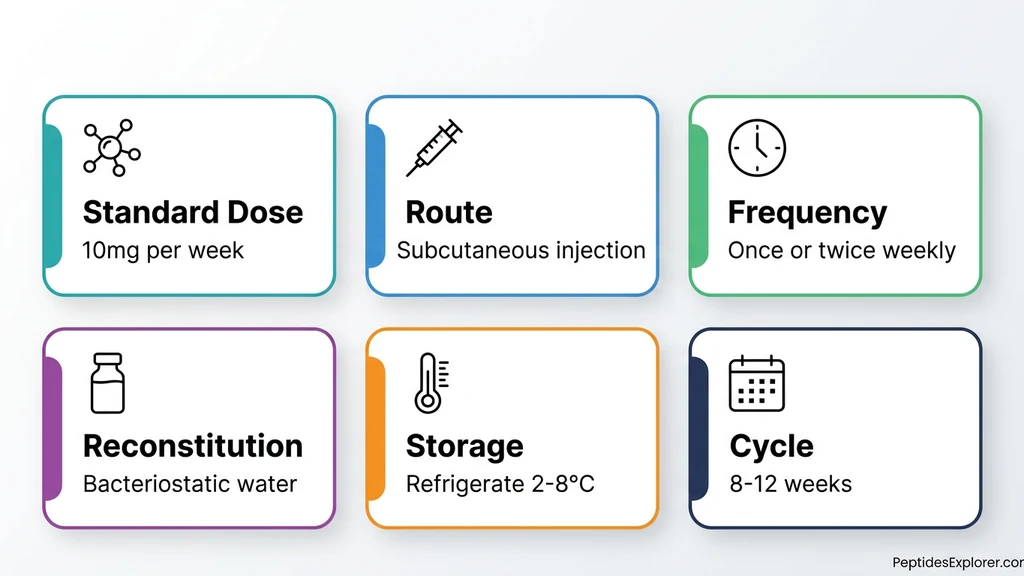
The standard MOTS-c dosage is 5 to 10 mg per week via subcutaneous injection, administered once or twice weekly, for cycles of 8 to 12 weeks. Beginners should start at 5 mg once per week and assess tolerance for two weeks before increasing.
MOTS-c (Mitochondrial ORF of the 12S rRNA Type-c) is a 16-amino-acid mitochondrial-derived peptide discovered in 2015 at USC. It activates AMPK, the same metabolic master switch triggered by exercise, earning it the label "exercise mimetic." Search interest has surged over 800% year-over-year as researchers and biohackers explore its metabolic, body composition, and anti-aging applications.
This guide covers exact dosage protocols, reconstitution math, injection timing, a week-by-week results timeline, side effects, stacking options, and the only human clinical trial data available. For a complete overview of MOTS-c's mechanism and biology, see the MOTS-c peptide profile.
MOTS-c is not FDA-approved. No completed human clinical trials exist for native MOTS-c. Consult a healthcare provider before acting on any information. For all peptide dosages in one place, see the peptide dosage chart.
Get your custom peptide protocol:
- Tailored to your body and goals
- Precise dosing and cycle length
- Safe stacking combinations
- Backed by peer-reviewed studies
- Ready in under 2 minutes
What Is the Right MOTS-c Dosage Protocol?
Three protocols dominate practitioner and community use. Each targets a different goal. All use subcutaneous injection.
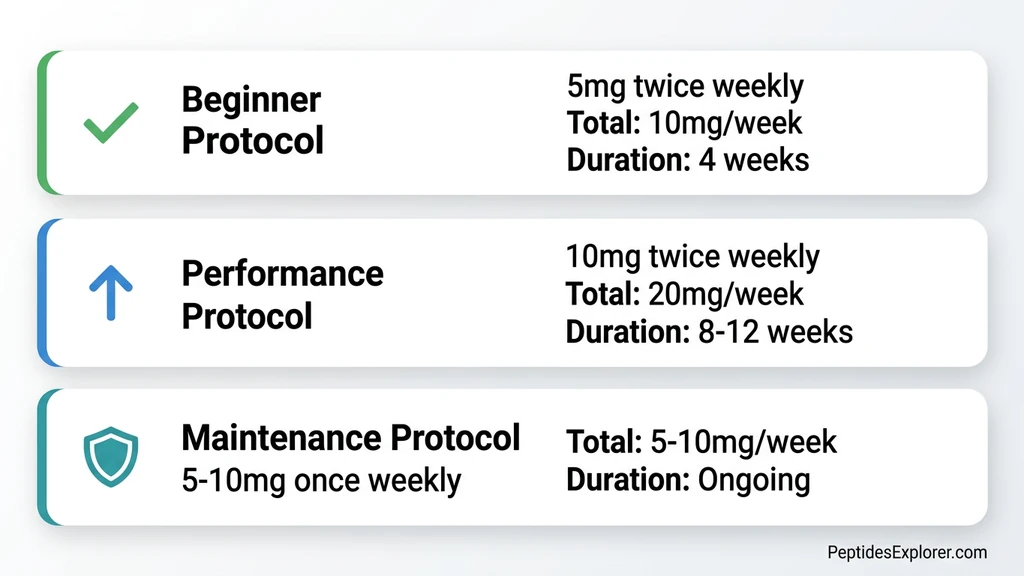
Beginner Protocol (5 mg/week)
Dose: 5 mg subcutaneously, once per week. Duration: 8 to 12 weeks. This is the starting point for first-time users.
Inject the full 5 mg in a single session. Run this protocol for at least two weeks to gauge tolerance before considering an increase. Most users settle here and report meaningful results by week four.
The beginner dose is sufficient for metabolic improvement and body composition changes. More is not always better with MOTS-c. Research on the MOTS-c analog CB4211 used 25 mg per day (a much higher dose), but native MOTS-c protocols trend lower.
Performance and Body Recomposition Protocol (10 mg/week)
Dose: 10 mg per week, split into two 5 mg injections (e.g., Monday and Thursday). Duration: 8 to 12 weeks.
This protocol targets athletes and body recomposition goals. Splitting the dose maintains more consistent AMPK activation across the week. Inject 30 to 60 minutes before exercise when possible for synergy with training-induced AMPK signaling.
The performance protocol costs twice the beginner protocol. Use the Peptide Cost Calculator to estimate total cycle expense before committing.
Anti-Aging and Metabolic Maintenance Protocol
Dose: 5 mg once weekly. Duration: 8 to 12 weeks, repeated 2 to 3 times per year.
This is the conservative approach for general metabolic health and longevity. Once-weekly dosing provides baseline AMPK activation and mitochondrial support without chronic pathway stimulation. Cycle on and off to avoid AMPK pathway tolerance.
Pairs well with Epitalon for a multi-pathway anti-aging approach. MOTS-c addresses mitochondrial decline; Epitalon targets telomere maintenance. Two distinct hallmarks of aging, covered by two peptides.
MOTS-c Dosage for Weight Loss
The same protocols apply. Performance protocol (10 mg/week) produces faster body composition changes. The beginner protocol (5 mg/week) works for users combining MOTS-c with structured diet and training.
MOTS-c promotes fat oxidation through AMPK-mediated lipolysis and targets visceral fat specifically. It preserves lean muscle mass during caloric restriction, a meaningful advantage over GLP-1 agonists like semaglutide.
A Reddit user documented dropping from 18% to 15% body fat in 15 days on MOTS-c. Typical results are more gradual. Expect visible body composition shifts at the 6 to 8 week mark.
MOTS-c Dosage for Women
Women use the same dosage ranges as men. No sex-specific dose adjustments are established in the research.
Start with the beginner protocol (5 mg/week) and assess for two weeks. Women report similar results timelines and side effect profiles as men. The 10 mg/week performance protocol is appropriate for women pursuing body recomposition or athletic performance goals.
How Do You Reconstitute and Inject MOTS-c?
MOTS-c ships as a lyophilized (freeze-dried) powder in vials, typically 10 mg per vial. Reconstitution with bacteriostatic water is required before injection.
Reconstitution Step-by-Step
Standard approach: add 2 mL of bacteriostatic water to a 10 mg vial. This produces a concentration of 5 mg/mL.
- 1.Bring both the vial and bacteriostatic water to room temperature.
- 2.Wipe the rubber stopper on the vial and the BAC water vial with an alcohol swab.
- 3.Draw 2 mL of bacteriostatic water with an insulin syringe.
- 4.Insert the needle into the MOTS-c vial at an angle and let the water trickle slowly down the glass wall. Do not squirt directly onto the powder.
- 5.Do not shake. Let the water dissolve the powder naturally, or swirl the vial gently.
- 6.Once fully dissolved, the solution should be clear.
For finer dose control, add 3 mL instead of 2 mL, producing a 3.33 mg/mL concentration. Use the Peptide Reconstitution Calculator to compute exact volumes for any vial size.
Injection Technique
Route: subcutaneous injection. This is a shallow injection into the fat layer beneath the skin.
Use an insulin syringe (29 to 31 gauge, 0.5 mL or 1 mL). Preferred injection sites: abdomen (2 inches from the navel), outer thigh, or upper arm. Pinch the skin, insert the needle at a 45-degree angle, inject slowly, wait a few seconds, then withdraw.
Rotate injection sites with each dose. This prevents localized irritation and scar tissue formation. For a full visual walkthrough, see the peptide injection guide.
How to Store MOTS-c
Lyophilized (unreconstituted): store at minus 20 degrees Celsius in a freezer. Stable for months.
Reconstituted: refrigerate at 2 to 8 degrees Celsius. Use within 14 to 30 days. Do not freeze reconstituted solution. Avoid repeated freeze-thaw cycles.
Protect from direct light. Keep the vial upright. If the solution becomes cloudy or discolored after reconstitution, discard it. For detailed guidance, see how to store peptides and how long do reconstituted peptides last.
For a general reconstitution walkthrough covering all peptides, see How to Reconstitute Peptides. For injection technique, site rotation, and needle selection, see the Peptide Injection Guide.
When Should You Take MOTS-c? Timing and Frequency
Morning dosing is preferred. MOTS-c's AMPK activation aligns with the body's metabolic circadian rhythm, which peaks in the morning and early afternoon.
For training days, inject 30 to 60 minutes before exercise. This timing lets MOTS-c's AMPK activation compound with the AMPK signaling that exercise itself triggers.
The 2021 Nature Communications study confirmed that exercise induces endogenous MOTS-c production in human skeletal muscle (Reynolds et al. 2021). Exogenous dosing amplifies that signal.
MOTS-c has a circulating half-life of approximately 2 to 4 hours. Serum levels drop relatively fast.
The downstream cellular effects (AMPK activation, mitochondrial biogenesis, gene expression changes) persist far longer. This is why once or twice weekly dosing works despite the short half-life.
Some users inject fasted. If you do, monitor for blood sugar dips. MOTS-c improves insulin sensitivity and glucose uptake. Combining it with fasting can occasionally cause mild hypoglycemia symptoms in sensitive individuals.
What Results Can You Expect from MOTS-c? Week-by-Week Timeline
Individual responses vary. Diet, training, baseline metabolic health, and dosage all influence the timeline. The following is aggregated from user reports and extrapolated from preclinical data.
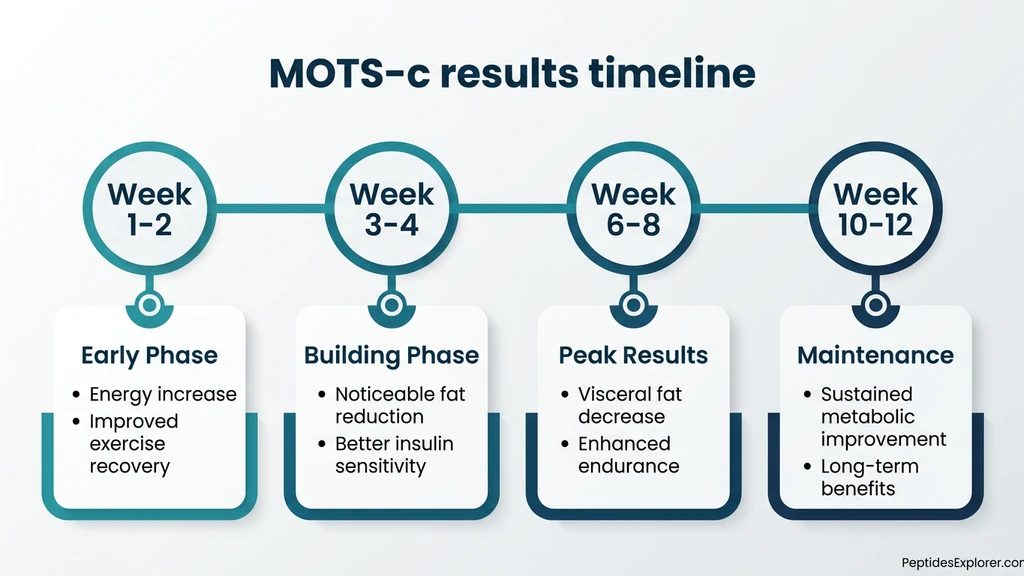
Weeks 1 to 2: Metabolic Adjustment
Subtle energy increase during the day. Improved workout recovery. Some users report mild fatigue as the body adjusts to altered metabolic signaling.
Do not expect visible changes yet. Cellular adaptation is underway: AMPK activation is ramping up, glucose uptake is improving, and mitochondrial biogenesis is beginning.
Weeks 2 to 4: First Measurable Shifts
Noticeable energy improvement. Fasting glucose may start trending downward. The initial metabolic shift becomes perceptible.
Users with metabolic syndrome or insulin resistance often see the earliest improvements. Improved carbohydrate tolerance and reduced post-meal energy crashes are commonly reported.
Weeks 4 to 6: Performance Gains
Improved stamina and endurance during exercise. Reduced systemic inflammation. Body composition changes begin.
This is the inflection point. Mitochondrial density has increased enough to produce measurable performance differences. In the Reynolds et al. mouse study, old mice treated with MOTS-c doubled their running capacity on treadmill tests.
Weeks 6 to 8: Visible Body Recomposition
Fat loss becomes visible, particularly around the midsection. Visceral fat reduction improves waist-to-hip ratio. Strength gains from better energy production.
This is where MOTS-c separates from placebo in most user reports. Training capacity is higher, recovery is faster, and the mirror starts confirming what the scale has been showing.
Weeks 8 to 12: Peak Results
Peak body recomposition. Sustained energy throughout the day. Metabolic markers (fasting glucose, insulin sensitivity, lipid profile) at their best.
This is the end of a standard cycle. Some users extend to 12 weeks; others stop at 8. Benefits gradually fade over 4 to 8 weeks after discontinuation without continued dosing.
Which MOTS-c Benefits Drive Dosage Decisions?
MOTS-c targets four domains. Your primary goal determines whether you need the beginner or performance dosage protocol.
Metabolic Regulation and Insulin Sensitivity
AMPK activation is the headline mechanism. When AMPK fires, cells shift from energy storage to energy burning. Glucose uptake increases through GLUT4 translocation. Fat oxidation ramps up. Mitochondrial biogenesis accelerates.
In the foundational mouse study, MOTS-c prevented diet-induced obesity and reversed insulin resistance without changes in food intake or exercise (Lee et al. 2015, Cell Metabolism). The beginner protocol (5 mg/week) is sufficient for metabolic improvement.
Fat Loss and Body Composition
MOTS-c promotes fat oxidation through AMPK-mediated lipolysis. It targets visceral fat, the metabolically dangerous fat around organs, preferentially.
Critically, MOTS-c preserves lean muscle mass during fat loss. This distinguishes it from GLP-1 agonists like semaglutide, which produce greater weight loss but carry a risk of muscle wasting. For body recomposition, the performance protocol (10 mg/week) accelerates results.
Exercise Performance and Recovery
MOTS-c improves mitochondrial density and cellular energy production. More mitochondria per cell translates to greater oxidative capacity and reduced fatigue.
The 2021 Nature Communications study demonstrated that aged mice (22 months old) treated with MOTS-c doubled their running capacity and outperformed untreated middle-aged mice (Reynolds et al. 2021). Exercise itself induces MOTS-c production in human skeletal muscle. Exogenous dosing compounds that effect.
Anti-Aging and Longevity
Mitochondrial dysfunction is a hallmark of aging. Endogenous MOTS-c levels decline as we age. Restoring those levels may reverse aspects of metabolic aging.
Aged mice treated with MOTS-c regained physical performance metrics closer to young mice. The peptide activates antioxidant response elements (ARE genes) in the nucleus, adding a protective layer against oxidative damage. The maintenance protocol (5 mg/week, cycled) is appropriate for longevity-focused use.
What Are the Side Effects of MOTS-c?
Most side effects are mild and transient. MOTS-c does not appear to carry the severe risk profile of hormonal peptides.
Common Side Effects
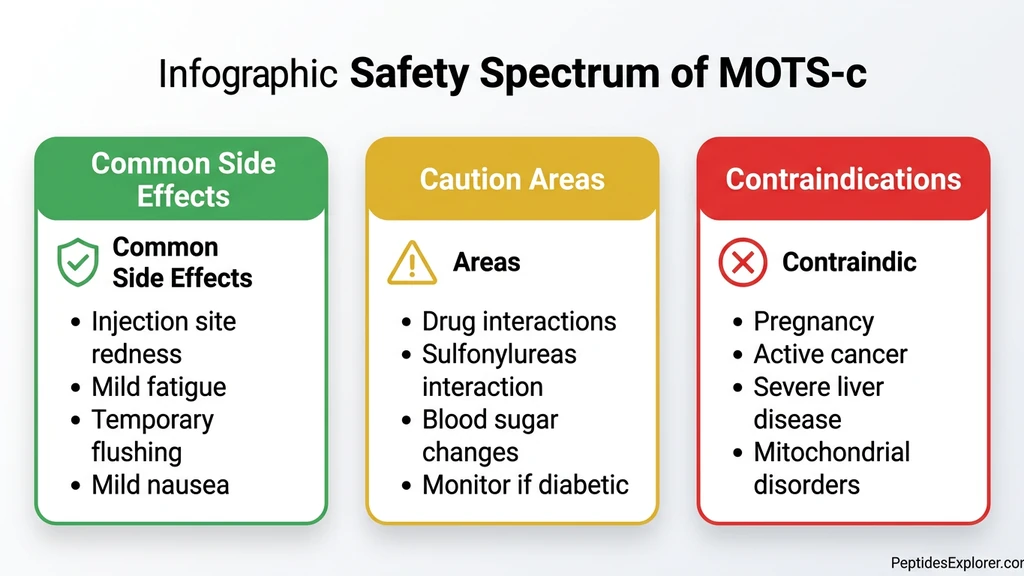
Injection site redness or mild swelling. Temporary increase in body temperature from heightened metabolic activity. Mild fatigue during the first week as the body adjusts to altered metabolic signaling. Occasional nausea. Headache.
These effects typically resolve within the first week. Reducing the dose or slowing the injection can help.
Less Common Reported Effects
Heart palpitations (reported by USADA in their MOTS-c overview). Blood sugar fluctuations, particularly in users who inject while fasting. Flushing. Muscle cramping (rare). Insomnia (rare).
If blood sugar symptoms occur (lightheadedness, shakiness), eat a small meal before or immediately after injection. Reduce the dose if symptoms persist.
Contraindications
Diabetes patients on insulin or sulfonylureas face increased hypoglycemia risk. MOTS-c improves insulin sensitivity, which compounds the glucose-lowering effect of these medications. Monitor blood sugar closely and adjust medication with your physician.
Metformin users should start at a lower dose. Both MOTS-c and metformin activate AMPK through different upstream mechanisms. The combined effect can be stronger than anticipated.
Pregnant or breastfeeding women should not use MOTS-c. People with mitochondrial diseases should consult a specialist before using any compound that alters mitochondrial function. No long-term human safety data exists. For broader safety considerations, see our peptide safety guide.
WADA Status: Is MOTS-c Banned in Sports?
Yes. MOTS-c is prohibited by WADA under category S4: Hormone and Metabolic Modulators. It is banned at all times, in-competition and out-of-competition (WADA 2026 Prohibited List).
Some sources incorrectly classify MOTS-c under S2 (Peptide Hormones). The correct category is S4. Athletes subject to anti-doping testing must not use MOTS-c.
How Does MOTS-c Compare to Other Metabolic Peptides?
MOTS-c occupies a specific niche: AMPK-driven metabolic enhancement with muscle preservation. Other metabolic peptides and drugs work through different pathways. The comparison helps determine which is right for your goals.
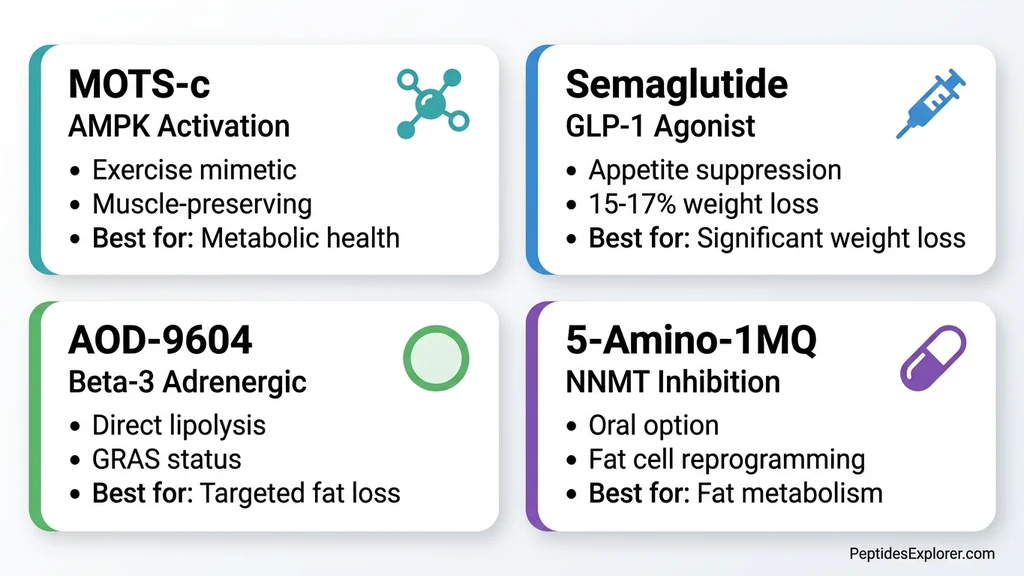
MOTS-c activates AMPK to improve metabolic function, fat oxidation, and mitochondrial biogenesis. Subcutaneous injection, 1 to 2 times per week. Moderate weight loss, preserves muscle. Research-only status. Best for metabolic health and exercise enhancement.
Semaglutide (Ozempic/Wegovy) is a GLP-1 receptor agonist that suppresses appetite. Subcutaneous injection, once weekly. High weight loss (15 to 17% body weight in trials). FDA-approved. Risk of muscle wasting. Best for significant weight loss.
AOD-9604 works through beta-3 adrenergic receptors to stimulate lipolysis. Daily subcutaneous injection. Mild to moderate fat loss. GRAS status as a food ingredient. Best for targeted stubborn fat.
5-Amino-1MQ inhibits NNMT to reprogram fat cell metabolism. Oral capsule, daily. Moderate fat loss. Research-only. Best for users wanting an oral option.
MOTS-c stacks well with any of these compounds because it targets a different pathway. The most common pairing is MOTS-c plus 5-Amino-1MQ for a dual-mechanism metabolic protocol.
What Are the Best MOTS-c Stacking Protocols?
Each stack targets a specific combination of goals. All assume the standard 8 to 12 week cycle length.
MOTS-c + 5-Amino-1MQ (Metabolic Dual Stack)
MOTS-c 5 mg twice per week (subcutaneous) plus 5-Amino-1MQ 50 to 100 mg per day (oral). Duration: 8 to 12 weeks.
Why this works: MOTS-c activates AMPK and improves mitochondrial function. 5-Amino-1MQ inhibits NNMT, preventing fat cells from resisting metabolic activation. They target different metabolic bottlenecks. The combination addresses fat metabolism from two directions.
MOTS-c + Epitalon (Anti-Aging Stack)
MOTS-c 5 mg once or twice per week for 8 to 12 weeks. Epitalon 5 mg per day for 10 to 20 days (as a short cycle within the MOTS-c cycle).
Why this works: MOTS-c restores youthful metabolic function through mitochondrial biogenesis. Epitalon activates telomerase, the enzyme that maintains telomere length. Two major hallmarks of aging addressed by two peptides operating through completely independent pathways.
MOTS-c + Ipamorelin (Body Recomposition Stack)
MOTS-c 5 mg twice per week plus Ipamorelin 200 to 300 mcg before bed. Duration: 8 to 12 weeks.
Why this works: MOTS-c handles the metabolic and fat-burning side. Ipamorelin's growth hormone release supports muscle growth, recovery, and sleep quality. One peptide burns fat; the other builds tissue.
MOTS-c + AOD-9604 + Tesamorelin (Aggressive Fat Loss Stack)
MOTS-c 5 mg twice per week plus AOD-9604 300 mcg per day plus Tesamorelin 1 to 2 mg per day. Duration: 8 to 12 weeks.
Three distinct mechanisms: AMPK activation (MOTS-c), beta-3 adrenergic lipolysis (AOD-9604), and GHRH-stimulated growth hormone release (Tesamorelin). This is the most aggressive fat-loss stack. Physician supervision is appropriate given the multiple active compounds. Use the Peptide Interaction Checker before combining.
What Does the Science Say? Key MOTS-c Research
Three landmark studies define what we know about MOTS-c. One clinical trial provides the only human data.
Discovery: Lee et al. 2015 (Cell Metabolism)
Dr. Changhan David Lee and Pinchas Cohen at the USC Leonard Davis School of Gerontology published the first description of MOTS-c in 2015. It was the first peptide shown to be encoded by mitochondrial DNA that acts as a systemic hormone.
Mice treated with MOTS-c prevented diet-induced obesity and reversed insulin resistance. Fat accumulation decreased without changes in food intake or physical activity. The paper established MOTS-c as an "exercise mimetic" and launched the field of mitochondrial-derived peptide research (Lee C et al., Cell Metab. 2015;21(3):443-454).
Exercise Mimetic Proof: Reynolds et al. 2021 (Nature Communications)
This study asked whether MOTS-c could restore physical performance in aged mice. The answer: yes, dramatically.
Aged mice (22 months, equivalent to roughly 65 to 70 human years) treated with MOTS-c three times per week doubled their running capacity on treadmill tests. They outperformed untreated middle-aged mice. The study also confirmed that exercise induces endogenous MOTS-c production in human skeletal muscle, establishing a bidirectional relationship between MOTS-c and physical activity (Reynolds JC et al., Nat Commun. 2021;12(1):470).
CB4211 Clinical Trial: The Only Human Data (CohBar 2021)
CB4211, a MOTS-c analog developed by CohBar, completed Phase 1a/1b clinical trials. This remains the only human clinical data for a MOTS-c-based compound.
Phase 1a: 65 healthy adults received CB4211 with no serious adverse events. Phase 1b: 20 obese patients with NAFLD (non-alcoholic fatty liver disease) received 25 mg per day subcutaneously for 4 weeks. Results versus placebo: ALT decreased 25%, AST decreased 17%, fasting glucose decreased 6%. All differences were statistically significant (CohBar press release, Aug 2021).
CB4211 is an analog, not native MOTS-c. The dosing (25 mg/day) is substantially higher than community MOTS-c protocols (5 to 10 mg/week). These results are directional, not directly translatable.
Additional Research
Zheng et al. published a comprehensive therapeutic review of MOTS-c in Frontiers in Endocrinology (2023), cataloging its effects on metabolism, aging, inflammation, and cardiovascular function (PMC).
A 2025 Frontiers in Physiology study demonstrated that MOTS-c restores mitochondrial respiration in type 2 diabetic hearts. A separate 2025 study showed MOTS-c prevents pancreatic islet cell senescence. The research pipeline continues to expand.
Why Does MOTS-c Cycling Matter?
AMPK is a stress-response pathway. Chronic, uninterrupted activation can lead to pathway desensitization, the biological equivalent of diminishing returns. This is why cycling exists.
The standard cycle is 8 to 12 weeks on, followed by 4 to 8 weeks off. Some practitioners recommend 2 to 3 cycles per year for maintenance-level use.
The cycling rationale differs from MOTS-c's pharmaceutical cousin metformin, which is taken continuously. Metformin activates AMPK through mitochondrial complex I inhibition at a low, steady level. MOTS-c activates AMPK more acutely through folate cycle disruption and AICAR accumulation. The stronger, intermittent stimulus benefits from periodic rest.
No established optimal cycling protocol exists in humans. The 8 to 12 week on / 4 to 8 week off pattern is extrapolated from pharmacological principles and community experience, not from controlled trials. MOTS-c half-life is approximately 2 to 4 hours, but the downstream cellular effects (mitochondrial biogenesis, gene expression changes) persist well beyond serum clearance.
Benefits begin fading 4 to 8 weeks after stopping. Most users report that gains in body composition and metabolic markers hold partially during the off period, particularly if diet and training remain consistent.
How Much Does a MOTS-c Cycle Cost?
MOTS-c sits at the higher end of the peptide price spectrum. A 10 mg vial typically costs $50 to $100 or more, depending on supplier and purity.
Beginner cycle (5 mg/week for 8 weeks): 40 mg total, requiring 4 vials. Estimated cost: $200 to $400. Performance cycle (10 mg/week for 8 weeks): 80 mg total, requiring 8 vials. Estimated cost: $400 to $800.
Both figures assume an 8-week run. If you are still deciding how long to stay on, MOTS-c cycle length covers how long to run it, when to break, and what changes on a second cycle.
These are approximate ranges. Supplier pricing, vial sizes, and purity all affect cost. Use the Peptide Cost Calculator for current estimates. For sourcing guidance, see where to buy peptides in 2026.
Additional supplies: bacteriostatic water ($5 to $10 per vial), insulin syringes ($10 to $15 per box of 100), alcohol swabs ($5). Total ancillary cost is under $30 for a full cycle.
Frequently Asked Questions
What is the standard MOTS-c dosage?
The standard dosage is 5 to 10 mg per week via subcutaneous injection. Beginners start at 5 mg once weekly for 2 weeks to assess tolerance, then can increase to 5 mg twice weekly (10 mg/week total) for performance goals. Cycles last 8 to 12 weeks followed by 4 to 8 weeks off.
Can MOTS-c replace exercise?
No. MOTS-c activates AMPK, one of the same pathways exercise activates, which earned it the exercise mimetic label. But exercise provides cardiovascular conditioning, bone loading, neuroplasticity, and psychological benefits that MOTS-c cannot replicate. Use MOTS-c to amplify the metabolic effects of exercise, not replace them.
How do you reconstitute MOTS-c?
Add 2 mL of bacteriostatic water to a 10 mg vial for a 5 mg/mL concentration. Let the water trickle down the vial wall slowly. Do not shake. Bring both vial and water to room temperature before mixing. Store reconstituted MOTS-c at 2 to 8 degrees Celsius and use within 14 to 30 days.
How long does it take to see results from MOTS-c?
Energy improvements typically appear within 1 to 2 weeks. Body composition changes become noticeable at 6 to 8 weeks. Peak results occur during weeks 8 to 12 with consistent use, proper training, and adequate nutrition.
Is MOTS-c safe?
Common side effects are mild: injection site redness, temporary fatigue, and occasional nausea. The MOTS-c analog CB4211 was well-tolerated in a Phase 1 trial with 85 participants and no serious adverse events. No long-term human safety data exists for native MOTS-c. Consult a healthcare provider, especially if you take diabetes medications.
Can you take MOTS-c with metformin?
Use caution. Both activate AMPK through different mechanisms. The combined effect may be stronger than expected. If you take metformin, start MOTS-c at 5 mg per week and monitor blood sugar closely. Consult your physician before combining.
Is MOTS-c banned in sports?
Yes. MOTS-c is prohibited by WADA under category S4 (Hormone and Metabolic Modulators) at all times, in-competition and out-of-competition. Athletes subject to anti-doping testing must not use MOTS-c.
How does MOTS-c compare to semaglutide for weight loss?
Semaglutide suppresses appetite via GLP-1 receptors and produces 15 to 17% body weight loss in clinical trials. MOTS-c activates AMPK to improve metabolic function and fat oxidation without appetite suppression. MOTS-c produces more moderate weight loss but preserves muscle mass. Some practitioners combine both for complementary effects.
What is the best time to inject MOTS-c?
Morning injection is preferred, ideally 30 to 60 minutes before exercise. This timing aligns MOTS-c's AMPK activation with the metabolic demands of training. Fasted morning injection is common but monitor for blood sugar dips if you are sensitive.
Can MOTS-c be taken orally?
Currently, MOTS-c is only available as an injectable peptide. As a 16-amino-acid peptide, it would likely be degraded by digestive enzymes if swallowed. Subcutaneous injection is the standard route. Researchers are exploring oral and nasal delivery systems, but none are commercially available.
The Bottom Line
MOTS-c dosage follows a simple framework: 5 mg per week for beginners, 10 mg per week for performance and body recomposition, cycled 8 to 12 weeks on and 4 to 8 weeks off. Inject subcutaneously, preferably in the morning before training.
The science is compelling. Lee et al. showed MOTS-c reverses insulin resistance in mice. Reynolds et al. proved aged mice doubled their running capacity. The CB4211 trial produced statistically significant improvements in liver enzymes and fasting glucose in humans. The research pipeline is accelerating.
MOTS-c is not FDA-approved and long-term human safety data does not exist. Every claim in this guide links to its source. Consult a healthcare provider before starting any peptide protocol.
Take the Peptide Quiz to see if MOTS-c fits your goals, or explore the MOTS-c peptide profile for a complete overview of mechanism, benefits, and biology. New to peptides? Start with our getting started with peptides guide. For stacking principles, see the peptide stacking guide.
Related Articles: - Best Peptides for Weight Loss - Peptide Dosage Chart - How to Store Peptides - Peptide Safety Guide - Peptide Stacking Guide - AOD-9604 Before and After — lipolytic peptide results comparison - Sermorelin for Fat Loss — GH-pathway fat loss with sermorelin
Helpful Tools
Related Articles
CJC-1295 Dosage: Complete Protocol Guide
CJC-1295 dosage guide: DAC and no-DAC protocols. Dosing by goal (anti-aging, fat loss, muscle, sleep), ipamorelin stacking, and injection timing.
DSIP Peptide Dosage: Sleep Protocols
DSIP dosage guide: 100-300 mcg protocols, reconstitution steps, timing before bed, cycling schedule, cortisol modulation, and delta-wave research.
Retatrutide Dosage: Titration Schedule
Retatrutide dosage chart with weekly titration schedule. Phase 2 & 3 trial data: up to 28.7% weight loss at 12 mg. Dose escalation and side effects.
Ipamorelin Dosage: Solo Protocols, Timing & Unit Math
Ipamorelin dosage: 200-300 mcg subcutaneous, 1-3x daily, bedtime fasted. Charts by goal and weight, saturation dose, reconstitution units, safety data.