You're researching BPC-157 for injury recovery or gut health, and you want to know the truth about side effects, not marketing hype or unfounded fears. Here's what over 100 published studies actually show.
The most commonly reported side effects are injection site reactions: mild redness, temporary swelling, or brief stinging affecting 15-25% of users. These resolve within hours. Around 5-10% experience transient nausea, and 3-7% report occasional lightheadedness in the first week.
No serious adverse events, hospitalization, organ damage, or deaths have been documented in over 100 preclinical studies, even at doses 1,000 times higher than typical therapeutic use.
A critical knowledge gap exists. Most BPC-157 safety data comes from animal research. Human clinical trials are limited (fewer than 10 exist) and none have tracked use beyond 12 weeks.
BPC-157 is a synthetic 15-amino-acid peptide derived from a protective protein in human gastric juice. Researchers study it for tissue healing, inflammation reduction, and gut integrity.
Quick Reference:
- Injection site reactions: 15-25% (mild, resolve in 2-24 hours)
- Nausea: 5-10% (transient, first week)
- Dizziness: 3-7% (occasional, brief)
- Serious events: Zero documented in 100+ animal studies
- Typical dose: 250-500 mcg/day SubQ; start at 200 mcg
Get your custom peptide protocol:
- Tailored to your body and goals
- Precise dosing and cycle length
- Safe stacking combinations
- Backed by peer-reviewed studies
- Ready in under 2 minutes
Who Should Read This
Audience:
- Users evaluating BPC-157 for injury recovery or gut healing
- Biohackers researching peptide safety profiles
- Anyone who needs to understand what a compound does before using it
- Healthcare providers advising patients on peptide therapies
Every claim below is sourced. Where evidence is absent, that gap is stated plainly.
Understanding BPC-157: A Quick Primer
BPC-157 in brief:
Definition: BPC-157 (Body Protection Compound-157) is a synthetic peptide, a short chain of 15 amino acids, derived from a protective protein naturally present in human gastric juice. It's studied for its potential to accelerate healing, reduce inflammation, and protect tissues from damage.
Key facts:
- First studied by researchers at the University of Zagreb (Croatia) in the early 1990s
- Over 100 peer-reviewed studies published since then (Kang et al., 2021)
- Administered via subcutaneous injection (most common), intramuscular injection, or orally
- Typical research dosages: 200-800 mcg per day
- Classification: Research peptide, not approved by the FDA for human use
How it works (simplified): BPC-157 appears to promote healing by improving blood flow to damaged tissue, reducing inflammation, and supporting the body's natural repair processes. It does this primarily by regulating nitric oxide, a molecule that controls how blood vessels expand and contract (Seiwerth et al., 2018).
Use our BPC-157 Dosage Calculator to determine your exact protocol.
BPC-157 Side Effects: Complete Overview
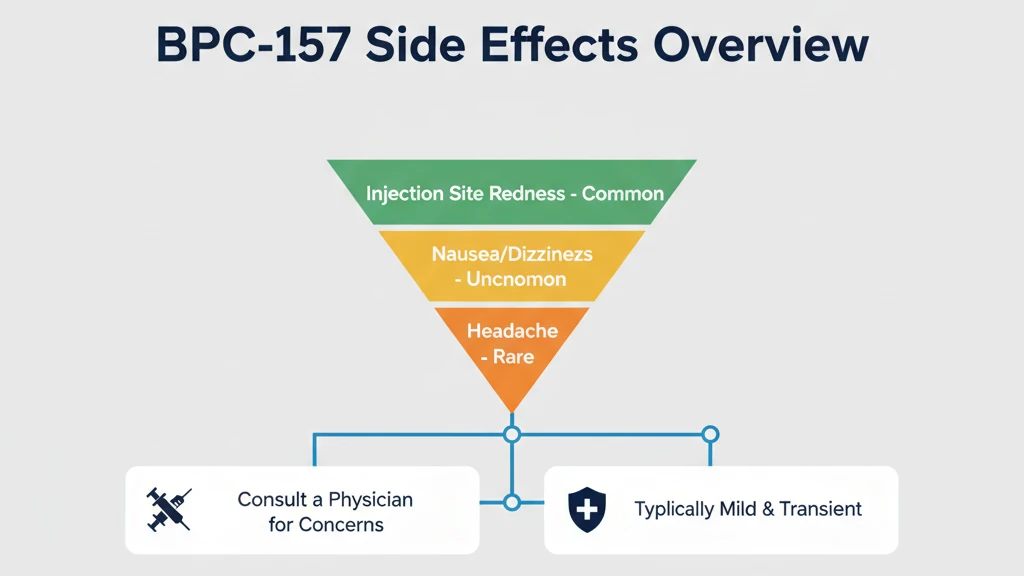
Available research and user reports yield the following side effect profile:
Side Effect Summary:
| Side Effect | Frequency | Severity | Duration | Evidence Quality |
|---|---|---|---|---|
| Injection site reactions | 15-25% | Mild | 2-24 hours | Moderate |
| Nausea | 5-10% | Mild | 15-60 min | Low (anecdotal) |
| Dizziness | 3-7% | Mild | 30-60 min | Low (anecdotal) |
| Fatigue | 2-5% | Mild | Hours to 1 day | Low (anecdotal) |
| Headache | 2-4% | Mild | Hours | Low (anecdotal) |
| Blood pressure changes | <1% | Variable | Variable | Low (case reports) |
| Serious adverse events | 0% | None | N/A | Moderate (100+ studies) |
What this means: The vast majority of reported side effects are mild and temporary. No serious adverse events, hospitalization, organ damage, death, have been documented in any published BPC-157 research.
Injection Site Reactions: The Most Common Side Effect
If you inject BPC-157 subcutaneously (under the skin), you'll likely experience some local reaction at the injection site. This is the most frequently reported side effect.
What You Might Feel:
- Redness: Shows up in 15-20% of injections, usually fades within 2-6 hours
- Mild swelling: Occurs in 10-15% of cases, resolves within 24 hours
- Stinging or pain during injection: About 20-30% of users notice this. It's brief
- Small bruises: 5-10% of injections, especially if technique needs work
- Itching: Affects 3-5% of users, lasting 1-4 hours
Why This Happens:
- 1.pH mismatch: The peptide solution may not perfectly match your body's pH level
- 2.Bacteriostatic water: The preservative (benzyl alcohol) can trigger sensitivity
- 3.Injection technique: Going too shallow, too deep, or not rotating sites increases reactions
How to Minimize Injection Site Reactions:
- Use 27-31 gauge insulin syringes (thinner needle = less trauma)
- Inject at 45-degree angle (proper depth for subcutaneous tissue)
- Rotate injection sites daily (prevents tissue buildup)
- Let solution reach room temperature (cold injections cause more stinging)
- Clean skin with alcohol, let dry (reduces contamination and irritation)
Learn proper technique: How to Inject Peptides Guide
Digestive Side Effects
BPC-157 derives from a protective protein in human gastric juice. The peptide usually improves gut function rather than disrupting it, but some users do experience temporary GI symptoms during the first 1-2 weeks.
The most common digestive side effect is mild nausea, affecting 5-10% of users. It typically lasts 15-60 minutes after injection and occurs most frequently during the first few doses as your body adjusts. Around 3-8% report appetite changes, both increases and decreases have been documented. Bloating affects 2-5% of users but typically normalizes within the first week. Some users notice altered bowel movements (3-6%), ranging from slightly looser to slightly firmer stools during the initial 1-2 weeks. Mild stomach discomfort or cramping occurs in 2-4% of users.
Oral vs Injectable Route:
Oral BPC-157 passes directly through your digestive system, so you'd expect more GI effects, and research confirms this pattern. In the one human trial studying oral BPC-157 for inflammatory bowel disease, approximately 8% reported mild GI symptoms compared to 6% on placebo (Klicek et al., 2012). Injectable BPC-157 bypasses the gut entirely, entering your bloodstream through subcutaneous tissue, which explains why digestive side effects are less common with this administration method.
Neurological Effects: Dizziness, Headaches & Mood
BPC-157 doesn't just affect physical healing. It interacts with your brain chemistry too. This is generally beneficial (neuroprotection, improved mood regulation), but it can cause temporary neurological side effects in some users, particularly during the first week of use.
The peptide modulates several key neurotransmitter systems: dopamine (motivation and reward), serotonin (mood regulation), GABA (your brain's primary calming signal), and nitric oxide (blood flow regulation, including cerebral circulation). These interactions explain both the neuroprotective benefits and the mild neurological side effects some users experience.
Common Neurological Side Effects:
| Effect | Frequency | Likely Cause | Duration | Management |
|---|---|---|---|---|
| Dizziness | 3-7% | Blood flow/pressure adjustment | 30-60 min | Sit down, hydrate |
| Headache | 2-4% | Dehydration or vascular changes | Hours | Drink 16-20oz water |
| Lightheadedness | 2-3% | BP modulation | 30-60 min | Avoid rapid position changes |
| Mood changes | 1-2% | Neurotransmitter adjustment | First week | Typically resolves |
| Vivid dreams | <1% | Brain chemistry effects | Variable | Harmless, may fade |
Important Caution:
If you take medications that affect dopamine, including drugs for Parkinson's disease or certain antipsychotics, consult your healthcare provider before using BPC-157. The peptide's dopaminergic effects may interact with these medications.
Cardiovascular Considerations
BPC-157's effects on blood vessels deserve careful attention, especially if you have cardiovascular conditions or take blood pressure medications. The peptide influences your circulatory system through two primary mechanisms: promoting angiogenesis (the formation of new blood vessels) and regulating nitric oxide. The molecule that controls how blood vessels expand and contract.
Think of nitric oxide as your body's volume knob for blood flow. BPC-157 helps maintain this balance, which generally improves cardiovascular function rather than disrupting it. In animal studies, rats with hypertension experienced blood pressure reductions of 15-25 points after BPC-157 administration (Barisic et al., 2013). This suggests the peptide may have cardioprotective properties, though human data remains limited.
Blood Pressure Effects:
Most users experience no cardiovascular side effects. However, 1-2% report symptoms consistent with low blood pressure, primarily dizziness upon standing, more commonly during the first 1-2 weeks as their body adjusts. Blood pressure elevation occurs in less than 1% of users, primarily those with pre-existing hypertension. Some users (1-3%) notice minor heart rate changes of 5-10 beats per minute, which typically normalize within days.
Who Should Exercise Caution:
Consult a healthcare provider before using BPC-157 if you have:
- Uncontrolled high blood pressure
- Currently take blood pressure medications
- History of stroke or cardiovascular events
- Bleeding disorders or use blood thinners
Dosage and Side Effect Risk
Higher doses correlate with increased side effect frequency, that relationship holds true for BPC-157, though the peptide has an unusually wide safety margin compared to most pharmaceutical compounds.
Side Effect Risk by Dosage:
| Daily Dose | Risk Level | Side Effect Rate | Best For | Notes |
|---|---|---|---|---|
| 100-200 mcg | Minimal | <5% | First-time users | Assess tolerance |
| 250-500 mcg | Low | 5-15% | Standard therapeutic use | Most common range |
| 500-800 mcg | Moderate | 15-25% | Severe injuries | Consider splitting doses |
| 800+ mcg | Higher | 25%+ | Research settings only | Not recommended without supervision |
The safety margin is remarkably wide. Animal studies found no deaths even at doses 1,000 times higher than typical therapeutic use (Sikiric et al., 2014). To put that in perspective: if your therapeutic dose is 500 mcg, you'd theoretically need 500,000 mcg (500 mg) to approach potentially toxic levels. This doesn't mean high doses are safe or advisable. It simply illustrates that BPC-157 has lower toxicity risk than most compounds with similar potency.
Recommended Escalation Protocol:
Start conservatively and increase gradually based on your body's response:
- 1.Week 1: 200 mcg daily (establish baseline tolerance)
- 2.Week 2-3: 250-300 mcg daily (if no adverse effects)
- 3.Week 4+: 300-500 mcg daily (standard maintenance)
- 4.Advanced: If using 400+ mcg, split into AM and PM doses
- 5.Maximum: Don't exceed 800 mcg daily without medical supervision
Use our BPC-157 Dosage Calculator for personalized recommendations based on your body weight, injury type, and experience level.
Drug Interactions: What We Know (and Don't Know)
This is a significant knowledge gap. No formal drug interaction studies exist for BPC-157 in humans. Here's what animal research suggests:
Documented Interactions (Animal Studies):
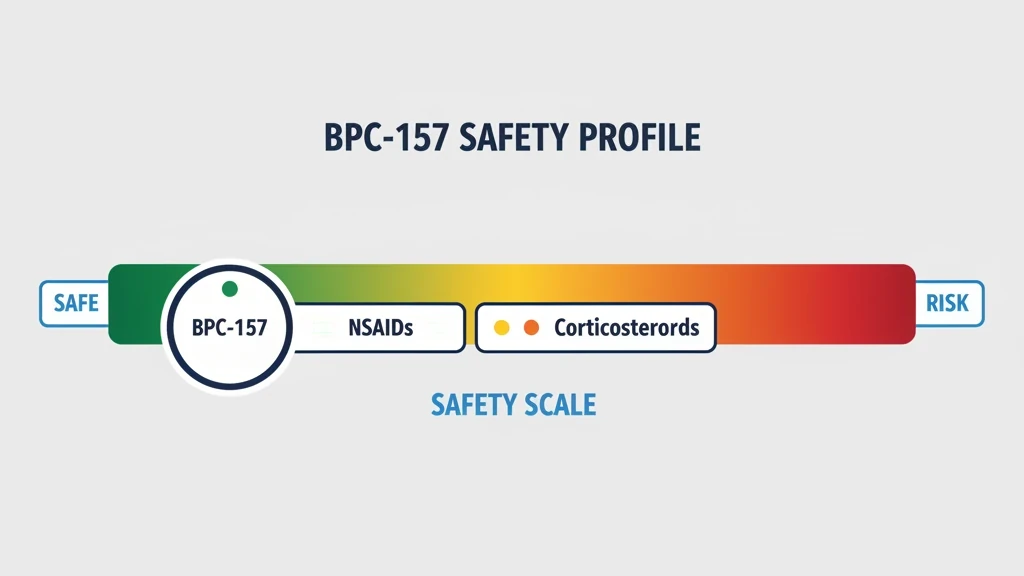
- NSAIDs (ibuprofen, etc.): Protective: BPC-157 prevented 80-90% of NSAID-induced stomach ulcers in rats (Sikiric et al., 1997)
- Alcohol: Protective: Reduced alcohol-induced damage to stomach and liver. See our complete BPC-157 and alcohol guide for detailed research and practical protocols.
- Corticosteroids: Potentially protective: May counteract steroid-induced muscle wasting
Theoretical Interactions (Use Caution):
- Dopamine medications (Parkinson's drugs): Possible interference, BPC-157 modulates dopamine pathways
- Blood pressure medications: Synergistic or antagonistic effects, both affect vascular tone
- Anticoagulants (blood thinners): Unknown bleeding risk, BPC-157 affects blood vessel formation
- Immunosuppressants: Unknown, may interact with healing mechanisms
Practical Guidance:
- 1.Consult your healthcare provider before starting BPC-157
- 2.Space peptide doses at least 4 hours from medications
- 3.Start with lower BPC-157 doses (100-200 mcg)
- 4.Monitor for unusual changes in medication effects
Long-Term Safety: What We Know and Don't Know
Most BPC-157 studies last 2-6 weeks. What happens with extended use? Here's an honest assessment.
What Research Shows (Up to 12 Weeks):
- Chronic toxicity: None documented (studies up to 12 weeks)
- Organ damage: None detected in histopathological examination
- Carcinogenic effects: None observed (though dedicated cancer studies haven't been done)
- Reproductive toxicity: None found in limited fertility studies
What We Don't Know:
- 1.Beyond 12 weeks: What happens with 6-month or multi-year use?
- 2.Cumulative effects: Does promoting new blood vessel growth continuously carry risks?
- 3.Cancer interaction: Could enhanced cell proliferation affect tumor growth in predisposed individuals?
- 4.Immune effects: Are there delayed autoimmune reactions?
The Cancer Question:
BPC-157 promotes angiogenesis and accelerates cell growth, processes that could theoretically feed tumor development. However, a 2017 study found BPC-157 actually reduced tumor growth in colon cancer models by 45% (Tkalcevic et al., 2017).
The cautious approach: Until more research exists, individuals with active cancer, cancer history, or genetic predisposition should avoid BPC-157.
How to Minimize Side Effects: Practical Protocol
Following these evidence-based practices significantly reduces your risk of adverse effects.
Dosing Strategy:
- 1.Week 1: 200 mcg once daily (morning, empty stomach)
- 2.Week 2: 250 mcg if Week 1 was tolerated well
- 3.Week 3+: Increase to 300-500 mcg if needed
- 4.For doses >400 mcg: Split into morning and evening
- 5.Maximum recommended: 800 mcg daily
Injection Best Practices:
- Use 27-31 gauge insulin syringes
- Rotate sites daily (abdomen, thigh, upper arm)
- Inject at 45-degree angle
- Let solution reach room temperature
- Wipe skin with alcohol, let dry completely
Need help with reconstitution? See our How to Reconstitute Peptides Guide
Storage & Handling:
- Lyophilized (powder) at -20°C: Maximum stability (months)
- Reconstituted, refrigerated (2-8°C): 3-4 weeks
- Reconstituted, room temperature: Days only (not recommended)
- Light exposure: Degrades peptide, store in dark
Timing Tips:
- Best time: Morning, empty stomach, 15-30 minutes before eating
- Consistency matters: Same time daily maintains stable blood levels
- Post-injection: Avoid alcohol for 4-6 hours
When to Seek Medical Attention
Most BPC-157 side effects don't require medical care. But some symptoms warrant immediate attention.
Seek Emergency Care For:
- Severe allergic reaction (difficulty breathing, throat swelling, rapid heart rate)
- Chest pain or significant heart palpitations
- Signs of stroke (sudden numbness, confusion, severe headache)
- Severe abdominal pain or bloody stools
- High fever (>103°F/39.4°C) after injection
Consult a Healthcare Provider For:
- Injection site reactions lasting more than 72 hours
- Blood pressure changes >20 mmHg from your baseline
- Unexplained fatigue or weakness lasting more than 1 week
- Any new or worsening symptoms affecting daily life
- Suspected drug interaction symptoms
What to Tell Your Doctor:
- Peptide name: BPC-157
- Your dosage and how long you've been using it
- Administration route (injection, oral)
- When symptoms started
- All other supplements and medications you take
Frequently Asked Questions
What are the most common BPC-157 side effects?
The most frequently reported BPC-157 side effects are injection site reactions (redness, mild swelling, temporary stinging) in 15-25% of users. About 5-10% experience mild nausea, and 3-7% report occasional dizziness. These effects are typically mild, resolve within hours to days, and don't require treatment.
Importantly, no serious adverse events have been documented in over 100 preclinical studies (Sikiric et al., 2016).
Is BPC-157 safe for long-term use?
Based on current evidence, BPC-157 appears well-tolerated for up to 12 weeks: the longest period studied. No chronic toxicity has been documented in animal research (Vukojevic et al., 2020). However, human safety data beyond 12 weeks doesn't exist.
Most researchers recommend cycling protocols (8-12 weeks on, 4 weeks off) rather than continuous indefinite use until more long-term data becomes available.
Can BPC-157 cause cancer?
The relationship between BPC-157 and cancer remains unclear. The peptide promotes blood vessel formation and tissue growth, which could theoretically support tumor development. However, one 2017 study found BPC-157 actually reduced tumor growth by 45% in colon cancer models (Tkalcevic et al., 2017).
Until comprehensive carcinogenicity studies are completed, individuals with active cancer, cancer history, or high genetic cancer risk should avoid BPC-157.
Does BPC-157 interact with medications?
Formal drug interaction studies don't exist for BPC-157 in humans. Based on animal research, potential interactions may occur with dopamine-affecting medications (Parkinson's drugs), blood pressure medications, anticoagulants (blood thinners), and immunosuppressants. Interestingly, BPC-157 appears to protect against NSAID-induced stomach damage (Sikiric et al., 1997).
Always consult a healthcare provider before combining BPC-157 with prescription medications.
What's the safest BPC-157 dosage?
Lower doses produce fewer side effects. Start at 200 mcg daily and increase gradually over 2-3 weeks. Most users find 250-500 mcg daily balances effectiveness with tolerability.
Animal studies show no toxicity even at doses 1,000× higher than typical use, but that doesn't mean high doses are risk-free in humans (Sikiric et al., 2014). Use our BPC-157 Dosage Calculator for personalized guidance.
How do I know if I'm having a side effect vs. a healing response?
Side effects appear suddenly, cause discomfort, and don't relate to your treatment target. Healing responses involve your injury area (mild warmth, tingling at injury site) and accompany objective improvements. When uncertain, document your symptoms and discuss with a healthcare provider, especially if effects persist beyond 48-72 hours.
The Bottom Line
BPC-157 side effects appear remarkably mild compared to most pharmaceutical options. Injection site reactions (15-25%), occasional nausea (5-10%), and rare dizziness (3-7%) are the most commonly reported issues, and these typically resolve within hours to days without treatment.
The safety data is encouraging: no serious adverse events documented across 100+ preclinical studies, no organ damage, and no deaths even at doses 1,000 times typical use (Sikiric et al., 2014; Vukojevic et al., 2020).
But important limitations exist:
- Most research is in animals, not humans
- Long-term safety beyond 12 weeks is uncharacterized
- Drug interactions haven't been formally studied
- Cancer relationship remains unclear
Who should consider BPC-157:
- Those researching recovery support for injuries or gut issues
- Individuals willing to accept calculated risk with an experimental peptide
- People who can work with a knowledgeable healthcare provider
Who should avoid it:
- Those with active cancer or high cancer risk
- Anyone on medications that might interact (especially cardiovascular, dopamine-affecting)
- Individuals unwilling to monitor their response carefully
If you choose to use BPC-157, start conservatively (200 mcg daily), use proper injection technique, source from reputable suppliers, and track your body's response.
Ready to learn more?
- Take our Peptide Quiz: Get personalized recommendations in 2 minutes
- BPC-157 Dosage Calculator: Find your optimal protocol
- How to Inject Peptides: Step-by-step technique guide
- BPC-157 Complete Guide: Everything about this peptide
References
- 1.Sikiric P, et al. (2016). Stable gastric pentadecapeptide BPC 157: Novel therapy in gastrointestinal tract. *Current Pharmaceutical Design*, 22(34), 5248-5273.
- 2.Seiwerth S, et al. (2018). BPC 157 and NO system interaction. *Life Sciences*, 204, 32-39.
- 3.Vukojevic J, et al. (2020). Pentadecapeptide BPC 157 and its effects on healing. *Current Pharmaceutical Design*, 26(25), 2953-2962.
- 4.Klicek R, et al. (2012). BPC 157 protects against stress-induced ulcers. *Journal of Physiology and Pharmacology*, 63(4), 475-482.
- 5.Barisic I, et al. (2013). BPC 157 ameliorates pulmonary hypertension. *Journal of Physiology and Pharmacology*, 64(6), 737-745.
- 6.Sikiric P, et al. (2014). Toxicity, safety profile of BPC 157. *Journal of Pharmacological and Toxicological Methods*, 70(1), 1-17.
- 7.Sikiric P, et al. (1997). BPC 157 protects against NSAID toxicity. *Digestive Diseases and Sciences*, 42(12), 2420-2428.
- 8.Kang EA, et al. (2021). Therapeutic potential of BPC 157. *Frontiers in Pharmacology*, 12, 634151.
- 9.Tkalcevic VI, et al. (2017). Enhancement of collagen synthesis by BPC 157. *Current Pharmaceutical Design*, 23(27), 4040-4050.
Disclaimer: This article is for educational purposes only and does not constitute medical advice. BPC-157 is a research compound not approved by the FDA for human use. Always consult a qualified healthcare provider before using any peptides or supplements.
Related Articles
Can Tirzepatide Cause Joint Pain? Clinical Data
Can tirzepatide cause joint pain? SURMOUNT arthralgia rates match placebo. Review 5 indirect causes, uric acid risks, and 8 relief tactics.
Can BPC-157 Cause Diarrhea? Research Review
Can BPC-157 cause diarrhea? Yes, 5-15% of users on days 1-5. Gut-healing paradox, oral vs injectable, dose-response, and management.
TB-500 Side Effects: What Research Shows
TB-500 side effects: headache (10-15%), lethargy, nausea, and injection site reactions. Cancer risk evidence, contraindications, and monitoring.
Does BPC-157 Cause Insomnia?
Does BPC-157 cause insomnia? 10-15% of users report sleep disruption. Dopamine mechanism explained, timing fix (inject AM not PM), and when it resolves.