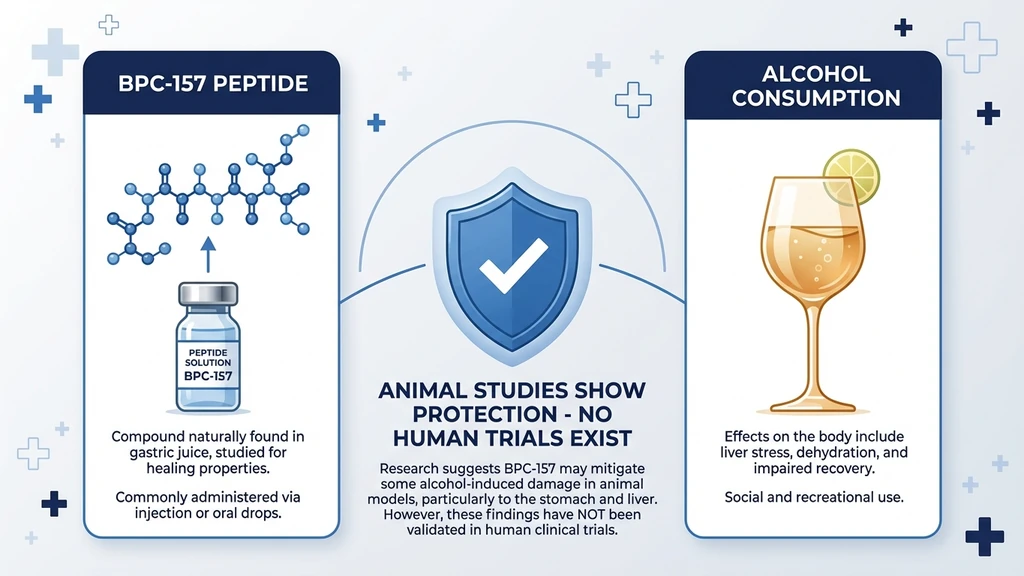
You are three weeks into a BPC-157 protocol for a torn rotator cuff. A friend's birthday dinner is tonight. One glass of wine sits between you and three weeks of progress.
It will not undo your protocol. Six animal studies over two decades consistently show BPC-157 protects against alcohol-induced damage to the stomach, liver, and brain. Researchers at the University of Zagreb classified BPC-157 as a "suitable alcohol antagonist" (Boban-Blagaic et al., 2006). No human clinical trial has tested the combination.
Occasional moderate drinking appears safe. Heavy drinking directly counteracts the healing you are paying for.
| Drinking Pattern | Impact on BPC-157 Protocol | Recommendation |
|---|---|---|
| 1-2 drinks, once or twice a month | Minimal interference | Continue protocol. Separate injection and alcohol by 4-6 hours |
| 2-3 drinks weekly | Measurable healing delay | Reduce frequency during your cycle for best results |
| 3+ drinks frequently | Tissue damage outpaces repair | BPC-157 still offers organ protection, but the ceiling is low |
| Daily heavy drinking | Active self-sabotage | Seek medical support. A peptide cannot outrun chronic alcohol damage |
Get your custom peptide protocol:
- Tailored to your body and goals
- Precise dosing and cycle length
- Safe stacking combinations
- Backed by peer-reviewed studies
- Ready in under 2 minutes
Can You Drink Alcohol While Taking BPC-157?
Yes. Based on available evidence, occasional moderate drinking does not cause dangerous interactions with BPC-157.
Six published studies have tested BPC-157 against alcohol-induced damage in rodents. Every one found protective effects. None found that alcohol blocked BPC-157's activity.
But "safe to combine" and "optimal for healing" are different questions.
Alcohol triggers systemic inflammation. It disrupts sleep architecture and suppresses growth hormone release during the first sleep cycle. It dehydrates tissue and diverts liver resources toward ethanol metabolism.
Think of BPC-157 as a repair crew working a morning shift. Alcohol is the party from the night before. A small dinner gathering leaves a few dishes to wash. The crew handles it before lunch. A weekend bender leaves broken furniture, stained floors, and a flooded bathroom. The crew still shows up. The building just takes longer to restore.
The peptide still functions after alcohol exposure. It has more damage to address, and healing takes longer. For a complete overview of BPC-157's effects across all body systems, see the peptide safety guide.
What Happens When You Drink on a BPC-157 Protocol
Two scenarios illustrate how alcohol quantity changes outcomes.
Scenario 1: Heavy single session You inject BPC-157 at 8 AM for a knee injury. At noon, you drink 6 beers over 5 hours at a barbecue. Your blood alcohol peaks while BPC-157 is still circulating. The alcohol spikes TNF-alpha and IL-6 (pro-inflammatory cytokines), loosens gut tight junctions, and triggers gastric inflammation. Your body redirects repair resources toward managing ethanol damage. One heavy session can delay soft-tissue healing by 5-7 days based on inflammatory marker recovery times (Koyuncu et al., 2025).
Scenario 2: Weekly moderate drinking You use BPC-157 for gut healing after years of NSAID damage. Three glasses of wine every Friday re-inflame the intestinal lining BPC-157 spent the week repairing. After 8 weeks, improvement stalls. The peptide worked. The alcohol erased its progress on a weekly cycle.
Both scenarios share the same principle: BPC-157 does not stop working. Alcohol creates new damage faster than the peptide can repair old damage. The math favors sobriety.
What the Research Shows: BPC-157 and Alcohol Studies
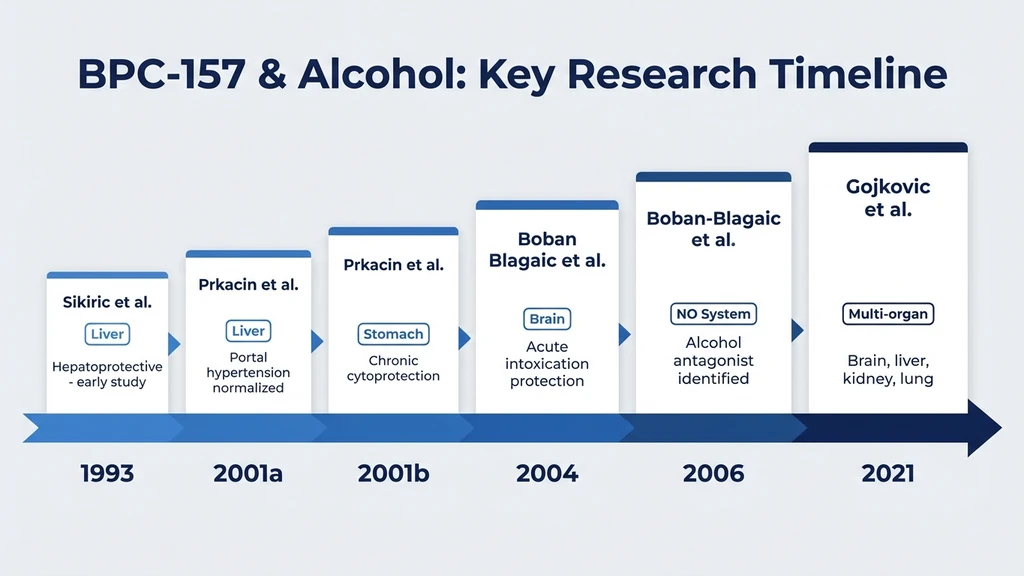
BPC-157 is one of the most studied peptides in the context of alcohol damage. Six primary studies from the University of Zagreb laboratory span two decades of research, led by Professor Predrag Sikiric.
Every study used the stable gastric pentadecapeptide form of BPC-157 (the same form available commercially). Doses ranged from 10 pg/kg to 10 mcg/kg. Protective effects appeared across this entire range.
Acute Alcohol Intoxication and Withdrawal
Boban Blagaic et al. (2004) administered BPC-157 to mice exposed to acute ethanol intoxication. The results were unambiguous.
BPC-157 reduced sustained ethanol anesthesia, prevented loss of righting reflex, counteracted hypothermia, and lowered mortality. The peptide worked whether given before or after ethanol exposure. Effective doses spanned six orders of magnitude (10 pg/kg to 10 mcg/kg).
In chronic alcohol models, BPC-157 attenuated withdrawal seizures over 24 hours following abrupt cessation.
A follow-up study (Boban-Blagaic et al., 2006) identified the mechanism: BPC-157 modulates the nitric oxide system during ethanol exposure. The researchers concluded BPC-157 functions as a "suitable alcohol antagonist."
Sources: Boban Blagaic et al., 2004 | Boban-Blagaic et al., 2006
Liver Protection: Portal Hypertension and Hepatocyte Damage
Prkacin et al. (2001) tested BPC-157 on rats consuming alcohol daily for three months at 7.28 g/kg per day. This is a severe chronic drinking model.
BPC-157 reduced elevated portal pressure to normal levels. It prevented and reversed hepatocyte enlargement, fatty liver changes, and liver weight increases. The peptide outperformed ranitidine, which produced only partial protection.
The findings held whether BPC-157 was given prophylactically (before drinking began) or therapeutically (after liver damage was established). BPC-157 does not merely prevent alcohol liver damage. It can reverse damage already done, at least in rats.
An earlier study (Sikiric et al., 1993) confirmed the hepatoprotective effect using different liver injury models. BPC-157 prevented liver necrosis and fatty changes across all models tested.
Sources: Prkacin et al., 2001 | Sikiric et al., 1993
Stomach Lining Protection: Chronic Cytoprotection
A second Prkacin et al. (2001) study focused on gastric lesions in the same chronic alcohol model.
BPC-157 prevented, attenuated, and reversed gastric lesions across three protocols: prophylactic (given before drinking), concurrent (given during), and therapeutic (given after damage). This triple-mode protection persisted throughout the three-month drinking period.
The researchers termed this "chronic cytoprotection." The cell-protection effect did not diminish with extended use. Many gastroprotective agents lose effectiveness over weeks. BPC-157 did not.
Source: Prkacin et al., 2001
Multi-Organ Protection: Brain, Liver, Kidney, Lung
The most comprehensive study came from Gojkovic et al. (2021), using Robert's intragastric alcohol model.
A single intragastric alcohol dose caused gastric lesions, brain swelling, intracranial hypertension, liver and kidney damage, lung injury, and severe thrombosis. BPC-157, administered within one minute of alcohol exposure, reversed brain swelling, protected liver tissue at the microscopic level, and counteracted vascular congestion across all organs examined.
The peptide worked at both 10 mcg/kg and 10 ng/kg doses. No other single compound in the literature demonstrates this breadth of organ protection against acute alcohol exposure.
Source: Gojkovic et al., 2021
How BPC-157 Protects Against Alcohol Damage
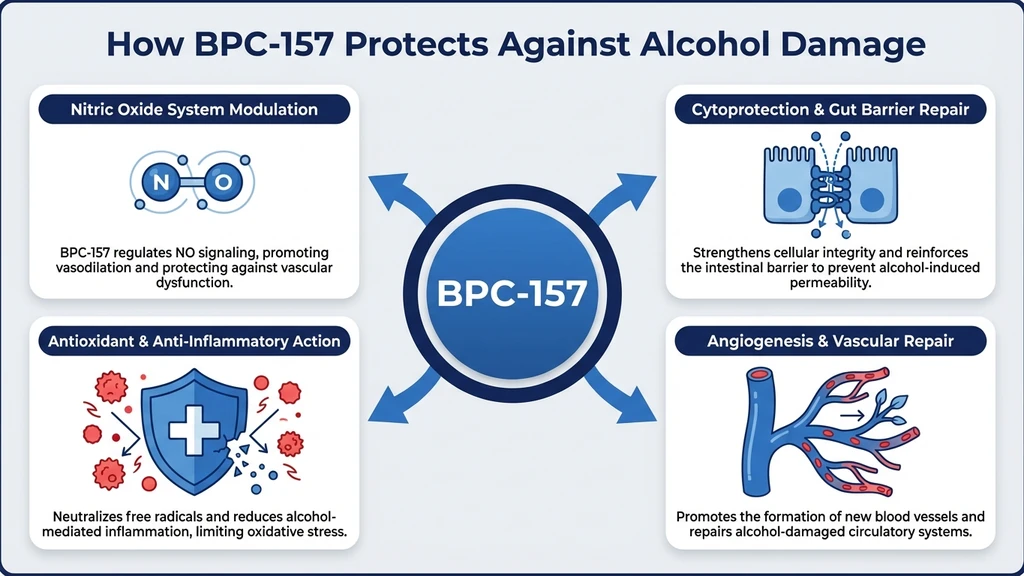
Four mechanisms explain why BPC-157 works across so many organ systems simultaneously.
Nitric Oxide System Modulation
BPC-157 modulates the nitric oxide (NO) system rather than simply increasing or decreasing NO levels. This distinction matters.
Alcohol disrupts NO pathways throughout the body. BPC-157 restores equilibrium. The 2006 study showed BPC-157's effects could not be fully blocked by L-NAME (a standard NO inhibitor), suggesting the peptide works through parallel pathways that remain active even when the primary NO system is pharmacologically suppressed.
This makes BPC-157 fundamentally different from L-arginine and other NO supplements. It regulates the system. It does not simply amplify it.
Cytoprotection and Gut Barrier Repair
BPC-157 stabilizes intestinal permeability and preserves tight junctions, the protein structures holding gut lining cells together (Chang et al., 2020).
Alcohol loosens tight junctions. Bacterial endotoxins cross into the bloodstream and trigger systemic inflammation. The common term is "leaky gut." BPC-157 directly counteracts this process.
Oral BPC-157 is especially relevant here. Direct contact with the gut lining during alcohol exposure provides localized protection exactly where damage occurs.
Source: Chang et al., 2020
Antioxidant and Anti-Inflammatory Action
Alcohol generates massive oxidative stress. Ethanol metabolism produces acetaldehyde and free radicals that damage cell membranes, proteins, and DNA.
BPC-157 increases total antioxidant status while reducing total oxidative stress. It suppresses TNF-alpha and IL-6, two inflammatory markers consistently elevated in alcohol-related organ damage (Koyuncu et al., 2025).
Boosting antioxidant defense while suppressing inflammatory signals explains why one peptide protects multiple organ systems from a single alcohol exposure.
Source: Koyuncu et al., 2025
Angiogenesis and Vascular Repair
BPC-157 promotes VEGF (vascular endothelial growth factor) expression and the formation of new blood vessels. Alcohol damages blood vessels throughout the body, particularly in the liver.
In the chronic drinking studies, BPC-157 restored hepatic blood flow by repairing damaged vasculature and normalizing portal pressure. This pro-angiogenic effect is one reason BPC-157 can reverse liver damage rather than merely slow its progression.
BPC-157 and Alcohol Tolerance
Forum users frequently report altered alcohol tolerance on BPC-157. Some say they need more drinks to feel effects. Others notice no change.
The animal data offers a partial explanation. BPC-157 opposes ethanol anesthesia and sedation in mice. The 2004 study documented reduced loss of righting reflex, the rodent equivalent of losing consciousness from alcohol. If this translates to humans (a significant "if"), the peptide could reduce the sedative component of intoxication.
Feeling less drunk does not mean your blood alcohol concentration is lower. Your liver still processes the same amount of ethanol. Organ damage proceeds at the same rate.
Reduced perceived intoxication could lead to overconsumption or impaired judgment about driving. If you notice changes in alcohol tolerance while using BPC-157, drink less, not more.
BPC-157 for Hangovers
No study has tested BPC-157 as a hangover intervention. The research examines tissue protection and organ damage prevention, not subjective morning-after symptoms.
BPC-157 protects against the underlying tissue damage that contributes to some hangover symptoms. Gastric irritation, liver stress, and systemic inflammation all respond to BPC-157 in animal models.
User reports from peptide forums: "Maybe slightly less bad than usual." Not a dramatic difference. Not a cure.
If hangover prevention is your primary motivation for BPC-157, recalibrate. The peptide protects organs over weeks and months. It does not erase the acute consequences of a Friday night.
Hydration, electrolytes, sleep, and moderation remain the only reliable hangover strategies.
Practical Protocol: Using BPC-157 If You Drink
These guidelines synthesize research findings with practical considerations for people who drink socially while running a BPC-157 protocol.
Timing: When to Inject Around Alcohol
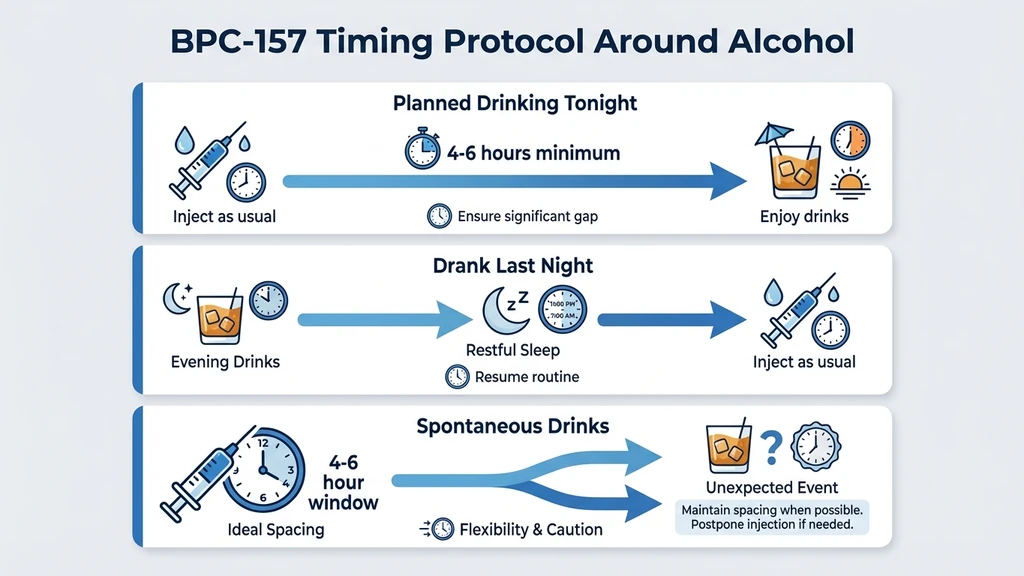
Separate BPC-157 injection and alcohol consumption by a minimum of 4-6 hours.
No study has established an optimal timing window. This recommendation is conservative, based on BPC-157's pharmacokinetics: absorption and distribution occur within 1-2 hours of subcutaneous injection.
Practical scenarios:
- Drinking tonight: inject BPC-157 in the morning
- Drank last night: inject BPC-157 as usual the next day
- Spontaneous drinks: do not skip your scheduled injection. Take it whenever you can maintain the 4-6 hour window
The research shows BPC-157 works both prophylactically and therapeutically. Missing the "before alcohol" window does not eliminate protective effects.
Oral vs. Injectable BPC-157 for Alcohol Users
Oral BPC-157 offers a specific advantage for drinkers: direct contact with the stomach and intestinal lining.
The chronic cytoprotection studies (Prkacin et al., 2001) and the adaptive cytoprotection research (Becejac et al., 2018) both demonstrate oral BPC-157 protects the GI tract from alcohol damage. The peptide bathes the same tissue that alcohol erodes.
For injury healing, injectable BPC-157 near the injury site remains standard. Systemic bioavailability is higher with subcutaneous injection (roughly 90% vs. 30-50% oral).
For gut and liver protection, consider adding oral BPC-157 as a supplemental route. Some users run both: injectable for their primary healing goal, oral for GI protection during periods of anticipated drinking.
Source: Becejac et al., 2018
Dosage Adjustment
No evidence supports changing your dose based on alcohol consumption.
The standard protocol remains 250-500 mcg per day. Use the BPC-157 Dosage Calculator for personalized dosing based on your vial concentration and body weight. For reconstitution math, use the peptide reconstitution calculator. For proper storage between uses, see how to store peptides.
Alcohol does not neutralize BPC-157. The peptide still functions. But alcohol creates additional tissue damage that competes with BPC-157's healing capacity. Your dose does not need to increase. Your alcohol intake, if healing is the priority, should decrease.
Decision Framework by Drinking Pattern
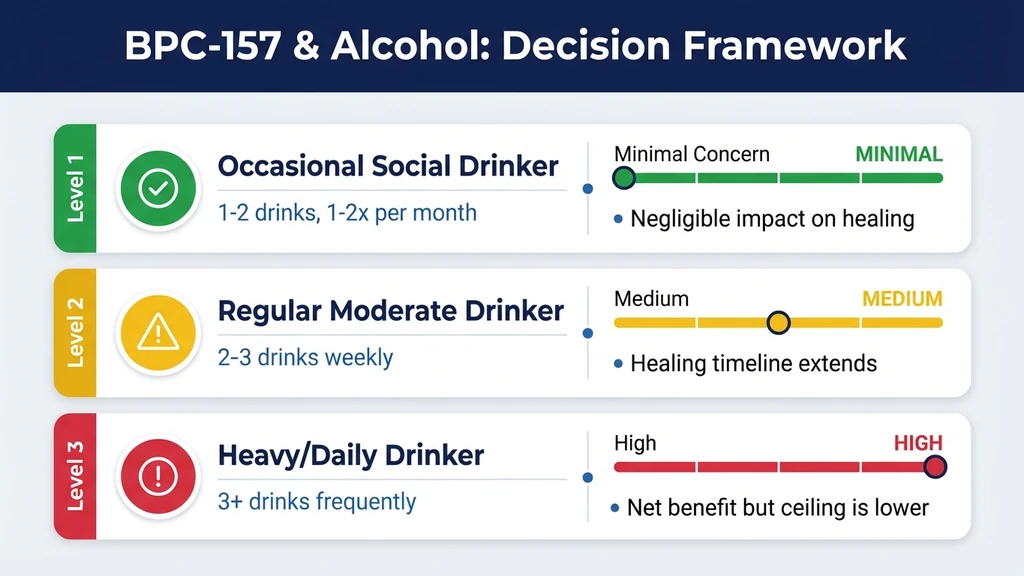
Occasional social drinker (1-2 drinks, once or twice monthly): Minimal concern. Continue your protocol as scheduled. Maintain the 4-6 hour timing window.
Regular moderate drinker (2-3 drinks, weekly): Your healing timeline extends. Weekly alcohol-driven inflammation creates a recurring setback BPC-157 must overcome each time. Reduce frequency during your cycle to maximize results.
Heavy or daily drinker (3+ drinks frequently): BPC-157 may offer meaningful organ protection based on chronic drinking studies. But you are spending money on a healing peptide while actively damaging the tissue it repairs. The research suggests BPC-157 still provides a net benefit for gut and liver health. The ceiling is lower.
Limitations and Safety
Every claim above carries the same caveat: the evidence comes from rodent studies.
Critical limitations:
- All six BPC-157 alcohol studies used rats or mice. No human clinical trial has tested the combination.
- Rodent doses may not translate directly to human physiology. Metabolic rates differ by a factor of 7-12x between species.
- BPC-157 is not FDA-approved for any indication. It remains classified as a research compound.
- The longest alcohol study ran three months. Long-term effects in humans are unknown.
Who should not rely on BPC-157 for alcohol protection:
- Anyone with diagnosed liver disease (cirrhosis, hepatitis, fatty liver disease)
- People with alcohol use disorder who need medical treatment, not peptide supplementation
- Anyone taking hepatotoxic medications (acetaminophen at high doses, certain statins, methotrexate)
- Individuals with bleeding disorders or on anticoagulants
BPC-157 is not a substitute for medical care. If alcohol is causing health problems, a gastroenterologist or addiction specialist provides more value than any peptide.
For a complete safety profile, see the BPC-157 Side Effects Guide. Check potential interactions with the Peptide Interaction Checker.
*Educational content only. Not medical advice. Consult a qualified healthcare provider before using any peptides.*
Frequently Asked Questions
Can I drink alcohol while taking BPC-157?
Occasional moderate drinking does not appear to cause dangerous interactions with BPC-157. Six rodent studies show protective effects against alcohol-induced organ damage (Boban Blagaic et al., 2004). Separate injection and alcohol by 4-6 hours. No human clinical data exists on the combination.
Does BPC-157 protect the liver from alcohol damage?
In rats drinking daily for three months, BPC-157 reversed portal hypertension, hepatocyte enlargement, and fatty liver changes (Prkacin et al., 2001). It outperformed ranitidine and worked both before and after damage was established. No human studies have confirmed this effect.
Will BPC-157 prevent a hangover?
No study has tested BPC-157 for hangover prevention. Its cytoprotective properties may reduce underlying tissue damage from alcohol, but user reports describe hangovers as "slightly less bad," not eliminated. Hydration, electrolytes, and sleep remain more effective strategies.
How long should I wait between BPC-157 and drinking?
Separate BPC-157 injection and alcohol by at least 4-6 hours. Inject in the morning if drinking that evening. If you drank last night, take BPC-157 the next morning as usual. The peptide works both before and after alcohol exposure (Boban Blagaic et al., 2004).
Is oral BPC-157 better than injectable for drinkers?
For gut and stomach protection, oral BPC-157 contacts the GI lining directly, the tissue alcohol damages most acutely. Research confirms oral BPC-157 prevents gastric lesions from alcohol (Becejac et al., 2018). For injury healing elsewhere, injectable remains more effective at roughly 90% vs. 30-50% bioavailability.
Does BPC-157 change alcohol tolerance?
Some users report needing more drinks to feel effects. Animal data shows BPC-157 reduces ethanol sedation in mice (Boban Blagaic et al., 2004). Feeling less drunk does not lower your blood alcohol level. Organ damage proceeds at the same rate regardless of perceived intoxication.
Should I increase my BPC-157 dose if I drink?
No evidence supports dose adjustment based on alcohol consumption. The standard 250-500 mcg per day remains appropriate. Alcohol does not neutralize BPC-157. Rather than increasing your dose, reduce alcohol intake during your cycle to maximize healing outcomes.
Can BPC-157 help with alcohol withdrawal?
In mice, BPC-157 attenuated withdrawal seizures over 24 hours following abrupt alcohol cessation (Boban Blagaic et al., 2004). No human data exists. Alcohol withdrawal can be life-threatening and requires medical supervision. BPC-157 is not a substitute for clinical detox protocols.
The Bottom Line
BPC-157 and alcohol is one of the better-studied combinations in peptide research. Six studies over two decades consistently show protective effects against alcohol damage to the stomach, liver, brain, kidneys, and lungs.
The principle is straightforward. BPC-157 repairs tissue. Alcohol damages it. The peptide wins when alcohol is occasional. Alcohol wins when it is chronic.
Next steps:
- BPC-157 Dosage Calculator: Find your optimal protocol
- BPC-157 Side Effects Guide: Complete safety profile
- BPC-157 Before and After: Real healing timelines
- Can You Take BPC-157 Orally?: Oral route for gut protection
- Does BPC-157 Cause Liver Damage?: Liver safety data from animal studies
- Does BPC-157 Cause Insomnia?: Sleep effects and timing strategies
- Does BPC-157 Cause High Blood Pressure?: Cardiovascular safety data
- How to Inject BPC-157: Proper injection technique
- How to Store Peptides: Keep your vials potent throughout the cycle
- BPC-157 Dosage for 200lb Male: Protocol guide with reconstitution math
- Where to Buy Peptides: Verified sourcing for research-grade BPC-157
- Peptide Dosage Chart: Cross-reference BPC-157 with other peptide protocols
- Take the Peptide Quiz: Personalized recommendations in 2 minutes
References
- 1.Boban Blagaic A et al. (2004). The influence of gastric pentadecapeptide BPC 157 on acute and chronic ethanol administration in mice. *Eur J Pharmacol.* 499(3):285-290. PubMed
- 2.Boban-Blagaic A et al. (2006). The influence of gastric pentadecapeptide BPC 157 on acute and chronic ethanol administration in mice: the effect of L-NAME and L-arginine. *Med Sci Monit.* 12(1):BR36-45. PubMed
- 3.Prkacin I et al. (2001). Portal hypertension and liver lesions in chronically alcohol drinking rats prevented and reversed by stable gastric pentadecapeptide BPC 157. *J Physiol Paris.* 95(1-6):315-24. PubMed
- 4.Prkacin I et al. (2001). Chronic cytoprotection: pentadecapeptide BPC 157, ranitidine and propranolol prevent and reverse gastric lesions in chronic alcohol drinking rats. *J Physiol Paris.* 95(1-6):295-301. PubMed
- 5.Gojkovic S et al. (2021). Robert's intragastric alcohol-induced gastric lesion model as a useful standard for BPC 157 cytoprotection/organoprotection studies. *Biomedicines.* 9(10):1300. PubMed
- 6.Sikiric P et al. (1993). Hepatoprotective effect of BPC 157 on liver lesions. *Life Sci.* 53(18):PL291-6. PubMed
- 7.Becejac T et al. (2018). Renewed cytoprotection/adaptive cytoprotection: BPC 157 and intragastric alcohol. *J Physiol Pharmacol.* 69(3). PubMed
- 8.Chang CH et al. (2020). BPC 157 rescued NSAID-cytotoxicity via stabilizing intestinal permeability. *Curr Pharm Des.* 26(25):2971-2981. PubMed
- 9.Koyuncu E et al. (2025). Protective effects of BPC 157 on liver, kidney, and lung. *Medicina.* PMC
- 10.Sikiric P et al. (2020). BPC 157 cytoprotection/organoprotection review. *Gut Liver.* 14(2):153-167. PMC
Related Articles
BPC-157 FDA Approval: 2026 Status Explained
BPC-157 is not FDA-approved. An FDA panel voted 8-6 on July 23, 2026 to recommend it for compounding. What the vote means for legal access, explained.
Can You Take BPC-157 Orally? Compared
Is oral BPC-157 as effective as injections? Science-backed comparison of oral vs injectable BPC-157 for gut healing, systemic benefits, and injury recovery.
How Long Does BPC-157 Take to Work?
BPC-157 timelines: gut healing 1-2 weeks, pain relief 1-2 weeks, tendon repair 4-8 weeks, bone healing 6-12 weeks. Factors that speed results.
BPC-157 vs BPC-159: Are They the Same?
BPC-157 vs BPC-159 compared: 15 vs 11 amino acids, 100+ studies vs near zero. Cognitive claims fact-checked and which one to choose.