Tendon injuries are notoriously slow healers. Conventional treatment, rest, ice, physical therapy, maybe a cortisone shot, takes 6-12 months for significant recovery. Some chronic cases never fully resolve.
Peptides change that timeline. The right protocol can compress 6-12 months of healing into 6-12 weeks by directly stimulating the biological pathways that repair tendon tissue: collagen synthesis, angiogenesis, and inflammation modulation.
The five most effective peptides for tendon repair, ranked by evidence and user results:
Get your custom peptide protocol:
- Tailored to your body and goals
- Precise dosing and cycle length
- Safe stacking combinations
- Backed by peer-reviewed studies
- Ready in under 2 minutes
Quick Comparison: Best Peptides for Tendon Repair
Your Achilles is still swollen at week six. Your rotator cuff aches every time you reach overhead. Conventional medicine says wait 6-12 months. Peptide protocols compress that timeline to 6-12 weeks.
BPC-157 is the best single peptide for tendon repair. Dose 250-500mcg daily near the injury site for 6-8 weeks. For severe or chronic injuries, stack it with TB-500, the "Wolverine stack" that competitors and clinics now call the gold standard.
| Peptide | Best For | Dose | Frequency | Evidence |
|---|---|---|---|---|
| BPC-157 | Localized healing, pain relief | 250-500mcg | Daily | 100+ preclinical studies |
| TB-500 | Systemic repair, scar reduction | 5-10mg (loading) | 2-3x/week | Multiple animal models |
| GHK-Cu | Collagen synthesis, inflammation | 1-3mg | 2-3x/week | Fibroblast culture studies |
| Ipamorelin + CJC-1295 | Systemic recovery via GH | 200mcg each | Daily (pre-sleep) | GH secretion trials |
| KPV | Anti-inflammatory support | 500mcg-1mg | Daily | NF-kB pathway data |
Research disclaimer: BPC-157, TB-500, and GHK-Cu are research peptides. No completed human clinical trials exist for tendon indications. All evidence derives from animal models and observational case reports. Consult a physician before use.
Why Is BPC-157 the Top Choice for Tendon Repair?
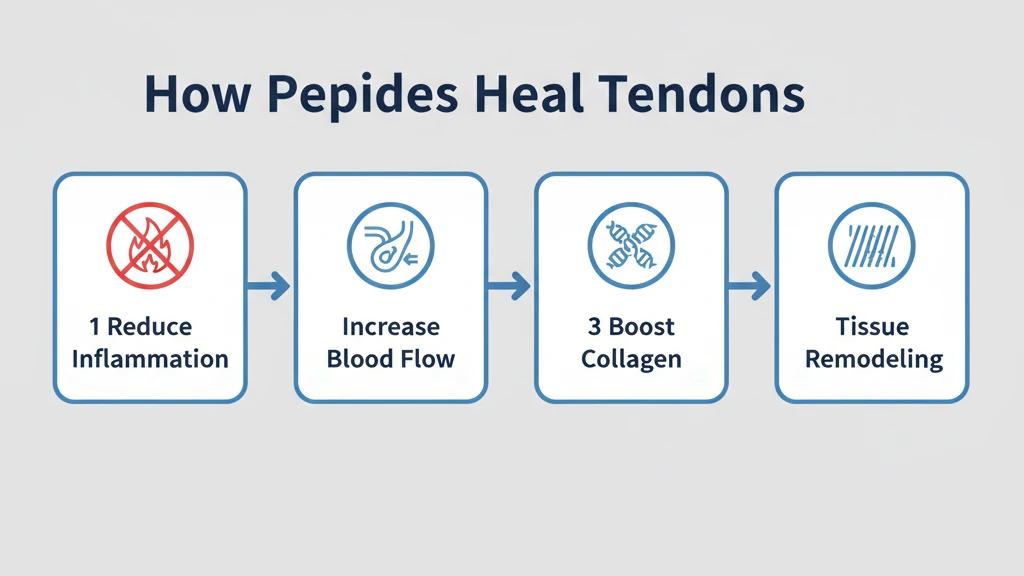
BPC-157 (Body Protection Compound-157) is a 15-amino acid peptide originally isolated from human gastric juice. More than 100 preclinical studies show consistent tissue repair effects across tendon, ligament, muscle, bone, and gut tissue.
What separates BPC-157 from most single-mechanism treatments is its triple action: it reduces inflammation, promotes collagen formation, and increases blood flow to the injury site simultaneously. Most anti-inflammatories only address the first pathway.
In a rat Achilles tendon transection model, BPC-157 significantly improved biomechanical recovery with increased load to failure, better functional index scores, and superior collagen formation compared to controls (Brcic et al., J Orthop Res, 2003).
How BPC-157 Accelerates Tendon Healing
Think of tendon blood supply like a neighborhood with only two narrow roads in. When those roads are blocked by inflammation, nutrients and repair cells cannot reach the damage. BPC-157 builds new roads. It upregulates VEGF to create new capillaries, then uses those vessels to flood the site with collagen-producing fibroblasts.
The literal mechanism: BPC-157 activates the FAK-paxillin pathway, promoting tendon outgrowth, cell survival, and cell migration. It increases EGR-1 expression, a transcription factor that drives tendon fibroblast differentiation and organized collagen fiber alignment.
Research confirms BPC-157 promotes tendon outgrowth, cell survival, and cell migration through FAK-paxillin pathway activation (Chang et al., J Physiol Pharmacol, 2010).
Key mechanisms:
- Angiogenesis: upregulates VEGF, creating new capillaries at the injury site
- Collagen formation: stimulates fibroblast activity and improves fiber alignment during healing
- Inflammation modulation: reduces inflammatory cytokines without fully suppressing immune response
- Local and systemic delivery: inject near the injury for targeted action or subcutaneously in the abdomen for broader support
BPC-157 Dosage Protocol for Tendons
Standard Protocol:
- Dosage: 250-500mcg per day
- Route: Subcutaneous injection within 1-2 inches of injury site
- Frequency: Once daily, same time each day
- Duration: 4-8 weeks for acute injuries; up to 12 weeks for chronic
- Reconstitution: 5mg vial + 2.5mL bacteriostatic water = 2mcg/uL
Use the peptide reconstitution calculator to calculate exact draw volumes.
Expected Timeline:
- Week 1-2: Reduced pain and inflammation, improved range of motion. Most users notice the first tangible change within 7-10 days.
- Week 3-4: Pain drops 40-60% from baseline. Light activity becomes comfortable again.
- Week 6-8: 70-90% healed for acute injuries. Full return to function for most people.
- Week 8-12: Required for chronic injuries (6+ months old). Gradual but continued improvement.
Start at 250mcg daily. Increase to 500mcg after week one if well tolerated. See the BPC-157 vs TB-500 comparison to determine which peptide fits your injury type.
Which Tendon Injuries Does BPC-157 Treat
BPC-157 works across the full spectrum of tendon pathology:
- Tennis elbow (lateral epicondylitis)
- Golfer's elbow (medial epicondylitis)
- Achilles tendonitis
- Patellar tendonitis (jumper's knee)
- Rotator cuff tendonitis
- Plantar fasciitis
For ligament injuries (ACL, MCL, UCL), the same mechanisms apply. Ligaments share the same collagen-dense, low-vascularity structure as tendons. Animal models show comparable healing responses.
Reported success rate: approximately 75-80% of users report significant improvement within 4-8 weeks. The remaining 20-25% have structural damage requiring surgery or need a longer treatment cycle.
How Does TB-500 Help Tendon and Ligament Recovery?
TB-500 (Thymosin Beta-4 fragment) targets different pathways than BPC-157. Where BPC-157 concentrates healing at the injection site, TB-500 circulates systemically and heals multiple tissues at once. Its standout advantage is scar tissue reduction, which determines whether a healed tendon regains full strength and flexibility.
TB-500 carries a half-life of 7-10 days, so you inject only 2-3 times per week rather than daily. Athletes managing multiple injuries simultaneously often prefer TB-500 as the backbone of their stack. For the complete protocol breakdown, see the BPC-157 + TB-500 dosage guide.
How TB-500 Repairs Tendons
Scar tissue is the enemy of tendon function. Every poorly-healed tendon injury deposits disorganized collagen that restricts movement and weakens tensile strength. TB-500's primary value is preventing and reversing that outcome.
The mechanism: thymosin beta-4 promotes cell migration through chemotaxis, drawing fibroblasts and endothelial cells to the injury site. It then guides organized collagen deposition rather than disorganized scar tissue formation. Studies show thymosin beta-4 enhances repair by organizing connective tissue and preventing myofibroblast formation, which drives excessive scarring (Bock-Marquette et al., J Clin Invest, 2010).
Additional research demonstrates TB-500 accelerates ligament healing in rat injury models with significantly better collagen alignment and fiber organization than controls (Smart et al., Int Wound J, 2012).
Key mechanisms:
- Scar tissue reduction: promotes organized collagen deposition instead of disorganized fibrous tissue
- Systemic effect: one injection addresses multiple injury sites simultaneously
- Flexibility restoration: healed tendons retain closer to original elasticity after TB-500 treatment
- Long half-life: 7-10 days means 2-3 injections per week rather than daily dosing
For safety considerations, the BPC-157 and TB-500 side effects guide covers both peptides comprehensively.
TB-500 Dosage Protocol
Loading Phase (Weeks 1-4):
- Dosage: 5-10mg per week total
- Split: 2-3 injections per week (Monday/Thursday, or Monday/Wednesday/Friday)
- Route: Subcutaneous in the abdomen or near injury site
Maintenance Phase (Weeks 5-8+):
- Dosage: 2.5-5mg per week total
- Frequency: 1-2 injections per week
Use the TB-500 dosage calculator for weight-adjusted dosing.
Expected Timeline:
- Week 2-3: Reduced inflammation, improved mobility. Some users feel the difference within 10-14 days.
- Week 4-6: Significant healing progress. Scar tissue begins to soften. Range of motion improves noticeably.
- Week 8-12: Near-complete recovery for most tendon injuries. Chronic injuries may need a second cycle.
The loading phase matters. It saturates tissue levels quickly and kickstarts the healing cascade. Starting at maintenance doses extends the time to results by 2-3 weeks.
When TB-500 Outperforms BPC-157
TB-500 delivers superior results in specific scenarios:
- Chronic tendonitis present for 6+ months
- Multiple simultaneous tendon or ligament injuries
- Scar tissue and adhesions from old injuries limiting range of motion
- Large tendon tears (Achilles rupture, rotator cuff partial tear)
Reported success rate: approximately 70-75% for chronic injuries. TB-500 works slower than BPC-157 for acute problems but surpasses it for systemic repair and long-term tissue quality. See the full Wolverine peptide stack guide for combined protocols.
Can GHK-Cu Accelerate Tendon Healing?
GHK-Cu is underused for tendon healing. This naturally occurring tripeptide (glycyl-L-histidyl-L-lysine bound to copper) fills a specific gap that neither BPC-157 nor TB-500 addresses directly: type I collagen synthesis.
Your body produces GHK-Cu naturally, but levels decline after age 25. Supplementing restores the tissue-remodeling capacity your tendons had a decade earlier. Its delivery flexibility is practical: GHK-Cu works both injected and applied topically, making it useful for superficial tendons like the Achilles and elbow tendons.
How GHK-Cu Supports Tendon Repair
Type I collagen is the primary structural protein in tendons. It determines tensile strength, flexibility, and resistance to re-injury. GHK-Cu increases its production directly.
Research shows GHK-Cu stimulates collagen synthesis in fibroblast cultures in a dose-dependent manner (Maquart et al., FEBS Lett, 1988). Broader gene expression analysis confirms its regenerative and protective actions across multiple tissue types, influencing approximately 4,000 genes toward repair and regeneration (Pickart et al., Biomedicines, 2018).
Key mechanisms:
- Type I collagen synthesis: directly increases production by tendon fibroblasts
- Anti-inflammatory: modulates TNF-alpha and IL-6, reducing chronic inflammation driving tendinosis
- Tissue remodeling: promotes organized collagen fiber architecture rather than disorganized scar
- Angiogenesis: promotes new capillary formation for better nutrient delivery to poorly vascularized tissue
- Dual delivery: injectable for deep tendons, topical for superficial ones
For injection frequency and technique, see the GHK-Cu injection dosage guide. For a full evidence review, the GHK-Cu benefits article covers the research in depth.
GHK-Cu Dosage Protocol
Injectable Protocol:
- Dosage: 1-3mg per week total
- Frequency: 2-3 injections per week
- Route: Subcutaneous near the injury site
- Duration: 4-8 weeks
Topical Protocol (for accessible tendons: Achilles, elbow):
- Apply 1-2% GHK-Cu serum directly over the injury
- Twice daily, morning and evening
- Combine with injectable for enhanced effect
- Duration: 4-8 weeks
Expected Timeline:
- Week 2-3: Reduced inflammation and pain around the injury
- Week 4-6: Improved collagen quality, tendon feels structurally stronger
- Week 6-8: Significant functional improvement, particularly when stacked with BPC-157
Reported success rate: approximately 60-70% as a standalone peptide, rising to 80%+ when stacked with BPC-157. GHK-Cu performs best as a supporting peptide rather than a primary treatment.
What Are the Best Peptide Stacks for Tendon Repair?
Single peptides produce results. Stacks produce better results by targeting different healing pathways simultaneously. Each combination below addresses distinct phases of the repair cascade.
Stack #1: BPC-157 + TB-500 (Gold Standard)
The most widely used tendon healing stack. BPC-157 handles localized repair at the injection site while TB-500 provides systemic healing and scar tissue reduction across all injured tissues.
Protocol:
- BPC-157: 250-500mcg daily, subcutaneous near injury
- TB-500: 5-10mg/week loading for 4 weeks, then 2.5-5mg/week maintenance
- Duration: 6-8 weeks minimum, 12 weeks for chronic injuries
Best for: severe tendon injuries (rotator cuff tears, Achilles rupture), chronic tendonitis unresponsive to single peptides, and injuries where scar tissue limits range of motion.
Expected results: 70-90% healing in 6-8 weeks compared to 6-12 months with rest alone. Most users report significant pain reduction by week 3-4 and functional recovery by week 6-8. The full protocol is detailed in the Wolverine peptide stack guide.
Stack #2: BPC-157 + TB-500 + GHK-Cu + KPV (Advanced Healing)
The four-peptide stack adds GHK-Cu for collagen quality and KPV for direct anti-inflammatory action. KPV (a tripeptide fragment of alpha-MSH) inhibits the NF-kB signaling pathway, the master regulatory switch for inflammatory gene expression. This blocks the chronic low-grade inflammation that keeps tendinosis from resolving.
Protocol:
- BPC-157: 250mcg daily
- TB-500: 5mg/week loading (2x weekly)
- GHK-Cu: 2mg/week (2x weekly injectable) + topical 2x daily
- KPV: 500mcg-1mg daily subcutaneous
- Duration: 6-8 weeks
Best for: advanced protocols managing chronic tendinosis with significant inflammatory burden, or cases where a previous BPC-157 + TB-500 cycle produced incomplete resolution.
Use the peptide stack calculator to generate a custom protocol based on your injury severity and peptide availability.
Stack #3: BPC-157 + GHK-Cu (Budget-Friendly)
A lighter stack combining BPC-157's localized healing with GHK-Cu's collagen synthesis support. Costs less than the gold standard and suits moderate injuries with a significant inflammatory component.
Protocol:
- BPC-157: 250mcg daily
- GHK-Cu: 2mg/week (2x weekly injectable) + topical 2x daily
- Duration: 6-8 weeks
Best for: moderate tendonitis, aging tendons with declining collagen quality (over 35-40), inflammation-dominant injuries, and budget-conscious protocols.
Stack #4: TB-500 + Ipamorelin/CJC-1295 (Systemic Recovery)
Combines TB-500's tendon repair with growth hormone peptides for full-body recovery optimization. Ipamorelin and CJC-1295 stimulate natural GH pulse secretion, which drives collagen synthesis and accelerates recovery throughout the body.
Protocol:
- TB-500: 5mg/week (2x weekly)
- Ipamorelin + CJC-1295: 200mcg each, subcutaneous before bed daily
- Duration: 8-12 weeks
Best for: multiple simultaneous injuries, athletes needing full-body recovery optimization, chronic tendon issues combined with muscle or joint problems. Also effective for peptides for joint pain where multiple connective tissue structures are affected.
How Long Does Peptide-Assisted Tendon Healing Take?
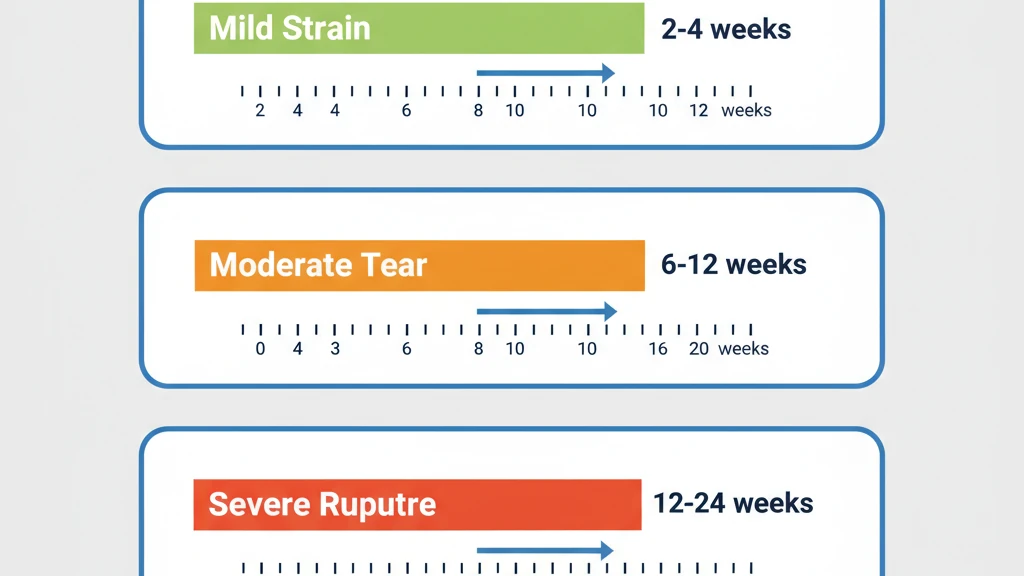
The answer depends on injury age and severity. Peptides amplify the biological healing process rather than replacing it. Acute injuries still in the inflammatory phase respond fastest.
Acute Injuries (less than 6 weeks old):
- BPC-157 alone: 3-6 weeks to significant improvement
- BPC-157 + TB-500 stack: 4-8 weeks to near-complete recovery
- Expected outcome: 80-95% recovery
Chronic Injuries (6+ months old):
- BPC-157 alone: 6-10 weeks
- BPC-157 + TB-500 stack: 6-12 weeks, may need a second cycle with a 2-4 week break
- Expected outcome: 60-80% recovery
Chronic injuries require longer treatment because the body has shifted from active healing into a degenerative state (tendinosis). Peptides must restart the inflammatory cascade before structural repair can begin. See how long does BPC-157 take to work for a week-by-week breakdown with expected milestones.
Severe Structural Damage (partial or complete tears):
- BPC-157 + TB-500 stack: 8-12 weeks
- Surgery may still be necessary for complete ruptures
- Peptides post-surgery accelerate recovery and reduce scar tissue adhesions
- Expected outcome: 70-85% recovery
Give any protocol a minimum of 6 weeks before evaluating results. Tendon remodeling is measured in weeks, not days.
Protocols for Specific Tendon Injuries
Tennis Elbow (Lateral Epicondylitis)
The most common tendon injury in people over 30. The lateral epicondyle is accessible for subcutaneous injection without specialized technique.
- Best: BPC-157 250-500mcg/day, 6 weeks
- Enhanced: add GHK-Cu topical 2x daily over the elbow
- Avoid: heavy gripping exercises during the first 4 weeks
Achilles Tendonitis
The Achilles is the thickest tendon in the body and one of the slowest to heal due to relatively poor blood supply. Use the full stack for best results.
- Best: BPC-157 + TB-500 stack, 8-12 weeks
- Alternative: TB-500 alone if budget is a constraint
- Add: GHK-Cu topical directly over the Achilles for collagen quality improvement
Rotator Cuff Tendonitis
Multiple tendons in a complex joint. Systemic plus localized approach produces the best outcomes.
- Best: BPC-157 + TB-500 stack, 6-10 weeks
- Alternative: BPC-157 alone for mild cases
- Important: add rotator cuff rehab exercises starting week 3-4
Patellar Tendonitis (Jumper's Knee)
Common in athletes. Responds well to BPC-157 alone in most cases.
- Best: BPC-157 250mcg/day, 6-8 weeks
- Enhanced: add TB-500 for chronic cases (3+ months)
- Key: reduce jumping and high-impact loading during treatment
Plantar Fasciitis
Technically a fascial injury, but peptides work through identical mechanisms on fascial tissue as on tendon.
- Best: BPC-157 500mcg/day, 4-6 weeks
- Enhanced: add GHK-Cu topical on the sole 2x daily
- Key: address root cause (footwear, biomechanics) alongside peptide protocol
For injection technique and site selection, review how to inject BPC-157 and where to inject BPC-157 before starting any protocol.
Common Mistakes in Peptide Tendon Protocols
Mistake #1: Stopping too early
Pain reduction happens in weeks 1-2. Structural repair (new collagen fibers, angiogenesis, tissue remodeling) happens between weeks 3-8. Stopping at week 4 means quitting at the halfway point of the repair process.
Fix: complete the minimum 6-week cycle. For chronic injuries, plan for 10-12 weeks before evaluating outcomes.
Mistake #2: Injecting into the tendon rather than around it
Intratendinous injection can cause local tissue damage and, in rare cases, tendon rupture. The correct method is subcutaneous injection within 1-2 inches of the injury, not into the tendon itself.
Fix: inject into the subcutaneous fat layer using a 29-31 gauge insulin syringe. Review where to inject BPC-157 for precise placement guidance by injury site.
Mistake #3: Skipping the TB-500 loading phase
Starting TB-500 at maintenance doses (2.5mg/week) instead of loading doses (5-10mg/week) delays tissue saturation by 2-3 weeks.
Fix: run 5mg twice weekly for the first 4 weeks before dropping to maintenance. The BPC-157 TB-500 dosage guide details the full loading protocol.
Mistake #4: No physical therapy alongside peptides
Peptides accelerate biological healing. Physical therapy provides the mechanical stimulus that guides collagen fiber alignment and tendon strength adaptation. Without progressive loading, repaired tissue will be structurally weaker.
Fix: start gentle range of motion exercises in weeks 1-2, add light resistance by week 3-4, and progress to full loading by week 6-8. See peptides for recovery for a combined approach with physical rehabilitation.
Frequently Asked Questions
What is the best peptide for tendon repair?
BPC-157 is the best single peptide for tendon repair. Dose 250-500mcg daily near the injury site for 6-8 weeks. It upregulates VEGF for angiogenesis, promotes collagen fibroblast activity, and reduces inflammation simultaneously.
For severe or chronic injuries, stack BPC-157 with TB-500. This Wolverine stack combination delivers localized healing plus systemic scar tissue reduction for 70-90% recovery in 6-8 weeks, versus 6-12 months with rest alone.
How long do peptides take to heal tendons?
Acute injuries (under 6 weeks old): 3-6 weeks with BPC-157 alone, 4-8 weeks with the BPC-157 + TB-500 stack.
Chronic injuries (6+ months old): 6-12 weeks. A second cycle is common for full resolution.
Severe tears: 8-12 weeks. Surgery may still be required for complete ruptures, but peptides post-surgery speed recovery significantly. See how long does BPC-157 take to work for week-by-week milestones.
Can peptides heal a torn tendon?
Peptides accelerate healing of partial tendon tears and reduce scar tissue formation. For partial tears, BPC-157 + TB-500 over 8-12 weeks produces 70-85% recovery in most cases.
Complete ruptures (full Achilles tear, complete rotator cuff tear) typically require surgery. However, using peptides post-operatively speeds recovery by 30-50%, reduces adhesion formation, and improves long-term functional outcomes. The peptides for inflammation guide explains the mechanism behind post-surgical healing support.
Is TB-500 or BPC-157 better for tendon repair?
They serve different roles. BPC-157 excels at localized healing: faster pain relief, direct anti-inflammatory action, and concentrated blood flow to the specific injury site. Best for acute tendonitis and single-site injuries.
TB-500 excels at systemic repair: reduces scar tissue, restores flexibility, and addresses multiple injuries at once. Best for chronic injuries and multi-site tendon problems.
The BPC-157 vs TB-500 comparison guide covers the evidence for each in detail. For maximum results, use both.
Do peptides work for chronic tendonitis?
Yes. BPC-157 and TB-500 are effective for chronic tendonitis (6+ months old), though healing takes 8-12 weeks instead of 4-6 weeks for acute injuries.
Many users report 60-80% improvement after conventional treatments (rest, PT, cortisone injections) have failed. TB-500 is particularly valuable for chronic cases because it actively remodels existing scar tissue. The peptides for inflammation guide explains why chronic tendinosis requires restarting the inflammatory cascade.
Can I inject BPC-157 near the injury site?
Yes, and local injection is the preferred method for tendon injuries. Injecting subcutaneously within 1-2 inches of the injured tendon delivers a higher local concentration directly to the tissue that needs it.
Use a 29-31 gauge insulin syringe and inject into the subcutaneous fat layer, not into the tendon itself. Rotate between 2-3 spots near the injury to prevent tissue irritation. The BPC-157 injection guide covers placement, technique, and reconstitution step by step.
Should I combine peptides with physical therapy?
Yes. Peptides accelerate biological healing; physical therapy provides the mechanical stimulus that tendons need to remodel properly. Without progressive loading, repaired tissue will be structurally weaker and more prone to re-injury.
Start with gentle range of motion in weeks 1-2. Add light resistance by week 3-4. Progress to full loading by week 6-8 as pain permits. The peptides for recovery guide covers how to combine both approaches for optimal long-term outcomes.
Do peptides work for ligament injuries?
Yes. Ligaments share the same collagen-dense, low-vascularity structure as tendons. BPC-157 and TB-500 work through identical mechanisms on ligament tissue: promoting angiogenesis, stimulating collagen fibroblast activity, and reducing scar formation.
Animal models show TB-500 accelerates ligament healing with better collagen organization than controls. The same BPC-157 + TB-500 gold standard stack applies to ACL, MCL, UCL, and ankle ligament injuries.
What peptides help with joint pain alongside tendon repair?
BPC-157 and TB-500 address both tendon and joint tissue simultaneously. For joint-specific pain (cartilage, synovial inflammation), the peptides for joint pain guide covers additional protocols including BPC-157, TB-500, and Ipamorelin + CJC-1295 stacks.
GHK-Cu also reduces synovial inflammation through TNF-alpha and IL-6 modulation. For athletes with both tendon and joint involvement, the TB-500 + Ipamorelin/CJC-1295 stack addresses both connective tissue repair and systemic recovery simultaneously.
The Bottom Line
The best peptides for tendon repair are BPC-157 for localized healing, TB-500 for systemic repair and scar tissue reduction, and GHK-Cu for collagen synthesis support.
For maximum results, stack BPC-157 (250-500mcg/day) + TB-500 (5-10mg/week loading, then 2.5-5mg/week maintenance) for 6-12 weeks. This combination accelerates tendon healing by 3-6x compared to rest alone.
Three things to remember:
- Use pharmaceutical-grade peptides from reputable sources
- Give the protocol minimum 6 weeks before judging results
- Combine with appropriate rest and physical therapy for optimal recovery
Related Articles
Peptides for Recovery: 7 Best Ranked by Evidence
Top 7 peptides for recovery ranked: BPC-157, TB-500, GHK-Cu, ipamorelin, CJC-1295, MOTS-c, thymosin alpha-1. Post-workout and injury protocols.
Peptides for Inflammation: 7 Best Ranked
Top 7 anti-inflammatory peptides ranked: BPC-157, KPV, LL-37, thymosin alpha-1, GHK-Cu, TB-500, Selank. Mechanisms, dosage protocols, and 10+ PubMed citations.
Best Peptides for Joint Pain: 6 Ranked
BPC-157, TB-500, collagen peptides, GHK-Cu, KPV, and AOD-9604 ranked for joint pain by evidence strength. Dosages, studies, and safety data included.
BPC-157 vs TB-500: Which Healing Peptide Wins?
BPC-157 vs TB-500 compared: mechanism, dosage, cost, half-life, and best use cases for tendon injuries, muscle tears, gut healing, and post-surgery recovery.