> Sources verified March 15, 2026 | 8 peer-reviewed studies cited | All dosage protocols reference published clinical data
The standard GHK-Cu injection dosage is 1 to 2 mg administered subcutaneously once daily, five days per week, in cycles of 4 to 12 weeks. For skin rejuvenation, 1 mg per day is typical. For wound healing or hair growth, 2 to 3 mg per day is common. GHK-Cu is also available topically at 1 to 3% concentration for localized skin and hair applications.
Medical disclaimer: No form of GHK-Cu is FDA-approved for any medical use. Injectable GHK-Cu is classified Category 2 by the FDA, restricting it from 503A pharmacy compounding. Consult a licensed healthcare provider before using any peptide.
GHK-Cu (glycyl-L-histidyl-L-lysine copper) is a naturally occurring tripeptide first isolated by Dr. Loren Pickart in 1973 from human plasma albumin. As Pickart's research group documented: "GHK stimulates blood vessel and nerve outgrowth, increases collagen, elastin, and glycosaminoglycan synthesis, as well as supports the function of dermal fibroblasts" (Pickart et al., 2015). The tripeptide modulates over 4,000 human genes (31.2% of the genome) and plasma levels decline from approximately 200 ng/mL at age 20 to less than half by age 60 (Pickart & Margolina, 2018).
Get your custom peptide protocol:
- Tailored to your body and goals
- Precise dosing and cycle length
- Safe stacking combinations
- Backed by peer-reviewed studies
- Ready in under 2 minutes
What Is GHK-Cu and How Does It Work?
GHK-Cu is a tripeptide: glycine, histidine, and lysine bound to a copper(II) ion. Dr. Loren Pickart discovered it in 1973 while studying why plasma from young blood accelerated tissue repair in older liver cells. The active agent turned out to be this small copper-binding peptide.
The mechanism is broad. GHK-Cu stimulates fibroblasts to produce collagen types I and III, glycosaminoglycans, and decorin. It delivers copper to lysyl oxidase, the enzyme responsible for collagen cross-linking. It suppresses pro-inflammatory cytokines IL-6 and TNF-alpha while increasing superoxide dismutase (SOD) and glutathione (Pickart et al., 2015).
Using Connectivity Map data from the Broad Institute, researchers found that GHK modulates 4,000+ genes. Among them: 47 DNA repair genes stimulated, 5 suppressed. Collagen synthesis, antioxidant defense, and stem cell recruitment all trend upward. Inflammation and tissue destruction trend downward.
The clinical relevance is straightforward. As GHK-Cu declines with age, so does the body's capacity for tissue repair, collagen production, and wound healing. Supplementing GHK-Cu restores signaling that the body once produced on its own.
For the full peptide profile, mechanisms, and research bibliography, see the GHK-Cu peptide page. If you are new to peptides, start with our getting started guide.
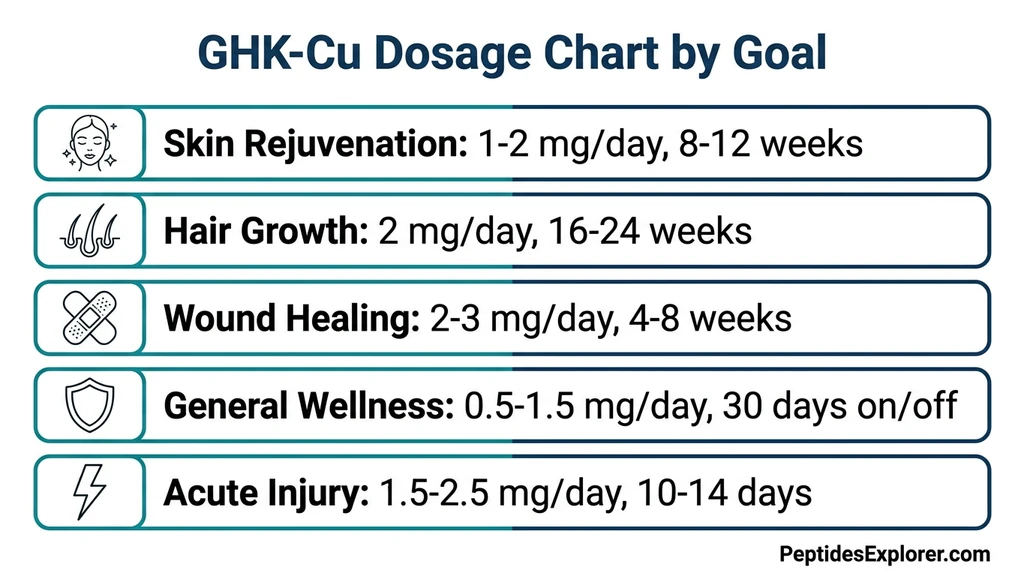
GHK-Cu Injection Dosage by Goal (Dosage Chart)
Dosage depends on the therapeutic goal. The table below summarizes five common protocols. All use subcutaneous injection unless noted otherwise.
Weight-based dosing reference: 15 to 30 mcg/kg body weight. For a 70 kg person, that yields 1.05 to 2.1 mg per day, consistent with the flat-dose ranges below.
Skin Rejuvenation and Anti-Aging Protocol
Dose: 1 to 2 mg per day Route: Subcutaneous (abdomen, thigh, or upper arm) Frequency: Daily, 5 days on, 2 days off Cycle: 8 to 12 weeks on, 4 weeks off Expected results: 4 to 8 weeks for visible improvement Best for: Fine lines, skin elasticity, skin density, overall skin quality
In a 12-week facial cream study (human trial, 71 women), 70% showed increased collagen production with GHK-Cu, compared to 50% with vitamin C and 40% with retinoic acid (Pickart et al., 2015). A nano-lipid GHK formulation produced a 31.6% reduction in wrinkle volume at 8 weeks in a separate human trial (Pickart & Margolina, 2018).
Hair Growth and Restoration Protocol
Dose: 2 mg per day (injectable) or 1.5 to 2.5% topical applied to scalp Route: Subcutaneous or topical Frequency: Daily injection (5 days on, 2 off) or twice daily topical Cycle: 16 to 24 weeks minimum Expected results: Reduced shedding at 4 to 8 weeks; new growth at 8 to 16 weeks; density improvement at 4 to 6 months Best for: Androgenetic alopecia, thinning hair, miniaturized follicles
A Phase II clinical trial (human, 6 months) found that 72% of male participants saw greater than 20% hair density increase using a 0.5% GHK-Cu lotion. A 2025 open-label study (human) reported 35% terminal hair growth with GHK-Cu combined with minoxidil versus 18% with minoxidil alone. In a preclinical comparison, a GHK-Cu microemulsion entered the anagen (growth) phase at 6 days versus minoxidil at 9 days (PMC10643103).
GHK-Cu works through fibroblast stimulation, VEGF and HGF secretion, and direct support of dermal papilla cells. Unlike minoxidil, it addresses the structural environment of the follicle rather than blood flow alone.
Wound Healing and Injury Recovery Protocol
Dose: 2 to 3 mg per day Route: Subcutaneous (near injury site preferred) Frequency: Daily Cycle: 4 to 8 weeks or until healed Expected results: Accelerated wound closure within 2 to 3 weeks Best for: Post-surgical recovery, chronic wounds, scar reduction
In animal studies, GHK-Cu collagen dressings increased collagen content 9-fold in healthy rats. The peptide improved healing in both ischemic and diabetic wound models (rats and pigs), producing organized collagen fiber alignment rather than random scarring (Pickart & Margolina, 2018). No large-scale human wound healing trials have been published. For tendon and ligament injuries, GHK-Cu pairs well with BPC-157 and TB-500. See our best peptides for tendon repair guide for complete protocols.
General Wellness and Anti-Aging Protocol
Dose: 0.5 to 1.5 mg per day Route: Subcutaneous Frequency: Daily or every other day Cycle: 30 days on, 30 days off Expected results: Improved skin quality, energy, and recovery over 4 to 8 weeks Best for: Maintenance, systemic anti-inflammatory support, preventive use
This lower-dose protocol suits individuals who have completed a targeted cycle (skin, hair, or healing) and want to maintain results. The rest period allows receptor sensitivity to reset.
Acute Injury Repair Protocol (Short Burst)
Dose: 1.5 to 2.5 mg per day Route: Subcutaneous Frequency: Daily Cycle: 10 to 14 days Best for: Acute injuries, post-operative healing, sports recovery
The short burst protocol delivers a concentrated healing signal without committing to a full cycle. Many users transition to a longer skin or general wellness protocol after the acute phase resolves.
GHK-Cu Dosage for Women
GHK-Cu protocols are generally identical for men and women. The peptide does not interact with hormonal pathways, making it one of the few compounds where sex-based dose adjustment is unnecessary.
Women typically start at the lower end of each range: 1 mg per day for skin rejuvenation, 1 to 2 mg per day for hair restoration. Topical GHK-Cu at 1 to 3% concentration is especially popular for facial anti-aging and can be layered into existing skincare routines without injection.
For scar reduction after procedures (microneedling, laser resurfacing, chemical peels), topical GHK-Cu accelerates recovery and collagen remodeling. Some dermatology clinics now apply GHK-Cu serum immediately after microneedling for enhanced penetration of up to 10-fold (PMC3016279).
Contraindications specific to women: GHK-Cu is contraindicated during pregnancy and breastfeeding. No human safety data exists for these populations. Discontinue use at least two weeks before attempting conception.
How Do You Reconstitute GHK-Cu?
Reconstitution converts lyophilized (freeze-dried) GHK-Cu powder into an injectable solution. The process takes under five minutes.
Supplies Needed
You need: one GHK-Cu lyophilized vial (typically 50 mg or 100 mg), bacteriostatic water (BAC water, containing 0.9% benzyl alcohol), insulin syringes (29 to 31 gauge, 0.5 inch), and alcohol swabs.
Do not use normal saline. Salt can dissociate copper from the peptide, reducing potency. Bacteriostatic water is the correct solvent. The benzyl alcohol inhibits bacterial growth, extending usable shelf life to approximately 30 days. For a detailed comparison, see bacteriostatic water vs sterile water. To source quality solvent, see where to buy bacteriostatic water.
Reconstitution Math
50 mg vial + 5 mL BAC water = 10 mg/mL A 2 mg dose = 0.2 mL = 20 units on an insulin syringe.
100 mg vial + 5 mL BAC water = 20 mg/mL A 2 mg dose = 0.1 mL = 10 units.
100 mg vial + 3 mL BAC water = 33.3 mg/mL A 2 mg dose = 0.06 mL = 6 units.
Higher concentrations mean smaller injection volumes but less room for dosing error. For most users, the 10 mg/mL concentration (50 mg vial + 5 mL) offers the best balance of accuracy and convenience.
For precise calculations with any vial size, use our Peptide Reconstitution Calculator.
Step-by-Step Reconstitution
- 1.Wipe the GHK-Cu vial stopper and BAC water vial stopper with alcohol swabs.
- 2.Draw the desired volume of BAC water into a syringe (e.g., 5 mL for a 50 mg vial).
- 3.Insert the needle into the GHK-Cu vial at an angle. Direct the water stream against the glass wall, not onto the powder.
- 4.Release the water slowly. Let it trickle down the inside of the vial.
- 5.Remove the syringe. Gently swirl the vial until the powder dissolves completely. Never shake. Shaking creates foam and can denature the peptide.
- 6.The solution should be clear to slightly blue-tinted (from the copper ion). Discard if cloudy or contains particles.
Storage: Refrigerate reconstituted GHK-Cu at 2 to 8°C, protected from light. Use within 30 days. Unreconstituted powder can be stored frozen at -20°C for months.
For a general guide covering all peptides, see How to Reconstitute Peptides. For GHK-Cu-specific reconstitution, including the saline restriction and color verification, see how to reconstitute GHK-Cu.
How Do You Inject GHK-Cu Subcutaneously?
GHK-Cu is administered via subcutaneous injection: under the skin, into the fat layer. Intramuscular injection is unnecessary and offers no advantage for this peptide.
Injection Sites and Technique
Preferred sites: Lower abdomen (at least two inches from the navel), outer thigh, upper arm fat pad.
Equipment: 29 to 31 gauge insulin syringe, 0.5 inch needle length.
Technique: 1. Clean the injection site with an alcohol swab. Let it dry. 2. Pinch a fold of skin between thumb and forefinger. 3. Insert the needle at a 45 to 90 degree angle (45 degrees for lean individuals, 90 degrees for those with more subcutaneous fat). 4. Inject slowly and steadily. 5. Hold the needle in place for 5 to 10 seconds after injecting, then withdraw. 6. Do not massage the injection site.
Rotate injection sites to prevent lipohypertrophy (fat tissue hardening). Keep a simple rotation: left abdomen, right abdomen, left thigh, right thigh.
For targeted healing (wound recovery, scar reduction), inject as close to the target area as practical. GHK-Cu has systemic distribution, but local concentration near the injection site is higher.
For detailed injection guidance applicable to all peptides, see our Peptide Injection Guide for Beginners.
Timing and Frequency
Most protocols call for once-daily injection, five days on, two days off. Consistency matters more than the specific time of day. Morning or evening, the results are the same.
Some practitioners recommend morning injection to align with the body's natural repair cycle. Others prefer evening injection to coincide with overnight collagen synthesis. No published data favors one over the other. Pick a time you can maintain consistently.
Topical vs Injectable GHK-Cu: Which Is Better?
Both delivery methods work. The right choice depends on your goal.
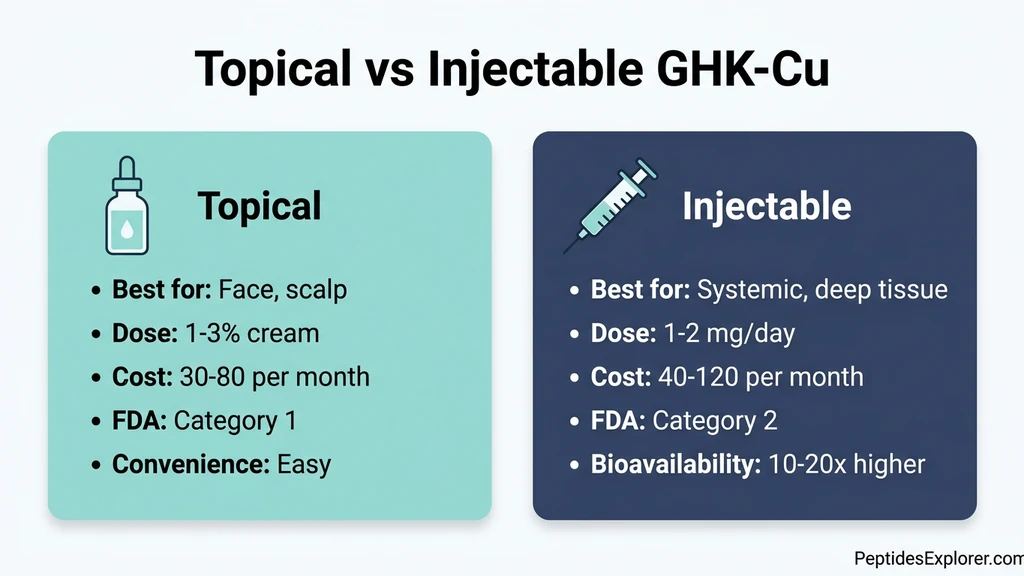
| Factor | Topical (Serum/Cream) | Injectable (Subcutaneous) |
|---|---|---|
| Bioavailability | Lower (dermis penetration proven, limited depth) | Higher (10 to 20x tissue concentration) |
| Best for | Facial skin, localized skin issues, scalp hair | Systemic anti-aging, deep tissue repair, bone and joint |
| Typical dose | 1 to 3% concentration, applied once or twice daily | 1 to 2 mg per day subcutaneous |
| Onset of results | 2 to 4 weeks (hydration), 4 to 8 weeks (structural) | 2 to 3 weeks (healing), 4 to 8 weeks (skin) |
| Convenience | Easy, no medical training needed | Requires reconstitution and injection skill |
| Safety | Very low risk; mild irritation possible | Low risk; injection site reactions, rare copper concerns |
| FDA status (2026) | Category 1: eligible for compounding | Category 2: restricted from 503A compounding |
| Enhancement | Microneedling boosts penetration up to 10-fold | Inject near target area for localized effect |
| Monthly cost | $30 to $80 for serums | $40 to $120 for vials and supplies |
Topical GHK-Cu is sufficient for facial skin goals. Injectable is superior for systemic effects, internal tissue repair, and when maximum bioavailability is needed. Some users do both: topical for the face, injectable for systemic benefits.
Microneedling before topical application dramatically increases absorption. A study in the Journal of Controlled Release confirmed that microneedling enhances peptide penetration through the stratum corneum by up to 10-fold (PMC3016279).
If you have experienced skin reactions with copper peptide serums, see Copper Peptides Ruined My Skin and Copper Peptide Irritation Guide for troubleshooting.
GHK-Cu Before and After: What Results to Expect
GHK-Cu rebuilds dermal architecture from the inside. The results are cumulative, not instant. Expect subtle early changes that compound over months into visible improvement.
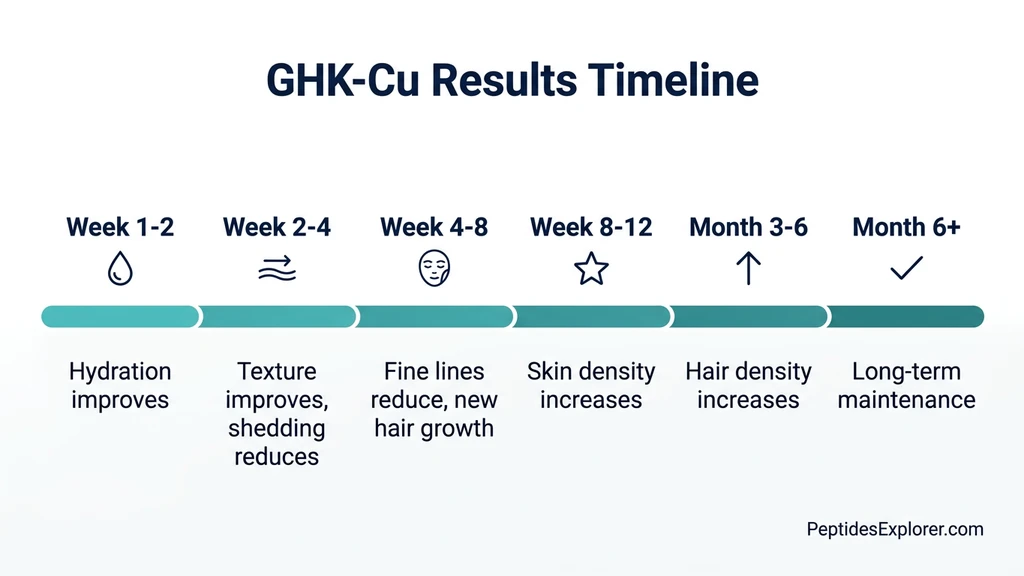
| Timeframe | Skin Changes | Hair Changes | Wound Healing |
|---|---|---|---|
| Week 1 to 2 | Improved hydration, reduced redness | No visible change | Wound closure begins |
| Week 2 to 4 | Smoother texture, early firmness | Reduced shedding | Significant wound improvement |
| Week 4 to 8 | Fine line reduction, improved elasticity | Hair shaft thickening, early new growth | Most wounds closed, scar remodeling starts |
| Week 8 to 12 | Significant skin density improvement, even tone | New growth visible in miniaturized areas | Scar reduction visible |
| Month 3 to 6 | Continued improvement, collagen maturation | Meaningful density increase | Mature, organized collagen |
| Month 6+ | Long-term maintenance results | Optimal density and thickness | Complete tissue remodeling |
The 12-week study on 71 women using GHK-Cu facial cream showed progressive improvement in skin thickness, firmness, and clarity. The 31.6% wrinkle volume reduction measured at 8 weeks continued improving through 12 weeks (Pickart & Margolina, 2018).
For hair, patience is mandatory. Hair follicles operate on a multi-month cycle. The earliest sign of response is reduced shedding at 4 to 8 weeks. Visible new growth requires 8 to 16 weeks. Meaningful density change takes 4 to 6 months. Users who quit before 16 weeks often miss the inflection point where results become obvious.
Consistency determines outcomes. Missing doses or taking extended unplanned breaks resets the accumulation curve. Five days on, two days off, maintained for the full cycle length: that is the protocol that produces published results.
What Are GHK-Cu Benefits by Application?
GHK-Cu acts on multiple tissue types. The benefits vary by target application, and each has distinct evidence behind it. For the full research overview, see the GHK-Cu peptide profile.
Skin Rejuvenation
In the 12-week comparative trial, 70% of women showed increased collagen with GHK-Cu versus 50% with vitamin C versus 40% with retinoic acid (Pickart et al., 2015). A nano-lipid formulation achieved 31.6% wrinkle volume reduction at 8 weeks.
GHK-Cu stimulates fibroblast proliferation, increases collagen I and III deposition, and promotes glycosaminoglycan synthesis (including hyaluronic acid). The result is thicker, firmer skin with improved elasticity and hydration. It outperformed both retinol and vitamin C in at least one head-to-head comparison.
Hair Growth
The Phase II trial data is compelling: 72% of male participants achieved greater than 20% hair density increase at 6 months. GHK-Cu enlarges follicles to a degree comparable to minoxidil, but through a different mechanism: fibroblast stimulation, VEGF and HGF secretion, and direct dermal papilla support.
A GHK-Cu microemulsion entered the anagen growth phase at 6 days versus 9 days for minoxidil (PMC10643103). Combined with minoxidil, GHK-Cu produced nearly double the terminal hair growth (35% vs 18% monotherapy).
Wound Healing
A GHK-Cu collagen dressing produced a 9-fold increase in collagen content in healthy rats. The peptide improved healing in diabetic and ischemic wound models, and systemic wound healing was demonstrated across rats, mice, and pigs (Pickart & Margolina, 2018).
The quality of healing matters as much as speed. GHK-Cu produces organized, aligned collagen fibers rather than random scar tissue. This means less visible scarring and stronger tissue at the repair site.
Bone and Joint Support
Anti-Inflammatory and Antioxidant Effects
GHK-Cu reduces IL-6 and TNF-alpha while increasing superoxide dismutase and glutathione. This dual action, lowering destructive inflammation while boosting antioxidant defense, protects tissues from oxidative damage during aging and after injury (PMC3359723).
The anti-inflammatory effect is clinically relevant. Chronic low-grade inflammation accelerates skin aging, hair follicle miniaturization, and tissue degeneration. Reducing it at the molecular level is how GHK-Cu produces systemic anti-aging benefits beyond any single tissue.
What Are GHK-Cu Side Effects and Safety Risks?
GHK-Cu has a strong safety profile at standard dosages based on available preclinical data. In animal studies (pigs), strong systemic wound healing was induced at approximately 1.1 mg/kg body weight, roughly 300-fold below GHK-Cu's established toxic threshold in the same model. At standard human doses (1 to 2 mg per day for a 70 kg person, or 0.014 to 0.028 mg/kg), copper toxicity risk is negligible. No serious adverse events have been reported in published human trials of topical GHK-Cu.
Common Side Effects
Injection site redness and warmth are the most frequent complaints. Both resolve within an hour. Mild bruising at injection sites occurs occasionally, especially in individuals new to subcutaneous injection.
Topical GHK-Cu may cause tingling or flushing at higher concentrations (above 2%). Some users report a skin purging phase during the first 1 to 2 weeks of topical use. This is temporary.
Rare Side Effects
Localized dryness or irritation with topical use in sensitive skin. Nausea with injectable use is rare and typically dose-dependent. Reducing the dose or taking with food resolves it in most cases.
Copper Toxicity: The Real Risk Assessment
Copper toxicity is the concern most people raise, and the data shows it is misplaced at standard dosages. The therapeutic dose for wound healing in pigs (1.1 mg/kg) is approximately 300 times below the toxic threshold. A 70 kg human taking 2 mg per day receives 0.028 mg/kg, a fraction of a fraction of the toxic range.
Symptoms of actual copper toxicity (nausea, vomiting, abdominal pain, liver damage) require far higher exposures than any GHK-Cu protocol provides. Serum copper levels do not measurably increase at standard peptide doses.
Contraindications
Absolute contraindications: - Wilson's disease or any copper metabolism disorder. These conditions impair copper excretion. Even small additional copper loads are dangerous. - Active cancer. GHK-Cu has pro-angiogenic properties (it promotes blood vessel formation). This could theoretically support tumor growth and vascularization. - Pregnancy and breastfeeding. No human safety data exists.
Relative precautions: - Do not combine topical GHK-Cu with strong acids (AHA, BHA, low-pH vitamin C) in the same application. The pH conflict can denature the peptide and irritate skin. - If you have a history of copper sensitivity, start with a lower topical concentration (0.5 to 1%) and monitor for irritation.
FDA Regulatory Status (2026 Update)
GHK-Cu is not FDA-approved for any medical indication. The regulatory landscape shifted in late 2023 and continues to evolve.
In September 2023, the FDA flagged injectable GHK-Cu as high-risk. Injectable forms are now classified as Category 2, restricting them from 503A pharmacy compounding. This means compounding pharmacies cannot legally produce injectable GHK-Cu for individual prescriptions under the standard pathway.
Non-injectable (topical) GHK-Cu is classified as Category 1, meaning it remains eligible for compounding with certain limitations. Topical serums and creams containing GHK-Cu continue to be sold commercially.
Injectable GHK-Cu remains available through research chemical suppliers. Its legal status for personal use varies by jurisdiction. Increased FDA scrutiny on peptide skincare products making drug claims has also accelerated through 2025 and 2026.
GHK-Cu Stacking Protocols
GHK-Cu combines well with several other peptides. The rationale for stacking: each compound targets a different phase or mechanism of tissue repair, producing synergistic results. Use our Peptide Interaction Checker to verify compatibility before combining compounds, and the Peptide Stack Calculator for dosing logistics.
GHK-Cu + BPC-157 (Tissue Repair Stack)
BPC-157: 250 to 500 mcg per day, subcutaneous near injury site GHK-Cu: 1 to 2 mg per day, subcutaneous Duration: 4 to 6 weeks
The rationale is complementary timing. BPC-157 handles the acute healing phase: angiogenesis, cell migration, and granulation tissue formation. GHK-Cu handles the remodeling phase: collagen organization, cross-linking, and scar reduction.
Inject both on the same day at slightly different sites. No known interactions or contraindications between the two. This is the most popular two-peptide healing stack in the research community. For BPC-157 safety data, see our BPC-157 Side Effects Guide.
GHK-Cu + TB-500 (Full-Spectrum Healing)
TB-500: 2 to 2.5 mg twice per week GHK-Cu: 1 to 2 mg per day Duration: 4 to 6 weeks
TB-500 provides broad systemic healing signals. It upregulates actin, promoting cell migration and tissue repair across the entire body. GHK-Cu ensures that the new tissue being laid down has proper collagen architecture.
This stack suits systemic recovery: post-surgical healing, multiple injury sites, or chronic degenerative conditions. For TB-500 dosing details, see the TB-500 Dosage Chart.
GHK-Cu + BPC-157 + TB-500 (GLOW Stack)
GHK-Cu: 1.5 to 2 mg per day BPC-157: 250 to 500 mcg per day TB-500: 250 to 500 mcg per day Duration: 4 weeks on, 2 to 4 weeks rest
The GLOW stack (sometimes sold as a pre-mixed blend at a 5:1:1 ratio) covers all three phases of tissue repair: acute healing (BPC-157), systemic signals (TB-500), and collagen remodeling (GHK-Cu). Add KPV at 200 to 500 mcg per day for additional anti-inflammatory support, particularly if the injury involves significant inflammation. See the KPV Dosage Guide for protocol details.
Daily subcutaneous injection for 4 weeks, followed by a rest period of 2 to 4 weeks. This is the most aggressive healing protocol commonly used and should be reserved for significant injuries or post-surgical recovery.
GHK-Cu + Epitalon (Anti-Aging Stack)
Epitalon: 5 mg per day for 10 to 20 days GHK-Cu: 1 to 2 mg per day for 4 to 6 weeks Rationale: Epitalon targets telomere maintenance at the cellular level. GHK-Cu targets tissue-level regeneration. Together, they address aging from two distinct angles: chromosomal integrity and extracellular matrix repair.
This combination appeals to users focused on longevity rather than injury recovery. The Epitalon cycle is short (10 to 20 days); GHK-Cu continues for a full 4 to 6 week cycle after Epitalon concludes.
Frequently Asked Questions
What is the standard GHK-Cu injection dosage?
The standard GHK-Cu injection dosage is 1 to 2 mg administered subcutaneously once daily, five days per week. Most protocols run 4 to 12 weeks followed by a 2 to 4 week rest period. Dosage ranges from 0.5 mg per day for general wellness up to 2 to 3 mg per day for wound healing.
How do you reconstitute GHK-Cu?
Add 5 mL of bacteriostatic water to a 50 mg vial (creating 10 mg/mL concentration) or a 100 mg vial (creating 20 mg/mL). Direct the water against the vial wall, not onto the powder. Gently swirl until dissolved. Refrigerate at 2 to 8°C and use within 30 days. Do not use normal saline, as salt can dissociate copper from the peptide.
How long does GHK-Cu take to show results?
Skin hydration improvements begin within 1 to 2 weeks. Visible fine line reduction and improved elasticity typically appear at 4 to 8 weeks. Hair growth results require 3 to 6 months of consistent use. Wound healing acceleration can be observed within 2 to 3 weeks.
Is GHK-Cu safe for women?
Yes. GHK-Cu protocols are generally identical for men and women because the peptide does not interact with hormonal pathways. Women typically start at 1 mg per day for skin goals and 1 to 2 mg per day for hair growth. GHK-Cu is contraindicated during pregnancy and breastfeeding.
Can GHK-Cu cause copper toxicity?
At standard dosages (1 to 2 mg per day), the risk is negligible. Research shows GHK-Cu's therapeutic dose is approximately 300-fold below its toxic threshold. People with Wilson's disease or copper metabolism disorders should avoid GHK-Cu entirely. Healthy individuals do not accumulate problematic copper levels at normal peptide doses.
Is GHK-Cu better than minoxidil for hair growth?
They work through different mechanisms. Minoxidil is a vasodilator that increases scalp blood flow. GHK-Cu works through regenerative pathways including collagen production, growth factor secretion (VEGF, HGF), and follicle enlargement. A 2025 study found GHK-Cu combined with minoxidil produced 35% terminal hair growth versus 18% with minoxidil alone. They may work best together.
What is the difference between topical and injectable GHK-Cu?
Injectable GHK-Cu provides 10 to 20 times higher tissue concentrations and systemic benefits (internal tissue repair, bone remodeling, bodywide anti-inflammation). Topical GHK-Cu at 1 to 3% concentration is effective for localized skin and hair benefits. For facial skin improvement, topical is often sufficient. For systemic anti-aging or injury recovery, injection is the better route.
Can I use GHK-Cu with BPC-157?
Yes. This is one of the most popular peptide stacks. BPC-157 (250 to 500 mcg per day) accelerates initial tissue repair while GHK-Cu (1 to 2 mg per day) excels at collagen remodeling and scar reduction. Inject both on the same day at slightly different sites. No known interactions or contraindications.
Is injectable GHK-Cu legal?
GHK-Cu is not FDA-approved for any medical use. As of 2026, injectable GHK-Cu is classified Category 2 by the FDA, restricting it from 503A pharmacy compounding. Non-injectable (topical) formulations are Category 1 and eligible for compounding. Injectable GHK-Cu remains available as a research chemical. Legal status for personal use varies by jurisdiction.
What vial size should I buy for GHK-Cu?
For a standard 2 mg per day protocol over 4 weeks (20 injection days), you need approximately 40 mg total. A 50 mg vial is the most practical for a single cycle. For extended protocols or higher doses, a 100 mg vial is more cost-effective. Use the Peptide Reconstitution Calculator to determine exact volumes for your chosen vial size.
The Bottom Line
## Clinical Evidence Summary
The evidence base for GHK-Cu spans preclinical and clinical research. Not all claims carry equal weight. The table below grades the key findings cited in this guide.
| Claim | Evidence Level | Study Type | Source |
|---|---|---|---|
| 70% collagen increase vs vitamin C and retinoic acid | Moderate | Human trial, n=71, 12 weeks | Pickart et al., 2015 |
| 31.6% wrinkle volume reduction | Moderate | Human trial, 8 weeks | Pickart & Margolina, 2018 |
| 72% achieved >20% hair density increase | Moderate | Phase II human trial, 6 months | Phase II clinical data |
| 35% terminal hair growth (GHK-Cu + minoxidil) | Moderate | Open-label human study, 2025 | Clinical data |
| Anagen phase at 6 days vs 9 days (minoxidil) | Preclinical | In vitro / animal model | PMC10643103 |
| 9-fold collagen increase in wound dressings | Preclinical | Animal study (rats) | Pickart & Margolina, 2018 |
| Systemic wound healing at 1.1 mg/kg | Preclinical | Animal study (pigs) | Pickart & Margolina, 2018 |
| 4,000+ genes modulated (31.2% of genome) | Strong | Connectivity Map analysis (Broad Institute) | Pickart et al., 2015 |
Key limitation: Most injectable GHK-Cu dosage protocols are extrapolated from topical human trials and animal studies. No large-scale randomized controlled trial has evaluated injectable GHK-Cu in humans for any indication. Dosage recommendations reflect clinical practice patterns and preclinical dose extrapolation, not FDA-approved labeling.
GHK-Cu is one of the most versatile peptides in current use. A single compound addresses skin aging, hair loss, wound healing, and systemic inflammation through well-documented molecular pathways. The standard injection dosage of 1 to 2 mg per day, subcutaneously, five days per week, covers most therapeutic goals.
Three factors determine results: product quality, protocol consistency, and patience. GHK-Cu rebuilds tissue architecture at the cellular level. That process takes weeks to months, not days.
Start with the protocol matched to your goal. Use the Peptide Reconstitution Calculator for precise dosing. Track your results at 4, 8, and 12 weeks. Adjust based on response, not impatience.
Related Guides: - GHK-Cu Injection Frequency - daily vs 3x/week schedules and cycling protocols - GHK-Cu Nasal Spray - alternative delivery route for cognitive benefits - GHK-Cu Microneedling Protocol - topical application with enhanced penetration - Does GHK-Cu Cause Hair Loss? - safety data on hair-specific concerns - Does GHK-Cu Cause Liver Damage? - copper safety at standard doses - How to Store Peptides - maintain potency throughout your cycle
Helpful Tools
Related Articles
How Often to Inject GHK-Cu
How often to inject GHK-Cu: once daily, 5 days on / 2 off for 4-12 weeks. See frequency by goal (skin, hair, healing) and cycling schedules.
BPC-157 TB-500 Dosage: Combined Protocol
BPC-157 TB-500 dosage: 250-500 mcg BPC-157 + 2-2.5 mg TB-500 daily. Weight-adjusted charts, injury-type matrix, blend vial math, and cycle timing.
GHK-Cu + BPC-157 + TB-500 Blend Dosage
GHK-Cu + BPC-157 + TB-500 blend dosage chart for 70 mg and 42 mg vials. Per-injection breakdown in mcg, reconstitution steps, and cycling protocol.
Where to Inject GHK-Cu: Sites by Goal
Where to inject GHK-Cu for skin, hair, wounds, and anti-aging. Subcutaneous site map by goal, rotation patterns, needle depth, and angle guidance.