Peptides are one of the fastest-growing areas in health optimization, injury recovery, and anti-aging — but the sheer volume of information can overwhelm anyone just starting out. Which peptide should you use first? How do you inject? What dose? Is it even safe?
This guide breaks it all down from scratch. No prior knowledge required. By the end, you'll understand exactly what peptides are, which ones match your goals, how to use them safely, and what results to realistically expect. Whether you're dealing with a nagging injury, trying to lose stubborn fat, or optimizing your overall health, this is the starting point.
What you'll learn: - What peptides are and how they work in your body - The 5 main categories of peptides (and which one fits your goal) - The best beginner-friendly peptides with exact protocols - How to reconstitute, dose, and inject step-by-step - Safety guidelines and side effects to watch for - How to source quality peptides and avoid fakes
Get your custom peptide protocol:
- Tailored to your body and goals
- Precise dosing and cycle length
- Safe stacking combinations
- Backed by peer-reviewed studies
- Ready in under 2 minutes
What Are Peptides and How Do They Work?
Peptides are short chains of amino acids — typically between 2 and 50 amino acids linked together. Your body produces hundreds of peptides naturally. They act as signaling molecules, telling your cells what to do: heal tissue, release growth hormone, reduce inflammation, burn fat, or modulate your immune system.
Synthetic peptides are lab-made copies of these natural signals. When you take a peptide like BPC-157, you're essentially giving your body extra copies of a healing signal it already recognizes. That's why peptides tend to have fewer side effects than pharmaceutical drugs — they work with your biology, not against it.
Key difference from steroids: Peptides don't directly force your body to do something (like anabolic steroids forcing muscle growth). Instead, they amplify or trigger natural processes. Think of peptides as turning up a dial that's already on your control panel.
How peptides are made: Most research peptides come as freeze-dried (lyophilized) powder in small glass vials. You reconstitute them with bacteriostatic water before injection. They're fragile molecules — heat, light, and rough handling destroy them — so proper storage matters.
Why Peptides Are Different from Supplements and Drugs
Supplements (protein, creatine, vitamins): - Work through nutrition and general metabolic support - Low specificity — broad effects - No prescription needed, widely available - Results: weeks to months, often subtle
Peptides: - Work through targeted cellular signaling - High specificity — each peptide has a defined function - Available as research compounds (legal gray area varies by country) - Results: days to weeks for most protocols
Pharmaceutical drugs: - Work through receptor blocking, enzyme inhibition, or forced biological changes - Often come with significant side effects - Prescription required - Results: hours to days, often strong
Peptides sit in a unique middle ground: more targeted and effective than supplements, but generally safer and more natural than drugs. That's why they've gained massive popularity among athletes, biohackers, and people recovering from injuries.
Types of Peptides: Which Category Fits Your Goal?
Not all peptides do the same thing. Before choosing one, you need to identify your primary goal. Here are the 5 main categories:
Healing & Recovery Peptides
Best for: Tendonitis, muscle tears, joint pain, gut issues, post-surgery recovery
Top peptides: - BPC-157 — The gold standard for injury healing. Works locally and systemically. Heals tendons, muscles, ligaments, and gut lining. Most researched healing peptide. - TB-500 — Systemic healing peptide. Reduces scar tissue, promotes new blood vessel growth. Excellent for chronic injuries. - GHK-Cu — Copper peptide that stimulates collagen synthesis. Great for wound healing and skin repair.
Typical timeline: 2-4 weeks for pain reduction, 6-8 weeks for significant healing. See real user timelines in our BPC-157 before and after report.
Starting point for beginners: BPC-157 at 250-500mcg/day is the most beginner-friendly healing peptide. Use our BPC-157 dosage calculator to get your exact dose. For tendon-specific injuries, read our best peptides for tendon repair guide.
Weight Loss Peptides
Best for: Stubborn fat loss, appetite control, metabolic optimization
Top peptides: - Semaglutide — GLP-1 receptor agonist. Reduces appetite by 30-40%. FDA-approved for weight loss (as Wegovy/Ozempic). Most effective weight loss peptide available. - Tirzepatide — Dual GIP/GLP-1 agonist (Mounjaro/Zepbound). Even more effective than semaglutide in clinical trials — up to 22% body weight loss. - AOD-9604 — Fragment of growth hormone that targets fat cells. Milder than GLP-1 agonists but fewer side effects. - 5-Amino-1MQ — Oral peptide that boosts metabolism. No injections needed.
Typical timeline: 4-8 weeks for noticeable fat loss with GLP-1 peptides. Read our full breakdown: best peptides for weight loss.
Starting point for beginners: If eligible for prescription, semaglutide is the most proven option. For non-prescription, AOD-9604 is gentler.
Muscle Growth & Performance Peptides
Best for: Building lean muscle, boosting growth hormone, improving recovery between workouts
Top peptides: - Ipamorelin — Growth hormone secretagogue. Stimulates natural GH release without spiking cortisol or prolactin. Cleanest GH peptide. - CJC-1295 — Often stacked with Ipamorelin. Extends GH pulses for sustained release. The Ipamorelin + CJC-1295 combo is the most popular GH stack. - MK-677 — Oral GH secretagogue. No injections needed. Increases GH and IGF-1. Watch for increased appetite and water retention. - IGF-1 LR3 — Direct growth factor. Advanced users only — powerful but requires careful dosing. See our IGF-1 LR3 dosage protocol.
Typical timeline: 4-8 weeks for improved recovery and sleep. 8-12 weeks for visible body composition changes. Read our deep dive: peptides for muscle growth.
Starting point for beginners: Ipamorelin alone or the Ipamorelin + CJC-1295 stack. Clean side effect profile, predictable results.
Anti-Aging & Longevity Peptides
Best for: Skin quality, cellular repair, telomere maintenance, overall vitality
Top peptides: - Epitalon — Telomerase activator. May slow cellular aging by protecting telomeres. Used in 10-20 day cycles. - GHK-Cu — Stimulates collagen and elastin production. Reverses some skin aging markers. Available topically and injectable. (Note: topical copper peptides require careful introduction to avoid irritation.) - NAD+ — Coenzyme critical for cellular energy. Declines with age. Supplementation supports mitochondrial function and DNA repair. - MOTS-c — Mitochondrial peptide. Improves metabolic function, insulin sensitivity, and exercise capacity.
Typical timeline: 4-12 weeks for noticeable skin and energy improvements.
Starting point for beginners: GHK-Cu topically (easiest — no injection) or Epitalon for a short 10-day cycle.
Cognitive & Neuroprotective Peptides
Best for: Focus, memory, anxiety reduction, brain fog, neuroprotection
Top peptides: - Semax — Nasal spray peptide developed in Russia. Enhances BDNF (brain-derived neurotrophic factor). Improves focus, memory, and mental clarity. No injection needed. - Selank — Anxiolytic peptide (nasal spray). Reduces anxiety without sedation. Often compared to a cleaner version of benzodiazepines. - DSIP — Delta sleep-inducing peptide. Improves sleep architecture and recovery. Used by athletes for better deep sleep. - Dihexa — Extremely potent nootropic. Advanced users only.
Typical timeline: Days to 2 weeks for cognitive peptides (fastest-acting category).
Starting point for beginners: Semax nasal spray — no needles, fast-acting, well-studied, minimal side effects.
Best Peptides for Absolute Beginners: Top 5 Picks
If you're overwhelmed by the options above, here are the 5 most beginner-friendly peptides based on ease of use, safety profile, research backing, and results consistency:
1. BPC-157 — Best Overall Starter Peptide - Why: Works for almost everyone (injuries, gut issues, general recovery). Read about BPC-157 side effects before starting. - Dose: 250-500mcg/day subcutaneous - Duration: 4-8 weeks - Side effects: Nearly zero reported - Cost: ~$40-60/month
2. Ipamorelin — Best for Growth Hormone / Anti-Aging - Why: Cleanest GH release peptide. No cortisol or prolactin spike. - Dose: 200-300mcg before bed - Duration: 8-12 weeks - Side effects: Mild hunger increase, occasional water retention - Cost: ~$50-80/month
3. Semax — Best for Cognitive Enhancement (No Needles) - Why: Nasal spray = no injection fear. Fast-acting focus and clarity. - Dose: 200-600mcg/day intranasal - Duration: 2-4 weeks on, 2 weeks off - Side effects: Rare — occasional mild headache - Cost: ~$30-50/month
4. Semaglutide — Best for Weight Loss (Prescription) - Why: Most effective weight loss compound available. FDA-approved. - Dose: Start 0.25mg/week, titrate up slowly - Duration: 12+ weeks - Side effects: Nausea (common first 2-4 weeks), reduced appetite - Cost: ~$150-400/month (varies by source)
5. TB-500 — Best for Systemic Healing - Why: Heals multiple injuries simultaneously. Reduces scar tissue. - Dose: 5-10mg/week loading, then 2.5mg/week maintenance — see our full TB-500 dosage chart - Duration: 8-12 weeks - Side effects: Rare — occasional fatigue, headache - Cost: ~$60-100/month
How to Use Peptides: Step-by-Step for Beginners
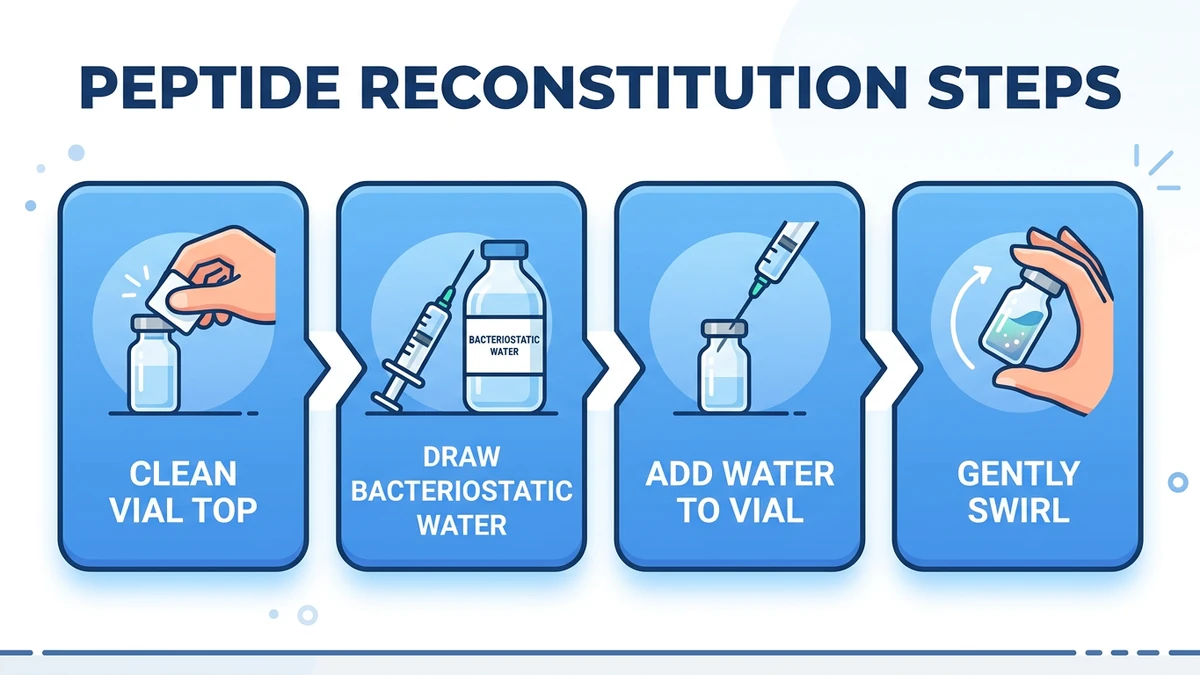
Most peptides require reconstitution (mixing powder with water) and subcutaneous injection. Here's the complete process. For an even deeper walkthrough with visuals, see our peptide injections complete guide.
What You Need (Essential Supplies)
Before your first peptide arrives, have these supplies ready:
Required:
- Bacteriostatic water (BAC water) — NOT sterile water, NOT saline
- Insulin syringes (29-31 gauge, 0.5ml or 1ml)
- Alcohol swabs (70% isopropyl)
- Your peptide vial(s)
Recommended:
- Sharps container for used needles
- Small refrigerator or dedicated fridge shelf
- Notebook or app to track doses
Total starter kit cost: $15-25 (excluding peptides)
Where to buy supplies: Insulin syringes and BAC water are available at most pharmacies without prescription. Amazon also carries BAC water and sharps containers.
Step 1: Reconstitute Your Peptide
Reconstitution = mixing the freeze-dried powder with bacteriostatic water to create an injectable solution.
Process:
- 1.Remove caps from both the peptide vial and BAC water
- 2.Swab both rubber stoppers with alcohol
- 3.Draw your desired amount of BAC water into a syringe (typically 1-2ml)
- 4.Insert needle into peptide vial at an angle, aimed at the glass wall
- 5.Slowly push water down the side of the vial — never squirt directly onto the powder
- 6.Gently swirl the vial until powder dissolves completely (1-2 minutes). Never shake.
- 7.Solution should be clear. If cloudy or has particles, discard it.
How much BAC water to add? This determines your concentration. Use our reconstitution calculator for exact numbers, or read our full how to reconstitute a peptide guide.
Common example: 5mg BPC-157 vial + 2ml BAC water = 2.5mg/ml. Each 0.1ml (10 units on insulin syringe) = 250mcg.
Step 2: Draw Your Dose
- 1.Swab the peptide vial stopper with alcohol
- 2.Draw air into the syringe equal to your dose volume
- 3.Insert needle, push air in (equalizes pressure), then invert vial
- 4.Pull plunger back to your dose marking
- 5.Tap syringe to move air bubbles to the top, push them out
- 6.Remove from vial
Reading insulin syringes: On a 1ml insulin syringe, each small line = 1 unit = 0.01ml. So 10 units = 0.1ml, 50 units = 0.5ml. Use our unit converter if you're unsure about your dose.
Step 3: Inject (Subcutaneous)
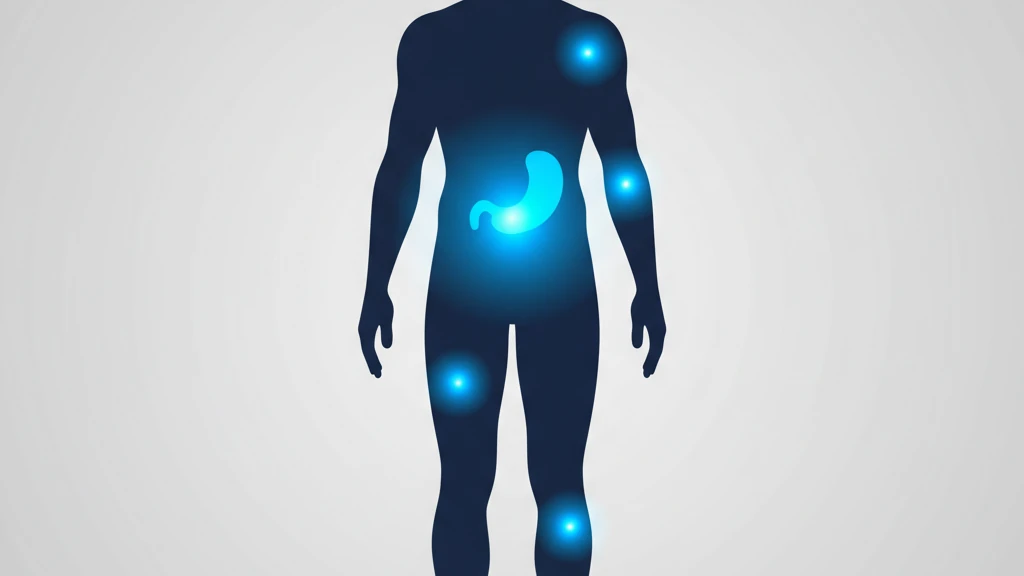
- 1.Clean injection site with alcohol swab
- 2.Pinch a fold of skin (abdomen is easiest for beginners)
- 3.Insert needle at a 45-degree angle
- 4.Push plunger slowly and steadily (3-5 seconds)
- 5.Release skin fold, withdraw needle
- 6.Apply light pressure with alcohol swab if needed
Best injection sites for beginners:
- Lower abdomen (2 inches from belly button) — easiest, least painful
- Outer thigh — good alternative
- Back of upper arm — harder to reach solo
Rotate sites each injection to avoid tissue irritation. Don't inject into the same exact spot twice in a row.
Pain level: Most people describe it as a slight pinch — significantly less than a blood draw. After 2-3 injections, most users barely notice it.
Step 4: Storage & Handling
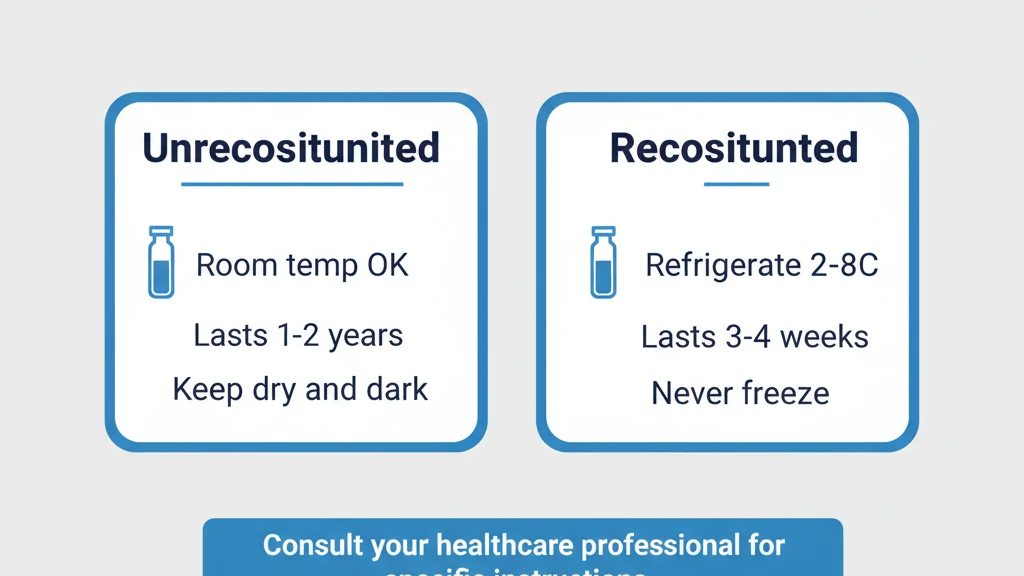
Unreconstituted (powder) peptides:
- Room temperature: stable for months
- Refrigerated: stable for 1-2 years
- Freezer: stable for 2+ years
- Keep away from direct sunlight and heat
Reconstituted (mixed) peptides:
- Must be refrigerated (2-8°C / 36-46°F)
- Use within 30 days
- Never freeze reconstituted peptides
- Don't leave out of the fridge for extended periods
Signs your peptide has gone bad:
- Solution becomes cloudy or discolored
- Visible particles floating
- Unusual smell
- Vial was left unrefrigerated for 24+ hours
Peptide Dosing Basics: How Much to Take
Peptide doses are measured in micrograms (mcg) or milligrams (mg). Getting the dose right is critical — too little won't work, too much wastes product and can increase side effects.
General dosing principles:
| Peptide | Beginner Dose | Standard Dose | Frequency |
|---|---|---|---|
| BPC-157 | 250mcg/day | 500mcg/day | Daily |
| TB-500 | 5mg/week | 10mg/week | 2-3x/week |
| Ipamorelin | 200mcg/day | 300mcg/day | Before bed |
| CJC-1295 | 100mcg/day | 200mcg/day | Before bed |
| Semaglutide | 0.25mg/week | 0.5-1mg/week | Once weekly |
| Semax | 200mcg/day | 600mcg/day | 1-2x daily |
Key rules:
- Start low: Always begin at the lower end of the dose range for your first cycle
- Titrate up: Increase gradually over 1-2 weeks if needed
- Be consistent: Daily peptides should be taken at the same time each day
- Cycle off: Most peptides benefit from cycling (8-12 weeks on, 4 weeks off)
- One at a time: Start with a single peptide. Don't stack multiple compounds until you know how each one affects you individually
Use our peptide stack calculator when you're ready to combine peptides.
Safety, Side Effects & What to Watch For
Peptides are generally well-tolerated — most have mild side effect profiles compared to pharmaceuticals or hormones. But they're not risk-free. Here's what every beginner needs to know:
Common Side Effects (Usually Mild & Temporary)
- Injection site reactions: Redness, mild swelling, itching (5-10% of users). Resolves in 30-60 minutes.
- Fatigue/grogginess: Common in the first week, especially with GH-releasing peptides. Usually subsides.
- Water retention: Mild bloating with GH peptides (Ipamorelin, CJC-1295, MK-677). Temporary.
- Nausea: Common with GLP-1 peptides (semaglutide, tirzepatide). Starts mild, usually improves over 2-4 weeks.
- Vivid dreams: Reported with BPC-157 and GH peptides. Not harmful.
- Increased hunger: Common with MK-677 and Ipamorelin. Manageable.
When to Stop and Seek Medical Advice
Stop immediately and consult a doctor if you experience:
- Severe allergic reaction (difficulty breathing, swelling of face/throat)
- Chest pain or heart palpitations
- Severe persistent headache
- Signs of infection at injection site (increasing redness, warmth, pus, fever)
- Numbness or tingling in extremities
- Severe gastrointestinal symptoms (persistent vomiting, blood in stool)
Important disclaimers:
- Peptides are not FDA-approved for most consumer uses (except semaglutide/tirzepatide for weight loss/diabetes)
- Most are sold as "research chemicals" — quality varies dramatically by source
- Always inform your doctor about any peptides you're using
- People with active cancer should avoid growth hormone-releasing peptides
- Pregnant or breastfeeding women should not use peptides
- If you drink alcohol, review how it interacts with specific peptides — for example, see our BPC-157 and alcohol guide
How to Minimize Risks
- 1.Source from reputable vendors — Look for third-party lab testing (COA), proper packaging, and established reputation
- 2.Start with one peptide — Never stack multiple untested compounds on your first cycle
- 3.Start at the lowest effective dose — You can always increase
- 4.Use proper injection technique — Clean hands, alcohol swabs, new syringe every time
- 5.Store correctly — Refrigerate reconstituted peptides, discard after 30 days
- 6.Track everything — Log your dose, injection site, and how you feel. This helps identify issues early
- 7.Take breaks — Cycle peptides (8-12 weeks on, 4+ weeks off) to avoid receptor desensitization
- 8.Get baseline bloodwork — Know your starting hormone levels so you can track changes. At minimum: CBC, metabolic panel, IGF-1, thyroid
How to Source Quality Peptides
The peptide market is unregulated — quality ranges from pharmaceutical-grade to completely fake. Your results depend entirely on getting real, properly manufactured product.
What to look for in a vendor:
- Certificate of Analysis (COA): A lab report showing purity (should be 98%+ for most peptides). Every reputable vendor provides this per batch.
- Third-party testing: COAs from an independent lab, not the manufacturer's own lab.
- Proper packaging: Peptides should arrive in sealed glass vials, lyophilized (powder form), with professional labeling.
- Cold shipping: Some vendors ship with ice packs. Not always necessary for powder form, but a good sign.
- Established reputation: Look for vendors with years of operation, active community presence, and consistent reviews.
Red flags:
- No COA available or COA looks fabricated
- Prices significantly below market rate (if it's too cheap, it's probably underdosed or fake)
- Pre-mixed / pre-reconstituted peptides (short shelf life, quality concerns)
- No contact information or customer support
- Only accepts cryptocurrency (while some legitimate vendors do, it's also common among scams)
Typical price ranges (for reference):
- BPC-157 (5mg vial): $25-50
- TB-500 (5mg vial): $30-55
- Ipamorelin (5mg vial): $25-45
- Semaglutide (5mg vial): $80-200
- Semax nasal spray: $25-50
Your First Peptide Cycle: A Practical Roadmap
Here's a step-by-step plan for your first 8 weeks with peptides:
Week 0 (Preparation): - Choose ONE peptide based on your primary goal (see recommendations above) - Order peptide + supplies (BAC water, insulin syringes, alcohol swabs) - Get baseline bloodwork if possible - Read the specific peptide's page on our site for detailed protocol
Week 1 (Start Low): - Reconstitute your peptide - Begin at the lowest recommended dose - Inject daily (or per protocol) at the same time - Track dose, injection site, and any effects in a notebook or app
Week 2-3 (Assess & Adjust): - If tolerating well with no side effects, increase to standard dose - By now you should feel comfortable with the injection process - Some peptides (BPC-157) may show early results
Week 4-6 (Peak Results Window): - Most peptides hit their stride at this point - Continue consistent dosing - Note any changes: pain reduction, sleep quality, body composition, energy
Week 7-8 (Evaluate): - Assess results against your goals - Decide: continue for another 4 weeks, or cycle off - If cycling off: stop peptide, wait 4 weeks before next cycle - Get follow-up bloodwork to compare
After your first cycle: You'll know how your body responds. From here, you can explore stacking (combining 2 peptides), try a different peptide, or repeat a successful protocol. Check our peptide interaction checker before stacking.
Frequently Asked Questions
Are peptides legal?
It depends on the peptide and your country. In the US, most peptides are legal to purchase as "research chemicals." Semaglutide and tirzepatide are FDA-approved prescription drugs. BPC-157, TB-500, and most others exist in a legal gray area — not approved for human use but not explicitly illegal to possess. Laws vary significantly by country. Always check your local regulations.
Are peptides safe for beginners?
Most popular peptides (BPC-157, Ipamorelin, TB-500, Semax) have strong safety profiles with minimal side effects. However, they are largely unregulated research compounds, so quality control depends on your source. Start with one well-researched peptide at a low dose, use proper injection technique, and source from reputable vendors with third-party testing.
Do I need a prescription for peptides?
For semaglutide and tirzepatide, yes — these are prescription medications. For most other peptides (BPC-157, TB-500, Ipamorelin, etc.), no prescription is needed in most countries. They're typically sold as research compounds. Some telehealth clinics and anti-aging doctors also prescribe compounded peptides.
How quickly do peptides work?
It varies by peptide and goal. Cognitive peptides like Semax can work within hours. Healing peptides like BPC-157 typically show initial results in 1-2 weeks. Growth hormone peptides take 4-8 weeks for noticeable body composition changes. Weight loss peptides like semaglutide show results in 2-4 weeks. Don't expect overnight results — give any peptide at least 4 weeks before judging effectiveness.
Can I take peptides orally instead of injecting?
Some peptides work orally — BPC-157 is effective orally for gut healing, MK-677 is an oral compound, and Semax/Selank are nasal sprays. However, most peptides are destroyed by stomach acid and need to be injected for full effect. If needles are a dealbreaker, start with oral BPC-157, MK-677, or Semax nasal spray. Read our full guide on oral vs injectable BPC-157.
What's the best first peptide for someone who's never used one?
BPC-157 is the most recommended first peptide. It has an excellent safety profile, works for a wide range of conditions (injuries, gut issues, general recovery), and is well-researched. If your goal is specifically cognitive enhancement and you want to avoid needles, Semax nasal spray is an even easier starting point.
How much does a peptide cycle cost?
A typical beginner cycle costs $50-150/month for the peptide itself, plus $15-25 for supplies (BAC water, syringes). BPC-157 is one of the most affordable at ~$40-60/month. GH peptides like Ipamorelin run $50-80/month. Prescription peptides like semaglutide are the most expensive at $150-400+/month. Use our peptide cost calculator for a personalized estimate.
Can I stack multiple peptides as a beginner?
Not recommended for your first cycle. Start with one peptide so you know exactly how your body responds. After 1-2 successful solo cycles, you can explore stacking. The most popular beginner stack is BPC-157 + TB-500 for injury healing. Use our peptide interaction checker before combining any peptides.
The Bottom Line
Getting started with peptides doesn't have to be complicated. Choose one peptide that matches your goal, learn proper reconstitution and injection technique, start at a low dose, and be patient. The most important factors for success are: sourcing quality product, dosing consistently, and giving the protocol enough time to work (minimum 4 weeks for most peptides).
For most beginners, BPC-157 (healing), Ipamorelin (growth hormone / anti-aging), or Semax (cognitive / no needles) are the ideal starting points. They're well-researched, have clean side effect profiles, and deliver reliable results.
Take our free peptide quiz to get a personalized recommendation based on your specific goals, or explore our peptide database to research individual compounds in detail.
Helpful Tools
Related Articles
How to Inject Peptides: SubQ & IM
Step-by-step peptide injection guide: SubQ vs IM technique, needle sizes, injection sites, dosing, and 5 common mistakes. BPC-157 and TB-500 examples included.
Where to Inject IGF-1 LR3: Sites, SubQ vs IM, Rotation
Where to inject IGF-1 LR3: abdomen, thigh or glute, subcutaneous, 29-31G needle. Why site-specific growth is a myth, a rotation map, and the hypoglycemia rule.
When to Take IGF-1 LR3: Best Time & Fed vs Fasted
When to take IGF-1 LR3: post-workout with carbs on training days, morning with breakfast on rest days, never fasted. Half-life, spacing from GH peptides, FAQ.
How to Reconstitute Tesamorelin: Water Volumes & Units
How to reconstitute tesamorelin: bacteriostatic water volumes for 2, 5, 10 and 20 mg vials, U-100 unit math, mixing steps, storage window, and bad-vial signs.