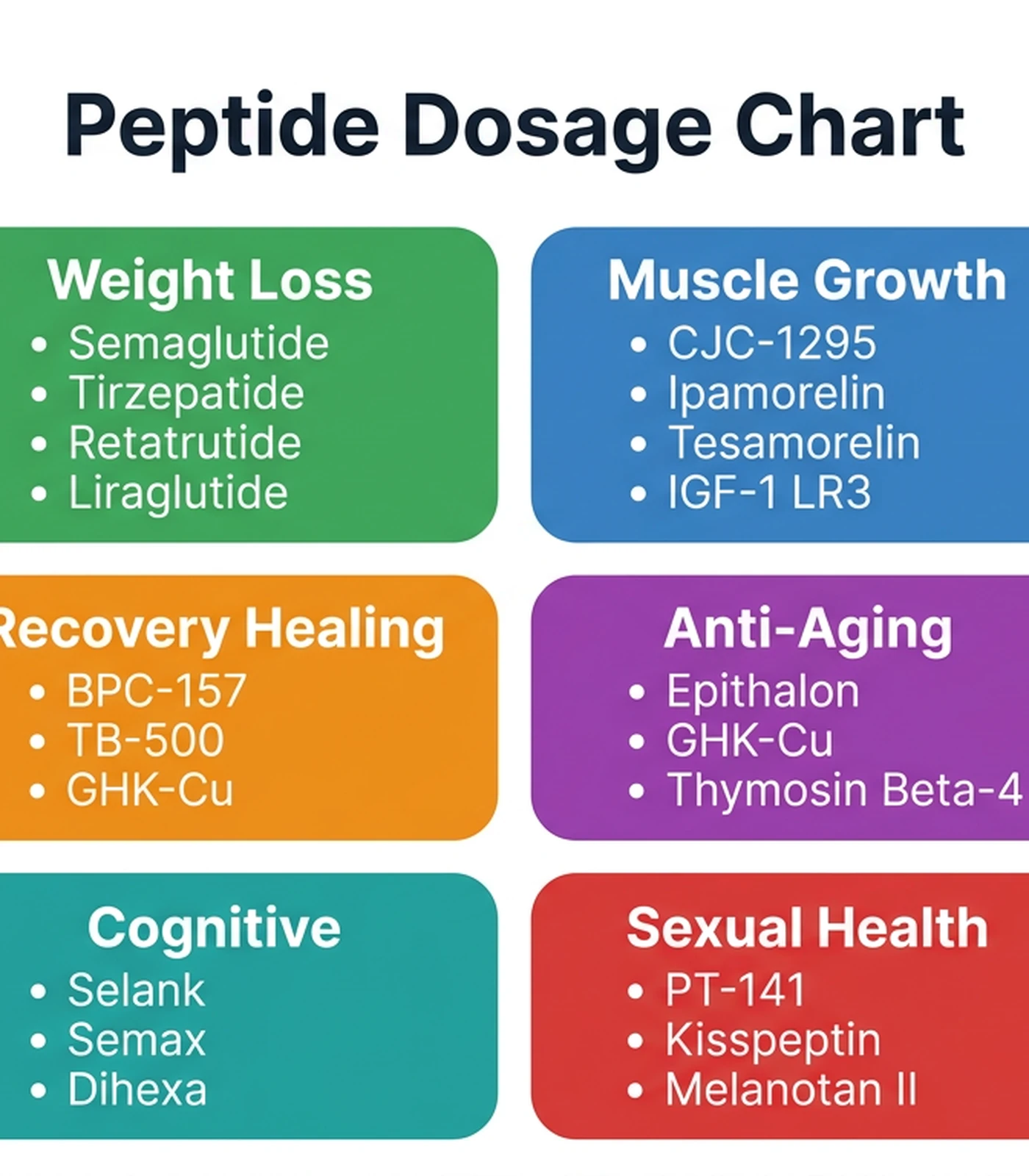
This peptide dosage chart tells you exactly how much of each peptide to take, how often, and when. It covers 24 peptides with three dosing tiers: beginner (start here), standard (most common), and advanced (experienced users only). Every entry includes a link to a free calculator so you can measure your dose precisely.
If you have never used a peptide before, read the "How to Use This Chart" section first. It explains every abbreviation, walks you through the supplies you need, and shows you how to go from a powder vial to a measured injection in five steps. New to peptides entirely? Start with our Getting Started with Peptides guide, then come back here for dosing.
All doses below come from published clinical trials, manufacturer guidelines, and established practitioner protocols as of February 2026. Print this page or save it as a PDF for quick reference at your workstation. Consult a licensed healthcare provider before using any peptide.
Which peptide is right for you? Pick your goal:
| Your Goal | Best Starting Peptide | What It Does | Beginner Dose | How to Take It |
|---|---|---|---|---|
| Heal an injury | BPC-157 | Speeds up tendon, ligament, muscle, and gut repair | 250 mcg/day | Injection (near injury or belly) |
| Lose weight | Semaglutide | Reduces appetite, FDA-approved for obesity | 0.25 mg/week | Injection (once weekly) |
| Improve sleep | DSIP | Deepens slow-wave sleep without sedation | 100 mcg/night | Injection (2-3 hrs before bed) |
| Anti-aging / skin | GHK-Cu | Rebuilds collagen, reverses skin aging | 1 mg/day | Injection or skin cream |
| Build muscle / recovery | CJC-1295 + Ipamorelin | Boosts your body's own growth hormone | 100 mcg each | Injection (before bed) |
| Boost immunity | Thymosin Alpha 1 | Strengthens T-cell immune response | 1.5 mg every other day | Injection (morning) |
| Reduce anxiety | Selank | Calms anxiety without drowsiness | 250 mcg/day | Nasal spray |
| Improve libido | PT-141 | Increases sexual desire (FDA-approved) | 0.5 mg as needed | Injection (45-60 min before) |
Not sure? Take the Peptide Quiz for a personalized recommendation.
Master Reference Table: All 24 Peptides at a Glance
*Scroll right on mobile to see all columns. "SubQ" means subcutaneous injection (into belly fat with a small insulin needle). "IM" means intramuscular injection (into muscle). "mcg" = micrograms, "mg" = milligrams (1 mg = 1,000 mcg).*
| Peptide | Category | Beginner Dose | Standard Dose | Advanced Dose | Frequency | Timing | Cycle Length | Route | Calculator |
|---|---|---|---|---|---|---|---|---|---|
| BPC-157 | Recovery | 250 mcg/day | 500 mcg/day | 750 mcg/day | 1-2x daily | Any time | 4-6 weeks | SubQ / IM | Calculator |
| TB-500 | Recovery | 2 mg 2x/wk | 2.5 mg 2x/wk | 5 mg 2x/wk | 2x/week (loading) | Any time | 4-6 wk load + maint | SubQ | Calculator |
| Semaglutide | Weight Loss | 0.25 mg/wk | 0.5-1 mg/wk | 2.4 mg/wk | 1x weekly | Same day each week | 12-16+ weeks | SubQ | Calculator |
| Tirzepatide | Weight Loss | 2.5 mg/wk | 5-7.5 mg/wk | 10-15 mg/wk | 1x weekly | Same day each week | 20+ weeks | SubQ | Calculator |
| Retatrutide | Weight Loss | 1 mg/wk | 4-8 mg/wk | 12 mg/wk | 1x weekly | Same day each week | 16+ weeks | SubQ | Calculator |
| AOD 9604 | Fat Loss | 300 mcg/day | 500 mcg/day | 1 mg/day | 1x daily | Morning fasted | 12-16 weeks | SubQ | |
| HGH Fragment 176-191 | Fat Loss | 150 mcg 2x/day | 250 mcg 2x/day | 500 mcg 2x/day | 2x daily | Morning fasted + bed | 8-12 weeks | SubQ | Calculator |
| 5-Amino-1MQ | Fat Loss | 50 mg/day | 100 mg/day | 150 mg/day | 1-2x daily | Morning | 4-8 weeks | Oral | |
| CJC-1295 (no DAC) | Growth Hormone | 100 mcg | 100-200 mcg | 200 mcg | 2-3x daily | Before bed | 8-12 weeks | SubQ | Calculator |
| Ipamorelin | Growth Hormone | 100 mcg | 200 mcg | 300 mcg | 2-3x daily | Before bed | 8-12 weeks | SubQ | Calculator |
| Sermorelin | Growth Hormone | 100 mcg/day | 200-300 mcg/day | 500 mcg/day | 1x daily | Before bed | 3-6 months | SubQ | |
| MK-677 | Growth Hormone | 10 mg/day | 12.5-25 mg/day | 25 mg/day | 1x daily | Before bed | 8-12 weeks | Oral | |
| IGF-1 LR3 | Muscle Growth | 20 mcg/day | 40-60 mcg/day | 80-100 mcg/day | 1x daily | Post-workout | 4-6 weeks | SubQ / IM | |
| GHK-Cu | Anti-Aging | 1 mg/day | 1-2 mg/day | 3 mg/day | 1x daily | Morning | 4-6 weeks | SubQ / Topical | |
| Epitalon | Anti-Aging | 5 mg/day | 10 mg/day | 10 mg/day | 1x daily | Evening | 10-20 day cycles | SubQ / IM | |
| MOTS-C | Longevity | 5 mg 3x/wk | 10 mg 3x/wk | 10 mg 5x/wk | 3-5x weekly | Morning | 4-8 weeks | SubQ | |
| DSIP | Sleep | 100 mcg | 200 mcg | 300 mcg | 1x daily | Before bed | 2-4 weeks | SubQ | |
| Semax | Neuroprotective | 200 mcg/day | 400 mcg/day | 600 mcg/day | 1-2x daily | Morning | 2-4 weeks | Nasal | |
| Selank | Neuroprotective | 250 mcg/day | 500 mcg/day | 750 mcg/day | 1-2x daily | Morning | 2-4 weeks | Nasal | |
| Thymosin Alpha 1 | Immune | 1.5 mg EOD | 1.5 mg daily | 3 mg daily | EOD to daily | Morning | 4-12 weeks | SubQ | |
| KPV | Anti-Inflammatory | 200 mcg/day | 500 mcg/day | 1 mg/day | 1x daily | Morning | 4-8 weeks | SubQ / Oral | |
| PT-141 | Sexual Health | 0.5 mg | 1-1.5 mg | 2 mg | As needed | 45-60 min before | Max 8x/month | SubQ / Nasal | |
| Melanotan II | Tanning | 250 mcg | 500 mcg | 1 mg | Daily (loading) | Any time | 2-3 wk load + maint | SubQ | |
| Kisspeptin | Sexual Health | 1 mcg/kg | 5 mcg/kg | 10 mcg/kg | Research only | Morning | Clinical setting | SubQ / IV |
Get your custom peptide protocol:
- Tailored to your body and goals
- Precise dosing and cycle length
- Safe stacking combinations
- Backed by peer-reviewed studies
- Ready in under 2 minutes
How to Use This Peptide Dosage Chart
This chart uses a three-tier system. Beginner is where everyone starts: the lowest effective dose, designed to test how your body responds. Standard is where most people settle after two weeks with no issues. Advanced is the upper end, reserved for experienced users who need more.
The rule is simple: start at beginner for two weeks, then move to standard if you feel fine. Never skip tiers. Never start at advanced.
Key Terms Explained (Glossary)
If you are new to peptides, these terms appear throughout this guide. Bookmark this section.
| Term | What It Means |
|---|---|
| SubQ (subcutaneous) | An injection into the fat layer just under the skin, usually belly or thigh. Uses a tiny insulin needle. Painless for most people. |
| IM (intramuscular) | An injection into muscle tissue. Less common for peptides. |
| mcg (micrograms) | A unit of weight. 1,000 mcg = 1 mg. Most peptide doses are measured in mcg. |
| mg (milligrams) | A larger unit of weight. Semaglutide and TB-500 are dosed in mg. |
| IU (International Units) | A measure of biological activity, not weight. Conversion varies by substance. Use the Peptide Unit Converter for conversions. |
| Reconstitution | Mixing the freeze-dried powder in the vial with bacteriostatic water to create an injectable liquid. |
| Bacteriostatic water (BAC water) | Sterile water with 0.9% benzyl alcohol preservative. The only water you should use to reconstitute peptides. |
| Titration | Gradually increasing your dose over time rather than jumping to the full dose on day one. |
| Loading phase | A period of higher or more frequent dosing at the start of a cycle to build up levels in your body (used for TB-500 and Melanotan II). |
| Maintenance phase | A period of lower or less frequent dosing after the loading phase, to keep levels steady. |
| Cycle | The total duration you use a peptide before taking a break. Most cycles are 4 to 12 weeks. |
| EOD | Every other day. |
| Fasted | On an empty stomach, at least 30 minutes before eating. Some peptides work better this way. |
| Half-life | How long it takes for half the peptide to leave your body. Short half-life = more frequent dosing. Track yours with the Peptide Half-Life Tracker. |
What Supplies Do You Need?
Before your first injection, gather these items. Most are available from any pharmacy or medical supply store.
| Supply | What It Is | Why You Need It |
|---|---|---|
| Peptide vial | Freeze-dried powder in a small glass vial | This is the peptide itself |
| Bacteriostatic water | Sterile water with preservative (usually a 30 mL vial) | Dissolves the powder into an injectable liquid |
| Insulin syringes | 1 mL syringes with 29-31 gauge needles (very thin) | Used for injecting and for adding water to the vial |
| Alcohol swabs | Individual sterile wipes | Clean the vial top and injection site before each use |
| Sharps container | Puncture-resistant disposal container | Safe disposal of used needles |
You do not need special training. Subcutaneous injection is the same technique diabetics use for insulin: pinch a fold of belly fat, insert the needle at a 45-degree angle, push the plunger, done. For a visual walkthrough, see the Peptide Injections: Complete Guide.
From Vial to Injection: 5 Steps
Here is the full process from opening a new vial to your first injection:
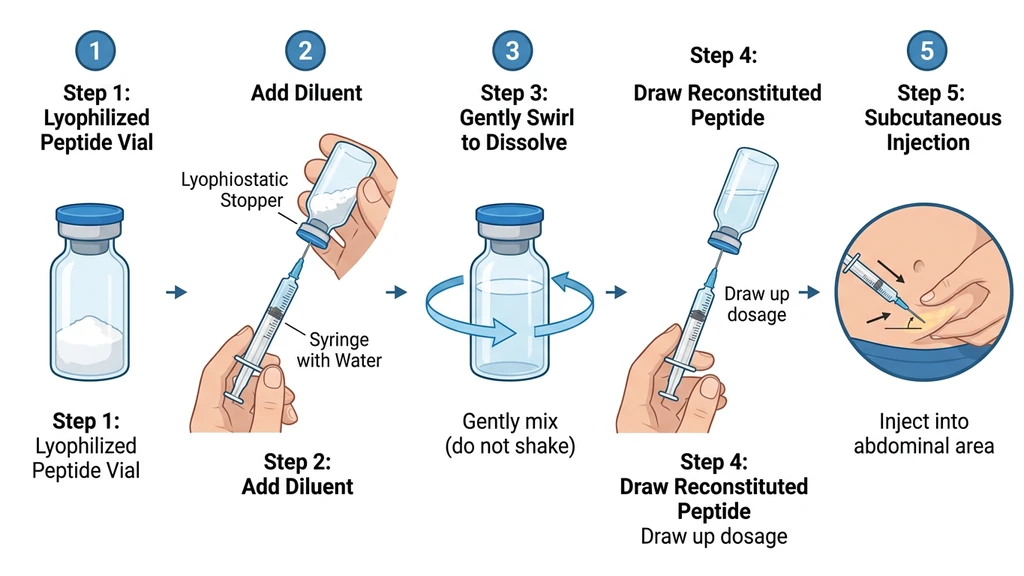
Step 1: Reconstitute. Remove the plastic cap from the vial. Wipe the rubber stopper with an alcohol swab. Draw bacteriostatic water into a syringe (typically 1 to 2 mL) and inject it slowly down the inside wall of the vial. Do not squirt it onto the powder.
Step 2: Mix gently. Swirl the vial between your fingers. Never shake. The powder should dissolve completely within 30 to 60 seconds, leaving a clear liquid. Refrigerate immediately.
Step 3: Calculate your dose. Use the Peptide Reconstitution Calculator. Enter the vial size (e.g., 5 mg), how much water you added (e.g., 2 mL), and the dose you want (e.g., 250 mcg). It tells you exactly how many units to draw.
Step 4: Draw. Wipe the vial stopper with a fresh alcohol swab. Insert the needle, turn the vial upside down, and draw the number of units the calculator told you.
Step 5: Inject. Wipe the injection site (belly, thigh, or upper arm) with an alcohol swab. Pinch the skin, insert at 45 degrees, push the plunger slowly, remove, and dispose of the needle in your sharps container.
That is it. The entire process takes under two minutes once you have done it twice. For detailed help with the math, see How to Reconstitute Peptides.
Recovery and Healing Peptide Dosages
These peptides help your body heal faster from injuries: torn tendons, strained muscles, damaged gut lining, and post-surgery recovery. BPC-157 and TB-500 are the two most popular. Many people use them together (called the "Wolverine Stack") because they heal through different pathways and amplify each other's effects. Both are well-tolerated with minimal side effects.
BPC-157 Dosage Protocol
What it does: BPC-157 accelerates healing of tendons, ligaments, muscles, and gut tissue. It is the most popular peptide for injury recovery and the one most beginners start with. If you have a nagging injury that will not heal, this is likely where you should begin.
How it works: BPC-157 is a synthetic fragment of a protein naturally found in your stomach acid. It promotes new blood vessel growth at injury sites (angiogenesis) and reduces inflammation. A systematic review covering 36 studies from 1993 to 2024 (PMC 12313605) confirmed healing benefits across gut, musculoskeletal, and neurological tissue.
Dosing tiers:
| Level | Dose | Frequency | Route | Duration |
|---|---|---|---|---|
| Beginner | 250 mcg/day | 1x daily | SubQ near injury | 4-6 weeks |
| Standard | 500 mcg/day | 1-2x daily | SubQ near injury | 4-6 weeks |
| Advanced | 750 mcg/day | 2x daily (split) | SubQ / IM | 4-8 weeks |
Subcutaneous injection near the injury site delivers the fastest localized effect. Systemic injection (abdomen) also works because BPC-157 migrates to sites of inflammation. Oral dosing (500 mcg to 1 mg in capsules) targets gut-related conditions: IBS, leaky gut, NSAID-induced gastric damage.
A 2025 Phase I trial (Lee & Burgess, 2025) demonstrated that IV BPC-157 doses up to 20 mg were tolerated in healthy volunteers with no serious adverse events. This is 40 times the standard subcutaneous dose, suggesting a wide safety margin.
Related resources: BPC-157 Dosage Calculator | BPC-157 Profile | BPC-157 Side Effects
TB-500 Dosage Protocol
What it does: TB-500 heals injuries from the inside out. Unlike BPC-157 (which works best near the injury), TB-500 travels through your entire body and finds damaged tissue wherever it is. One injection in your belly can reach a torn shoulder, a bad knee, or an inflamed gut.
How it works: TB-500 is a synthetic fragment of Thymosin Beta-4, a protein your body uses to move healing cells to damaged areas and build new blood vessels. It works systemically: a single subcutaneous injection in the abdomen reaches damaged tissue throughout the body.
Dosing tiers:
| Phase | Dose | Frequency | Duration |
|---|---|---|---|
| Loading (Beginner) | 2 mg | 2x/week | 4-6 weeks |
| Loading (Standard) | 2.5 mg | 2x/week | 4-6 weeks |
| Loading (Advanced) | 5 mg | 2x/week | 4-6 weeks |
| Maintenance | 2 mg | 1x/week | 4-8 weeks |
The loading phase builds serum levels of thymosin beta-4 fragments. Skipping the loading phase is the most common dosing mistake. Maintenance alone is insufficient for acute injury healing.
TB-500 stacks with BPC-157 for what practitioners call the "Wolverine Stack." BPC-157 handles localized repair; TB-500 handles systemic inflammation and vascular remodeling. The combination is the most widely used recovery protocol in the peptide community.
Related resources: TB-500 Dosage Calculator | TB-500 Profile | TB-500 Dosage Chart
Weight Loss Peptide Dosages
These peptides help you lose weight by reducing appetite, burning fat, or both. The three most effective (semaglutide, tirzepatide, retatrutide) are GLP-1 agonists: they mimic a natural gut hormone that tells your brain you are full. Clinical trials showed 15 to 24% body weight loss over one year. Three additional peptides target fat through different mechanisms. All weight loss peptides use a slow "titration" approach: you start at a low dose and increase gradually over weeks to minimize side effects (mainly nausea).
Semaglutide Dosage Protocol
What it does: Semaglutide dramatically reduces appetite. You eat less because you genuinely feel full sooner. It is FDA-approved for weight loss (brand name Wegovy) and for diabetes (brand name Ozempic). In clinical trials, participants lost an average of 14.9% of their body weight over 68 weeks (published in the New England Journal of Medicine).
How it works: Semaglutide mimics a gut hormone called GLP-1. This hormone signals your brain to stop eating, slows down how fast food leaves your stomach, and improves how your body handles insulin.
Titration schedule:
| Weeks | Dose | Notes |
|---|---|---|
| 1-4 | 0.25 mg/wk | Titration start |
| 5-8 | 0.5 mg/wk | Assess GI tolerance |
| 9-12 | 1.0 mg/wk | Most users stabilize here |
| 13-16 | 1.7 mg/wk | If weight loss plateaus |
| 17+ | 2.4 mg/wk | Maximum approved dose |
Inject once weekly on the same day each week. Rotate injection sites (abdomen, thigh, upper arm). Nausea is the primary side effect during titration; it typically resolves within two to three weeks at each dose level.
Do not skip titration steps. Jumping from 0.25 mg to 1.0 mg triggers severe nausea and vomiting in most users. The four-week intervals at each dose level allow GI adaptation.
Related resources: Semaglutide Dosage Calculator | Semaglutide Profile
Tirzepatide Dosage Protocol
What it does: Tirzepatide is a stronger weight loss peptide than semaglutide. It targets two appetite hormones instead of one, producing more weight loss in clinical trials: 22.5% of body weight over 72 weeks. A 2025 head-to-head study confirmed it: tirzepatide users lost 20.2% vs 13.7% for semaglutide. FDA-approved as Mounjaro (diabetes) and Zepbound (obesity).
How it works: Tirzepatide activates both GIP and GLP-1 receptors simultaneously. Think of semaglutide as pressing one appetite-suppression button; tirzepatide presses two.
Titration schedule:
| Weeks | Dose | Notes |
|---|---|---|
| 1-4 | 2.5 mg/wk | Starting dose |
| 5-8 | 5.0 mg/wk | First escalation |
| 9-12 | 7.5 mg/wk | Intermediate |
| 13-16 | 10 mg/wk | Effective for most |
| 17-20 | 12.5 mg/wk | If needed |
| 21+ | 15 mg/wk | Maximum approved dose |
Each dose escalation occurs at four-week intervals minimum. Some practitioners hold patients at 10 mg if weight loss trajectory is satisfactory, reserving higher doses for plateaus.
Related resources: Tirzepatide Dosage Calculator | Tirzepatide Profile
Retatrutide Dosage Protocol
What it does: Retatrutide is the most powerful weight loss peptide studied so far. It produced roughly 24% body weight loss in trials, more than semaglutide or tirzepatide. It is not yet FDA-approved (still in Phase 3 trials as of February 2026), so it is only available through research suppliers.
How it works: Retatrutide hits three targets instead of two: GIP, GLP-1, and glucagon receptors. The third target (glucagon) makes your body burn more calories even at rest, adding a fat-burning effect on top of appetite suppression.
Titration schedule:
| Weeks | Dose | Notes |
|---|---|---|
| 1-4 | 1 mg/wk | Starting dose |
| 5-8 | 2 mg/wk | First escalation |
| 9-12 | 4 mg/wk | Intermediate |
| 13-16 | 8 mg/wk | Standard target |
| 17+ | 12 mg/wk | Maximum studied dose |
Retatrutide's glucagon receptor activation provides an additional thermogenic effect absent from semaglutide and tirzepatide. This third pathway increases energy expenditure independent of appetite suppression. GI side effects parallel those of other incretin therapies: nausea, diarrhea, and constipation during dose escalation.
Related resources: Retatrutide Dosage Calculator | Retatrutide Profile
AOD 9604 Dosage Protocol
What it does: AOD 9604 helps burn fat without the side effects of full growth hormone. It tells fat cells to release stored energy. It does not affect blood sugar or cause growth-related side effects.
How it works: AOD 9604 is a small piece of human growth hormone (amino acids 177-191), specifically the fat-burning fragment. It triggers lipolysis (fat breakdown) without raising IGF-1 levels, which is the main concern with full HGH.
Dosing tiers:
| Level | Dose | Frequency | Timing |
|---|---|---|---|
| Beginner | 300 mcg/day | 1x daily | Morning fasted |
| Standard | 500 mcg/day | 1x daily | Morning fasted |
| Advanced | 1 mg/day | 1x daily | Morning fasted |
Fasted administration is standard protocol. AOD 9604's lipolytic activity is blunted by insulin. Inject at least 30 minutes before eating. Clinical data supporting fat loss in humans remains limited; most evidence comes from in vitro and animal models.
Related resources: AOD 9604 Profile | AOD-9604 Before and After | AOD-9604 Dosage and Side Effects
HGH Fragment 176-191 Dosage Protocol
What it does: HGH Fragment 176-191 burns fat, similar to AOD 9604. The two are closely related (same region of growth hormone, slightly different structure). You take it twice a day on an empty stomach for maximum effect.
How it works: This fragment is the fat-burning tail of human growth hormone. It activates the same fat-cell receptor pathway (beta-3 adrenergic) as AOD 9604, triggering stored fat to be released and burned.
Dosing tiers:
| Level | Dose | Frequency | Timing |
|---|---|---|---|
| Beginner | 150 mcg | 2x daily | Morning fasted + before bed |
| Standard | 250 mcg | 2x daily | Morning fasted + before bed |
| Advanced | 500 mcg | 2x daily | Morning fasted + before bed |
Splitting the dose into two administrations (AM and PM) maintains more consistent lipolytic signaling across a 24-hour period. As with AOD 9604, avoid eating within 30 minutes of injection. Fasted-state dosing is non-negotiable for this peptide.
Related resources: HGH Fragment Dosage Calculator | HGH Fragment Profile
5-Amino-1MQ Dosage Protocol
What it does: 5-Amino-1MQ helps your body burn fat instead of storing it. The big advantage: you swallow a capsule instead of injecting. No needles, no reconstitution, no syringes.
How it works: Your fat cells overproduce an enzyme called NNMT that promotes fat storage. 5-Amino-1MQ blocks this enzyme, shifting your metabolism toward burning fat and increasing NAD+ (a molecule involved in energy production). Animal studies (Neelakantan et al., Biochemical Pharmacology, 2018) showed significant body fat reduction without changes in food intake.
Dosing tiers:
| Level | Dose | Frequency | Route |
|---|---|---|---|
| Beginner | 50 mg/day | 1x daily | Oral capsule |
| Standard | 100 mg/day | 1-2x daily | Oral capsule |
| Advanced | 150 mg/day | 1-2x daily | Oral capsule |
Morning dosing is preferred because of its stimulatory effect on cellular metabolism. Human clinical data remains preliminary.
Related resources: 5-Amino-1MQ Profile
Growth Hormone Peptide Dosages
These peptides tell your body to make more of its own growth hormone (GH). They do not inject synthetic GH into your body. Instead, they signal your pituitary gland (a small gland at the base of your brain) to release more of what it already produces. This is a safer approach because your body's natural feedback system stays intact. Benefits include better sleep, faster recovery, improved body composition, and healthier skin.
CJC-1295 and Ipamorelin Combined Dosage Protocol
What they do: CJC-1295 and Ipamorelin are almost always used together. The combination is the most popular growth hormone stack and the best starting point for anyone interested in GH peptides. Benefits include deeper sleep, faster recovery, fat loss, and improved skin quality.
How they work: Your body releases growth hormone through a two-step process: one signal says "make GH" (that is CJC-1295's job) and another says "release it now" (that is Ipamorelin's job). Using both together produces a much bigger GH pulse than either one alone. Teichman et al. (JCEM, 2006, PMID: 16352683) confirmed dose-dependent GH elevation in healthy adults.
Combined dosing tiers:
| Level | CJC-1295 | Ipamorelin | Frequency | Timing |
|---|---|---|---|---|
| Beginner | 100 mcg | 100 mcg | 2x daily | Before bed + AM |
| Standard | 100-200 mcg | 200 mcg | 2-3x daily | Before bed + AM + post-workout |
| Advanced | 200 mcg | 300 mcg | 3x daily | Before bed + AM + post-workout |
Administer on an empty stomach. Carbohydrates and fats blunt GH release. The pre-bedtime dose is the most important because it amplifies the natural nocturnal GH pulse. Cycle for 8 to 12 weeks, then take 4 weeks off to prevent desensitization.
Related resources: CJC-1295 + Ipamorelin Calculator | CJC-1295 Profile | Ipamorelin Profile
Sermorelin Dosage Protocol
What it does: Sermorelin boosts growth hormone with a single daily injection before bed. It is gentler and slower-acting than CJC-1295/Ipamorelin, making it a good choice for people who want a low-maintenance GH protocol. Results build gradually over months: better sleep first, then body composition, then skin improvements.
How it works: Sermorelin is a shortened version of the hormone your brain uses to trigger GH release. The FDA approved it in 1997 for children with growth hormone deficiency. It was discontinued in 2008 due to manufacturing issues (not safety concerns) and is still available through compounding pharmacies.
Dosing tiers:
| Level | Dose | Frequency | Timing |
|---|---|---|---|
| Beginner | 100 mcg/day | 1x daily | Before bed |
| Standard | 200-300 mcg/day | 1x daily | Before bed |
| Advanced | 500 mcg/day | 1x daily | Before bed |
Sermorelin protocols run longer than CJC/Ipamorelin cycles. Three to six months is standard because sermorelin's GH elevation is more gradual and cumulative. Results build over time: improved sleep quality in weeks two to four, body composition changes by month two, skin and recovery improvements by month three.
Related resources: Sermorelin Profile | Sermorelin for Fat Loss
MK-677 (Ibutamoren) Dosage Protocol
What it does: MK-677 raises growth hormone levels with a single pill before bed. No injections. No mixing. Swallow a capsule and your GH and IGF-1 levels stay elevated for 24 hours. This makes it the easiest GH-boosting option for people who dislike needles.
How it works: MK-677 mimics ghrelin, the "hunger hormone." When ghrelin signals rise, your pituitary releases more growth hormone. MK-677 tricks this system into producing a sustained GH elevation without actual hunger (though appetite does increase).
Dosing tiers:
| Level | Dose | Frequency | Timing |
|---|---|---|---|
| Beginner | 10 mg/day | 1x daily | Before bed |
| Standard | 12.5-25 mg/day | 1x daily | Before bed |
| Advanced | 25 mg/day | 1x daily | Before bed |
Bedtime dosing is standard. MK-677 amplifies the nocturnal GH pulse and increases appetite within one to two hours of ingestion. Taking it before bed sidesteps hunger-related compliance issues. Water retention and mild joint stiffness are common at 25 mg; these effects are dose-dependent and resolve with dose reduction.
MK-677 increases fasting blood glucose and insulin levels. Monitor HbA1c during extended cycles. This is not a benign oral supplement: treat it with the same caution as any GH-elevating compound.
Related resources: MK-677 Profile
IGF-1 LR3 Dosage Protocol
What it does: IGF-1 LR3 directly builds muscle. While other GH peptides work by raising growth hormone (which then raises IGF-1), this one skips the middleman and delivers IGF-1 directly. It is the most potent peptide for muscle growth but also carries more risk than the others in this section.
How it works: IGF-1 LR3 is a modified version of insulin-like growth factor 1, engineered to last 20 to 30 hours in the body instead of 12 minutes. It stimulates muscle cell growth and prevents muscle breakdown.
Dosing tiers:
| Level | Dose | Frequency | Timing |
|---|---|---|---|
| Beginner | 20 mcg/day | 1x daily | Post-workout |
| Standard | 40-60 mcg/day | 1x daily | Post-workout |
| Advanced | 80-100 mcg/day | 1x daily | Post-workout |
Post-workout timing maximizes the anabolic window when muscle tissue is primed for nutrient uptake and repair. Hypoglycemia is a real risk at doses above 60 mcg, particularly when combined with insulin or during caloric restriction. Keep fast-acting carbohydrates accessible during the first hour after injection.
Cycle length is short: 4 to 6 weeks maximum. Prolonged IGF-1 LR3 use downregulates IGF-1 receptors. Extended breaks between cycles (at least 4 weeks) are mandatory for receptor resensitization.
Related resources: IGF-1 LR3 Profile | IGF-1 LR3 Dosage Protocol
Anti-Aging and Longevity Peptide Dosages
These peptides target the mechanisms that make your body age: collagen loss (wrinkles, joint stiffness), telomere shortening (cellular aging), and mitochondrial decline (low energy, metabolic slowdown). None are FDA-approved for anti-aging, but research is promising. GHK-Cu is the most beginner-friendly in this category because it is a naturally occurring compound your body already produces.
GHK-Cu Dosage Protocol
What it does: GHK-Cu rebuilds collagen, the protein that keeps your skin firm, your joints smooth, and your hair healthy. Your body naturally produces GHK-Cu, but levels drop by 60% between age 20 and 60. Supplementing it reverses some of that decline. Many people notice firmer skin, faster wound healing, and thicker hair.
How it works: GHK-Cu (glycyl-L-histidyl-L-lysine copper complex) activates over 4,000 genes involved in tissue remodeling. It stimulates collagen production, reduces inflammation, and promotes wound healing. Available as both an injection and a skin cream.
Dosing tiers:
| Level | Dose | Frequency | Route | Duration |
|---|---|---|---|---|
| Beginner | 1 mg/day | 1x daily | SubQ | 4-6 weeks |
| Standard | 1-2 mg/day | 1x daily | SubQ | 4-6 weeks |
| Advanced | 3 mg/day | 1x daily | SubQ | 4-6 weeks |
Topical application (creams containing 1-3% GHK-Cu) targets skin-specific aging: wrinkles, laxity, and hyperpigmentation. Injectable protocols address systemic collagen remodeling: joints, hair, internal tissue repair. Many practitioners combine both routes for comprehensive coverage.
Related resources: GHK-Cu Profile | GHK-Cu Dosage Guide
Epitalon Dosage Protocol
What it does: Epitalon targets biological aging at the chromosomal level. Each time your cells divide, their telomeres (protective caps on chromosomes) get shorter. When they get too short, the cell stops functioning. Epitalon activates the enzyme that rebuilds these caps. Users often report improved sleep and a sense of rejuvenation.
How it works: Epitalon is a synthetic version of epithalamin, a substance from the pineal gland studied by Russian gerontologist Vladimir Khavinson. It activates telomerase, the enzyme that maintains telomere length. Khavinson's research showed increased telomere length in human cell cultures and extended lifespan in animal models.
Dosing tiers:
| Level | Dose | Frequency | Duration | Cycles per Year |
|---|---|---|---|---|
| Beginner | 5 mg/day | 1x daily | 10 days | 2 |
| Standard | 10 mg/day | 1x daily | 10-20 days | 2 |
| Advanced | 10 mg/day | 1x daily | 20 days | 2-3 |
Epitalon protocols are short and intense: 10 to 20 consecutive days, repeated two to three times per year. Evening administration aligns with the pineal gland's natural circadian activity. Some users report improved sleep onset and vivid dreams during Epitalon cycles, consistent with its pineal modulation.
Related resources: Epitalon Profile
MOTS-C Dosage Protocol
What it does: MOTS-C is sometimes called the "exercise in a vial" peptide. It activates the same metabolic pathways that exercise does, promoting fat burning and improving how your mitochondria (the energy factories in your cells) function. It targets belly fat specifically while preserving muscle.
How it works: MOTS-C is a naturally occurring mitochondrial peptide discovered at USC in 2015. It activates AMPK, the same metabolic switch your body flips during exercise. No completed human clinical trials exist yet, though Phase 1 data for the analog CB4211 showed promising metabolic improvements.
Dosing tiers:
| Level | Dose | Frequency | Duration |
|---|---|---|---|
| Beginner | 5 mg | 3x/week | 4-8 weeks |
| Standard | 10 mg | 3x/week | 4-8 weeks |
| Advanced | 10 mg | 5x/week | 4-8 weeks |
Morning dosing maximizes synergy with daytime physical activity. MOTS-C promotes fat oxidation through AMPK-mediated lipolysis and targets visceral fat specifically. Unlike GLP-1 agonists, it preserves lean muscle mass during caloric restriction.
Related resources: MOTS-C Profile | MOTS-C Dosage Guide
Sleep and Neuroprotective Peptide Dosages
These peptides improve sleep quality, sharpen cognition, or reduce anxiety. DSIP deepens your sleep without the grogginess of sleeping pills. Semax sharpens focus and memory. Selank calms anxiety without sedation. All three use tiny doses and have mild side effect profiles. Semax and Selank are nasal sprays (no injection needed).
DSIP Dosage Protocol
What it does: DSIP improves the deepest, most restorative phase of sleep (called "delta sleep" or slow-wave sleep). Unlike sleeping pills, it does not knock you out or leave you groggy the next morning. A 1984 study found a 59% increase in deep sleep duration in chronic insomnia patients.
How it works: DSIP (Delta Sleep-Inducing Peptide) is a nine-amino-acid neuropeptide that modulates your brain's sleep architecture. It enhances slow-wave sleep without causing sedation, distinguishing it from drugs like Ambien or benzodiazepines.
Dosing tiers:
| Level | Dose | Frequency | Timing |
|---|---|---|---|
| Beginner | 100 mcg | 1x nightly | 2-3 hours before bed |
| Standard | 200 mcg | 1x nightly | 2-3 hours before bed |
| Advanced | 300 mcg | 1x nightly | 2-3 hours before bed |
Administer two to three hours before intended sleep time, not immediately at bedtime. DSIP modulates sleep-promoting pathways rather than inducing acute sedation; the delay allows these mechanisms to activate. Cycle for 2 to 4 weeks, then assess. Chronic uninterrupted use beyond 4 weeks lacks safety data.
Related resources: DSIP Profile
Semax Dosage Protocol
What it does: Semax sharpens mental focus, improves memory, and speeds up learning. It is a nasal spray: two squirts in the morning and you are done. Developed and approved in Russia for stroke recovery and cognitive decline. No injections required.
How it works: Semax increases BDNF (brain-derived neurotrophic factor), a protein that supports the growth and survival of brain cells. It also modulates serotonin and dopamine. Despite being derived from a stress hormone (ACTH), it does not raise cortisol levels.
Dosing tiers:
| Level | Dose | Frequency | Route |
|---|---|---|---|
| Beginner | 200 mcg/day | 1x daily | Nasal spray |
| Standard | 400 mcg/day | 1-2x daily | Nasal spray |
| Advanced | 600 mcg/day | 2x daily | Nasal spray |
Nasal administration provides rapid CNS penetration via the olfactory mucosa. Morning dosing is standard; adding a second dose in the early afternoon extends cognitive benefits through the workday. Avoid evening dosing because Semax may interfere with sleep onset due to its stimulatory BDNF activity. Cycle for 2 to 4 weeks with equal time off.
Related resources: Semax Profile
Selank Dosage Protocol
What it does: Selank reduces anxiety. Its calming effect is comparable to medications like Xanax, but without drowsiness, brain fog, or addiction risk. It is a nasal spray that works within 5 to 10 minutes. Approved in Russia for generalized anxiety disorder.
How it works: Selank is a synthetic version of tuftsin, a naturally occurring immune peptide. It modulates GABA receptors (the same system benzodiazepines target) but without suppressing cognitive function or creating dependence.
Dosing tiers:
| Level | Dose | Frequency | Route |
|---|---|---|---|
| Beginner | 250 mcg/day | 1x daily | Nasal spray |
| Standard | 500 mcg/day | 1-2x daily | Nasal spray |
| Advanced | 750 mcg/day | 2x daily | Nasal spray |
Selank works within 5 to 10 minutes of nasal administration. Effects last 3 to 4 hours. Morning dosing covers work-related anxiety; a second afternoon dose extends coverage. Unlike Semax, Selank does not interfere with sleep and can be used in the evening if needed. Cycle 2 to 4 weeks on, 2 to 4 weeks off.
Related resources: Selank Profile
Immune and Anti-Inflammatory Peptide Dosages
These peptides strengthen your immune system or reduce chronic inflammation. Thymosin Alpha 1 boosts your body's T-cells (the immune cells that fight infections and cancer). KPV calms inflammation at the cellular level, making it useful for gut issues, skin conditions, and autoimmune flare-ups. Both have strong safety profiles.
Thymosin Alpha 1 Dosage Protocol
What it does: Thymosin Alpha 1 strengthens your immune system by maturing T-cells (the white blood cells that detect and destroy infections and abnormal cells). It is one of the most clinically proven peptides on this list, approved in over 35 countries for hepatitis B and C treatment.
How it works: Your thymus gland (located behind your breastbone) naturally produces Thymosin Alpha 1 to train immune cells. The synthetic version (brand name Zadaxin) enhances T-cell function, dendritic cell activity, and balanced cytokine production. Decades of clinical use confirm it is one of the safest peptides available.
Dosing tiers:
| Level | Dose | Frequency | Timing |
|---|---|---|---|
| Beginner | 1.5 mg | Every other day | Morning |
| Standard | 1.5 mg | Daily | Morning |
| Advanced | 3 mg | Daily | Morning |
The 1.5 mg every-other-day protocol mirrors the approved Zadaxin regimen. Daily dosing is reserved for acute immune challenges or practitioner-guided protocols. Thymosin Alpha 1 is one of the safest peptides in clinical use; decades of human data confirm a clean side effect profile.
Related resources: Thymosin Alpha 1 Profile
KPV Dosage Protocol
What it does: KPV shuts down inflammation. It is especially effective for gut problems (IBD, colitis, leaky gut) when taken orally, and for systemic inflammation (joints, skin, autoimmune conditions) when injected. Unlike anti-inflammatory drugs, KPV does not suppress your overall immune system.
How it works: KPV is a tiny three-amino-acid fragment of alpha-MSH, a natural anti-inflammatory hormone. It retains the full anti-inflammatory power of the parent hormone without causing skin tanning. Unlike Melanotan II, KPV does not activate melanocortin receptors.
Dosing tiers:
| Level | Dose | Frequency | Route |
|---|---|---|---|
| Beginner | 200 mcg/day | 1x daily | SubQ or Oral |
| Standard | 500 mcg/day | 1x daily | SubQ or Oral |
| Advanced | 1 mg/day | 1x daily | SubQ or Oral |
Oral administration (500 mcg to 1.5 mg/day) targets gut-specific inflammation: IBD, colitis, and intestinal barrier dysfunction. Subcutaneous injection addresses systemic inflammation: joints, skin, and autoimmune conditions. Morning dosing is standard. Preclinical studies demonstrate potent NF-kB inhibition and IL-10 elevation at microgram-level doses.
Related resources: KPV Dosage Guide
Sexual Health and Other Peptide Dosages
These peptides increase libido and sexual function. PT-141 is the standout: FDA-approved, proven in clinical trials, and used as-needed (not daily). Melanotan II primarily causes skin tanning but also increases libido as a secondary effect. Kisspeptin is strictly a research compound used only in clinical settings.
PT-141 (Bremelanotide) Dosage Protocol
What it does: PT-141 increases sexual desire. Unlike Viagra (which only affects blood flow), PT-141 works in the brain to increase actual arousal and desire. It is FDA-approved for women (brand name Vyleesi) and widely used off-label by men, especially when Viagra or Cialis stop working. You take it only when needed, 45 to 60 minutes before.
How it works: PT-141 activates melanocortin-4 receptors in the hypothalamus, the part of your brain that controls sexual desire. This is a fundamentally different approach than PDE5 inhibitors (Viagra, Cialis), which only increase blood flow without affecting desire.
Dosing tiers:
| Level | Dose | Timing | Max Frequency |
|---|---|---|---|
| Beginner | 0.5 mg | 45-60 min before activity | 8x/month |
| Standard | 1-1.5 mg | 45-60 min before activity | 8x/month |
| Advanced | 2 mg | 45-60 min before activity | 8x/month |
The approved Vyleesi dose is 1.75 mg. Community protocols range from 0.5 mg to 2 mg. Nausea is the primary side effect and is dose-dependent; starting at 0.5 mg and titrating up minimizes this. Do not exceed 8 doses per month. PT-141 is an as-needed peptide, not a daily protocol.
Related resources: PT-141 Profile
Melanotan II Dosage Protocol
What it does: Melanotan II produces a deep tan without UV exposure (or with minimal sun). It also increases libido and reduces appetite as secondary effects. The first injection almost always causes nausea, which goes away after a few doses. Not FDA-approved. Requires careful mole monitoring.
How it works: Melanotan II activates melanocortin receptors that stimulate melanin production in your skin (the pigment that causes tanning). Because it hits multiple melanocortin receptor types, it also affects appetite and sexual desire.
Dosing tiers:
| Phase | Dose | Frequency | Duration |
|---|---|---|---|
| Loading (Beginner) | 250 mcg | 1x daily | 2-3 weeks |
| Loading (Standard) | 500 mcg | 1x daily | 2-3 weeks |
| Loading (Advanced) | 1 mg | 1x daily | 2-3 weeks |
| Maintenance | 500 mcg | 1-2x/week | Ongoing |
Start at 250 mcg on the first injection to assess tolerance. Nausea is almost universal on the first dose. Increase to 500 mcg on the second or third injection if tolerated. The loading phase builds melanin; maintenance preserves it with less frequent dosing. Monitor moles carefully during Melanotan II use. Any mole changes require immediate dermatological evaluation.
Related resources: Melanotan II Profile
Kisspeptin Dosage Protocol
What it does: Kisspeptin triggers your body to produce more reproductive hormones (testosterone in men, estrogen in women). It is used in clinical research to study fertility and sexual function. This is not a self-administration peptide. It requires weight-based dosing and IV or SubQ administration under clinical supervision.
How it works: Kisspeptin signals your brain to release GnRH (gonadotropin-releasing hormone), which triggers a cascade: your pituitary releases LH and FSH, which stimulate your reproductive organs. Published human studies (Dhillo et al., JCEM, 2005) used IV bolus doses and observed rapid hormonal responses.
Research dosing (clinical settings only):
| Level | Dose | Route | Setting |
|---|---|---|---|
| Low | 1 mcg/kg | IV or SubQ | Clinical trial |
| Standard | 5 mcg/kg | IV or SubQ | Clinical trial |
| High | 10 mcg/kg | IV or SubQ | Clinical trial |
Self-administration of kisspeptin outside clinical supervision is not recommended due to the need for precise weight-based dosing and IV/SubQ technique.
Related resources: Kisspeptin Profile
Weight Loss Peptide Dosage Comparison Chart (2026)
The three GLP-1 track peptides produce dramatically different weight loss outcomes. This comparison synthesizes published clinical trial data into a single reference.
| Peptide | Mechanism | Starting Dose | Max Dose | Frequency | Expected Weight Loss | FDA Status |
|---|---|---|---|---|---|---|
| Semaglutide | GLP-1 agonist | 0.25 mg/wk | 2.4 mg/wk | Weekly | ~14.9% over 68 wk | Approved (Wegovy) |
| Tirzepatide | GIP + GLP-1 | 2.5 mg/wk | 15 mg/wk | Weekly | ~22.5% over 72 wk | Approved (Zepbound) |
| Retatrutide | GIP + GLP-1 + GCG | 1 mg/wk | 12 mg/wk | Weekly | ~24% over 48 wk | Phase 3 |
| AOD 9604 | HGH fragment | 300 mcg/day | 1 mg/day | Daily | Limited data | Not approved |
| HGH Frag 176-191 | HGH fragment | 150 mcg 2x/day | 500 mcg 2x/day | 2x daily | Limited data | Not approved |
| 5-Amino-1MQ | NNMT inhibitor | 50 mg/day | 150 mg/day | Daily (oral) | Limited data | Not approved |
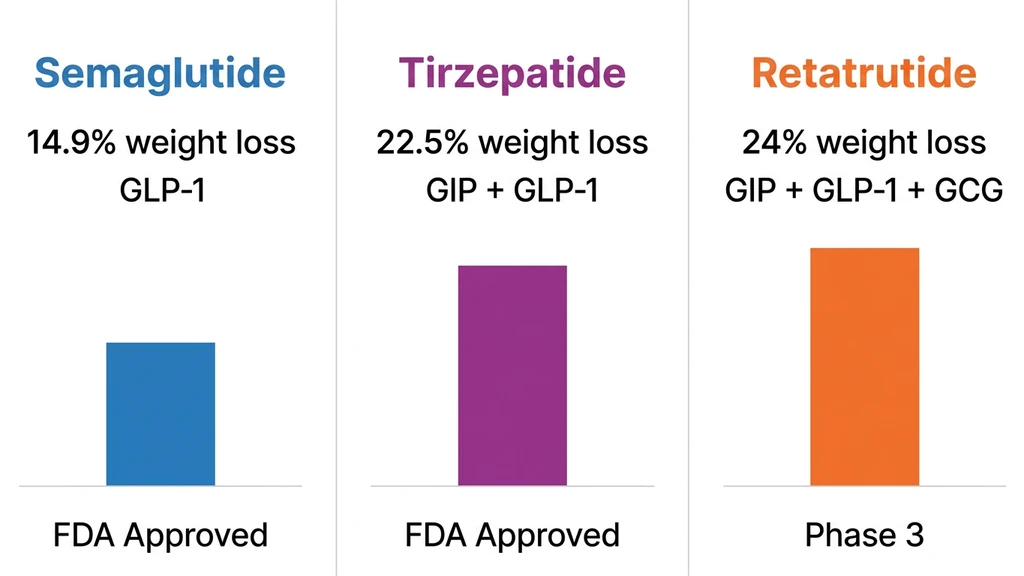
The numbers tell a clear story. Each generation of incretin therapy produces greater weight loss than the last. Semaglutide, the first dedicated GLP-1 obesity treatment, achieved 14.9% body weight reduction in the STEP 1 trial. Tirzepatide added GIP receptor activation and pushed results to 22.5%. Retatrutide layered glucagon receptor agonism on top and reached approximately 24% in Phase 2 data.
The head-to-head data is equally decisive. The 2025 NEJM trial comparing tirzepatide directly against semaglutide showed 20.2% versus 13.7% weight loss over the same treatment period. Dual agonism outperforms single agonism.
AOD 9604, HGH Fragment 176-191, and 5-Amino-1MQ operate through entirely different pathways and lack the large-scale RCT data supporting the GLP-1 class. They may serve as adjuncts but should not be considered first-line weight loss peptides based on current evidence.
For a detailed analysis of all weight loss peptide options, see Best Peptides for Weight Loss.
How to Reconstitute and Measure Peptide Doses
Peptides arrive as a dry powder (called "lyophilized" or freeze-dried) in a small glass vial. You cannot inject the powder directly. You need to add sterile water to dissolve it into a liquid, then draw the correct amount with a syringe. This process is called reconstitution. It sounds complicated but takes under two minutes. The math is straightforward, and our calculator does it for you.
The reconstitution formula:
Concentration (mcg/mL) = Vial Size (mcg) / Water Added (mL)
Volume to Draw (mL) = Desired Dose (mcg) / Concentration (mcg/mL)
Worked example: A 5 mg (5,000 mcg) vial reconstituted with 2 mL of bacteriostatic water yields a concentration of 2,500 mcg/mL. To inject 250 mcg, draw 0.10 mL (10 units on a standard insulin syringe). To inject 500 mcg, draw 0.20 mL (20 units).
Common reconstitution volumes:
| Vial Size | Water Added | Concentration | 100 mcg = | 250 mcg = | 500 mcg = |
|---|---|---|---|---|---|
| 2 mg | 1 mL | 2,000 mcg/mL | 0.05 mL (5 units) | 0.125 mL (12.5 units) | 0.25 mL (25 units) |
| 5 mg | 1 mL | 5,000 mcg/mL | 0.02 mL (2 units) | 0.05 mL (5 units) | 0.10 mL (10 units) |
| 5 mg | 2 mL | 2,500 mcg/mL | 0.04 mL (4 units) | 0.10 mL (10 units) | 0.20 mL (20 units) |
| 10 mg | 2 mL | 5,000 mcg/mL | 0.02 mL (2 units) | 0.05 mL (5 units) | 0.10 mL (10 units) |
| 10 mg | 3 mL | 3,333 mcg/mL | 0.03 mL (3 units) | 0.075 mL (7.5 units) | 0.15 mL (15 units) |
Use a standard 1 mL insulin syringe (100 units). Each unit on the syringe equals 0.01 mL. For doses requiring fractional units (e.g., 7.5 units), round to the nearest whole unit or use a higher reconstitution volume for easier measurement.
The Peptide Reconstitution Calculator eliminates manual math. Enter your vial size and water volume; it returns exact syringe measurements for any dose. For a step-by-step visual guide, see How to Reconstitute Peptides.
Peptide Stacking: Combined Dosing Protocols
"Stacking" means using two or more peptides at the same time. Done correctly, certain combinations produce better results than either peptide alone. Done incorrectly, you risk side effects, wasted money, or dangerous interactions. The three stacks below are the most popular and well-documented. If you are a beginner, master one peptide before adding a second.
BPC-157 + TB-500: The Wolverine Stack
This is the most popular peptide stack in existence. BPC-157 promotes localized healing through angiogenesis and nitric oxide modulation. TB-500 drives systemic repair through cell migration and blood vessel formation. Together, they address both local tissue damage and systemic inflammation.
Protocol:
| Peptide | Loading Phase (4-6 wk) | Maintenance (4-6 wk) |
|---|---|---|
| BPC-157 | 250-500 mcg/day | 250 mcg/day or stop |
| TB-500 | 2.5-5 mg 2x/week | 2 mg 1x/week |
Inject BPC-157 subcutaneously near the injury site. Inject TB-500 subcutaneously in the abdomen. They can be injected at the same time but should not be mixed in the same syringe unless stability data confirms compatibility.
CJC-1295 + Ipamorelin: GH Optimization Stack
The GHRH + GHRP combination amplifies growth hormone release beyond what either peptide achieves individually. CJC-1295 stimulates GH synthesis; Ipamorelin triggers GH release. The pairing mimics the body's natural two-signal GH regulation system.
Protocol:
| Peptide | Dose | Frequency | Timing |
|---|---|---|---|
| CJC-1295 (no DAC) | 100-200 mcg | 2-3x daily | Before bed + AM |
| Ipamorelin | 200-300 mcg | 2-3x daily | Before bed + AM |
Combine in the same injection if desired. Both peptides are stable in solution together. Administer on an empty stomach; food blunts GH release. The pre-bedtime dose is the priority.
Semaglutide + BPC-157: Weight Loss + Gut Healing
GLP-1 agonists commonly cause nausea, constipation, and GI discomfort during dose escalation. BPC-157's gastroprotective properties may reduce these side effects while supporting GI mucosa integrity. This combination addresses a practical limitation of semaglutide therapy.
Protocol:
| Peptide | Dose | Frequency | Notes |
|---|---|---|---|
| Semaglutide | Per titration schedule | 1x weekly | Follow standard escalation |
| BPC-157 | 250-500 mcg/day | 1x daily (oral) | Oral targets GI tract directly |
Oral BPC-157 capsules are preferred over injectable for this stack because the target is the gastrointestinal lining. This stack is practitioner-guided; do not combine prescription medications with research peptides without medical supervision.
Stack Safety and Interaction Checking
Before combining any peptides, verify there are no known contraindications. The Peptide Interaction Checker cross-references peptide combinations against documented interactions and side effect overlap. The Peptide Stack Calculator generates combined protocols with dosing, timing, and cost estimates.
General stacking rules: never combine two peptides that act on the same receptor at the same time. Do not stack more than three peptides simultaneously without practitioner guidance. Introduce one new peptide per week so side effects can be attributed to a specific compound.
Factors That Affect Peptide Dosing
The dosage chart gives ranges, not exact numbers, because the right dose depends on your body. Four factors determine where you should start and how to adjust.
Body Weight
Heavier individuals generally require higher absolute doses to achieve the same serum concentration. This is most relevant for weight-based peptides like kisspeptin (dosed in mcg/kg) and less relevant for receptor-saturating peptides like BPC-157, where tissue concentration at the injury site matters more than total body distribution.
For weight loss peptides, the relationship is inverse: semaglutide and tirzepatide use fixed-dose titration regardless of starting weight. A 300-pound patient starts at 0.25 mg semaglutide, the same as a 180-pound patient.
Age and Hormonal Status
Growth hormone peptides become more relevant with age because endogenous GH production declines approximately 14% per decade after age 30. A 50-year-old may respond more dramatically to CJC-1295/Ipamorelin than a 25-year-old because the baseline is lower.
Post-menopausal women and androgen-deficient men may respond differently to sexual health peptides like PT-141 and kisspeptin. Hormonal context shapes peptide response.
Goal and Experience Level
Recovery peptides (BPC-157, TB-500) scale with injury severity. A mild tendonitis protocol differs from a post-surgical recovery protocol even when using the same peptide.
First-time peptide users should always start at the beginner tier regardless of body size or fitness level. Two weeks at the lowest effective dose reveals individual sensitivity. Experienced users with documented tolerance may start at the standard tier.
Injection Site and Route of Administration
Subcutaneous injection deposits the peptide into the fat layer beneath the skin. Intramuscular injection places it directly in muscle tissue. Nasal sprays bypass the GI tract and enter the bloodstream through the olfactory mucosa. Oral administration subjects the peptide to gastric degradation, which is why most peptides cannot be taken orally. Exceptions like BPC-157 and 5-Amino-1MQ have specific formulations designed for oral stability.
Injection site rotation prevents lipodystrophy (fat tissue changes at overused sites). Rotate between abdomen, thigh, and upper arm. BPC-157 is the notable exception: injecting near the injury site delivers higher local concentrations.
Peptide Dosing Safety Guidelines
Getting the dose right is only half the equation. How you prepare, inject, and store your peptides matters just as much. Most problems (infections, reduced potency, unexpected reactions) come from poor technique or improper storage, not from the peptides themselves. Follow these rules from day one.
Start Low, Titrate Slowly
Every peptide protocol in this guide starts with a beginner dose. That is intentional. The first injection reveals individual sensitivity: allergic reactions, injection site reactions, blood pressure changes, and GI disturbance all surface within the first week.
Increase dose by one tier every one to two weeks. Document each change and its effects. If side effects appear at a higher dose, return to the previously tolerated dose. Not every user needs the advanced dose. Many achieve their goals at the standard tier.
Sterile Injection Technique
Use alcohol swabs on the vial stopper and injection site before every injection. Use a new sterile syringe and needle for each injection. Never reuse needles. Never share vials.
Draw bacteriostatic water slowly and inject it along the vial wall, not directly onto the lyophilized powder. Swirl gently; do not shake. Vigorous agitation denatures peptide bonds and reduces potency. For a complete visual walkthrough, see Peptide Injections: Complete Guide.
Storage and Shelf Life
Unreconstituted (lyophilized) peptides are stable at room temperature for shipping but should be refrigerated (2-8 C / 36-46 F) upon arrival. Reconstituted peptides must be refrigerated immediately and used within 28 to 30 days. Some peptides (IGF-1 LR3, MOTS-C) degrade faster and should be used within 14 to 21 days after reconstitution.
Never freeze reconstituted peptides. Freezing ruptures the solution's molecular structure and reduces bioavailability. Keep vials upright and away from light. Bacteriostatic water's preservative (benzyl alcohol at 0.9%) prevents microbial growth but does not halt peptide degradation indefinitely.
Regulatory Status Disclaimer
Semaglutide, tirzepatide, PT-141, and thymosin alpha 1 have regulatory approval in at least one country for at least one indication. All other peptides in this chart are sold as research chemicals. They are not approved by the FDA for human therapeutic use.
This article provides educational information based on published research. It does not constitute medical advice. Consult a licensed healthcare provider before using any peptide. Self-administration of research peptides carries inherent risks including contamination, incorrect dosing, and unknown long-term effects.
Common Dosing Mistakes
Most peptide side effects and disappointing results trace back to a handful of avoidable errors. These five mistakes account for the majority of problems reported in peptide communities.
1. Skipping the beginner tier. Starting at the standard or advanced dose eliminates your ability to isolate side effects. If nausea, headaches, or injection site reactions appear, you cannot tell whether lowering the dose would fix them. Always run two weeks at the beginner dose first.
2. Confusing mcg with mg. One milligram equals 1,000 micrograms. A user who injects 500 mg of BPC-157 instead of 500 mcg has taken a dose 1,000 times higher than intended. Double-check units on every vial label and every syringe draw. Use the Peptide Unit Converter to verify conversions.
3. Ignoring reconstitution volume in dose calculations. Adding 1 mL of bacteriostatic water to a 5 mg vial yields 5 mg/mL. Adding 2 mL yields 2.5 mg/mL. The same syringe draw delivers twice the dose at the higher concentration. Recalculate every time you reconstitute a new vial with a different water volume. The Peptide Reconstitution Calculator prevents this error.
4. Injecting growth hormone peptides at the wrong time. CJC-1295, ipamorelin, sermorelin, and MK-677 amplify the body's natural GH pulse, which peaks during deep sleep. Injecting these peptides in the morning blunts their primary mechanism. Take them 30 to 60 minutes before bed.
5. Stacking too many peptides at once. Introducing three peptides simultaneously makes it impossible to identify which one caused a side effect. Add one new peptide per week, document your response, and only add the next when the current one is well tolerated. Use the Peptide Interaction Checker before combining compounds.
Special Populations: Adjustments by Age, Gender, and Weight
Standard peptide doses work for most adults between 130 and 230 lbs (59-104 kg) aged 25 to 50. Users outside these ranges or with specific medical considerations should adjust their approach.
Adults Over 50
Metabolic clearance slows with age, meaning peptides stay active longer per dose. Start at the low end of the beginner tier and extend the observation period to three weeks instead of two before increasing. Growth hormone peptides (CJC-1295, ipamorelin, sermorelin) are particularly relevant for this population because endogenous GH production declines approximately 14% per decade after age 30.
Water retention and joint stiffness from GH peptides are more pronounced in older adults. Monitor blood glucose closely if using MK-677, which can raise fasting glucose by 5 to 15 mg/dL. Consult a physician about IGF-1 monitoring before starting any GH secretagogue.
Women
Most peptide doses are sex-neutral. BPC-157, TB-500, semaglutide, tirzepatide, and GHK-Cu use the same starting doses regardless of sex. The exceptions: PT-141 for women uses 1.75 mg subcutaneously (the FDA-approved Vyleesi dose), which differs from the research doses listed for men.
Post-menopausal women may respond more strongly to GH peptides due to lower baseline IGF-1 levels. Melanotan II and kisspeptin have sex-specific effects on reproductive hormones and should be discussed with an endocrinologist. Women who are pregnant, breastfeeding, or planning pregnancy should not use research peptides.
Under 150 lbs or Over 250 lbs
Most peptide protocols use fixed dosing, not weight-based dosing. A 140-lb user takes the same BPC-157 dose as a 220-lb user. The exceptions are kisspeptin (dosed per kg in research settings) and some practitioners who adjust TB-500 loading doses for users over 250 lbs (increasing from 5 mg to 7.5 mg twice weekly).
Users under 150 lbs may experience stronger side effects at standard doses, particularly with GLP-1 agonists. Titrate semaglutide and tirzepatide more slowly (hold each dose level for four weeks instead of the standard two to four weeks) if GI side effects are severe.
Frequently Asked Questions
How do you calculate peptide dosage?
Peptide dosage calculation requires two steps. First, determine the concentration after reconstitution: divide the vial size (in mcg) by the volume of bacteriostatic water added (in mL). Second, calculate the injection volume: divide the desired dose (in mcg) by the concentration (in mcg/mL). Example: a 5 mg (5,000 mcg) vial reconstituted with 2 mL yields 2,500 mcg/mL. For a 250 mcg dose, draw 0.10 mL (10 units on an insulin syringe). The Peptide Reconstitution Calculator performs this calculation instantly.
How to dose peptides for beginners?
Beginners should start at the lowest dose listed in the dosage chart for their chosen peptide and maintain it for one to two weeks. This reveals individual sensitivity and potential side effects. For example, BPC-157 beginners start at 250 mcg/day, semaglutide beginners start at 0.25 mg/week, and CJC-1295/Ipamorelin beginners start at 100 mcg each per injection. After two weeks with no adverse effects, increase to the standard dose. Never jump directly to the advanced dose.
How often should you inject peptides?
Injection frequency depends on the peptide's half-life and mechanism. BPC-157 is injected one to two times daily. TB-500 is injected two times per week during loading and once weekly during maintenance. Semaglutide and tirzepatide are injected once weekly. CJC-1295 and Ipamorelin are injected two to three times daily. PT-141 is used as needed. The master reference table at the top of this article lists the frequency for all 24 peptides.
How much peptide should I inject?
The amount depends on which peptide you are using, your experience level, and your goals. The peptide dosage chart above provides beginner, standard, and advanced doses for 24 peptides. Typical ranges: BPC-157 at 250 to 750 mcg/day, semaglutide at 0.25 to 2.4 mg/week, CJC-1295 at 100 to 200 mcg per injection, and TB-500 at 2 to 5 mg twice weekly. Start at the beginner dose and titrate upward.
Is peptide dosage based on body weight?
Most peptide doses are fixed, not weight-based. Semaglutide, tirzepatide, BPC-157, TB-500, and all growth hormone peptides use the same starting dose regardless of body weight. Kisspeptin is the notable exception, dosed at 1 to 10 mcg/kg in clinical research. Some practitioners adjust doses for individuals at extreme ends of the weight spectrum (under 120 lbs or over 300 lbs), but standard protocols use fixed dosing.
Can I take multiple peptides at the same time?
Yes, peptide stacking is common. Proven combinations include BPC-157 + TB-500 for recovery, CJC-1295 + Ipamorelin for growth hormone, and semaglutide + BPC-157 for weight loss with gut protection. However, not all combinations are safe. Avoid stacking two peptides that act on the same receptor, and introduce only one new peptide per week to isolate side effects. Use the Peptide Interaction Checker to verify compatibility before combining.
How long should a peptide cycle last?
Cycle length varies by peptide. BPC-157 and TB-500 run for 4 to 8 weeks. Growth hormone peptides (CJC-1295, Ipamorelin, MK-677) cycle 8 to 12 weeks with 4 weeks off. Semaglutide and tirzepatide are long-term therapies running 12 to 52+ weeks. Epitalon uses short 10 to 20 day bursts repeated two to three times per year. The master reference table lists recommended cycle lengths for all peptides.
What is the best time of day to inject peptides?
Growth hormone peptides (CJC-1295, Ipamorelin, Sermorelin, MK-677) are best injected before bed to amplify the natural nocturnal GH pulse. Fat loss peptides (AOD 9604, HGH Fragment 176-191) work best in a fasted state, typically morning before breakfast. DSIP is injected two to three hours before bed. Semax and Selank are taken in the morning for cognitive benefits. BPC-157 and TB-500 can be injected at any time. PT-141 is taken 45 to 60 minutes before sexual activity.
Can I download a peptide dosage chart as a PDF?
Yes. Click the "Print / Save PDF" button at the top of this article or press Ctrl+P (Windows) / Cmd+P (Mac) and select "Save as PDF." The page uses a print-optimized stylesheet that removes navigation and sidebars, formats all tables for clean A4 output, and preserves table borders. Bookmark this page for regular reference because dosing guidelines are updated as new clinical data becomes available.
The Bottom Line
This peptide dosage chart consolidates protocols for 24 peptides into a single reference. Dosing is the foundation: too little wastes time and money, too much introduces unnecessary risk. Start at the beginner tier, titrate methodically, and document your response.
For personalized protocol recommendations, take the Peptide Quiz. If you are new to peptides entirely, read the Getting Started with Peptides guide before selecting a compound.
Track your peptide half-lives and dosing schedules with the Peptide Half-Life Tracker. Estimate total protocol costs with the Peptide Cost Calculator. Both tools are free and require no account.
All information in this article is for educational purposes. Peptide research advances rapidly. Consult a licensed healthcare provider before beginning any peptide protocol.
Related articles: - Tesamorelin Dosage for Fat Loss — GHRH analog dosing for visceral fat reduction - AOD-9604 Before and After — clinical results for AOD-9604 - Sermorelin for Fat Loss — sermorelin-specific fat loss protocols
If you would rather work it out for your own vial, the peptide dosage calculator walks the arithmetic from milligrams to syringe units and routes you to the right tool.
Helpful Tools
Related Articles
Peptides for Recovery: 7 Best Ranked by Evidence
Top 7 peptides for recovery ranked: BPC-157, TB-500, GHK-Cu, ipamorelin, CJC-1295, MOTS-c, thymosin alpha-1. Post-workout and injury protocols.
Peptides for Bodybuilding (2026)
Best peptides for bodybuilding: BPC-157, TB-500, MK-677, CJC-1295/Ipamorelin, HGH Fragment 176-191. Dosages and stacking protocols.
GHK-Cu Dosage: Protocols & Charts
GHK-Cu dosage guide with injection protocols by goal (skin, hair, healing), reconstitution steps, dosage charts, side effects, and before/after timeline.
Microdosing GLP-1: What It Is and the Risks
Microdosing GLP-1 means dosing below the range trials tested. What the dose-response data shows, how it differs from titration, and the cost and safety risks.