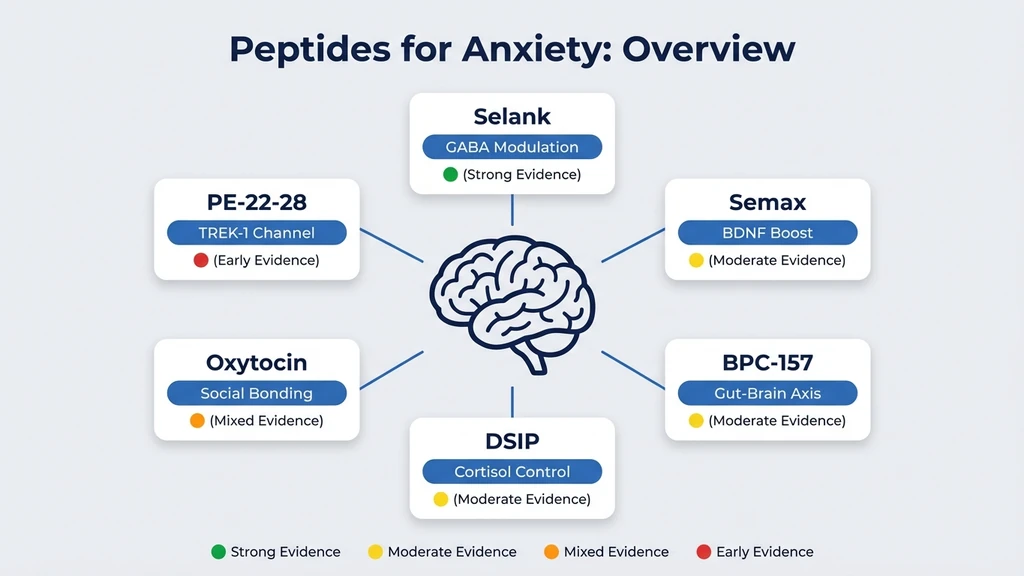
The most evidence-backed peptides for anxiety are Selank, Semax, BPC-157, DSIP, Oxytocin, and PE-22-28. Selank has the strongest clinical data: a 62-patient trial in generalized anxiety disorder showed anxiolytic effects comparable to benzodiazepines, with no sedation, tolerance, or dependency (Zozulya et al., 2008). Semax supports mood indirectly through BDNF upregulation. BPC-157 may reduce anxiety via the gut-brain axis.
About 19.1% of U.S. adults experience an anxiety disorder in any given year (NIMH). Standard treatments (SSRIs, benzodiazepines, therapy) help many people, but side effects and dependency risks drive growing interest in peptide-based alternatives. What follows: six peptides ranked by evidence quality, with mechanisms, dosages, and the safety concerns most articles omit.
Quick comparison:
| Peptide | Primary Mechanism | Evidence Level | Best For | Onset | Route | Sedating? |
|---|---|---|---|---|---|---|
| Selank | GABA modulation, enkephalin stabilization | Strong (human trials) | Generalized anxiety, stress | 15-30 min | Intranasal | No |
| Semax | BDNF, dopamine/serotonin modulation | Moderate (human use, animal anxiety data) | Anxiety + brain fog | 15-30 min | Intranasal | No |
| BPC-157 | Dopamine/serotonin rebalancing, gut-brain | Moderate (animal studies) | Gut-related anxiety | 1-2 weeks | Injection or oral | No |
| DSIP | Cortisol normalization, GABA enhancement | Moderate (human sleep data) | Anxiety-driven insomnia | Same night | Injection/intranasal | Mild |
| Oxytocin | Amygdala GABA, serotonergic | Mixed (inconclusive human trials) | Social anxiety | Minutes | Intranasal | No |
| PE-22-28 | TREK-1 channel inhibition | Early (preclinical only) | Depression + anxiety | Days (animal) | Injection | No |
Get your custom peptide protocol:
- Tailored to your body and goals
- Precise dosing and cycle length
- Safe stacking combinations
- Backed by peer-reviewed studies
- Ready in under 2 minutes
How Peptides Work for Anxiety
Peptides are short amino acid chains that act as signaling molecules. Several cross the blood-brain barrier and modulate the neurotransmitter systems implicated in anxiety. Three mechanisms matter most.
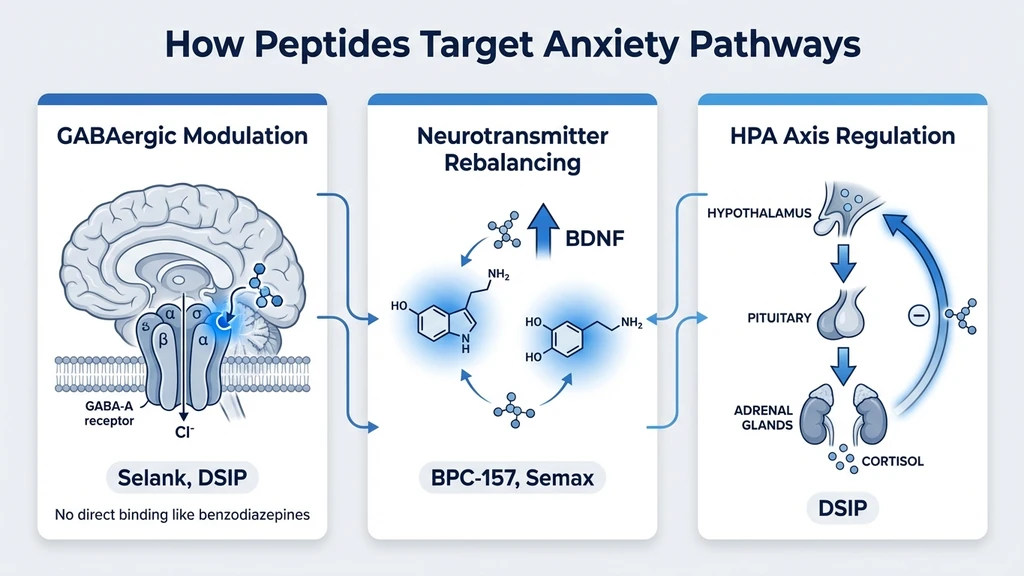
GABAergic modulation. Gamma-aminobutyric acid (GABA) is the brain's primary inhibitory neurotransmitter. Insufficient GABA activity produces the hyperarousal, racing thoughts, and muscle tension characteristic of anxiety. Selank and DSIP both enhance GABAergic signaling through allosteric modulation. The distinction matters: allosteric modulators fine-tune receptor activity without the forced channel opening that makes benzodiazepines addictive.
Neurotransmitter rebalancing. Serotonin, dopamine, and norepinephrine regulate mood, motivation, and stress response. BPC-157 modulates both dopaminergic and serotonergic systems simultaneously, increasing serotonin synthesis in some brain regions while decreasing it in others. The pattern suggests selective rebalancing. SSRIs, by contrast, increase serotonin indiscriminately.
Semax elevates BDNF (brain-derived neurotrophic factor), which promotes neuroplasticity and new neural connections.
HPA axis regulation. The hypothalamic-pituitary-adrenal axis governs the stress response. Chronic anxiety keeps cortisol elevated, which damages the hippocampus and impairs emotional regulation. Social isolation compounds this effect. Research on longevity populations shows that strong social networks act as a natural cortisol governor, while chronic isolation locks the HPA axis in survival mode. DSIP dampens ACTH and cortisol surges, breaking the anxiety-insomnia-cortisol cycle.
A 2022 review in Behavioural Brain Research mapped the role of neuropeptides across anxiety and depression, identifying over 20 endogenous peptide systems involved in emotional regulation. A 2023 review documented how synthetic peptides can replicate and enhance these natural protective mechanisms.
Compare this to conventional anxiolytics. SSRIs block serotonin reuptake across the entire brain. Benzodiazepines force open GABA-A chloride channels, producing rapid relief alongside sedation, tolerance, and physical dependence. Peptides modulate these same systems through more selective pathways: fewer off-target effects, no receptor downregulation, no withdrawal syndrome in available clinical data.
The 6 Best Peptides for Anxiety (Ranked by Evidence)
The ranking below follows a simple hierarchy: human clinical trials outweigh animal studies with multiple replications, which outweigh single preclinical experiments, which outweigh theoretical mechanisms alone. Each peptide is assessed by what the data actually shows.
1. Selank: The Gold Standard Anxiolytic Peptide
Evidence level: STRONG (human clinical trials in GAD patients)
Selank is a synthetic heptapeptide based on tuftsin, developed at the Institute of Molecular Genetics of the Russian Academy of Sciences. It has been approved in Russia since 2009 for generalized anxiety disorder (GAD) and neurasthenia.
The clinical evidence:
The strongest study enrolled 62 patients with GAD. Selank was compared head-to-head with medazepam (a benzodiazepine). Anxiolytic effects were comparable, but Selank also demonstrated antiasthenic and psychostimulant properties (Zozulya et al., 2008; PMID 18454096).
Patients felt less fatigued and more mentally alert. No sedation was observed.
A second comparison study tested Selank against phenazepam, another benzodiazepine. Results: comparable anxiety reduction, zero sedation, no muscle relaxation side effects, no tolerance development, and no withdrawal symptoms (PMID 25176261).
A molecular study found Selank alters expression of 36 genes related to the nervous and immune systems, including genes governing GABAergic neurotransmission (PMC4757669). Another study showed Selank enhances the anxiolytic effect of diazepam in chronic mild stress models without increasing side effects (PMC5322660).
Mechanism: Positive allosteric modulation of the GABA system (not direct GABA-A binding). Stabilizes enkephalin degradation, extending the activity of the body's natural pain and anxiety-reducing peptides. Modulates serotonin turnover in the frontal cortex and hippocampus.
Protocol: - Dosage: 250-500 mcg intranasal, 1-2 times daily - Cycle: 14-30 days on, 2 weeks off - Onset: 15-30 minutes after administration - Duration of effect: 6-12 hours per dose
Key advantage: Anxiolytic potency matching benzodiazepines without sedation, tolerance, or dependency. No other peptide on this list has that clinical profile.
2. Semax: Cognitive Clarity With Mood Support
Evidence level: MODERATE (approved for human use in Russia; anxiety-specific data from animal models)
Semax is a synthetic analogue of ACTH(4-10), approved in Russia since the 1990s for cognitive and neurological conditions. Its primary reputation is as a nootropic, but mood stabilization and stress resilience are consistent secondary benefits.
The evidence:
Semax rapidly elevates BDNF and TrkB receptor expression in the hippocampus, the brain region most involved in emotional memory and anxiety regulation (PMID 20566356). BDNF promotes neuroplasticity, the formation of new neural connections that underpin recovery from chronic anxiety.
A human trial in healthy adults showed improved cognitive function alongside enhanced emotional stability (for more on peptides and brain health, see peptides for cognitive function) (PMID 18611170). Anti-inflammatory and antioxidant neuroprotective effects have been documented across multiple studies (PMID 22946722).
Important caveat: A 1996 study noted a potential "anxiogenic component" in Semax, meaning it may increase anxiety at certain doses in people with high baseline anxiety. This is not widely discussed but is relevant. Semax is better suited for anxiety accompanied by brain fog and fatigue than for acute panic or severe GAD.
Protocol: - Dosage: 300-600 mcg intranasal daily - Cycle: 10-20 days on, 2 weeks off - Onset: 15-30 minutes - Best timing: Morning (it can be mildly stimulating)
Classic stack: Semax (morning for cognitive clarity) + Selank (midday for anxiety control). This combination was developed at the same Russian research institute and is the most established peptide stack for mental performance with mood support.
3. BPC-157: Gut-Brain Axis Anxiety Relief
Evidence level: MODERATE (animal studies; no human anxiety-specific trials)
BPC-157 is a 15-amino acid synthetic peptide derived from a protein in human gastric juice. Most people know it for tendon and joint repair, but its anxiolytic properties in animal models are striking. Its mechanism is unique among the peptides on this list.
The evidence:
Anxiolytic effects were demonstrated in two validated behavioral models: the shock probe/burying test and the light/dark test. BPC-157 significantly reduced anxiety-like behaviors in both paradigms. Antidepressant effects were confirmed in Porsolt's forced swim test and chronic unpredictable stress models, with efficacy comparable to imipramine and other standard antidepressants.
BPC-157 modulates both dopaminergic and serotonergic systems simultaneously. Within 40 minutes of administration, it increases serotonin synthesis in the substantia nigra and olfactory nucleus while decreasing it in the hypothalamus and hippocampus (PMID 34380875). This is selective modulation. SSRIs push serotonin in one direction everywhere; BPC-157 adjusts it regionally.
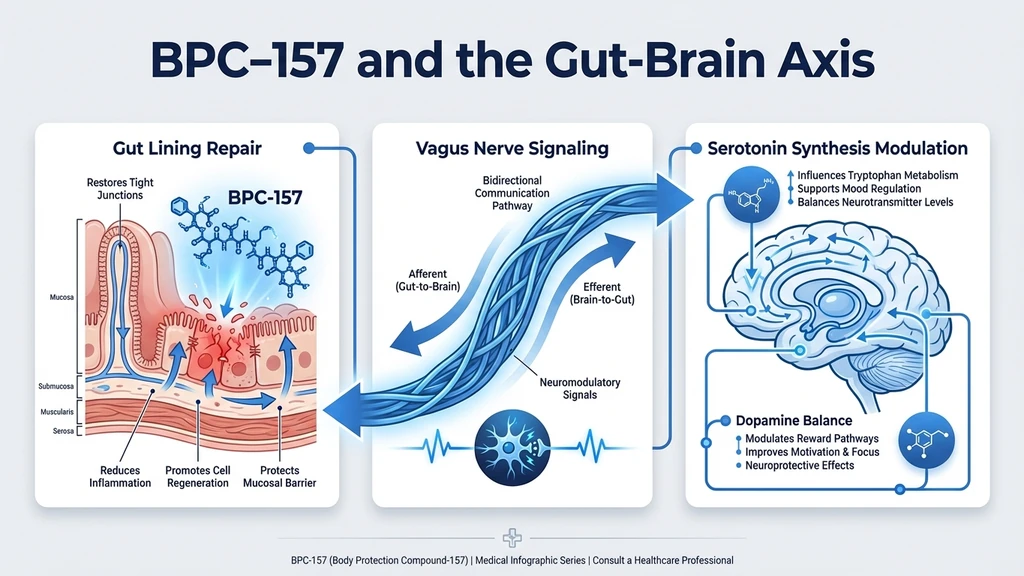
The gut-brain angle: Many people with chronic anxiety have comorbid gut issues: IBS, inflammatory bowel conditions, food sensitivities. BPC-157 heals the gut lining while simultaneously modulating brain neurotransmitters. For a detailed look at how peptides heal the gut, see peptides for gut health. For individuals whose anxiety has a gut component, this dual action is unmatched by any other peptide.
Protocol: - Dosage: 250-500 mcg/day, subcutaneous injection or oral - Duration: 4-8 weeks - Onset: 1-2 weeks for anxiety effects (faster for gut symptoms) - Oral route works for gut-brain effects; injection for systemic distribution
Use our BPC-157 dosage calculator for precise dosing. For more on this peptide, see our BPC-157 profile and BPC-157 side effects guide. If you drink alcohol, review our BPC-157 and alcohol interaction guide.
4. DSIP: The Sleep-Anxiety Connection
Evidence level: MODERATE (human sleep studies; anxiety data from animal models and early human reports)
DSIP (Delta Sleep-Inducing Peptide) was first isolated in 1977. It targets the anxiety-insomnia cycle. Anxiety disrupts sleep. Poor sleep worsens anxiety. Breaking this cycle is often the fastest path to symptom improvement.
The evidence:
DSIP promotes natural delta-wave (stage 3) sleep without the forced sedation of sleeping pills. A 1983 human study found subjects reported "better relaxation" and "improved tolerance against psychic stress" (PMID 3791851).
DSIP dampens ACTH and cortisol surges, the hormones that keep anxious people awake at 3 AM replaying worst-case scenarios. By normalizing the HPA axis, DSIP addresses the neuroendocrine root of stress-driven insomnia.
In animal studies, DSIP injection increased substance P concentration in the hypothalamus and "sharply decreased classical manifestations of stress" (PMID 7628639). DSIP also enhances GABA signaling, providing a direct anxiolytic mechanism beyond its sleep effects.
A comprehensive review characterized DSIP as a stress-protective molecule with sleep-modulatory, analgesic, and neuroendocrine properties (PMID 9352530).
Protocol: - Dosage: 100-300 mcg subcutaneous or intranasal - Timing: 30 minutes before bed - Duration: 2-4 week cycles - Onset: Same night for sleep effects; cumulative anxiolytic benefit over 1-2 weeks
Best for: Anxiety-driven insomnia, nocturnal rumination, HPA axis dysregulation, stress-related sleep disruption. Not ideal for daytime-only anxiety without a sleep component.
5. Oxytocin: Social Anxiety and Emotional Regulation
Evidence level: MIXED (extensive preclinical data; inconclusive human trials)
Oxytocin is a naturally occurring neuropeptide, the "bonding hormone" released during social connection, physical touch, and breastfeeding. Its anti-anxiety effects in animal models are consistent and well-documented. The human data is more complicated.
The evidence:
Animal studies consistently show reduced anxiety-like behaviors with central oxytocin administration. The mechanism is clear: oxytocin activates GABAergic interneurons in the amygdala (the brain's fear center) and interacts with serotonergic systems to dampen threat perception.
The human picture is less encouraging. A systematic review of 15 randomized controlled trials found "no significant effects on core symptomatology" for anxiety and depressive disorders (PMC6361048). For social anxiety specifically, intranasal oxytocin improved observer-rated social behavior, but patients themselves did not perceive improvement.
One trial found intranasal oxytocin enhanced the effects of exposure therapy for social anxiety disorder (PMID 19246160), suggesting it may work best as a therapy adjunct rather than a standalone treatment.
Honest assessment: The mechanism is sound. The preclinical support is extensive. The clinical translation has been disappointing. Oxytocin shows the widest gap between animal results and human outcomes of any peptide on this list.
Protocol: - Dosage: 20-40 IU intranasal - Timing: 30-45 minutes before social situations or therapy sessions - Best for: Social anxiety, relationship-related anxiety, therapy augmentation - Not recommended as a standalone anxiety treatment based on current evidence
6. PE-22-28: Emerging Antidepressant-Anxiolytic
Evidence level: EARLY (preclinical only; no human trials)
PE-22-28 is a synthetic heptapeptide derived from spadin, a naturally occurring neuropeptide. It is included here as a "one to watch" rather than a current recommendation, because its mechanism is genuinely novel.
The evidence:
PE-22-28 inhibits TREK-1 potassium channels with high specificity (IC50: 0.12 nM versus 40-60 nM for its parent molecule spadin). TREK-1 knockout mice show resistance to depression across validated behavioral models. PE-22-28 produces rapid antidepressant-like effects in mice, within days rather than the weeks SSRIs require. Action duration reaches 23 hours, compared to 7 hours for spadin (PMC5601071).
The speed of action is notable. If these results translate to humans, PE-22-28 could function more like ketamine (rapid onset) than like SSRIs (4-6 week delay). PE-22-28 may also promote neurogenesis through enhanced BDNF pathway activation via TREK-1 inhibition.
Current status: No human safety or efficacy data. No approved use in any country. This peptide is years away from clinical application. The mechanism, a specific potassium channel target for mood regulation, represents a genuinely different approach to anxiety and depression.
How Do Anxiety Peptides Compare to SSRIs and Benzodiazepines?
Peptides are not a first-line replacement for established anxiety treatments. They occupy a different position in the toolkit. Here is how they compare.
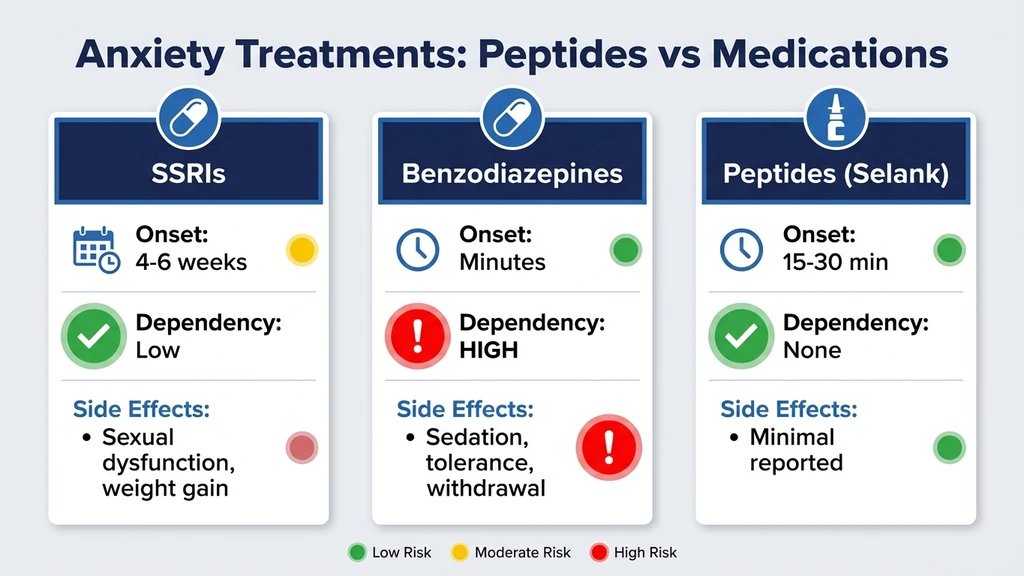
| Treatment | Mechanism | Onset | Dependency Risk | Common Side Effects |
|---|---|---|---|---|
| SSRIs (Zoloft, Lexapro) | Serotonin reuptake inhibition | 4-6 weeks | Low (withdrawal syndrome possible) | Sexual dysfunction (40-65%), weight gain, emotional blunting |
| Benzodiazepines (Xanax, Klonopin) | Direct GABA-A receptor binding | Minutes | HIGH (physical dependence within weeks) | Sedation, cognitive impairment, withdrawal seizures |
| Buspirone | 5-HT1A partial agonist | 2-4 weeks | Low | Dizziness, nausea, headache |
| Selank | GABA allosteric modulation + enkephalin | 15-30 minutes | None observed in trials | Nasal irritation (rare) |
| Semax | BDNF upregulation + neurotransmitter modulation | 15-30 minutes | None observed | Headache, possible anxiogenic at high doses |
| BPC-157 | Dopamine/serotonin rebalancing | 1-2 weeks | None observed | Mild nausea (oral), injection site irritation |
SSRIs and benzodiazepines have decades of large-scale clinical trial data. Peptides have Russian clinical studies and animal models. The evidence gap is real and should not be minimized. None of the peptides discussed here are FDA-approved for anxiety treatment in the United States.
This is not a "replace your medication" section. Peptides are emerging alternatives worth discussing with a healthcare provider, particularly for people who have not responded to conventional treatments or cannot tolerate their side effects.
How to Use Peptides for Anxiety: Practical Protocols
Four protocols cover most scenarios. All assume pharmaceutical-grade peptides and medical supervision. Use our peptide interaction checker before combining any peptides with existing medications.
Selank Standalone Protocol (General Anxiety)
The simplest starting point for anxiety. Appropriate for generalized anxiety, work stress, and anxious rumination.
- Selank 250-500 mcg intranasal, 1-2 times daily
- Morning dose + early afternoon dose (avoid evening dosing if it affects sleep)
- 14-30 day cycles, 2 weeks off between cycles
- Effects begin within 15-30 minutes of each dose
This is the most evidence-backed protocol on this list. Start at 250 mcg twice daily and increase only if needed.
Selank + Semax Stack (Calm Focus)
The classic Russian nootropic stack. Developed at the same research institute that created both peptides. Appropriate for anxiety with brain fog, stress-related cognitive decline, or depression comorbidity.
- Semax 300-600 mcg intranasal, morning
- Selank 250-500 mcg intranasal, 30 minutes after Semax
- 10-20 day cycles, 2 weeks off
- Semax provides cognitive enhancement and BDNF elevation. Selank provides anxiolytic calm. The combination addresses both the mental fog and the anxiety.
Use our peptide stack calculator to plan dosing and cycling.
BPC-157 + Selank Stack (Gut-Brain Anxiety)
For people whose anxiety coexists with gut issues: IBS, bloating, food sensitivities, or inflammatory bowel conditions.
- BPC-157 250-500 mcg oral or subcutaneous, daily
- Selank 250-500 mcg intranasal, daily
- 4-8 week duration
- BPC-157 heals the gut lining and rebalances brain neurotransmitters. Selank provides immediate anxiolytic relief while BPC-157 builds its cumulative effect over 1-2 weeks.
See our guide on taking BPC-157 orally for administration details.
DSIP + Selank Stack (Anxiety-Insomnia Cycle)
For people whose anxiety peaks at night: racing thoughts at bedtime, 3 AM waking, stress-disrupted sleep that worsens daytime anxiety.
- Selank 250-500 mcg intranasal, evening (addresses anxious rumination)
- DSIP 100-200 mcg subcutaneous, 30 minutes before bed (ensures restorative delta-wave sleep)
- 2-4 week cycles
- Breaking the sleep-anxiety cycle often produces faster improvement in daytime anxiety than targeting anxiety directly.
This combination is particularly useful during high-stress periods (exams, work deadlines, life transitions) when sleep disruption threatens to escalate into a full anxiety episode.
Are Anxiety Peptides Safe? Side Effects and Regulatory Status
Peptides for anxiety are not risk-free. Most articles downplay or omit these considerations.
Side Effects by Peptide
Selank: Excellent safety record across Russian clinical use. Side effects rare and mild: nasal irritation, occasional light headache. No tolerance, no dependency, no withdrawal in any published study. Approved in Russia; not FDA-approved in the US.
Semax: Good safety profile across decades of Russian clinical use. Occasional headache and, rarely, temporary hair shedding reported anecdotally. Possible anxiogenic effect at high doses in individuals with high baseline anxiety. Approved in Russia.
BPC-157: No recorded lethal dose (LD50) in animal studies. Side effects: mild nausea (oral route), injection site irritation. Avoid with active cancer; BPC-157 is pro-angiogenic and promotes cell proliferation.
No human clinical trials establishing long-term safety. FDA Category 2 substance. Cannot be legally compounded by US pharmacies.
DSIP: Limited long-term safety data. Avoid combining with sedative medications, alcohol, or CNS depressants. Not approved for medical use in any country.
Oxytocin: Prescription nasal spray in some countries. Side effects: nasal irritation, headache. Effects are context-dependent and may increase anxiety in some situations.
PE-22-28: No human safety data whatsoever. Research compound only.
Drug Interactions
Selank + SSRIs: Selank modulates serotonin turnover. Theoretical risk of serotonin syndrome when combined with SSRIs, SNRIs, or MAOIs. No cases reported, but caution is warranted. Discuss with your prescribing physician before combining.
DSIP + CNS depressants: DSIP enhances GABA signaling and promotes sleep. Combining with benzodiazepines, sleep medications, or alcohol could produce excessive sedation.
BPC-157 + blood thinners: BPC-157 affects the nitric oxide system and promotes angiogenesis. Theoretical interaction with anticoagulants. Consult physician if on blood-thinning medication.
General rule: If you take any psychiatric medication, discuss peptide use with your prescriber before starting. The interaction data is limited, which means risk cannot be ruled out.
Regulatory Status
None of the peptides in this article are FDA-approved for anxiety treatment in the United States. Selank and Semax are approved medications in Russia. In the US and most Western countries, these peptides are classified as research compounds.
BPC-157 was placed in FDA Category 2 in 2023, meaning it cannot be legally compounded by US pharmacies. It is not a controlled substance.
This regulatory status says nothing about safety. It means these peptides have not undergone the full FDA approval process, which costs $1-2 billion and takes 10-15 years. It also means quality control varies wildly between suppliers. Source only from vendors who provide third-party certificates of analysis.
Frequently Asked Questions
What is the best peptide for anxiety?
Selank has the strongest clinical evidence for anxiety reduction. A 62-patient human trial in generalized anxiety disorder showed anxiolytic effects comparable to benzodiazepines, with no sedation, tolerance, or dependency (Zozulya et al., 2008). It is administered as a nasal spray with effects starting within 15-30 minutes.
Are peptides for anxiety FDA-approved?
No. None of the peptides discussed in this guide are FDA-approved for anxiety treatment in the United States. Selank and Semax are approved in Russia for anxiety and neurological conditions respectively. In the US, these peptides are available as research compounds.
Can peptides replace anti-anxiety medications like Xanax or Zoloft?
Peptides should not be viewed as direct replacements for prescribed medications. While Selank showed comparable anxiolytic effects to certain benzodiazepines in clinical studies, the evidence base is far smaller than for established pharmaceuticals. Never discontinue prescribed medication without your physician's guidance.
How quickly do anxiety peptides work?
Selank and Semax produce noticeable effects within 15-30 minutes of intranasal administration. BPC-157 typically requires 1-2 weeks of consistent use for anxiety-related benefits. DSIP acts within the same night for sleep-related anxiety. PE-22-28 showed rapid effects in animal models but has no human data.
What are the side effects of peptides for anxiety?
Side effects are generally mild. Selank may cause minor nasal irritation and occasional headaches. Semax can cause headaches and, rarely, temporary hair shedding. BPC-157 may cause mild nausea or injection site irritation. Serious adverse events have not been reported in the available clinical literature for these peptides.
Can you stack multiple anxiety peptides together?
Yes. The most established combination is Selank + Semax, developed at the same Russian research institute. Selank provides anxiolytic effects while Semax enhances focus and BDNF. BPC-157 can be added for gut-brain support, and DSIP for sleep. Use the Peptide Stack Calculator and Interaction Checker on PeptidesExplorer to verify compatibility.
Is Selank addictive like benzodiazepines?
No. Clinical studies confirm Selank does not produce dependency or withdrawal symptoms. Unlike benzodiazepines, which bind directly to GABA-A receptors and cause receptor downregulation with chronic use, Selank modulates the GABAergic system through allosteric mechanisms that do not lead to tolerance.
The Bottom Line
Selank is the most evidence-backed peptide for anxiety. Two human clinical trials demonstrated anxiolytic effects comparable to benzodiazepines. No sedation. No tolerance. No dependency. That safety profile is what makes Selank stand apart. No other peptide on this list has that combination of efficacy data and safety profile.
For anxiety with brain fog, the Selank + Semax stack provides both calm and cognitive clarity. For gut-related anxiety, BPC-157 acts on the gut lining and brain neurotransmitters simultaneously, a connection conventional anxiolytics ignore. For anxiety-driven insomnia, DSIP breaks the sleep-anxiety cycle that perpetuates both conditions.
Three things to keep in mind: the evidence base for peptides is smaller than for conventional medications, none are FDA-approved for anxiety in the US, and product quality varies dramatically between suppliers. Discuss peptide use with a healthcare provider, particularly if you take any psychiatric medication.
Explore individual peptide profiles for deeper research: Selank, Semax, BPC-157, DSIP. Use our peptide stack calculator to plan combination protocols and our peptide interaction checker to verify safety. For practical guidance on peptide administration, see our complete injection guide and getting started with peptides. For all dosage references, see the peptide dosage chart. For sourcing, see where to buy peptides in 2026. For proper handling, see how to store peptides and our peptide safety guide.
Related Articles: - Peptides for Cognitive Function - Peptides for Gut Health - Peptide Safety Guide - Peptide Stacking Guide - How to Store Peptides
Helpful Tools
Related Articles
Peptides for Sleep: 6 Best Ranked by Evidence
Top 6 peptides for sleep ranked: DSIP, Selank, Epitalon, ipamorelin + CJC-1295, BPC-157, GHRP-6. Protocols, doses, and stacking.
Peptides for Depression: The Evidence
What research shows about peptides for depression: Selank, Semax, BPC-157, DSIP, and GLP-1. None are FDA-approved antidepressants. Evidence and safety inside.
Peptides for Inflammation: 7 Best Ranked
Top 7 anti-inflammatory peptides ranked: BPC-157, KPV, LL-37, thymosin alpha-1, GHK-Cu, TB-500, Selank. Mechanisms, dosage protocols, and 10+ PubMed citations.
12 Nootropic Peptides Ranked (2026)
12 nootropic peptides ranked by evidence: Semax, Selank, Cerebrolysin, Dihexa, BPC-157. Mechanisms, dosages, and which ones actually work for focus and memory.