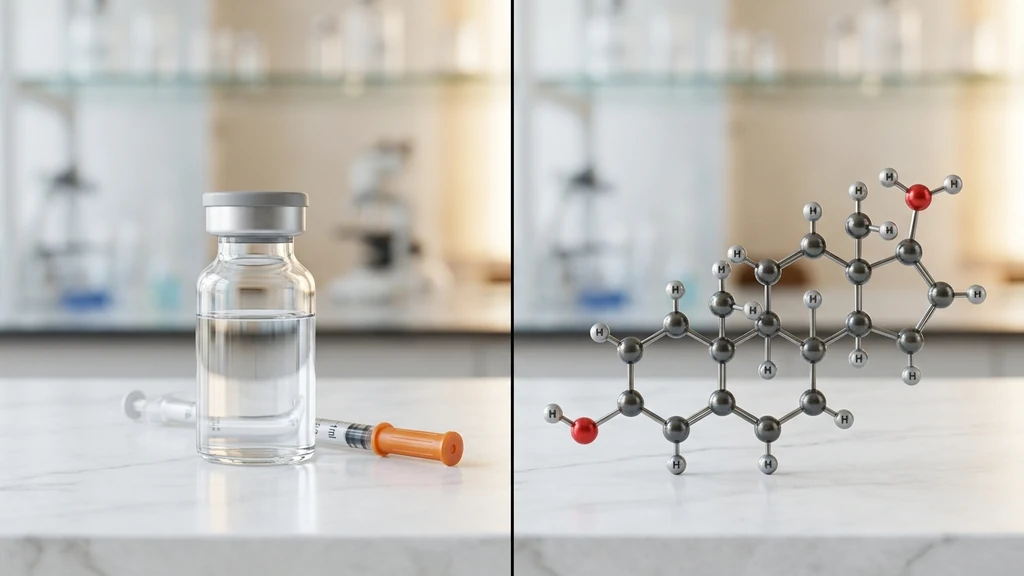
You typed "peptides vs steroids" because someone at the gym mentioned peptides and you want to know if they are the same thing as anabolic steroids. They are not. Peptides are short chains of amino acids (2-50) that send signaling messages to your cells. Anabolic steroids are synthetic versions of testosterone that force muscle cells to grow by hijacking your hormonal system. The difference is like sending a memo to your construction crew versus bulldozing the site and rebuilding it yourself.
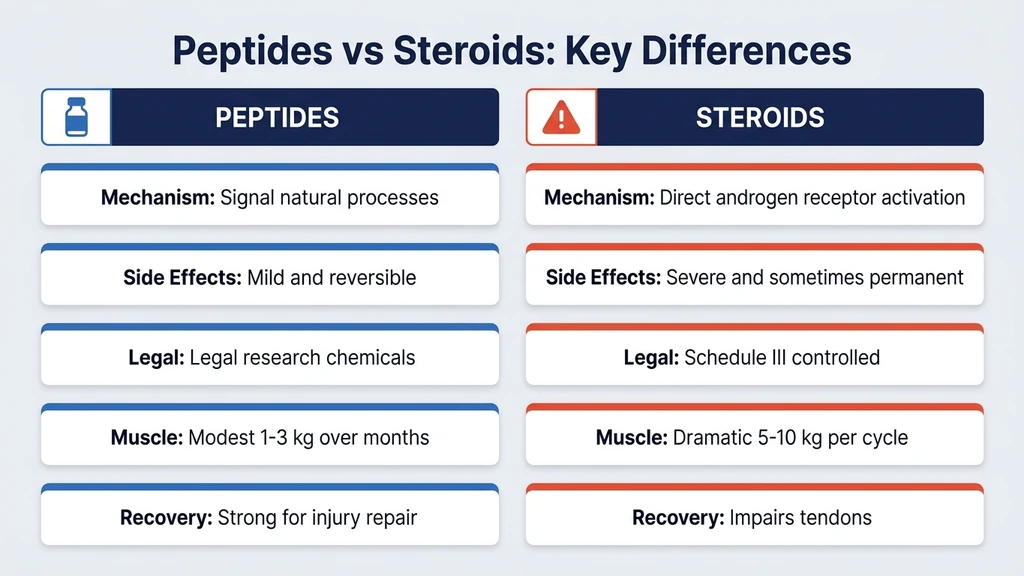
| Feature | Peptides | Anabolic Steroids |
|---|---|---|
| Molecular structure | Short amino acid chains (2-50 residues) | Modified testosterone (4-ring steroid nucleus) |
| Primary mechanism | Signal cells to increase natural processes (GH release, healing, fat oxidation) | Bind androgen receptors directly, force protein synthesis |
| Legal status (US) | Most are legal as research chemicals; some FDA-approved (e.g., tesamorelin) | Schedule III controlled substances without prescription |
| Side effect severity | Mild (injection site reactions, water retention, headache) | Severe (liver damage, cardiovascular disease, hormonal shutdown) |
| Reversibility of side effects | Most reverse within days to weeks of stopping | Some permanent (gynecomastia, voice deepening in women, cardiac remodeling) |
| Muscle building potential | Modest, indirect (via GH/IGF-1 elevation) | Dramatic, direct (10-20 lbs lean mass per cycle is typical) |
| Fat loss | Moderate (GH peptides reduce visceral fat 5-15%) | Variable (some steroids reduce fat, others increase water retention) |
| Recovery enhancement | Strong for injury repair (BPC-157, TB-500) | Accelerates training recovery but impairs tendon/ligament integrity |
| Monthly cost | $40-200 depending on peptide | $50-300 depending on compound |
| Drug test detection | Most undetectable on standard panels | Detectable for weeks to months on WADA/sports panels |
Both categories include compounds that are not FDA-approved for general performance use. This guide is educational. Consult a healthcare provider before using any compound. For a broader introduction, see getting started with peptides.
Get your custom peptide protocol:
- Tailored to your body and goals
- Precise dosing and cycle length
- Safe stacking combinations
- Backed by peer-reviewed studies
- Ready in under 2 minutes
What Are Peptides at the Molecular Level?
Peptides are chains of amino acids linked by peptide bonds. The shortest peptides contain just 2 amino acids (dipeptides). The longest still classified as peptides top out around 50 residues. Beyond that, they are called proteins. Your body produces hundreds of peptides naturally: insulin (51 amino acids), oxytocin (9 amino acids), and growth hormone-releasing hormone (44 amino acids) are all peptides.
Synthetic peptides used in research and therapy mimic these natural signaling molecules. BPC-157 is a 15-amino-acid fragment derived from a protein in human gastric juice. Ipamorelin is a 5-amino-acid chain that triggers your pituitary gland to release its own growth hormone. The peptide delivers a message. Your body decides how to respond.
Think of peptides as text messages sent to specific departments in a company. The message says "produce more growth hormone" or "send repair cells to this tendon." The department reads the message and acts within its normal operating range. The company's org chart stays intact. Bhasin et al. confirmed that GH-releasing peptides like ipamorelin increase pulsatile GH secretion without disrupting the hypothalamic-pituitary feedback loop (PMID: 16352683).
Common Peptide Categories
Growth hormone secretagogues (ipamorelin, CJC-1295, MK-677) stimulate your pituitary to release more GH. They do not inject synthetic GH into your body. Your pituitary still regulates the ceiling. Nass et al. demonstrated that MK-677 increased GH secretion by 97% and IGF-1 levels by 55% without suppressing the body's natural pulsatile GH pattern (PMID: 18981485).
Healing peptides (BPC-157, TB-500) accelerate tissue repair by upregulating angiogenesis, cell migration, and growth factor receptor expression. They do not build muscle beyond your genetic ceiling. They help damaged tissue return to baseline faster. For injury-specific applications, see BPC-157 and muscle growth.
Fat loss peptides (tesamorelin, AOD-9604, MOTS-c) increase lipolysis or improve metabolic function. Tesamorelin is FDA-approved for HIV-associated lipodystrophy and reduced trunk fat by 18% over 26 weeks in the pivotal trial (Falutz et al., *JAMA*, 2007; PMID: 17785710).
What Are Anabolic Steroids at the Molecular Level?
Anabolic-androgenic steroids (AAS) are synthetic derivatives of testosterone, the primary male sex hormone. Every anabolic steroid shares a core structure: four interconnected carbon rings called the steroid nucleus (three cyclohexane rings and one cyclopentane ring). Chemists modify this backbone to alter potency, oral bioavailability, and the ratio of anabolic (muscle-building) to androgenic (masculinizing) effects.
Testosterone itself has an anabolic-to-androgenic ratio of 1:1. Nandrolone (Deca-Durabolin) shifts that ratio to roughly 10:1, favoring muscle growth over masculinization. Trenbolone pushes it to 5:1 with extreme potency. These modifications do not eliminate androgenic effects. They reduce them relative to the anabolic signal.
When an anabolic steroid enters your bloodstream, it passes through cell membranes and binds directly to androgen receptors in muscle tissue. The receptor-steroid complex enters the cell nucleus and activates genes responsible for protein synthesis. This is not a suggestion. It is a direct override. Bashin et al. demonstrated that supraphysiological testosterone (600 mg/week) increased lean body mass by 6.1 kg over 10 weeks, even without exercise (PMID: 8637535). That study remains one of the most cited in sports medicine.
How Peptides and Steroids Work Differently
The core distinction is signaling versus replacement. Peptides signal your body to do more of what it already does. Steroids replace your body's hormonal output with a synthetic flood.
Peptides: Turning Up the Thermostat
When you inject a GH-releasing peptide like ipamorelin, it binds to ghrelin receptors on your pituitary gland. The pituitary responds by secreting a pulse of growth hormone. Your hypothalamus still monitors GH levels and applies the brakes through somatostatin when levels get too high. The feedback loop remains functional. This is exactly how GH-releasing peptides differ from injecting growth hormone directly, covered in HGH or peptides.
This is why peptides rarely cause the extreme side effects seen with steroids. The system has a built-in governor. You can nudge GH output upward by 50-100%, but you cannot force it to 500% because the hypothalamus will intervene. Veldhuis et al. confirmed that GH secretagogues amplify pulse amplitude while preserving the normal ultradian rhythm of GH release (PMID: 19141587).
The analogy: a thermostat set to 72 degrees. Peptides move the dial to 74. The heating system works harder within its design parameters. Nothing breaks.
Steroids: Bypassing the Thermostat Entirely
When you inject testosterone enanthate at 500 mg/week (a common beginner steroid cycle), your blood testosterone rises to 3,000-4,000 ng/dL. The normal male range is 300-1,000 ng/dL. Your hypothalamus detects this supraphysiological level and shuts down its own production of gonadotropin-releasing hormone (GnRH). Your pituitary stops producing luteinizing hormone (LH) and follicle-stimulating hormone (FSH). Your testicles stop producing testosterone and sperm.
This is called hypothalamic-pituitary-gonadal (HPG) axis suppression. It begins within days and is complete within 2-3 weeks on cycle. Jarow and Lipshultz documented that exogenous testosterone suppresses spermatogenesis to azoospermia (zero sperm) in 65% of men within 6 months (PMID: 2005467).
The analogy: instead of adjusting the thermostat, you ripped it off the wall and pointed a flamethrower at the room. The temperature goes exactly where you want it. But the original heating system is now offline, and relighting it after you turn off the flamethrower takes weeks to months.
Side Effect Profiles Compared
The gap in side effect severity between peptides and steroids is the single most important distinction for newcomers to understand.
Peptide Side Effects: Mild and Reversible
Most peptide side effects resolve within days of dose adjustment or cessation. The common ones include water retention (GH peptides increase extracellular fluid by 1-3 lbs), injection site redness, transient headaches, and increased hunger (ghrelin-mimetic peptides like ipamorelin and MK-677). MK-677 can elevate fasting blood glucose by 5-10 mg/dL in predisposed individuals. Nass et al. reported that MK-677 increased fasting glucose from 97 to 103 mg/dL over 12 months in elderly subjects (PMID: 18981485).
Serious peptide side effects are rare in published literature. No peptide used in the bodybuilding and wellness community has been associated with organ failure, cardiovascular events, or death at standard research doses. For a full safety breakdown, see the peptide safety guide.
Steroid Side Effects: Severe and Sometimes Permanent
Anabolic steroids carry a documented list of adverse effects that scale with dose and duration.
Cardiovascular damage. Steroids reduce HDL cholesterol by 40-70% and increase LDL. Baggish et al. found that long-term AAS users had significantly impaired coronary artery plaque volume compared to non-users, with a mean plaque volume 3 times higher (PMID: 28033100). This cardiovascular remodeling does not fully reverse after cessation.
Liver toxicity. Oral steroids (17-alpha-alkylated compounds like dianabol and anadrol) pass through the liver and can cause cholestasis, peliosis hepatis, and hepatocellular adenomas. Solimini et al. reviewed the hepatotoxic effects documented in athletes using AAS, spanning cholestasis, peliosis hepatis, adenoma, and hepatocellular carcinoma (PMID: 28379599).
Hormonal shutdown. Every AAS cycle suppresses the HPG axis. Post-cycle recovery (PCT) typically requires 4-12 weeks. Some men never fully recover natural testosterone production after prolonged use. Kanayama et al. documented persistent hypogonadism in 29% of former AAS users who had used steroids for more than 2 years (PMID: 25713692).
Psychological effects. AAS use is associated with increased aggression, irritability, and in some cases frank psychosis. Pope and Katz reported that 12% of AAS users in their cohort experienced hypomanic or manic episodes during steroid cycles (PMID: 8855834).
Legal Differences: Where Each Category Stands
In the United States, anabolic steroids are classified as Schedule III controlled substances under the Anabolic Steroid Control Act of 1990 (amended in 2004). Possessing steroids without a valid prescription is a federal crime punishable by up to 1 year in prison for a first offense. Distribution carries up to 5 years.
Peptides occupy a different legal space. Most research peptides are sold legally as "not for human consumption" research chemicals. Some peptides have FDA approval for specific medical conditions: tesamorelin (Egrifta) for HIV lipodystrophy, semaglutide (Ozempic/Wegovy) for diabetes and obesity, and growth hormone-releasing hormones for GH deficiency testing.
The FDA has increased scrutiny of compounding pharmacies selling peptides since 2024, placing several peptides on the 503A/503B bulk substance list review. BPC-157, in particular, faces an uncertain regulatory future. However, possessing research peptides is not a criminal offense in most US states.
For competitive athletes, the distinction matters further. WADA bans all anabolic steroids and several peptide categories (GH secretagogues, GHRPs, SARMs). TB-500 has been explicitly banned since 2010. Most healing peptides like BPC-157 are not listed but fall under a gray area. Athletes subject to drug testing should assume any performance-related compound may be prohibited.
Muscle Building: Peptides Cannot Match Steroids
Honesty matters here. If your only goal is maximum muscle mass in minimum time, steroids are dramatically more effective than peptides. Denying this would be dishonest and would erode your trust in everything else written on this site.
Bhasin et al. showed that 600 mg/week of testosterone produced 6.1 kg of lean mass gain in 10 weeks without exercise (PMID: 8637535). Combined with resistance training, the gain was 6.1 kg of lean mass plus significant strength increases. No peptide produces results in that range.
GH-releasing peptides (ipamorelin, CJC-1295, MK-677) increase growth hormone, which supports muscle protein synthesis and reduces body fat. But GH is not testosterone. Rudman et al. found that 6 months of GH administration in elderly men increased lean mass by 3.7 kg, but much of that was water and connective tissue rather than contractile muscle fiber (PMID: 2355952).
The realistic expectation for peptides: 1-3 kg of lean mass over 3-6 months, improved body composition (less fat, slightly more muscle), better recovery between workouts, improved sleep quality (GH peaks during deep sleep). These are meaningful gains, especially for people over 35 whose natural GH production has declined by 14% per decade. They are not steroid-level gains. For peptide-specific training strategies, see peptides for bodybuilding.
Who Uses Peptides and Who Uses Steroids?
The user populations overlap but differ in their primary goals.
Typical Peptide Users
Injury recovery. Athletes and recreational lifters with tendon injuries, joint pain, or post-surgical repair needs. BPC-157 and TB-500 are the most common choices. The goal is returning to baseline function, not exceeding it.
Anti-aging and longevity. Adults over 35 seeking to restore declining GH levels. Ipamorelin and CJC-1295 are popular for improved sleep, skin quality, fat loss, and general vitality. These users typically run low-dose protocols for months at a time.
Fat loss. Tesamorelin, AOD-9604, and semaglutide users targeting visceral or subcutaneous fat. This group often includes people who have plateaued with diet and exercise alone.
Conservative approach. People who want performance support but are unwilling to accept the side effect profile of steroids. This is a growing segment, especially among women, for whom androgenic side effects (voice deepening, facial hair, clitoral enlargement) are irreversible.
Typical Steroid Users
Competitive bodybuilders. Steroids remain the foundation of competitive physique sports. The mass and conditioning required to compete at regional or national levels cannot be achieved with peptides alone.
Strength athletes. Powerlifters and strongman competitors who need maximum force production. Testosterone, nandrolone, and trenbolone dominate this population.
Recreational users seeking rapid transformation. The largest and fastest-growing steroid user group. Pope et al. estimated 3-4 million Americans have used AAS, with the majority being non-competitive recreational lifters (PMID: 24002127).
TRT patients. Men with clinically diagnosed hypogonadism using testosterone at replacement doses (100-200 mg/week) under medical supervision. This is legitimate medical use, distinct from supraphysiological cycling.
Can You Use Peptides and Steroids Together?
Some users combine peptides and steroids. The two most common combinations are GH peptides alongside a testosterone base, and healing peptides during or after a steroid cycle.
GH peptides + testosterone. Adding ipamorelin/CJC-1295 to a testosterone cycle amplifies IGF-1 levels beyond what either compound achieves alone. Testosterone increases IGF-1 production in the liver. GH peptides increase GH, which further stimulates hepatic IGF-1 output. The synergy is real but modest. No published study has quantified the combined effect in healthy adults.
Healing peptides during steroid cycles. Steroids strengthen muscle but weaken tendons and ligaments. Anabolic steroids increase muscle force output faster than connective tissue can adapt, creating an injury risk. Michna documented that AAS-treated rats showed tendon collagen dysplasia (disorganized collagen fibers) despite increased muscle mass (PMID: 3240838). Running BPC-157 at 250-500 mcg/day during a steroid cycle is a common community practice to protect connective tissue. No clinical trial validates this approach, but the mechanistic rationale is sound.
Post-cycle therapy (PCT) support. Some users add GH peptides during PCT to maintain body composition while natural testosterone recovers. GH supports fat oxidation and lean mass preservation independent of androgen levels.
Combining these compound classes does not eliminate the risks of either. Steroid side effects persist regardless of peptide co-administration. Peptide side effects may be amplified (GH peptides plus steroids can worsen water retention and joint swelling). Medical supervision is strongly recommended for anyone running both categories simultaneously.
Common Mistakes Newcomers Make
1. Thinking peptides are "legal steroids." Peptides and steroids work through completely different mechanisms. A GH-releasing peptide will not produce the 15 lbs of muscle gain that a testosterone cycle delivers. Setting steroid-level expectations for peptides leads to disappointment at week 8 and wasted money. Realistic peptide expectations: improved body composition, better recovery, 1-3 kg lean mass over several months.
2. Assuming steroids are safe because a friend had no side effects. Cardiovascular damage from AAS accumulates silently. Baggish et al. found coronary plaque buildup in AAS users who reported feeling perfectly healthy (PMID: 28033100). The absence of symptoms does not equal the absence of harm. A 25-year-old may run 3 steroid cycles with no noticeable problems and present with cardiac pathology at 40.
3. Skipping bloodwork with either category. Peptides that elevate GH can raise fasting glucose and IGF-1. Steroids alter cholesterol, liver enzymes, hematocrit, and hormone panels. Running any performance compound without baseline and follow-up bloodwork is like driving without a dashboard. You have no idea what is happening under the hood until something breaks.
4. Using MK-677 and calling it "not a steroid" while ignoring its risks. MK-677 is not a steroid, but it does raise GH for 24 hours per dose and can elevate blood glucose toward prediabetic levels in susceptible individuals. Labeling something "just a peptide" does not make it risk-free. Every compound deserves the same due diligence.
Frequently Asked Questions
Are peptides safer than steroids?
Yes, based on published evidence. Peptide side effects are typically mild (water retention, injection site reactions, headaches) and reverse within days of stopping. Steroid side effects include cardiovascular damage, liver toxicity, hormonal shutdown, and psychological changes, some of which are permanent. No peptide in common use has been linked to organ failure or death at standard doses.
Can peptides build as much muscle as steroids?
No. Steroids directly force protein synthesis via androgen receptor activation, producing 5-10 kg of lean mass per cycle. Peptides work indirectly by raising GH and IGF-1, yielding 1-3 kg of lean mass over 3-6 months. Peptides improve body composition and recovery, but they do not match steroid-level hypertrophy. See our peptides for bodybuilding guide for realistic expectations.
Are peptides legal in the United States?
Most peptides are sold legally as research chemicals. Some have FDA approval for specific conditions (tesamorelin, semaglutide). Anabolic steroids are Schedule III controlled substances, making possession without a prescription a federal crime. The FDA has increased peptide regulation since 2024, but possessing research peptides is not a criminal offense in most states.
Do peptides show up on drug tests?
Standard workplace drug panels (5-panel, 10-panel) do not test for peptides. WADA and sports-specific panels ban certain peptide categories including GH secretagogues and TB-500. Most healing peptides like BPC-157 are not explicitly listed but may fall under prohibited substance classes. Anabolic steroids are detectable for weeks to months on sports panels.
What is the best peptide for someone who wants steroid-like results?
No peptide replicates steroid results. The closest approach is stacking a GH secretagogue (ipamorelin + CJC-1295) with a fat-loss peptide (tesamorelin or AOD-9604). This combination raises GH, reduces body fat, and supports lean mass, producing noticeable body composition changes over 8-12 weeks. Expect improved definition and recovery, not dramatic mass gain.
Can you take peptides during a steroid cycle?
Yes. GH peptides alongside testosterone amplify IGF-1 levels beyond either compound alone. Healing peptides like BPC-157 (250-500 mcg/day) are used during steroid cycles to protect tendons and ligaments, since steroids increase muscle force faster than connective tissue adapts. Combining both categories does not eliminate the risks of either. Medical supervision is recommended.
Do peptides shut down your natural hormone production?
GH-releasing peptides do not suppress your natural GH axis. They stimulate pulsatile release while the hypothalamic feedback loop stays intact. This contrasts with steroids, which shut down the HPG axis within 2-3 weeks, suppressing natural testosterone and sperm production. Recovery from steroid-induced suppression takes 4-12 weeks with PCT; peptide cessation requires no recovery protocol.
Which is better for injury recovery: peptides or steroids?
Peptides. BPC-157 and TB-500 directly accelerate tissue repair through angiogenesis, cell migration, and growth factor upregulation. Steroids increase muscle strength but weaken tendons and ligaments by disrupting collagen organization (Michna, 1986). Running steroids with an existing tendon injury increases the risk of rupture because muscle force outpaces connective tissue adaptation.
The Bottom Line
Peptides and steroids are different tools for different goals. Peptides send signals that amplify your body's natural processes within its existing limits. Steroids override those limits by flooding your system with synthetic hormones. The trade-off is straightforward: steroids build more muscle, faster, but carry cardiovascular, hepatic, hormonal, and legal risks that peptides do not.
For newcomers focused on body composition, recovery, and longevity, peptides offer meaningful results with a manageable risk profile. For those determined to pursue steroids, understanding the distinction ensures you are making an informed choice rather than confusing the two categories.
Use the peptide interaction checker to verify compound compatibility before starting any protocol. For cost planning, see the peptide cost calculator. For a full safety overview, read the peptide safety guide. And if you are just beginning to explore this space, start with getting started with peptides.
Helpful Tools
Related Articles
CJC-1295 vs Sermorelin: Half-Life and Dosing
CJC-1295 vs sermorelin: half-life 6-8 days vs 10-20 min, GH output 2-10x vs physiologic pulse, cost, FDA status, and who picks which.
Tesamorelin vs Ipamorelin: Key Differences
Tesamorelin vs ipamorelin: GHRH analog vs ghrelin mimetic. Fat loss data, dosing, side effects, cost, and stacking protocols. PubMed-cited guide.
GHRP-2 vs GHRP-6: Potency vs Hunger Compared
GHRP-2 vs GHRP-6: GH release potency, hunger effects, cortisol and prolactin impact, 100-300 mcg dosing, and which peptide fits each research goal.
CJC-1295/Ipamorelin Side Effects: Manage Them
CJC-1295/ipamorelin side effects: injection reactions 20-30%, water retention 15-25%, flushing 15-20%. DAC comparison and management.