You are comparing two growth hormone peptides and trying to decide which one fits your goals. Tesamorelin is a GHRH analog, the only peptide in its class with FDA approval. Ipamorelin is a selective ghrelin mimetic, popular for its clean GH pulse and gentle side effect profile. They stimulate growth hormone through entirely different pathways, and that difference shapes everything from dosing to cost to who benefits most.
The short answer: tesamorelin is the stronger choice for visceral fat reduction, backed by Phase 3 clinical trial data showing 15 to 18% visceral fat loss over 26 weeks (Falutz et al., NEJM 2007, PMID: 17625126). Ipamorelin is the more versatile peptide for general anti-aging, sleep quality, and body recomposition, with a far lower price point and milder side effect profile.
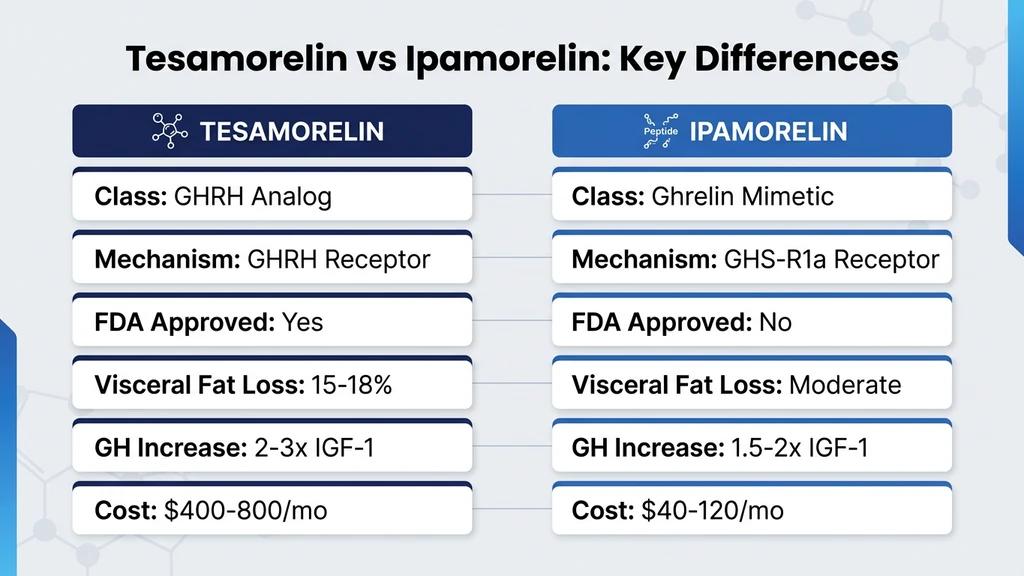
| Feature | Tesamorelin | Ipamorelin |
|---|---|---|
| Class | GHRH analog | Ghrelin mimetic (GHRP) |
| Mechanism | Stimulates GHRH receptor on pituitary | Activates ghrelin receptor (GHS-R1a) |
| FDA approved | Yes (Egrifta, HIV lipodystrophy) | No |
| Standard dose | 2 mg/day (subcutaneous) | 100 to 300 mcg, 2 to 3x/day |
| Visceral fat reduction | 15 to 18% (CT-verified) | Moderate (no CT-scan trial data) |
| GH increase | 2 to 3x baseline IGF-1 | 1.5 to 2x baseline IGF-1 |
| Cortisol impact | Minimal | Minimal |
| Prolactin impact | Minimal | Minimal |
| Cost per month | $400 to $800+ | $40 to $120 |
| Common stack | Solo (or with GHRP) | CJC-1295 (no DAC) |
Use our CJC-1295 + Ipamorelin dosage calculator to dial in ipamorelin protocols, or the peptide cost calculator to compare monthly expenses. This is educational content for research purposes. Consult a healthcare provider before using any peptide.
Get your custom peptide protocol:
- Tailored to your body and goals
- Precise dosing and cycle length
- Safe stacking combinations
- Backed by peer-reviewed studies
- Ready in under 2 minutes
How Do Tesamorelin and Ipamorelin Work?
Both peptides increase growth hormone, but they press different buttons on the pituitary gland. Understanding the distinction matters because it determines when each peptide works best, how they interact with your body's feedback systems, and why clinicians sometimes combine them.
Tesamorelin: The GHRH Pathway
Tesamorelin is a synthetic version of growth hormone-releasing hormone (GHRH), the 44-amino-acid signal your hypothalamus sends to the pituitary every 90 to 120 minutes. Picture a thermostat turning on the furnace. GHRH tells the pituitary to open the gates and release stored growth hormone into the bloodstream.
Theratechnologies modified the natural GHRH molecule by attaching a trans-3-hexenoic acid group to position 1, which slows enzymatic breakdown and gives tesamorelin a functional half-life of roughly 26 minutes after subcutaneous injection (Stanley & Bhatt, Expert Opin Pharmacother 2012, PMID: 22500646). The resulting GH pulse is large, physiological in shape, and lasts 2 to 4 hours.
Because tesamorelin works through the GHRH receptor, it respects somatostatin feedback. When GH rises high enough, your body's brake system (somatostatin) kicks in and prevents overproduction. This is a safety feature that exogenous HGH injections lack. Tesamorelin produces GH elevations within the high-normal range, not the supraphysiological levels seen with synthetic HGH (Spooner et al., J Clin Endocrinol Metab 2012).
Ipamorelin: The Ghrelin Mimetic Pathway
Ipamorelin takes a completely different route. It is a synthetic pentapeptide (five amino acids) that mimics ghrelin, the "hunger hormone" your stomach produces. But instead of triggering appetite like natural ghrelin does, ipamorelin selectively activates the growth hormone secretagogue receptor (GHS-R1a) on pituitary somatotroph cells.
Think of it as a side door into the same building. GHRH uses the front entrance (the GHRH receptor). Ipamorelin slips through a separate entrance (the ghrelin receptor) that also leads to GH release, but through a different intracellular signaling cascade involving phospholipase C and calcium release.
The critical advantage: ipamorelin is the most selective ghrelin mimetic ever developed. Older peptides in this class, like GHRP-6 and GHRP-2, activate the ghrelin receptor but also spike cortisol, prolactin, and appetite. Ipamorelin avoids all three at therapeutic doses (Raun et al., Eur J Endocrinol 1998, PMID: 9916862). The GH pulse peaks 30 to 40 minutes after injection and returns to baseline within 2 to 3 hours.
Why the Pathway Difference Matters
GHRH and ghrelin receptors sit on the same pituitary cells, but they amplify each other. Activating both receptors simultaneously produces a GH pulse roughly 2 to 3 times larger than either signal alone. This is why clinicians often pair a GHRH analog (CJC-1295 or sermorelin) with a ghrelin mimetic (ipamorelin) for maximum GH output (Bowers et al., Endocrine 2004, PMID: 15265519).
Tesamorelin and ipamorelin are not interchangeable. They are complementary. Choosing one over the other depends on your goal, budget, and whether you need FDA-approved clinical data supporting the specific outcome you want.
Visceral Fat: Where Tesamorelin Has No Equal
Visceral fat wraps around your liver, kidneys, and intestines. Unlike the subcutaneous fat you can pinch, visceral fat is metabolically active and drives insulin resistance, inflammation, and cardiovascular risk. Reducing it requires more than calorie deficits. Growth hormone specifically mobilizes visceral adipose tissue, and tesamorelin has the best clinical evidence for this effect among all peptides.
Tesamorelin's Phase 3 Fat Loss Data
Two pivotal Phase 3 trials totaling over 800 HIV-positive adults with lipodystrophy tested tesamorelin 2 mg/day against placebo. CT scans measured visceral adipose tissue (VAT) directly, which is the gold standard for measuring deep abdominal fat.
Results after 26 weeks: tesamorelin reduced VAT by 15.2% in one trial and 18% in the second. Placebo groups showed a 5% increase (Falutz et al., NEJM 2007, PMID: 17625126). A longer 52-week extension study confirmed the reduction held at 17.5% with continued use (Falutz et al., J Acquir Immune Defic Syndr 2010, PMID: 20628291).
Importantly, the fat reduction was specific to visceral fat. Subcutaneous fat decreased by only 5 to 7%, and lean body mass was preserved. This selective action is why tesamorelin earned FDA approval for HIV-associated lipodystrophy in 2010 under the brand name Egrifta.
A 2019 study in non-HIV patients confirmed similar benefits: tesamorelin reduced liver fat by 37% and visceral fat by 14% in adults with NAFLD and metabolic syndrome (Stanley et al., J Clin Endocrinol Metab 2019, PMID: 30882856).
Ipamorelin's Fat Loss Profile
Ipamorelin lacks CT-verified visceral fat data from large clinical trials. Its fat loss effects come from general GH elevation: increased lipolysis, improved fat oxidation, and gradual body recomposition over 8 to 16 weeks of consistent use.
Users typically report reduced abdominal softness and improved body composition, but these are subjective outcomes without the imaging confirmation tesamorelin provides. Animal data supports the mechanism: GH secretagogues reduce adiposity in diet-induced obesity models (Tschop et al., Nature 2000, PMID: 11001066).
If visceral fat measured on a DEXA or CT scan is your primary concern, tesamorelin is the evidence-based choice. If you want general body recomposition at a fraction of the cost, ipamorelin combined with CJC-1295 delivers meaningful results over 3 to 6 months. For broader fat loss peptide options, see our best peptides for weight loss guide.
Head-to-Head: Which Is Better for Each Goal?
No single peptide wins every category. Your priority determines the better choice. The table below summarizes the comparison, followed by detailed breakdowns for each goal.
| Goal | Better Choice | Why |
|---|---|---|
| Visceral fat reduction | Tesamorelin | CT-verified 15 to 18% reduction, FDA-approved |
| General fat loss | Tie | Tesamorelin stronger data; ipamorelin + CJC-1295 more practical |
| Anti-aging | Ipamorelin | Lower cost, versatile, sustainable long-term |
| Muscle recovery | Ipamorelin | Multiple daily doses optimize IGF-1 pulsing |
| Sleep improvement | Ipamorelin | Bedtime dosing enhances natural GH surge |
| Liver fat (NAFLD) | Tesamorelin | 37% liver fat reduction in clinical trial |
| Budget-friendly | Ipamorelin | 5 to 10x cheaper per month |
| Clinical evidence | Tesamorelin | Phase 3 RCTs, FDA approval |
Fat Loss and Body Composition
Tesamorelin delivers the larger GH pulse and has clinical trial proof for visceral fat reduction. For someone whose physician has flagged high visceral fat on imaging, or whose metabolic panel shows elevated liver enzymes suggestive of fatty liver, tesamorelin offers the most direct solution.
Ipamorelin paired with CJC-1295 (no DAC) produces a meaningful but more gradual shift in body composition. Most users notice changes by week 6 to 8: clothes fitting differently, reduced abdominal softness, improved muscle definition. The recomposition effect compounds over 12 to 16 weeks. See our peptide dosage chart for complete dosing tables.
Anti-Aging and Longevity
Growth hormone declines roughly 14% per decade after age 30. Restoring youthful GH pulsatility improves skin collagen synthesis, energy, cognitive sharpness, and recovery from daily wear. Both peptides accomplish this, but ipamorelin is the practical winner for long-term anti-aging use.
The reasons are financial and logistical. Anti-aging protocols run for months or years. Ipamorelin costs $40 to $120 per month. Tesamorelin costs $400 to $800 per month. Over a 12-month protocol, that gap becomes $480 to $1,440 versus $4,800 to $9,600. The GH elevation from ipamorelin is sufficient for anti-aging benefits without the premium price.
For those exploring other longevity peptides, epitalon targets telomere maintenance while GHK-Cu drives collagen synthesis directly.
Muscle Recovery and Growth
Ipamorelin's dosing flexibility gives it an edge for athletes and bodybuilders. You can inject 200 to 300 mcg two to three times daily, producing multiple GH pulses that mimic the body's natural pulsatile rhythm. Each pulse triggers IGF-1 release from the liver, and IGF-1 is the primary mediator of GH's anabolic effects on muscle protein synthesis and connective tissue repair.
Tesamorelin's single daily dose produces one large GH pulse per day. Effective, but less aligned with the multi-pulse pattern that drives optimal recovery. For detailed bodybuilding protocols, see our peptides for bodybuilding guide and the peptide stacking guide.
Sleep Quality
Growth hormone's largest natural pulse occurs during deep slow-wave sleep. Injecting ipamorelin 30 to 60 minutes before bed amplifies this nocturnal surge, and many users report noticeably deeper, more restorative sleep within the first week. The DSIP peptide targets sleep through a different mechanism, but ipamorelin remains the most popular sleep-enhancing GH secretagogue.
Tesamorelin is typically dosed in the morning on an empty stomach, which misses the bedtime window. While morning tesamorelin still improves overall GH status and may indirectly benefit sleep, ipamorelin's flexible dosing makes it the better fit when sleep quality is a primary goal.
Dosage Comparison: Protocols Side by Side
These two peptides have fundamentally different dosing structures. Tesamorelin uses one fixed daily dose established in clinical trials. Ipamorelin offers a range of doses and frequencies depending on the goal.
| Parameter | Tesamorelin | Ipamorelin |
|---|---|---|
| Standard dose | 2 mg (2,000 mcg) once daily | 200 to 300 mcg per injection |
| Frequency | Once daily (morning) | 1 to 3 times daily |
| Timing | Morning, empty stomach | Pre-bed (minimum), or morning + pre-bed |
| Route | Subcutaneous | Subcutaneous |
| Fasting requirement | 30 min before/after food | 1 hr before / 30 min after food |
| Cycle length | 12 to 26 weeks | 8 to 16 weeks, then 4 to 6 weeks off |
| Half-life | ~26 minutes | ~2 hours |
For full tesamorelin dosing protocols, see our dedicated tesamorelin dosage for fat loss guide. For ipamorelin combined with CJC-1295, use the CJC-1295 + Ipamorelin dosage calculator.
Tesamorelin Dosing Protocol
The clinical dose is 2 mg subcutaneously once daily. This is the dose used in every Phase 3 trial. No dose-ranging study has been published testing higher or lower doses in humans, so deviating from 2 mg lacks evidence support.
Timing matters. Inject in the morning on an empty stomach. Food, particularly carbohydrates, triggers insulin release, and insulin suppresses GH secretion. A study in healthy volunteers showed GH response to GHRH decreased by 40% when preceded by a glucose load (Ghigo et al., J Clin Endocrinol Metab 1992, PMID: 1400885).
Most off-label protocols run 12 to 26 weeks. The Phase 3 data showed visceral fat reduction plateauing around week 26, with fat returning to baseline within 3 months of stopping (Falutz et al., 2010). This means tesamorelin requires ongoing use to maintain results.
Ipamorelin Dosing Protocol
Ipamorelin offers three tiers depending on experience and goals.
Beginner: 100 to 200 mcg once daily before bed. This is enough to enhance sleep quality and start gradual body recomposition. Run for 8 to 12 weeks, then take 4 weeks off.
Standard: 200 to 300 mcg two to three times daily (morning, post-workout, and/or before bed). Space injections at least 3 hours apart. This produces multiple GH pulses per day and is the protocol most users settle on for fat loss and recovery. Run for 12 to 16 weeks, then 4 to 6 weeks off.
Advanced (with CJC-1295 no DAC): 200 to 300 mcg ipamorelin plus 100 mcg CJC-1295 per injection, two to three times daily. This is the gold standard GH peptide stack. CJC-1295 amplifies and extends each GH pulse, producing significantly greater GH output than either peptide alone (Ionescu & Bhatt, Pituitary 2006, PMID: 16703411). See the peptide stacking guide for complete protocols.
Side Effect Comparison
Both peptides carry favorable safety profiles compared to exogenous HGH. Neither causes the sustained supraphysiological GH levels that drive HGH's worst side effects (insulin resistance, joint swelling, carpal tunnel). But their risk profiles differ in ways that matter for long-term use.
| Side Effect | Tesamorelin | Ipamorelin |
|---|---|---|
| Injection site reaction | Common (redness, swelling, itching) | Uncommon (mild) |
| Headache | Reported in 5 to 7% of trial participants | Occasional, usually first week |
| Peripheral edema | Mild, in early weeks | Rare |
| Joint stiffness | Occasional | Rare |
| Nausea | Uncommon | Rare |
| Cortisol increase | Minimal | Minimal |
| Prolactin increase | Minimal | Minimal |
| Appetite increase | No | Minimal (far less than GHRP-6) |
| Paresthesia (tingling) | Reported in ~5% of subjects | Occasional |
| IGF-1 elevation concern | Must monitor; FDA label includes warning | Moderate, upper-normal range |
Tesamorelin-Specific Risks
The most notable tesamorelin side effect is injection site reactions. In the Phase 3 trials, erythema (redness), pruritus (itching), and induration (hardening) at the injection site occurred in roughly 20% of subjects (Falutz et al., 2007). Rotating injection sites reduces this.
The FDA label carries a warning about IGF-1 monitoring. Sustained IGF-1 elevation above the upper limit of normal could theoretically increase cancer risk, though no trial has shown this. Tesamorelin's FDA labeling recommends baseline and periodic IGF-1 testing (Theratechnologies, Egrifta prescribing information, FDA label).
Tesamorelin is contraindicated in patients with active malignancy, known hypersensitivity to GHRH, and during pregnancy (category X). The peptide safety guide covers general contraindications for all GH peptides.
Ipamorelin-Specific Risks
Ipamorelin's side effect profile is remarkably clean. Mild headache during the first few days of use is the most commonly reported issue, and it typically resolves without intervention. Some users notice slight water retention or tingling in the hands and feet, both signs of GH activity rather than adverse effects per se.
The primary caution applies to all GH secretagogues: avoid use with active cancer, monitor blood glucose if diabetic or pre-diabetic, and do not combine with exogenous HGH (Raun et al., 1998). Ipamorelin does not suppress the body's own GH production, which is one of its key safety advantages over synthetic HGH therapy.
Cost Comparison: The Budget Reality
Cost is often the deciding factor. Tesamorelin is dramatically more expensive than ipamorelin, and the gap widens over multi-month protocols.
| Cost Factor | Tesamorelin | Ipamorelin |
|---|---|---|
| Peptide cost per month | $400 to $800 | $40 to $80 |
| With CJC-1295 stack | N/A (usually solo) | $70 to $120 total |
| Syringes/supplies | ~$15/month | ~$20/month (more injections) |
| Annual cost (continuous) | $5,000 to $10,000 | $500 to $1,500 |
| Insurance coverage | Possible if HIV lipodystrophy Dx | Not covered |
Tesamorelin's price reflects its status as an FDA-approved pharmaceutical (Egrifta). Compounding pharmacies offer it at lower prices than brand-name Egrifta, but it remains one of the most expensive peptides available. For a breakdown of costs across all peptides, use the peptide cost calculator.
Ipamorelin is widely available from research peptide suppliers and compounding pharmacies at $30 to $80 per 5 mg vial. A standard protocol (200 mcg three times daily = 600 mcg/day) uses roughly 18 mg per month, costing $100 to $300 depending on the source. Adding CJC-1295 adds $30 to $60 per month.
Stacking: Ipamorelin + CJC-1295 vs Tesamorelin Solo
The most common question in GH peptide therapy is whether to run tesamorelin alone or stack ipamorelin with CJC-1295 (no DAC). Both approaches boost GH, but the logic behind each stack is different.
The Ipamorelin + CJC-1295 Stack
This is the most popular GH peptide combination worldwide. The rationale is straightforward: CJC-1295 is a GHRH analog (like tesamorelin) that tells the pituitary to produce and store more GH. Ipamorelin is a ghrelin mimetic that tells the pituitary to release that stored GH. Together, they produce a synergistic pulse roughly 2 to 3 times larger than either alone.
Typical protocol: - 100 mcg CJC-1295 (no DAC) + 200 to 300 mcg ipamorelin per injection - Two to three times daily - 12 to 16 weeks on, 4 to 6 weeks off - Monthly cost: $70 to $150
This stack is the closest analog to tesamorelin's GHRH-driven GH release, but at roughly one-tenth the price. The tradeoff: no FDA approval, no Phase 3 CT-scan data on visceral fat, and the need for multiple daily injections. For protocols, see the peptide stacking guide.
Tesamorelin Solo Protocol
Tesamorelin is almost always used as a standalone peptide. Its GHRH agonism is potent enough that adding a second GHRH analog (like CJC-1295) would be redundant. Some practitioners add ipamorelin to tesamorelin to hit both receptor pathways, but this protocol lacks published clinical data.
Typical protocol: - 2 mg tesamorelin subcutaneously, once daily, morning - 12 to 26 weeks continuous - Monthly cost: $400 to $800
The advantage is simplicity: one injection per day, one fixed dose, and FDA-trial-level evidence supporting the outcome. The disadvantage is cost and the fact that results reverse within months of discontinuation.
Can You Stack Tesamorelin with Ipamorelin?
In theory, combining tesamorelin (GHRH agonist) with ipamorelin (ghrelin mimetic) should produce the same synergy as CJC-1295 plus ipamorelin. Both hit different receptor types on the same pituitary cells.
No published trial has tested this specific combination. Some anti-aging clinics prescribe it, but the evidence is extrapolated from general GHRH plus GHRP synergy data (Bowers, 2004). The cost would be substantial: $500 to $900 per month for both peptides. Most clinicians suggest the CJC-1295 plus ipamorelin stack as the more cost-effective route to dual-pathway stimulation.
For other peptide combinations, consult the peptide stack calculator and the getting started with peptides guide.
What the Research Says: Key Clinical Studies
Tesamorelin has a research advantage that few peptides can match: multiple Phase 3 randomized controlled trials with CT-scan endpoints. Ipamorelin has strong preclinical and mechanistic data, but its human evidence comes from smaller studies and clinical observation rather than large RCTs.
Landmark Tesamorelin Trials
Falutz et al., NEJM 2007 (PMID: 17625126): The first pivotal trial. 412 HIV-positive adults with lipodystrophy received tesamorelin 2 mg/day or placebo for 26 weeks. Tesamorelin group: 15.2% VAT reduction by CT scan. Placebo: 5% increase. IGF-1 rose into the upper-normal range. No significant glucose metabolism changes.
Falutz et al., JAIDS 2010 (PMID: 20628291): 52-week extension confirming 17.5% sustained VAT reduction with continued use. Fat returned to baseline within 3 months of discontinuation, establishing that tesamorelin requires ongoing administration.
Stanley et al., J Clin Endocrinol Metab 2019 (PMID: 30882856): 62 non-HIV adults with abdominal obesity and NAFLD received tesamorelin or placebo for 12 months. Tesamorelin reduced liver fat fraction by 37% (MRI-measured) and visceral fat by 14%. This trial extended tesamorelin's evidence base beyond HIV lipodystrophy.
Fourman et al., Lancet HIV 2020 (PMID: 32890498): Tesamorelin reduced coronary artery plaque progression in HIV-positive individuals with subclinical atherosclerosis, suggesting cardiovascular benefits mediated through visceral fat reduction.
Key Ipamorelin Studies
Raun et al., Eur J Endocrinol 1998 (PMID: 9916862): The foundational ipamorelin study demonstrating dose-dependent GH release without significant cortisol or prolactin elevation. This selectivity profile distinguishes ipamorelin from all other ghrelin mimetics.
Hansen et al., Eur J Endocrinol 1999 (PMID: 10580762): Confirmed ipamorelin's selective GH release in healthy human volunteers, with GH peaks occurring 30 to 40 minutes post-injection.
Johansen et al., Bone 1999 (PMID: 10321888): Ipamorelin increased bone mineral content and periosteal bone formation in rats, suggesting skeletal benefits independent of general GH effects. Human bone density data is not yet available.
Jimenez-Reina et al., Horm Metab Res 2002 (PMID: 12439778): Demonstrated that ipamorelin maintains its GH-releasing efficacy over repeated dosing without significant desensitization, supporting long-term protocol feasibility.
Common Mistakes When Choosing Between Them
Mistakes in this comparison usually stem from conflating GH elevation with fat loss, or from ignoring the cost dimension.
Mistake 1: Assuming Higher GH Means Better Fat Loss
Tesamorelin produces a larger GH pulse than ipamorelin, but GH amplitude alone does not predict fat loss magnitude. GH's fat-mobilizing effect follows a saturation curve. Beyond a threshold, additional GH provides diminishing returns for lipolysis while increasing insulin resistance risk (Moller & Jorgensen, Endocr Rev 2009, PMID: 19389994). If your GH levels are mildly depleted (common after age 40), ipamorelin may restore them to the sweet spot without overshoot.
Mistake 2: Running Tesamorelin for Anti-Aging on a Moderate Budget
Tesamorelin at $400 to $800 per month for general anti-aging is poor value when ipamorelin plus CJC-1295 achieves comparable GH restoration at $70 to $150. Save tesamorelin for the specific scenario where CT-verified visceral fat reduction or liver fat reversal justifies the premium.
Mistake 3: Using Ipamorelin Solo Without CJC-1295
Ipamorelin alone produces a meaningful GH pulse, but adding CJC-1295 (no DAC) at 100 mcg per injection roughly doubles the amplitude and extends the duration. The additional cost is $30 to $60 per month. Skipping CJC-1295 to save that small amount leaves significant GH output on the table. The combination is the standard of care in most peptide clinics.
Mistake 4: Eating Before Injection
Both peptides require fasting to work properly. Insulin from food suppresses GH release by 40% or more (Ghigo et al., 1992). Injecting tesamorelin after breakfast or ipamorelin right after dinner blunts the GH pulse you are paying for. Fast at least 30 minutes before and after tesamorelin. Fast at least 60 minutes before and 30 minutes after ipamorelin.
Who Should Choose Tesamorelin?
Tesamorelin is the right peptide when you need documented visceral fat reduction and can justify the cost. Specific scenarios where tesamorelin is the clear choice:
CT or DEXA showing elevated visceral fat. If imaging confirms high visceral adipose tissue, tesamorelin has direct CT-verified evidence for this endpoint. No other peptide does.
Fatty liver disease (NAFLD/MASLD). The 2019 Stanley trial showed 37% liver fat reduction. For someone with elevated ALT/AST and hepatic steatosis on ultrasound, tesamorelin offers a clinical-grade intervention.
HIV-associated lipodystrophy. This is the FDA-approved indication. Insurance may cover Egrifta in this context.
Cardiovascular risk reduction. The 2020 Fourman trial showed reduced coronary plaque progression. For HIV-positive patients with subclinical atherosclerosis, tesamorelin addresses both metabolic and cardiovascular risk.
Consult a physician for any medical use. For general tesamorelin protocols, see the tesamorelin dosage for fat loss guide.
Who Should Choose Ipamorelin?
Ipamorelin fits the majority of people interested in GH peptides. It is the better starting point when:
Your goal is general anti-aging. Skin quality, sleep, energy, recovery. Ipamorelin restores youthful GH pulsatility at a sustainable cost. Results build over 3 to 6 months.
You want better sleep. Bedtime dosing enhances the natural nocturnal GH surge. Sleep improvements often appear within the first week.
You are an athlete or lifter. Multiple daily injections produce GH pulses that support recovery between training sessions. Stack with CJC-1295 for maximum effect.
Budget matters. At $40 to $120 per month (or $70 to $150 with CJC-1295), ipamorelin is sustainable for long-term protocols that tesamorelin's price makes impractical.
You are new to peptides. Ipamorelin's gentle side effect profile and dosing flexibility make it the safest entry point into GH peptide therapy. See our getting started with peptides guide for complete onboarding instructions and the how to store peptides guide for proper handling.
For detailed ipamorelin dosing, use the CJC-1295 + Ipamorelin dosage calculator. For the full dosing reference, see the peptide dosage chart.
How Sermorelin Compares to Both
Sermorelin frequently enters this conversation because it is also a GHRH analog, like tesamorelin. The difference: sermorelin is a truncated version of GHRH (only the first 29 amino acids), while tesamorelin is the full 44-amino-acid sequence with a stabilizing chemical modification.
| Feature | Tesamorelin | Sermorelin | Ipamorelin |
|---|---|---|---|
| Class | Full-length GHRH analog | Truncated GHRH analog | Ghrelin mimetic |
| FDA approved | Yes (Egrifta) | Previously (Geref, withdrawn) | No |
| GH elevation | Strong | Moderate | Moderate |
| Visceral fat data | Phase 3 CT-scan trials | No CT-scan trial data | No CT-scan trial data |
| Cost/month | $400 to $800 | $80 to $200 | $40 to $120 |
| Half-life | ~26 minutes | ~12 minutes | ~2 hours |
Sermorelin occupies a middle ground. Stronger than ipamorelin for raw GH output, cheaper than tesamorelin, but lacking the clinical trial depth of either. Many clinics have shifted from sermorelin to CJC-1295 (a longer-acting GHRH analog) paired with ipamorelin. For sermorelin-specific protocols, see our sermorelin for fat loss guide and is sermorelin safe article.
Frequently Asked Questions
Can I take tesamorelin and ipamorelin together?
Yes, combining tesamorelin (GHRH agonist) with ipamorelin (ghrelin mimetic) activates both pituitary receptor types and produces a synergistic GH pulse roughly 2 to 3 times larger than either alone. No published trial has tested this exact pair, but the dual-pathway synergy is well established in GHRH plus GHRP research. Monthly cost would exceed $500.
How long does it take to see results from tesamorelin?
Tesamorelin's visceral fat reduction becomes measurable on CT scans by week 12, with maximum effects at 26 weeks (15 to 18% VAT reduction). Subjective improvements in body composition and waist circumference typically appear by week 6 to 8. IGF-1 levels rise within the first week of daily 2 mg injections.
Is ipamorelin safe for long-term use?
Ipamorelin has the cleanest safety profile among ghrelin mimetics. It does not raise cortisol or prolactin at therapeutic doses (100 to 300 mcg). Standard protocols cycle 8 to 16 weeks on and 4 to 6 weeks off. Repeated dosing studies show no significant receptor desensitization. Monitor IGF-1 levels annually and avoid use with active cancer.
Why is tesamorelin so much more expensive than ipamorelin?
Tesamorelin is an FDA-approved pharmaceutical (brand name Egrifta) manufactured by Theratechnologies. FDA-approved peptides carry costs for clinical trials, regulatory compliance, and controlled distribution. Ipamorelin lacks FDA approval and is sold through compounding pharmacies and research suppliers at 5 to 10 times lower cost per month.
Does tesamorelin work for people without HIV?
Yes. A 2019 trial in 62 non-HIV adults with NAFLD showed tesamorelin reduced liver fat by 37% and visceral fat by 14% over 12 months (Stanley et al., PMID: 30882856). Off-label prescribing for non-HIV patients is legal but not covered by insurance. The metabolic benefits appear consistent regardless of HIV status.
Should I take ipamorelin in the morning or before bed?
Before bed is the highest-priority injection window. Growth hormone's largest natural pulse occurs during deep sleep, and ipamorelin amplifies it. If dosing twice daily, add a morning injection on an empty stomach. Space injections at least 3 hours apart and fast for 60 minutes before each dose to avoid insulin suppressing the GH response.
What happens when I stop taking tesamorelin?
Visceral fat returns to pre-treatment levels within approximately 3 months of discontinuation. The 52-week extension trial (Falutz et al., 2010, PMID: 20628291) confirmed this rebound. Tesamorelin does not permanently reset fat distribution. Ongoing use is required to maintain results, which compounds the long-term cost burden.
Is CJC-1295 plus ipamorelin as effective as tesamorelin?
For general GH elevation, the CJC-1295 plus ipamorelin stack likely produces comparable or greater total GH output through dual-pathway synergy. For CT-verified visceral fat reduction specifically, tesamorelin has Phase 3 evidence that the CJC-1295 plus ipamorelin stack lacks. Choose based on whether you need clinical-grade visceral fat data or cost-effective GH optimization.
The Bottom Line
Tesamorelin and ipamorelin are not competitors. They are tools designed for different jobs that happen to share the same downstream effect: more growth hormone. Tesamorelin is the precision instrument for visceral fat, backed by FDA approval and CT-scan trial data proving 15 to 18% reduction over 26 weeks. Ipamorelin is the versatile daily driver for anti-aging, sleep, recovery, and body recomposition at a fraction of the cost.
If your physician has identified visceral fat or fatty liver as a health risk, tesamorelin offers clinical-grade evidence. If you want to optimize GH levels for general wellness and performance, ipamorelin combined with CJC-1295 is the practical choice. Use our CJC-1295 + Ipamorelin dosage calculator to build your protocol, or the peptide cost calculator to compare monthly expenses.
Consult a qualified healthcare provider before starting either peptide. For complete onboarding, visit our getting started with peptides guide.
Helpful Tools
Related Articles
CJC-1295 DAC vs No DAC: How to Choose
CJC-1295 DAC (6-8 day half-life, weekly injection) vs no DAC/Mod GRF 1-29 (30-min half-life, 2-3x daily). Compare dosing, GH patterns, and cost.
CJC-1295 Dosage: Complete Protocol Guide
CJC-1295 dosage guide: DAC and no-DAC protocols. Dosing by goal (anti-aging, fat loss, muscle, sleep), ipamorelin stacking, and injection timing.
Tesamorelin Dosage for Fat Loss
Tesamorelin dosage guide for fat loss. FDA-approved 2 mg/day protocol, visceral fat reduction data, cycling strategies, and GH peptide comparisons.
CJC-1295 vs Sermorelin: Half-Life and Dosing
CJC-1295 vs sermorelin: half-life 6-8 days vs 10-20 min, GH output 2-10x vs physiologic pulse, cost, FDA status, and who picks which.