You train five days a week, eat 180 grams of protein daily, sleep seven hours, and your physique has stalled for three months. Peptides are short-chain amino acid sequences that signal your body to amplify specific biological processes: growth hormone release, tissue repair, fat oxidation, or myostatin suppression. They do not replace training or nutrition. They remove biological bottlenecks that training and nutrition alone cannot reach.
Growth hormone declines roughly 14% per decade after age 30 (Iranmanesh et al., J Clin Endocrinol Metab, 1991). Tendon collagen synthesis slows. Fat accumulates around visceral organs. Peptides target each of these bottlenecks individually. A GH secretagogue addresses the hormonal deficit. A healing peptide compresses a six-week tendon recovery into two. A myostatin inhibitor lifts the genetic ceiling on lean mass.
| Peptide | Primary Goal | Mechanism | Typical Dose | Cycle Length |
|---|---|---|---|---|
| BPC-157 | Recovery & Healing | Angiogenesis, VEGF upregulation | 250-500 mcg/day | 4-8 weeks |
| TB-500 | Systemic Repair | Actin regulation, stem cell migration | 5-10 mg/week (loading) | 8-12 weeks |
| MK-677 | GH Elevation & Appetite | Ghrelin mimetic, oral GH secretagogue | 10-25 mg/day oral | 8-16 weeks |
| CJC-1295 + Ipamorelin | Pulsatile GH Release | GHRH + GHRP synergy | 100 mcg + 100 mcg 2x/day | 12-16 weeks |
| HGH Fragment 176-191 | Targeted Fat Loss | Lipolysis without GH side effects | 250-500 mcg/day | 8-12 weeks |
| Follistatin-344 | Myostatin Inhibition | Binds and neutralizes myostatin | 100-200 mcg/day | 10-30 days on, 3-4 weeks off |
None of these peptides are FDA-approved for bodybuilding purposes. All dosages reflect published research and practitioner-reported protocols. Consult a healthcare provider before starting any peptide regimen. If you are new to peptides, start with getting started with peptides before building a protocol.
Get your custom peptide protocol:
- Tailored to your body and goals
- Precise dosing and cycle length
- Safe stacking combinations
- Backed by peer-reviewed studies
- Ready in under 2 minutes
How Peptides Work for Bodybuilding: Three Categories
Bodybuilding peptides fall into three functional categories. Understanding which category targets your specific bottleneck saves you money and prevents wasted cycles.
Think of your physique like a factory with three departments: construction (muscle building), maintenance (repair and recovery), and waste management (fat removal). Each department has its own rate-limiting step. Peptides address rate-limiting steps that training and diet cannot bypass.
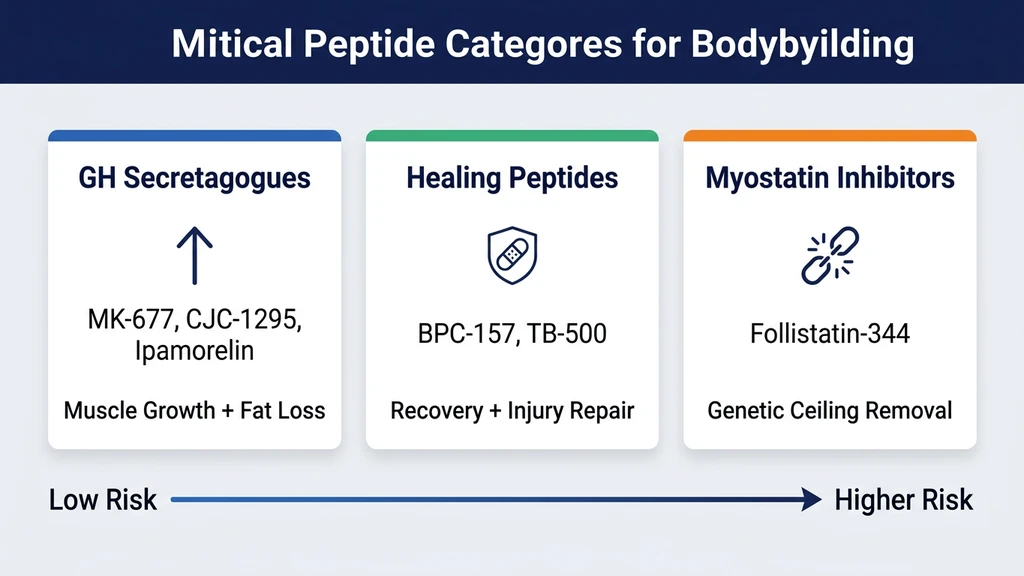
1. Growth Hormone Secretagogues (Muscle Building + Fat Loss)
GH secretagogues stimulate your pituitary gland to release more growth hormone. They do not introduce exogenous GH. Your body produces the hormone; the peptide amplifies the signal.
The primary compounds are MK-677 (oral ghrelin mimetic), CJC-1295 (GHRH analog), and Ipamorelin (selective GHRP). Each activates a different receptor upstream of GH release. CJC-1295 binds the GHRH receptor. Ipamorelin binds the ghrelin receptor. Running both triggers a synergistic GH pulse 3-5 times larger than either compound alone (Ionescu & Bhatt, StatPearls, 2023).
Elevated GH drives two bodybuilding-relevant outcomes: increased IGF-1 production in the liver (which promotes satellite cell differentiation and muscle protein accretion) and enhanced hormone-sensitive lipase activity in adipocytes (which mobilizes stored body fat for oxidation). For a full comparison of fat loss protocols, see sermorelin for fat loss and tesamorelin dosage for fat loss.
2. Healing and Recovery Peptides (Injury Prevention + Training Volume)
Recovery peptides do not build muscle directly. They repair the connective tissue, blood vessels, and muscle fibers damaged by training. The result: you tolerate higher training volume and frequency without accumulating overuse injuries.
BPC-157 is a 15-amino-acid fragment derived from human gastric juice. It promotes angiogenesis (new blood vessel formation) through the VEGFR2 pathway and upregulates growth hormone receptor expression in tendon fibroblasts (Hsieh et al., 2017). TB-500 (Thymosin Beta-4) regulates actin polymerization and recruits stem cells to damaged tissue, addressing systemic repair rather than localized healing (Goldstein et al., Expert Opin Biol Ther, 2012).
For bodybuilders, these compounds address the limiting factor in natural training: connective tissue adaptation lags behind muscle growth by 8-12 weeks. That mismatch causes tendonitis, strains, and forced deloads. Healing peptides close the gap. For detailed injury protocols, see the peptide stacking guide and peptides for joint pain.
3. Myostatin Inhibitors (Genetic Ceiling Removal)
Myostatin is a protein your body produces to limit muscle growth. It binds the ActRIIB receptor on muscle cells and suppresses satellite cell proliferation. Follistatin-344 traps myostatin in a high-affinity complex, preventing it from signaling that growth cap.
The proof of concept is dramatic: myostatin-knockout mice develop 2-3 times normal muscle mass. Belgian Blue cattle carry a natural myostatin mutation and display extraordinary musculature. In nonhuman primates, AAV-delivered follistatin increased quadriceps fiber size by 15-36% (Kota et al., Sci Transl Med, 2009).
Follistatin-344 is the most advanced myostatin inhibitor available as a research peptide. It requires strict cycling (10-30 days on, 3-4 weeks off) because the body compensates by upregulating myostatin production during sustained suppression. Full protocols are covered in the follistatin-344 dosage guide.
BPC-157 for Bodybuilding: The Recovery Accelerator
BPC-157 earns the top spot on this list because the most common bottleneck in natural bodybuilding is not hormonal. It is structural. Tendons, ligaments, and muscle-tendon junctions fail before muscles reach their growth potential.
A 2025 systematic review of 36 preclinical studies confirmed that BPC-157 improves structural, biomechanical, and functional outcomes across muscle, tendon, ligament, and bone injury models (Vasireddi et al., 2025). In rat models, 10 mcg/kg daily restored completely crushed quadriceps muscle to near-normal function within 14 days, while untreated controls remained severely impaired at 72 days (Novinscak et al., 2008). Separately, BPC-157 reversed corticosteroid-induced muscle healing impairment, restoring tissue integrity to levels matching uninjured controls (Pevec et al., 2010).
Use our BPC-157 Dosage Calculator to plan your protocol based on body weight and injury type.
BPC-157 Bodybuilding Protocol
| Parameter | Value |
|---|---|
| Daily dose | 250-500 mcg |
| Injection route | Subcutaneous (abdomen or near injury) |
| Frequency | 1x daily (some split 2x) |
| Cycle length | 4-8 weeks |
| Time off | 2-4 weeks between cycles |
| Reconstitution | 5 mg vial + 2.5 mL bacteriostatic water = 2 mg/mL |
The 250 mcg dose suits general recovery and tendon maintenance during heavy training blocks. Bump to 500 mcg during peaking phases, competition prep, or when managing an active injury. For a complete breakdown of BPC-157 injection technique, see how to inject BPC-157. Storage protocols are covered in how to store peptides.
Why Bodybuilders Use BPC-157
The training math explains BPC-157's reputation in bodybuilding. A muscle that heals in 48 hours instead of 72 adds roughly 52 extra productive training sessions per year. Tendons that tolerate higher volume let you progressive overload without forced deloads every 6 weeks.
BPC-157 also upregulates growth hormone receptor expression in tissue fibroblasts. This means your existing GH output produces a stronger local effect at the injury site (Chang et al., 2014). If you stack BPC-157 with a GH secretagogue, the receptor upregulation creates a synergy that neither compound achieves alone.
For more detail on the muscle evidence, see BPC-157 for muscle growth. For women-specific protocols, see BPC-157 benefits for women. For dosage by body weight, see the BPC-157 dosage for 200lb male guide.
TB-500 for Bodybuilding: Systemic Tissue Repair
TB-500 (Thymosin Beta-4) is a 43-amino-acid peptide that regulates actin, a protein present in virtually every cell. Actin governs cell motility, structure, and the migration of stem cells to damaged tissue. When you inject TB-500, repair cells travel faster to injury sites and proliferate more efficiently once they arrive.
TB-500 was first studied extensively in racehorses. A study in thoroughbreds demonstrated that TB-4 treatment improved tendon remodeling and reduced collagen disorganization after induced flexor tendon lesions. Treated horses showed significantly improved fiber alignment scores at 90 days compared to controls (Sawyer et al., 2020).
TB-500 provides bodybuilders with a different healing profile than BPC-157. BPC-157 excels at localized repair (the specific tendon or muscle you injured). TB-500 works systemically: it reduces inflammation and promotes repair throughout the body simultaneously. For a deep dive into TB-500 mechanisms, see what does TB-500 do.
TB-500 Bodybuilding Protocol
| Phase | Dose | Frequency | Duration |
|---|---|---|---|
| Loading | 5-10 mg/week | 2-3 injections/week | 4 weeks |
| Maintenance | 2.5-5 mg/week | 1-2 injections/week | 4-8 weeks |
| Prevention | 2.5 mg/week | 1 injection/week | Ongoing (cycle 8 on / 4 off) |
TB-500 has a long half-life of approximately 7-10 days. This means precise injection timing matters less than consistency. Split your weekly dose across 2-3 injections during loading (Monday/Wednesday/Friday or Monday/Thursday). During maintenance, a single weekly injection is sufficient.
For exact reconstitution volumes, use the peptide reconstitution calculator. For vial shelf life after mixing, see how long do reconstituted peptides last.
The BPC-157 + TB-500 Bodybuilding Stack
The BPC-157 + TB-500 combination is the most widely used healing stack in bodybuilding, often called the "Wolverine Stack." BPC-157 builds new blood vessels at the injury site. TB-500 sends repair cells along those vessels. Together, they cover both localized and systemic healing.
Protocol: - BPC-157: 250-500 mcg/day (subcutaneous, near injury or abdomen) - TB-500: 5-10 mg/week loading, 2.5-5 mg/week maintenance - Duration: 8-12 weeks - Estimated monthly cost: $80-150
This stack is particularly valuable during high-volume training blocks, competition prep, or when training through a nagging injury. For full stacking protocols, dosage timing, and injection site rotation, see the peptide stacking guide. Check compatibility with other compounds using the Peptide Interaction Checker.
MK-677 for Bodybuilding: Oral Growth Hormone Secretagogue
MK-677 (Ibutamoren) is a non-peptide ghrelin mimetic that you take orally. It binds the ghrelin receptor (GHS-R1a) in the pituitary and hypothalamus, triggering sustained growth hormone and IGF-1 elevation for up to 24 hours per dose.
A two-month study in healthy obese males showed that MK-677 at 25 mg/day increased GH secretion by 40%, raised IGF-1 levels by 40%, and increased fat-free mass by 3 kg over 8 weeks without changes in diet or exercise (Svensson et al., J Clin Endocrinol Metab, 1998). A separate 12-month trial in older adults demonstrated that 25 mg nightly increased GH and IGF-1 to levels comparable with healthy young adults, with a 1.8 kg increase in fat-free mass (Murphy et al., J Clin Endocrinol Metab, 1998).
MK-677 stands apart from injectable GH secretagogues for one reason: oral dosing. No reconstitution, no needles, no injection site rotation. You swallow a capsule before bed and the pituitary does the rest.
MK-677 Bodybuilding Protocol
| Parameter | Value |
|---|---|
| Daily dose | 10-25 mg |
| Administration | Oral, once daily before bed |
| Cycle length | 8-16 weeks (some run 6 months) |
| Time off | 4-8 weeks between cycles |
| Peak GH elevation | 2-6 hours post-dose |
| IGF-1 elevation | Sustained 24 hours |
Start at 10 mg for the first two weeks to assess appetite and water retention. Most bodybuilders settle at 25 mg/day. Taking MK-677 before bed exploits the natural nocturnal GH pulse, amplifying the spike rather than creating an off-cycle surge. Fasting for 2 hours before dosing avoids insulin interference with GH release.
Side effects at 25 mg include increased appetite (significant in some users), mild water retention, transient numbness in extremities, and potential increases in fasting blood glucose over extended cycles. Monitor fasting glucose quarterly if running cycles longer than 12 weeks.
MK-677 vs. Injectable GH Secretagogues
MK-677 produces lower peak GH values than injectable combinations like CJC-1295 + Ipamorelin. The injectable pair generates GH pulses 3-5 times above baseline, while MK-677 raises mean 24-hour GH by approximately 40%. The tradeoff: MK-677 maintains elevated GH and IGF-1 around the clock rather than in acute spikes.
For bodybuilders who prioritize simplicity and sustained IGF-1 elevation, MK-677 wins. For those seeking maximum GH pulsatility (important for fat loss and muscle recovery timing), the injectable stack is more effective. Some advanced users combine both: MK-677 as a daily baseline with CJC-1295/Ipamorelin injected pre-workout for acute pulses.
For reconstitution and dosing guidance on injectable alternatives, see the peptide dosage chart.
CJC-1295 + Ipamorelin: The Gold Standard GH Stack
The CJC-1295 + Ipamorelin combination is the most prescribed GH secretagogue stack in anti-aging and performance medicine. CJC-1295 is a GHRH analog that extends the GH-releasing signal. Ipamorelin is a selective GHRP that triggers the initial GH pulse. Together, they produce a larger, longer GH spike than either compound alone.
Ipamorelin is highly selective for the GH axis. Unlike GHRP-6 or hexarelin, it does not significantly elevate cortisol, prolactin, or aldosterone at standard doses. A clinical study demonstrated that ipamorelin at 1 mcg/kg produced GH elevations comparable to GHRP-6 without the cortisol and appetite spikes that limit GHRP-6's utility (Raun et al., Eur J Endocrinol, 1998).
CJC-1295 with Drug Affinity Complex (DAC) extends the half-life from 6 minutes (native GHRH) to approximately 8 days. A single 30 mcg/kg injection raised mean GH levels by 2-10 fold for 6 or more days and IGF-1 by 1.5-3 fold for 9-11 days (Teichman et al., J Clin Endocrinol Metab, 2006). The no-DAC version (Mod GRF 1-29) has a shorter half-life (~30 minutes) and is preferred by bodybuilders who want pulsatile rather than sustained GH elevation.
CJC-1295 + Ipamorelin Bodybuilding Protocol
Mod GRF 1-29 (no DAC) + Ipamorelin (preferred for bodybuilding):
| Parameter | Value |
|---|---|
| Dose per injection | 100 mcg CJC-1295 (no DAC) + 100 mcg Ipamorelin |
| Frequency | 2-3x daily (morning, post-workout, bedtime) |
| Cycle length | 12-16 weeks |
| Time off | 4-8 weeks |
| Injection route | Subcutaneous |
| Best timing | On empty stomach (2+ hours fasted) |
The three-injection protocol (morning/post-workout/bedtime) produces three distinct GH pulses per day. Bedtime injection is the most important: it amplifies the natural nocturnal GH surge. If you can only inject once daily, inject 30 minutes before sleep. For pre-workout timing, inject 15-20 minutes before training to elevate GH during the session.
This stack pairs well with BPC-157 for bodybuilders managing injuries during a GH secretagogue cycle. The growth hormone receptor upregulation from BPC-157 amplifies the tissue-level response to each GH pulse. For stacking details, see the peptide stacking guide.
Expected Results: CJC-1295 + Ipamorelin for Body Composition
Realistic expectations based on clinical data and practitioner reports:
| Timeline | Expected Changes |
|---|---|
| Weeks 1-4 | Improved sleep quality, mild increase in morning hunger, slight water retention |
| Weeks 4-8 | Visible fat loss (especially visceral), improved recovery between sessions, skin quality improvement |
| Weeks 8-12 | Measurable lean mass gain (1-3 kg), reduced body fat (1-3%), faster workout recovery |
| Weeks 12-16 | Peak body composition changes, sustained energy, improved training capacity |
These numbers assume consistent training and adequate protein intake (1.6-2.2 g/kg/day). GH secretagogues amplify the results of good training and nutrition. They do not replace them. For fat-specific protocols, compare with sermorelin for fat loss and tesamorelin dosage for fat loss.
HGH Fragment 176-191 for Bodybuilding: Targeted Fat Loss
HGH Fragment 176-191 is a modified fragment of the growth hormone molecule (amino acids 176-191). It retains the fat-burning properties of GH while eliminating the muscle-building, blood-sugar-raising, and organ-growth effects. For bodybuilders in a cutting phase, this selectivity is the appeal.
The fragment works by stimulating lipolysis (fat breakdown) and inhibiting lipogenesis (new fat formation). Heffernan et al. demonstrated that HGH Frag 176-191 stimulated lipolysis at rates 12.5 times greater than placebo in adipose tissue explants, with no effect on glucose metabolism or IGF-1 levels (Heffernan et al., Endocrinology, 2001). In obese mice, the fragment reduced body fat by 50% over three weeks without altering food intake.
HGH Fragment does not raise IGF-1, which means it does not promote muscle growth through the GH-IGF-1 axis. This makes it a pure fat-loss tool. Bodybuilders who want both muscle growth and fat loss should use a full GH secretagogue stack (CJC-1295 + Ipamorelin) instead. The fragment is for contest prep and cutting cycles where preserving lean mass while maximizing fat loss is the singular goal.
HGH Fragment 176-191 Bodybuilding Protocol
| Parameter | Value |
|---|---|
| Daily dose | 250-500 mcg (split into 2 injections) |
| Injection timing | Morning (fasted) + pre-workout or pre-bed |
| Injection route | Subcutaneous (abdomen preferred for localized effect claims) |
| Cycle length | 8-12 weeks |
| Time off | 4 weeks between cycles |
| Fasting required | 2 hours before and 30 minutes after injection |
Fasting is critical for HGH Fragment efficacy. Insulin blunts the fragment's lipolytic action. Inject on an empty stomach, and avoid eating for 30 minutes post-injection. The two most popular timing protocols are fasted morning injection + pre-bed injection, or fasted morning injection + pre-cardio injection (30 minutes before fasted cardio).
At 500 mcg/day for 12 weeks, a cycle requires approximately 42 mg total. Budget $150-300 depending on source. Use the peptide cost calculator for exact estimates.
HGH Fragment vs. Full GH Secretagogues for Fat Loss
| Factor | HGH Frag 176-191 | CJC-1295 + Ipamorelin | MK-677 |
|---|---|---|---|
| Fat loss | Strong (targeted) | Moderate (indirect via GH) | Moderate (offset by appetite increase) |
| Muscle growth | None | Yes (via IGF-1) | Yes (via IGF-1) |
| IGF-1 elevation | None | Significant | Significant |
| Blood sugar impact | Neutral | Mild increase possible | Mild increase possible |
| Appetite effect | None | Minimal | Significant increase |
| Best for | Contest prep, cutting | Recomposition | Off-season, bulking |
Bodybuilders in contest prep often choose HGH Fragment because it strips fat without raising appetite (which MK-677 does) or complicating blood sugar management. Bodybuilders in an off-season bulk prefer MK-677 or CJC-1295 + Ipamorelin because the IGF-1 elevation directly supports new muscle tissue. For additional fat-loss compounds, see how to microdose semaglutide.
Follistatin-344 for Bodybuilding: Myostatin Inhibition
Follistatin-344 is a 344-amino-acid protein that neutralizes myostatin, the body's built-in muscle growth limiter. This is the most aggressive peptide on this list. It targets the genetic ceiling itself.
Myostatin knockout produces extreme phenotypes in every species studied. A child documented with a natural myostatin loss-of-function mutation displayed visible muscular hypertrophy at birth and extraordinary strength by age 4.5 years (Schuelke et al., N Engl J Med, 2004). In nonhuman primates, AAV-delivered follistatin 344 increased quadriceps fiber diameter by 15-36% with no adverse effects on cardiac pathology or reproductive function (Kota et al., 2009).
Follistatin binds myostatin and activin A with picomolar affinity (Kd ~5-10 pM), preventing them from activating the ActRIIB receptor on muscle cells. With the myostatin signal blocked, satellite cells proliferate without the normal cap, and protein synthesis tilts toward net accretion. The caveat: your body compensates. Extended follistatin use triggers upregulation of endogenous myostatin production, which is why strict cycling is non-negotiable.
Follistatin-344 Bodybuilding Protocol
| Parameter | Value |
|---|---|
| Daily dose | 100-200 mcg |
| Injection route | Subcutaneous (abdomen or thigh) |
| Frequency | 1x daily, post-workout preferred |
| Cycle length | 10-30 days on |
| Time off | 3-4 weeks minimum (critical) |
| Typical vial size | 1 mg (1,000 mcg) |
| Injections per vial | 5-10 at 100-200 mcg/day |
FS-344 has a circulating half-life of approximately 90 minutes, requiring daily injection. Post-workout timing aligns the peptide with the natural elevation of protein synthesis after resistance training. At 100 mcg/day for 30 days, one cycle requires 3 mg total. At 200 mcg/day for 20 days, it requires 4 mg. Expect to budget $200-600 per cycle.
Follistatin-344 is a full-length protein, not a short-chain peptide. It requires careful reconstitution (swirl gently, never shake) and must be refrigerated at 2-8 degrees Celsius. For reconstitution steps, use the peptide reconstitution calculator. For complete dosing protocols, see the follistatin-344 dosage guide.
Follistatin Safety and Cycling
Follistatin 344 carries more risk than the other compounds on this list because myostatin has functions beyond limiting muscle growth. Myostatin regulates cardiac tissue remodeling. Chronic suppression could theoretically affect heart muscle hypertrophy, though the Kota et al. primate study found no cardiac pathology over the study period.
Three rules for follistatin cycling: 1. Never exceed 30 consecutive days of use. The body upregulates myostatin production within 2-4 weeks to compensate. 2. Take 3-4 full weeks off between cycles. This allows myostatin levels to normalize and receptor sensitivity to reset. 3. Monitor bloodwork. Track IGF-1, liver enzymes, and complete blood count before, during, and after each cycle.
For broader safety protocols including bloodwork panels and physician consultation frameworks, see the peptide safety guide.
Peptide Stacking Protocols for Bodybuilders
Single peptides produce single-pathway effects. Stacking targets multiple bottlenecks simultaneously. The protocols below are organized by bodybuilding phase.
Each stack follows a core principle: combine peptides that activate different receptor systems. Two compounds hitting the same receptor produce diminishing returns. Two compounds hitting separate pathways produce compounding results. For compatibility details on every combination, see the full peptide stacking guide, or run your planned combination through the Peptide Interaction Checker.
Off-Season Bulk Stack
Goal: Maximize muscle growth, support recovery from high-volume training, elevate GH and IGF-1.
| Compound | Dose | Frequency | Purpose |
|---|---|---|---|
| CJC-1295 (no DAC) | 100 mcg | 2-3x daily | GHRH pathway, GH pulse amplification |
| Ipamorelin | 100 mcg | 2-3x daily (with CJC) | GHRP pathway, synergistic GH release |
| BPC-157 | 250 mcg | 1x daily | Tendon/ligament maintenance during heavy training |
Duration: 12-16 weeks on, 4-8 weeks off. Why this works: CJC-1295 + Ipamorelin elevates GH and IGF-1 for muscle accretion. BPC-157 prevents the tendon and connective tissue injuries that derail heavy training phases. The 250 mcg maintenance dose of BPC-157 is sufficient for injury prevention; increase to 500 mcg if managing an active injury.
Use our Peptide Stack Calculator to build custom protocols with reconstitution volumes and cost estimates.
Cutting / Contest Prep Stack
Goal: Maximize fat loss, preserve lean mass, support recovery on caloric deficit.
| Compound | Dose | Frequency | Purpose |
|---|---|---|---|
| HGH Fragment 176-191 | 250-500 mcg | 2x daily (fasted) | Direct lipolysis without IGF-1 or appetite effects |
| BPC-157 | 250 mcg | 1x daily | Recovery support during caloric deficit |
| TB-500 | 2.5 mg | 1x weekly | Systemic repair, joint protection during deficit |
Duration: 8-12 weeks. Why this works: HGH Fragment strips fat without raising appetite or blood sugar. BPC-157 and TB-500 prevent the joint and tendon breakdown that accelerates on caloric deficits (reduced recovery resources). This stack avoids MK-677 because its appetite-stimulating effects directly conflict with caloric restriction.
For additional cutting-phase strategies, see tesamorelin dosage for fat loss.
Injury Recovery Stack (Training Through Pain)
Goal: Heal a specific injury while maintaining as much training volume as possible.
| Compound | Dose | Frequency | Purpose |
|---|---|---|---|
| BPC-157 | 500 mcg | 1x daily (near injury) | Localized angiogenesis, tissue repair |
| TB-500 | 5-10 mg/week (loading) | 2-3x weekly | Systemic stem cell migration, actin regulation |
| Ipamorelin | 100 mcg | 1-2x daily | GH pulse for accelerated tissue remodeling |
Duration: 6-8 weeks loading, then 4-6 weeks maintenance. Why this works: BPC-157 builds blood vessels at the injury site. TB-500 sends repair cells systemically. Ipamorelin elevates GH, which amplifies tissue remodeling speed. BPC-157 upregulates GH receptor expression in fibroblasts, creating a synergy where each GH pulse from ipamorelin produces a stronger local healing response.
For BPC-157 injection technique near specific injury sites, see how to inject BPC-157. For TB-500 dosing details, use the TB-500 Dosage Calculator.
Dosage Quick-Reference Table: All Six Peptides
This table consolidates every dosage recommendation from this guide. Print it, screenshot it, or bookmark it.
| Peptide | Standard Dose | Injection Route | Frequency | Cycle | Off Period | Monthly Cost (est.) |
|---|---|---|---|---|---|---|
| BPC-157 | 250-500 mcg/day | Subcut. (near injury or abdomen) | 1x daily | 4-8 weeks | 2-4 weeks | $50-100 |
| TB-500 | 5-10 mg/week (loading), 2.5-5 mg (maint.) | Subcut. (abdomen or thigh) | 2-3x/week, then 1-2x | 8-12 weeks | 4 weeks | $60-120 |
| MK-677 | 10-25 mg/day | Oral | 1x daily (bedtime) | 8-16 weeks | 4-8 weeks | $40-80 |
| CJC-1295 + Ipamorelin | 100 mcg + 100 mcg | Subcut. | 2-3x daily | 12-16 weeks | 4-8 weeks | $120-200 |
| HGH Frag 176-191 | 250-500 mcg/day (split) | Subcut. (abdomen) | 2x daily (fasted) | 8-12 weeks | 4 weeks | $80-150 |
| Follistatin-344 | 100-200 mcg/day | Subcut. | 1x daily | 10-30 days | 3-4 weeks | $200-600 |
All costs are approximate and vary by vendor. Use the peptide cost calculator for vendor-specific pricing. For proper reconstitution of any compound above, see the peptide reconstitution calculator and how to store peptides.
Safety, Side Effects, and Risk Mitigation
Peptides for bodybuilding carry real risks. No compound on this list is FDA-approved for muscle building, fat loss, or athletic performance. All evidence comes from preclinical studies, GH-deficiency trials, and practitioner-reported protocols. Understanding the specific risks of each compound class lets you make informed decisions.
GH Secretagogue Risks (MK-677, CJC-1295, Ipamorelin)
Blood sugar elevation. GH antagonizes insulin. MK-677 at 25 mg/day raised fasting glucose by approximately 0.3 mmol/L in a 12-month trial of elderly subjects (Murphy et al., 1998). Bodybuilders with insulin resistance, prediabetes, or a family history of type 2 diabetes should monitor fasting glucose and HbA1c every 8-12 weeks during a GH secretagogue cycle.
Water retention. GH increases sodium reabsorption in the kidneys, leading to 1-3 kg of water weight in the first 2-4 weeks. This is cosmetic, not dangerous, but can obscure body composition changes on the scale.
Joint discomfort and carpal tunnel. Sustained GH elevation can cause periarticular fluid retention. Numbness or tingling in the hands indicates the dose may be too high. Reduce by 25-50% if symptoms persist beyond 2 weeks.
Appetite stimulation (MK-677 specifically). MK-677 mimics ghrelin, the hunger hormone. Some users report appetite increases significant enough to derail a cutting diet. This is a feature during bulking and a liability during cutting.
Healing Peptide Risks (BPC-157, TB-500)
BPC-157 and TB-500 have favorable safety profiles in preclinical research, with no lethal dose established in animal toxicology studies. Community-reported side effects are mild and infrequent.
BPC-157: Occasional reports of headache, dizziness, and nausea. Rare reports of transient blood pressure changes. For a detailed breakdown, see the peptide safety guide.
TB-500: Mild fatigue, headache, and injection-site irritation reported by a minority of users. TB-500 promotes angiogenesis, so anyone with active cancer or a cancer history should not use this compound without physician clearance, as angiogenesis supports tumor vascularization.
Both compounds: Quality control is the primary risk. Peptides from unregulated vendors may contain under-dosed product, bacterial contamination, or misidentified compounds. Source from vendors that provide third-party certificates of analysis (COA) with HPLC purity data. For vendor evaluation, see where to buy peptides in 2026. For regulatory context, see the FDA peptide crackdown 2026.
Follistatin-344 Risks
Follistatin carries the highest theoretical risk profile on this list because myostatin has legitimate physiological functions beyond limiting muscle size.
Cardiac hypertrophy concern. Myostatin regulates cardiac muscle remodeling. Long-term suppression could promote pathological heart enlargement. The Kota et al. primate study found no cardiac issues, but the treatment period was limited. Conservative cycling (10-30 days on, 3-4 weeks off) mitigates this risk.
Reproductive effects. Follistatin binds activin, which plays roles in follicle-stimulating hormone regulation. Prolonged activin suppression could affect reproductive hormone balance. Blood work should include FSH and LH during and after cycles.
No human clinical trial data. All follistatin-344 dosing is extrapolated from animal studies and practitioner observation. The margin of error is wider than for compounds with human trial data.
Baseline and follow-up blood panels should include: complete metabolic panel, IGF-1, GH, testosterone, FSH, LH, liver enzymes, fasting glucose, and HbA1c. For detailed panel recommendations, see the peptide safety guide.
Where to Source Peptides for Bodybuilding
Peptide quality varies enormously across vendors. A 2024 analysis of peptide products from online retailers found that 33% contained less than 90% of the labeled dose, and several contained bacterial endotoxins above acceptable thresholds. Your results depend on what is actually in the vial.
Quality indicators to verify before purchasing: - Third-party certificate of analysis (COA) with HPLC purity data (demand 98%+ purity) - Mass spectrometry confirmation of molecular identity - Endotoxin testing (LAL test) results below 5 EU/mg - GMP or ISO-certified manufacturing facility - Consistent batch-to-batch testing documentation
For a comprehensive vendor evaluation framework, see where to buy peptides in 2026. For regulatory context on the current US market, see the FDA peptide crackdown 2026. Once you have your peptides, proper storage is essential to maintain potency: follow the protocols in how to store peptides and check expiration guidelines in how long do reconstituted peptides last.
Use the peptide unit converter to verify dosage calculations and the peptide reconstitution calculator for mixing volumes before your first injection.
Frequently Asked Questions
Are peptides legal for bodybuilding?
Peptides occupy a gray area. Most are sold as "research chemicals" and are legal to purchase in the US, UK, Canada, and Australia. They are not FDA-approved for bodybuilding. WADA bans several peptides (including GH secretagogues and TB-500) in competitive sport. Check your federation's prohibited substance list before use.
Which peptide builds the most muscle?
Follistatin-344 has the strongest direct muscle-building mechanism by neutralizing myostatin. In primates, it increased muscle fiber size by 15-36%. However, it requires strict cycling and carries higher risk. CJC-1295 + Ipamorelin produces more moderate gains (1-3 kg lean mass over 12 weeks) with better safety data.
How long do peptides take to work for bodybuilding?
GH secretagogues (MK-677, CJC-1295/Ipamorelin) produce measurable IGF-1 elevation within 1-2 weeks. Visible body composition changes appear at 6-8 weeks. BPC-157 reduces injury pain within 7-14 days. Follistatin effects on muscle fullness appear within 2-3 weeks of daily injection at 100-200 mcg.
Can you stack multiple peptides at once?
Yes, provided the peptides target different receptor systems. BPC-157 + TB-500 + CJC-1295/Ipamorelin is a common three-compound stack covering healing, systemic repair, and GH elevation. Avoid stacking two GH secretagogues that hit the same receptor (e.g., hexarelin + GHRP-6). Use the Peptide Interaction Checker before combining.
Do peptides replace steroids for bodybuilding?
No. Peptides operate through different mechanisms and produce more modest results. Testosterone directly activates the androgen receptor, increasing protein synthesis by 20-30%. Peptides primarily elevate GH/IGF-1, repair tissue, or suppress myostatin. Bodybuilders using peptides alone gain 1-4 kg lean mass per 12-week cycle versus 5-10 kg from anabolic steroids.
What blood work should I run before using peptides?
Baseline panel should include: IGF-1, GH, fasting glucose, HbA1c, complete metabolic panel, liver enzymes (AST/ALT), testosterone, FSH, LH, and complete blood count. Retest at 8 weeks into your cycle and 4 weeks after stopping. Monitor fasting glucose quarterly during any GH secretagogue cycle exceeding 12 weeks.
Are peptides safe for long-term use?
Safety data varies by compound. MK-677 has 12-month human trial data showing sustained efficacy with manageable side effects (water retention, increased appetite, mild glucose elevation). BPC-157 and TB-500 have extensive animal safety data but no long-term human trials. Follistatin-344 has the least safety data and should not exceed 30 consecutive days.
How much do peptides cost per month for bodybuilding?
A basic stack (BPC-157 + CJC-1295/Ipamorelin) runs $150-250 per month. MK-677 alone costs $40-80 monthly. HGH Fragment adds $80-150. Follistatin-344 is the most expensive at $200-600 per 10-30 day cycle. Total monthly spend for an advanced multi-peptide stack ranges from $250-500 depending on doses and vendor.
The Bottom Line
Peptides for bodybuilding target three distinct bottlenecks: hormonal output (GH secretagogues), structural integrity (healing peptides), and genetic ceiling (myostatin inhibitors). Matching the right compound to your specific limitation produces results that stacking more training volume or dietary adjustments cannot.
Start with the compound that addresses your current bottleneck. If chronic tendonitis limits your squat volume, BPC-157 and TB-500 produce faster gains than any GH secretagogue because they remove the training limiter. If you have hit a body composition plateau despite consistent training, CJC-1295 + Ipamorelin or MK-677 targets the hormonal decline directly.
Three rules apply regardless of which compound you choose. Source pharmaceutical-grade product from vendors who provide third-party certificates of analysis. Run baseline blood work before your first cycle and retest at 8 weeks. Respect cycle lengths and off periods because receptor desensitization and compensatory feedback mechanisms are real biological constraints, not suggestions.
For help building your first protocol, use the Peptide Stack Calculator to combine compounds with compatible mechanisms, or start with the getting started with peptides guide.
Helpful Tools
Related Articles
Peptides for Recovery: 7 Best Ranked by Evidence
Top 7 peptides for recovery ranked: BPC-157, TB-500, GHK-Cu, ipamorelin, CJC-1295, MOTS-c, thymosin alpha-1. Post-workout and injury protocols.
Peptide Dosage Chart: 20+ Peptides
Peptide dosage chart with beginner, standard, and advanced doses for 24 peptides. Dosing frequency, timing, cycle length, and free calculators.
BPC-157 for Muscle Growth: Research
Does BPC-157 build muscle? Review of PubMed studies on muscle repair, healing mechanisms, dosage protocols, and how BPC-157 compares to TB-500 for recovery.
CJC-1295 Dosage: Complete Protocol Guide
CJC-1295 dosage guide: DAC and no-DAC protocols. Dosing by goal (anti-aging, fat loss, muscle, sleep), ipamorelin stacking, and injection timing.