You tore something, had surgery, or pushed too hard in the gym. The body's repair machinery is running, but it is slow. Peptides accelerate that machinery. The seven most effective peptides for recovery are BPC-157, TB-500, GHK-Cu, ipamorelin, CJC-1295, MOTS-c, and thymosin alpha-1. Each targets a different phase of the repair process.
BPC-157 and TB-500 form the core of most recovery protocols. A 2018 systematic review confirmed BPC-157's tissue-protective effects across tendon, muscle, nerve, and gut models (Sikiric et al., Curr Pharm Des, 2018). TB-500's parent molecule, thymosin beta-4, accelerated dermal wound closure by 42% in a controlled human trial (Philp et al., Ann N Y Acad Sci, 2010).
No peptide listed here is FDA-approved for recovery. Consult a healthcare provider before using any peptide.
Quick-reference ranking:
| Rank | Peptide | Primary Recovery Type | Mechanism | Evidence Level | Onset | Dose Range |
|---|---|---|---|---|---|---|
| 1 | BPC-157 | Tendon, muscle, gut, post-surgery | VEGF upregulation, nitric oxide, collagen synthesis | Strong (extensive animal data) | 3-7 days | 250-500 mcg/day |
| 2 | TB-500 | Systemic tissue repair, scar reduction | Actin regulation, cell migration, angiogenesis | Strong (human wound data) | 1-2 weeks | 2-5 mg 2x/week |
| 3 | GHK-Cu | Skin, collagen remodeling, anti-scarring | Copper-dependent collagen, TGF-beta modulation | Moderate (human skin trials) | 2-4 weeks | 1-2 mg/day |
| 4 | Ipamorelin | Muscle, bone, sleep-driven recovery | GH secretagogue (selective) | Moderate (human GH data) | 1-2 weeks | 200-300 mcg before bed |
| 5 | CJC-1295 | Sustained GH elevation, deep recovery | GHRH analogue with DAC | Moderate (human PK/PD data) | 1-2 weeks | 1-2 mg/week |
| 6 | MOTS-c | Metabolic recovery, exercise adaptation | AMPK activation, mitochondrial biogenesis | Moderate (human exercise data) | 1-3 weeks | 5-10 mg/week |
| 7 | Thymosin Alpha-1 | Immune recovery, post-illness repair | T-cell maturation, dendritic cell activation | Strong (FDA orphan drug) | 1-2 weeks | 1.6 mg 2x/week |
For dosing protocols, see our peptide dosage chart. For combination strategies, see the peptide stacking guide.
Get your custom peptide protocol:
- Tailored to your body and goals
- Precise dosing and cycle length
- Safe stacking combinations
- Backed by peer-reviewed studies
- Ready in under 2 minutes
How Peptides Speed Up Recovery
Recovery is construction. The body clears damaged tissue, lays scaffolding, builds new cells, and reconnects blood supply. Every step requires specific molecular signals. Peptides provide those signals in concentrated form.
Think of a construction site after a storm. Workers are available, raw materials are stockpiled, but the project manager is overwhelmed. Peptides act as additional project managers: they do not replace the workers or the materials, but they coordinate the rebuild faster. BPC-157 calls in the plumbing crew (new blood vessels). TB-500 mobilizes the framing team (cell migration). GHK-Cu upgrades the finishing materials (collagen quality). The literal biology: each peptide upregulates specific growth factors and signaling cascades that the body already uses, just at higher concentrations and for longer durations.
Four recovery pathways matter most.
Angiogenesis. New blood vessels deliver oxygen and nutrients to damaged tissue. BPC-157 upregulates vascular endothelial growth factor (VEGF) and stimulates nitric oxide synthesis, accelerating vessel formation at the injury site (Seiwerth et al., J Physiol Pharmacol, 2018).
Cell migration and proliferation. Damaged tissue needs replacement cells. TB-500 binds to G-actin and promotes actin polymerization, which enables keratinocytes, endothelial cells, and fibroblasts to migrate into the wound bed (Goldstein et al., Expert Opin Biol Ther, 2012).
Collagen remodeling. New tissue needs structural integrity. GHK-Cu stimulates collagen I and III synthesis while simultaneously activating matrix metalloproteinases that remove disorganized scar tissue (Pickart et al., BioMed Res Int, 2015).
Growth hormone release. GH drives systemic repair: muscle protein synthesis, bone mineralization, tendon collagen turnover. Ipamorelin and CJC-1295 stimulate pulsatile GH release from the pituitary without disrupting cortisol or prolactin (Raun et al., Eur J Endocrinol, 2005).
The 7 Best Peptides for Recovery (Ranked)
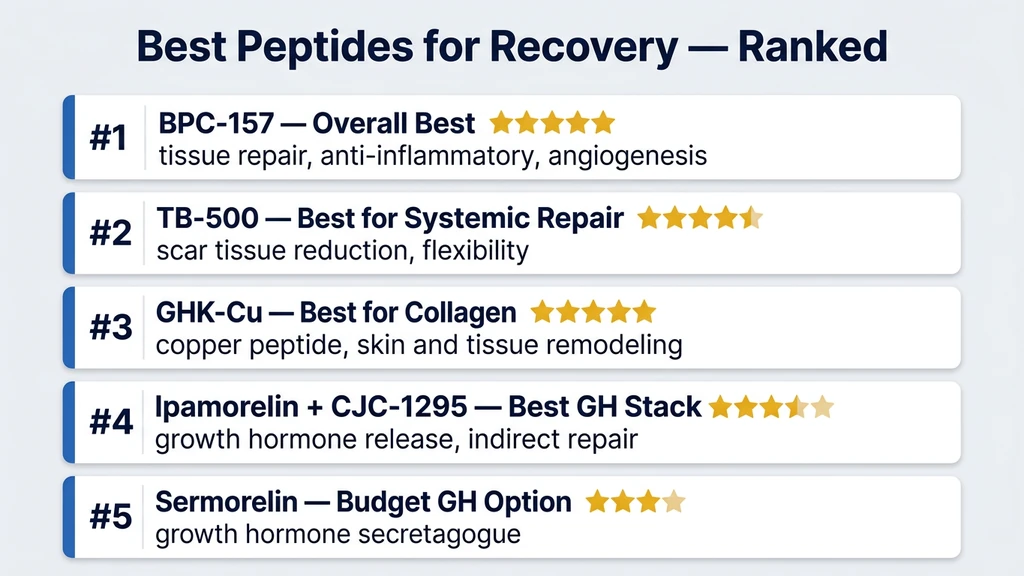
Ranked by breadth of evidence, mechanism specificity, and practical results across recovery types. The top three (BPC-157, TB-500, GHK-Cu) are direct tissue repair agents. The remaining four support recovery through indirect pathways: growth hormone release, metabolic optimization, and immune reconstitution.
1. BPC-157: The Tissue Repair Specialist
Evidence level: STRONG (extensive animal data across 20+ tissue types, no completed human trials)
BPC-157 (Body Protection Compound-157) is a 15-amino-acid peptide derived from human gastric juice. It is the single most studied peptide for tissue repair, with positive results across tendon, muscle, ligament, nerve, bone, and gut models.
How it accelerates recovery. BPC-157 upregulates VEGF, increases nitric oxide synthesis, activates the FAK-paxillin pathway for tendon healing, and stimulates growth hormone receptor expression in injured tissue. In rat Achilles tendon transection models, BPC-157 restored tendon biomechanical strength to near-normal levels within 72 days versus incomplete healing in controls (Chang et al., J Appl Physiol, 2011). Muscle crush injury models showed accelerated functional recovery with reduced fibrosis (Pevec et al., J Physiol Pharmacol, 2010).
For tendon and ligament injuries specifically, see our best peptides for tendon repair guide. For BPC-157 and muscle, see BPC-157 and muscle growth.
Recovery protocol: - Post-surgery: 500 mcg/day subcutaneous, 6-8 weeks - Tendon/ligament injury: 250-500 mcg/day, 4-8 weeks. Inject near the injury site when possible. See where to inject BPC-157 for knee injuries - Post-workout muscle recovery: 250 mcg/day, ongoing during training blocks - Gut recovery (post-NSAID damage, ulcers): 500 mcg/day oral. See how to take BPC-157
Use our BPC-157 dosage calculator for weight-adjusted dosing. For body weight considerations, see the BPC-157 dosage for a 200lb male guide.
Why it ranks first. No other recovery peptide has data across this many tissue types. BPC-157 works on tendons, muscles, nerves, gut lining, and bone. The limitation: all data comes from animal models. No completed human clinical trial exists for any recovery application.
2. TB-500: The Systemic Repair Agent
Evidence level: STRONG (human wound healing data for parent molecule thymosin beta-4)
TB-500 is a synthetic fragment of thymosin beta-4, a 43-amino-acid protein naturally present in all human cells. Where BPC-157 excels at localized repair, TB-500 works systemically. It reaches damaged tissue throughout the body regardless of injection site.
How it accelerates recovery. TB-500 promotes cell migration by sequestering G-actin, which is the rate-limiting step in wound repair. Cells cannot move to the injury site without actin polymerization. TB-500 also reduces inflammation, prevents adhesion formation, and upregulates the anti-inflammatory cytokine IL-10. A phase II human trial of thymosin beta-4 eye drops for corneal wound healing confirmed tissue repair activity in humans (Dunn et al., Ann N Y Acad Sci, 2010). Dermal wound studies showed 42% faster closure rates (Philp et al., 2010).
For a deeper look at TB-500 mechanisms, see what does TB-500 do?.
Recovery protocol: - Loading phase (weeks 1-4): 5 mg subcutaneous, twice weekly - Maintenance (weeks 5-12): 2.5 mg subcutaneous, once weekly - Post-surgery: Start loading 3-5 days after surgery (not before, to avoid interfering with initial clotting) - Chronic injuries: 2.5 mg twice weekly for 4 weeks, then 2.5 mg once weekly
Use our TB-500 dosage calculator for protocol planning. See the TB-500 dosage chart for complete loading and maintenance schedules.
Why it ranks second. TB-500 has human data for its parent molecule and works systemically, making it ideal for multiple simultaneous injuries or post-surgical recovery where inflammation is widespread. The molecule reaches places a localized injection cannot.
3. GHK-Cu: The Collagen Rebuilder
Evidence level: MODERATE (human skin and wound trials; no human musculoskeletal trials)
GHK-Cu (glycyl-L-histidyl-L-lysine copper complex) is a naturally occurring tripeptide that declines with age. At age 20, plasma GHK-Cu levels sit around 200 ng/mL. By age 60, they drop to 80 ng/mL. This decline correlates directly with slower wound healing and thinner, weaker connective tissue.
How it accelerates recovery. GHK-Cu stimulates collagen I and III production, activates decorin (which organizes collagen fibrils into functional tissue rather than scar), and recruits dermal fibroblasts and mast cells to wound sites. A gene expression study found GHK-Cu modulates 4,000+ human genes, with a net effect of switching tissue from a damaged state to a repair state (Pickart et al., 2015). Human facial skin studies showed 70% increase in collagen thickness after topical GHK-Cu application (Leyden et al., J Cosmet Sci, 2002).
For dosage specifics, see our GHK-Cu injection dosage guide. For reconstitution, see how to reconstitute GHK-Cu.
Recovery protocol: - Post-surgery (scar minimization): 1-2 mg/day subcutaneous near the incision site, starting 7-10 days post-op - Joint/connective tissue recovery: 1-2 mg/day subcutaneous, 4-8 weeks - Skin recovery (burns, abrasions): Topical cream 1-2x/day or subcutaneous 1 mg/day - Hair follicle recovery: See GHK-Cu for hair growth
Why it ranks third. GHK-Cu fills the gap that BPC-157 and TB-500 leave: collagen quality. The first two get tissue to the injury site fast. GHK-Cu ensures that tissue is organized, strong, and minimally scarred. For the GHK-Cu + BPC-157 + TB-500 blend protocol, all three work in sequence.
4. Ipamorelin: The Selective GH Booster
Evidence level: MODERATE (human pharmacokinetic and GH release data; limited injury-specific studies)
Ipamorelin is a five-amino-acid growth hormone secretagogue that stimulates GH release from the pituitary. Unlike older secretagogues (GHRP-6, hexarelin), ipamorelin does not raise cortisol or prolactin at therapeutic doses. This selectivity matters for recovery: cortisol is catabolic and slows healing.
How it supports recovery. Growth hormone drives muscle protein synthesis, tendon collagen turnover, bone mineralization, and lipolysis. Sleep-phase GH pulses are when the body does most of its repair work. Ipamorelin amplifies those pulses. A human trial showed ipamorelin increased GH release in a dose-dependent manner with minimal side effects (Raun et al., Eur J Endocrinol, 2005). A post-surgical study in patients recovering from abdominal procedures found that ipamorelin accelerated bowel recovery time and reduced hospital stay (Greenwood-Van Meerveld et al., Neurogastroenterol Motil, 2007).
Recovery protocol: - Standard: 200-300 mcg subcutaneous before bed (to amplify natural sleep-phase GH pulse) - Enhanced: 200-300 mcg twice daily (morning fasted + before bed) - Post-surgery: 200 mcg before bed, start 48 hours post-surgery - Duration: 8-12 weeks on, 4 weeks off
For combination dosing with CJC-1295, use our CJC-1295 + ipamorelin dosage calculator.
Why it ranks fourth. Ipamorelin is the safest GH secretagogue for recovery. The absence of cortisol spikes means it supports repair without triggering the stress response that slows healing. The limitation: GH is a systemic signal. It supports recovery but does not target specific damaged tissue the way BPC-157 or TB-500 does.
5. CJC-1295: The Sustained GH Platform
Evidence level: MODERATE (human pharmacokinetic data; no direct injury-recovery trials)
CJC-1295 is a synthetic analogue of growth hormone-releasing hormone (GHRH) with a Drug Affinity Complex (DAC) that extends its half-life from minutes to approximately 6-8 days. This creates sustained GH elevation rather than the acute spikes produced by secretagogues like ipamorelin.
How it supports recovery. CJC-1295 with DAC increased mean GH levels by 2-10 fold and IGF-1 by 1.5-3 fold in healthy adults over 7-14 days (Teichman et al., J Clin Endocrinol Metab, 2006). Sustained GH elevation promotes continuous tissue repair rather than pulse-dependent recovery. IGF-1 elevation drives local tissue growth factors in muscle, bone, and connective tissue.
Recovery protocol: - CJC-1295 with DAC: 1-2 mg subcutaneous once weekly - CJC-1295 no DAC (Mod GRF 1-29): 100-200 mcg subcutaneous 2-3x/day (paired with ipamorelin for synergistic GH release) - Duration: 8-12 weeks
The ipamorelin + CJC-1295 combination is the most common GH-based recovery stack. Ipamorelin stimulates GH release. CJC-1295 amplifies and sustains it. Together, they produce higher and longer GH peaks than either alone. See the peptide stacking guide for timing details.
Why it ranks fifth. CJC-1295 provides the sustained GH platform that makes ipamorelin more effective. The combination addresses the main limitation of GH secretagogues: short-lived pulses. The limitation: like ipamorelin, CJC-1295 provides systemic support rather than targeted tissue repair.
6. MOTS-c: The Metabolic Recovery Peptide
Evidence level: MODERATE (human exercise physiology data; emerging clinical trials)
MOTS-c is a mitochondria-derived peptide encoded by mitochondrial DNA. It is the only peptide on this list that directly addresses metabolic recovery: the energy systems that power tissue repair.
How it supports recovery. MOTS-c activates AMPK, the master switch for cellular energy regulation. AMPK activation increases mitochondrial biogenesis, improves insulin sensitivity, and enhances fatty acid oxidation. A 2021 human trial showed MOTS-c improved exercise capacity and metabolic regulation in obese adults over 4 weeks (Lee et al., Cell Metab, 2015). Physical exercise naturally increases endogenous MOTS-c levels, and plasma MOTS-c correlates with exercise capacity in young adults (Reynolds et al., Peptides, 2021).
For complete dosing, see our MOTS-c dosage guide.
Recovery protocol: - Post-workout metabolic recovery: 5 mg subcutaneous, 3x/week (training days) - General metabolic optimization: 10 mg subcutaneous once weekly - Duration: 4-8 weeks
Why it ranks sixth. MOTS-c fills a niche no other recovery peptide addresses: mitochondrial function. Every repair process requires ATP. Damaged mitochondria slow recovery across all tissue types. The limitation: MOTS-c does not directly repair tissue. It optimizes the energy system that powers repair.
7. Thymosin Alpha-1: The Immune Recovery Peptide
Evidence level: STRONG (FDA orphan drug designation; human clinical trials in immunocompromised patients)
Thymosin alpha-1 is a 28-amino-acid peptide naturally produced by the thymus gland. It is the only peptide on this list with regulatory approval (marketed as Zadaxin in 37 countries). Its recovery application is specific: immune reconstitution after illness, surgery, or prolonged physical stress.
How it supports recovery. Thymosin alpha-1 matures T-cells, activates dendritic cells, and enhances natural killer cell activity. After major surgery, immune suppression can persist for 7-14 days, increasing infection risk and slowing wound healing. Thymosin alpha-1 restored T-cell function in post-surgical patients within 5-7 days in clinical trials (Romani et al., Blood, 2004). A meta-analysis of sepsis patients showed thymosin alpha-1 reduced mortality by 40% when added to standard care (Wu et al., Int Immunopharmacol, 2015).
For more on immune peptides, see peptides for immune system.
Recovery protocol: - Post-surgery immune support: 1.6 mg subcutaneous twice weekly, starting 48 hours post-surgery, for 4 weeks - Post-illness recovery: 1.6 mg subcutaneous twice weekly for 2-4 weeks - Overtraining immune recovery: 1.6 mg once weekly during heavy training blocks
Why it ranks seventh. Thymosin alpha-1 is the most clinically validated peptide on this list, but its recovery application is narrow: immune function. For athletes dealing with recurrent infections during hard training, or patients recovering from surgery with immune suppression, it fills a critical gap. It does not directly repair muscle, tendon, or bone.
Recovery Types: Which Peptides Match Your Situation
Different recovery scenarios demand different peptide combinations. A torn Achilles requires a different protocol than post-marathon soreness. Matching the right peptide to the right recovery type prevents wasted time and money.
Post-Workout Recovery (Muscle Soreness, Micro-Tears)
Post-workout recovery targets exercise-induced muscle damage: micro-tears in muscle fibers, inflammation from eccentric loading, and glycogen depletion. The goal is faster return to training, not structural repair.
Best peptides: BPC-157 (250 mcg/day) + ipamorelin (200-300 mcg before bed)
BPC-157 reduces exercise-induced inflammation and promotes muscle fiber repair. Ipamorelin amplifies the natural GH pulse during sleep, when most muscle protein synthesis occurs. Add MOTS-c (5 mg on training days) for athletes in heavy training blocks to maintain mitochondrial efficiency.
Timeline: 24-48 hours faster return to baseline versus unassisted recovery. Most users report noticeable reduction in delayed-onset muscle soreness (DOMS) within the first week of use.
Post-Surgery Recovery
Post-surgical recovery involves wound closure, infection prevention, scar tissue management, and functional restoration. The body's repair systems are already activated by the surgical trauma. Peptides amplify those systems.
Best stack: BPC-157 (500 mcg/day) + TB-500 (5 mg 2x/week loading) + GHK-Cu (1-2 mg/day starting day 7-10) + thymosin alpha-1 (1.6 mg 2x/week)
BPC-157 accelerates wound healing and protects against NSAID-related gut damage from post-surgical pain management. TB-500 reduces adhesion formation and promotes systemic tissue repair. GHK-Cu minimizes scarring once the wound has closed. Thymosin alpha-1 prevents post-surgical immune suppression that increases infection risk.
Important: Do not start BPC-157 or TB-500 before surgery. Both promote angiogenesis, which could complicate the surgical field. Start 48-72 hours post-surgery or as directed by your surgeon.
Timeline: Most protocols run 6-8 weeks post-surgery. Users report 30-50% faster functional recovery compared to standard post-surgical timelines, though no controlled human trial has confirmed these numbers.
Injury Recovery (Tendons, Ligaments, Muscle Tears)
Structural injuries require targeted repair: new collagen, revascularization, and reduced fibrosis. This is where the peptide trio of BPC-157, TB-500, and GHK-Cu delivers the strongest results.
Best stack: BPC-157 (500 mcg/day, local injection when possible) + TB-500 (5 mg 2x/week for 4 weeks, then 2.5 mg/week) + GHK-Cu (1-2 mg/day)
For tendon injuries specifically, see our detailed tendon repair peptide guide. BPC-157 injected near the injury site (within 2-3 cm) provides the highest local concentration. TB-500 can be injected anywhere because it migrates systemically.
Timeline: Most structural injuries show measurable improvement within 4-6 weeks. Full recovery for tendon injuries typically requires 8-12 weeks with peptides, versus 6-12 months without. These timelines come from anecdotal reports and animal study extrapolations, not controlled human trials.
General Recovery and Anti-Aging Repair
General recovery targets the slow accumulation of micro-damage from aging, chronic stress, and suboptimal sleep. Declining GH levels after age 30 reduce the body's baseline repair capacity by approximately 14% per decade (Iranmanesh et al., J Clin Endocrinol Metab, 1991).
Best stack: CJC-1295 (1-2 mg/week) + ipamorelin (200-300 mcg before bed) + MOTS-c (10 mg/week)
This combination restores GH pulsatility toward youthful levels and optimizes mitochondrial function. The result: better sleep quality, faster muscle recovery between sessions, improved skin elasticity, and reduced joint stiffness.
Timeline: 4-6 weeks for noticeable improvements in sleep and recovery. 8-12 weeks for measurable changes in body composition and exercise capacity.
Stacking Peptides for Recovery: Protocols and Timing
Single peptides work. Stacks work better. The key is combining peptides that target different phases of recovery rather than doubling up on the same mechanism.
For comprehensive stacking strategies, see our peptide stacking guide. Use the peptide stack calculator to plan your protocol and the peptide interaction checker to verify safety.
The Core Recovery Stack: BPC-157 + TB-500
This is the most widely used recovery stack in the peptide community, and for good reason. BPC-157 drives localized repair. TB-500 provides systemic coverage. Together, they address both the immediate injury site and the surrounding tissue.
Protocol: - BPC-157: 250-500 mcg subcutaneous daily, injected near the injury when possible - TB-500: 5 mg subcutaneous twice weekly (loading, weeks 1-4), then 2.5 mg once weekly (maintenance, weeks 5-12) - Duration: 8-12 weeks minimum
Timing: Inject BPC-157 in the morning. Inject TB-500 in the evening. The two peptides do not need to be administered at the same time because they work through independent pathways.
Expected outcome: Accelerated tissue repair across tendon, muscle, and ligament injuries. Reduced inflammation within 3-5 days. Functional improvement within 2-4 weeks. This stack is the starting point for any serious injury recovery protocol.
The Full Recovery Stack: BPC-157 + TB-500 + GHK-Cu
Adding GHK-Cu to the core stack addresses collagen quality and scar prevention. This is the protocol for post-surgical recovery or injuries where scar tissue is a concern (rotator cuff, ACL reconstruction, abdominal surgery).
Protocol: - BPC-157: 500 mcg/day subcutaneous - TB-500: 5 mg 2x/week (loading), then 2.5 mg/week (maintenance) - GHK-Cu: 1-2 mg/day subcutaneous, starting 7-10 days after the injury or surgery (after initial wound closure) - Duration: 8-12 weeks
For the pre-mixed blend option, see GHK-Cu + BPC-157 + TB-500 blend dosage guide.
Why delay GHK-Cu? GHK-Cu activates matrix metalloproteinases (MMPs) that remodel collagen. In the first 7 days after injury, you want collagen deposition, not remodeling. Starting GHK-Cu too early could slow initial wound closure.
The Growth Hormone Recovery Stack: CJC-1295 + Ipamorelin
This stack supports recovery indirectly by restoring youthful GH pulsatility. It pairs well with the tissue repair peptides above or stands alone for general recovery optimization.
Protocol: - Ipamorelin: 200-300 mcg subcutaneous before bed - CJC-1295 no DAC (Mod GRF 1-29): 100-200 mcg subcutaneous before bed (same injection) - Duration: 8-12 weeks on, 4 weeks off - Timing: Inject on an empty stomach. GH release is blunted by food, especially carbohydrates.
The synergy: Ipamorelin stimulates GH release at the pituitary. CJC-1295 amplifies and extends the release window. The combination produces a larger, longer GH pulse than either peptide alone. A single bedtime injection of both peptides maximizes the natural sleep-phase GH surge.
Use our CJC-1295 + ipamorelin calculator for precise dosing.
Recovery Timeline: What to Expect Week by Week
Recovery timelines vary by injury severity, peptide protocol, individual biology, and compliance. The following timeline is based on the BPC-157 + TB-500 core stack, the most commonly used recovery protocol. These are community-reported averages, not clinical trial data.
| Week | What to Expect | Notes |
|---|---|---|
| 1 | Reduced inflammation, less pain at rest | BPC-157's anti-inflammatory effects are the first signal |
| 2-3 | Improved range of motion, less pain during movement | TB-500 loading phase drives systemic cell migration |
| 4-6 | Noticeable functional improvement, return to light activity | New tissue formation visible on imaging (some users) |
| 6-8 | Significant recovery milestone, can resume modified training | Transition TB-500 to maintenance dose |
| 8-12 | Near-full recovery for moderate injuries, ongoing repair for severe | Continue BPC-157 if progress is still occurring |
| 12+ | Full recovery for most tendon/ligament injuries | Some complex injuries require additional cycles |
Three factors that slow recovery:
Insufficient rest. Peptides accelerate repair, but they cannot rebuild tissue that is being re-damaged daily. If you continue the activity that caused the injury, peptides will not overcome the ongoing damage. Relative rest during the first 4-6 weeks is non-negotiable.
Poor sleep. GH release peaks during stage 3 and REM sleep. Disrupted sleep reduces the recovery benefits of every peptide on this list, especially ipamorelin and CJC-1295. Aim for 7-9 hours per night.
Inadequate protein. Tissue repair requires amino acids. Peptides signal the body to build, but the raw materials must be available. Minimum 1.6 g protein per kg body weight during active recovery. For a 180-pound person, that is approximately 130 g protein daily.
Common Mistakes That Slow Peptide-Assisted Recovery
Mistake 1: Starting too many peptides at once. Running five or six peptides from day one makes it impossible to identify which ones work and which cause side effects. Start with the core stack (BPC-157 + TB-500). Add one peptide every 2 weeks if needed. If you develop a side effect, you know which compound caused it.
Mistake 2: Underdosing TB-500 during loading. TB-500 requires a loading phase because it accumulates in tissue over time. Running 2.5 mg/week from day one (maintenance dose) delays systemic saturation by 3-4 weeks. The loading dose is 5 mg twice weekly for the first 4 weeks. Cutting this in half doubles the time to meaningful tissue levels.
Mistake 3: Injecting GHK-Cu too early after surgery. GHK-Cu activates matrix metalloproteinases that remodel collagen. During the first 7 days post-surgery, the wound needs collagen deposition, not remodeling. Starting GHK-Cu before day 7-10 can weaken the initial wound closure. Wait until the incision has sealed.
Mistake 4: Ignoring reconstitution and storage. Peptides are fragile molecules. Incorrect reconstitution (using the wrong diluent, shaking instead of swirling) or improper storage (leaving vials at room temperature) degrades the peptide into inactive fragments. See how to store peptides and use the reconstitution calculator to avoid dosing errors. For reconstitution specifics, see how long reconstituted peptides last.
Safety Considerations for Recovery Peptides
Recovery peptides have favorable safety profiles in the available data, but "favorable" does not mean "risk-free." No peptide on this list has completed a large-scale human safety trial for recovery applications.
BPC-157 and TB-500 are pro-angiogenic. Both peptides stimulate new blood vessel growth. This is exactly what you want for injury repair. It is potentially dangerous in the context of active cancer, where tumor angiogenesis feeds tumor growth. If you have any cancer history or active malignancy, do not use BPC-157 or TB-500 without oncologist clearance. For detailed safety profiles, see our peptide safety guide.
Ipamorelin and CJC-1295 affect blood glucose. Growth hormone raises fasting blood glucose. Most healthy adults tolerate this well. Diabetic individuals or those on insulin or metformin should monitor blood glucose closely and discuss GH secretagogue use with their endocrinologist.
Quality control is critical. Research peptides are not regulated as pharmaceuticals. Purity varies between vendors. Always verify third-party certificates of analysis (COAs) showing >98% purity and endotoxin testing. See where to buy peptides in 2026 for sourcing guidance. For the current regulatory landscape, see FDA peptide crackdown: what happened.
Injection technique matters. Subcutaneous injection is the standard route for all peptides on this list. Improper technique increases infection risk and reduces absorption. See our complete injection guide and getting started with peptides for practical instruction.
Frequently Asked Questions
What is the best peptide for recovery after surgery?
BPC-157 at 500 mcg/day is the strongest single peptide for post-surgical recovery, with data spanning wound healing, tendon repair, and gut protection. For optimal results, combine it with TB-500 (5 mg twice weekly) and thymosin alpha-1 (1.6 mg twice weekly) to address tissue repair, systemic healing, and immune suppression simultaneously.
How long do recovery peptides take to work?
BPC-157 shows anti-inflammatory effects within 3-7 days. TB-500 requires 1-2 weeks for tissue-level accumulation during the loading phase. Ipamorelin and CJC-1295 begin elevating GH within the first dose, but recovery benefits become noticeable after 1-2 weeks. Most structural injuries show measurable improvement by week 4-6.
Can you stack BPC-157 and TB-500 together?
Yes. BPC-157 and TB-500 work through independent mechanisms and are the most commonly combined recovery peptides. BPC-157 provides localized repair via VEGF and nitric oxide. TB-500 provides systemic coverage via actin regulation and cell migration. Inject them at different times of day. No adverse interaction has been reported.
Are recovery peptides safe for athletes?
Recovery peptides have favorable safety profiles in available data. BPC-157 and TB-500 showed no adverse effects across hundreds of animal studies. Ipamorelin does not raise cortisol or prolactin. Note that TB-500 (thymosin beta-4) and growth hormone secretagogues are prohibited by WADA for competitive athletes. Check current anti-doping regulations before use.
What is the best peptide for post-workout muscle recovery?
BPC-157 at 250 mcg/day combined with ipamorelin 200-300 mcg before bed. BPC-157 reduces exercise-induced inflammation and accelerates muscle fiber repair. Ipamorelin amplifies the natural sleep-phase GH pulse, which drives most muscle protein synthesis. Add MOTS-c at 5 mg on training days for mitochondrial recovery during heavy blocks.
Do you need a prescription for recovery peptides?
In the United States, most recovery peptides are classified as research compounds, not prescription drugs. BPC-157 was placed in FDA Category 2 in 2023, restricting pharmacy compounding. Thymosin alpha-1 has FDA orphan drug designation and is available by prescription for specific conditions. Regulatory status varies by country. Consult local regulations.
How much do recovery peptides cost per month?
A basic BPC-157 + TB-500 stack costs approximately $120-200 per month from reputable research peptide vendors. Adding GHK-Cu increases cost by $50-80/month. The CJC-1295 + ipamorelin stack runs $80-150/month. Prices vary significantly by vendor and quantity. Use the Peptide Cost Calculator on PeptidesExplorer to estimate your specific protocol cost.
Can peptides help with chronic injuries that have not healed?
BPC-157 and TB-500 show particular promise for chronic injuries. TB-500 reduces existing scar tissue and adhesions that prevent healing in chronic cases. BPC-157 restarts angiogenesis in tissue that has stalled in an inflammatory state. Chronic tendinopathies, old muscle tears, and non-union fractures are the most commonly reported success cases in community forums.
The Bottom Line
The most effective recovery peptides target different phases of repair. BPC-157 drives localized tissue healing through VEGF and nitric oxide. TB-500 provides systemic cell migration and scar reduction. GHK-Cu ensures the new collagen is organized and strong. Ipamorelin and CJC-1295 restore the growth hormone pulses that power overnight repair. MOTS-c optimizes the mitochondria that fuel every step.
For most injury and post-surgical recovery, start with the core stack: BPC-157 (250-500 mcg/day) + TB-500 (5 mg twice weekly loading, 2.5 mg weekly maintenance). Add GHK-Cu at day 7-10 for scar prevention. Add ipamorelin before bed for GH support. Run the protocol for 8-12 weeks minimum.
Three things matter as much as the peptides themselves: adequate rest from the activity that caused the injury, 7-9 hours of quality sleep per night, and at least 1.6 g protein per kg body weight. Peptides coordinate the rebuild. Sleep, rest, and nutrition supply the raw materials.
Plan your protocol with the BPC-157 dosage calculator, TB-500 dosage calculator, and peptide stack calculator. For safe handling, see how to store peptides and the reconstitution calculator. For sourcing, see where to buy peptides in 2026. For a complete starting guide, see getting started with peptides.
Recovery and repair are not the same problem. Peptides for healing organises the evidence by tissue, and separates injectable signalling peptides from collagen powders.
Helpful Tools
Related Articles
Peptides for Bodybuilding (2026)
Best peptides for bodybuilding: BPC-157, TB-500, MK-677, CJC-1295/Ipamorelin, HGH Fragment 176-191. Dosages and stacking protocols.
Peptide Dosage Chart: 20+ Peptides
Peptide dosage chart with beginner, standard, and advanced doses for 24 peptides. Dosing frequency, timing, cycle length, and free calculators.
Peptides for Energy: 7 Best Ranked by Evidence
Top 7 peptides for energy ranked: MOTS-c, CJC-1295 + ipamorelin, 5-Amino-1MQ, thymosin alpha-1, BPC-157, epitalon, SS-31. Doses and protocols.
Peptides for Inflammation: 7 Best Ranked
Top 7 anti-inflammatory peptides ranked: BPC-157, KPV, LL-37, thymosin alpha-1, GHK-Cu, TB-500, Selank. Mechanisms, dosage protocols, and 10+ PubMed citations.