You have been managing inflammation for months, maybe years. NSAIDs dull the pain but erode the stomach lining. Corticosteroids work fast but thin your bones and raise your blood sugar. The fire keeps returning because those treatments never address the source.
Seven peptides target inflammation at its molecular root: NF-kB signaling, cytokine cascades, macrophage polarization, and barrier repair. The strongest evidence supports BPC-157 for gut and systemic inflammation, KPV for NF-kB-driven conditions, and thymosin alpha-1 for immune dysregulation. None are FDA-approved for inflammatory conditions. Consult a healthcare provider before acting on any information. For repair organised by tissue rather than by mechanism, see peptides for healing.
| Rank | Peptide | Primary Anti-Inflammatory Mechanism | Best For | Evidence Level | Typical Dose |
|---|---|---|---|---|---|
| 1 | BPC-157 | Cytokine modulation + tissue repair | Gut, systemic, NSAID damage | Strong preclinical (36 studies) | 250-500 mcg/day |
| 2 | KPV | NF-kB inhibition + M2 polarization | Autoimmune, gut, colitis | Moderate preclinical | 200-500 mcg/day |
| 3 | Thymosin Alpha-1 | Immune rebalancing + cytokine regulation | Chronic immune inflammation | Strong (RCTs, 11,000+ patients) | 1.6 mg 2x/week |
| 4 | LL-37 | Antimicrobial + NETosis modulation | Infection-driven inflammation | Moderate (2 RCTs) | 50-100 mcg/day |
| 5 | GHK-Cu | Gene expression reset (4,000+ genes) | Joint, skin, aging inflammation | Moderate preclinical | 1-2 mg/day |
| 6 | TB-500 | NF-kB suppression + cell migration | Multi-site tissue inflammation | Low-moderate preclinical | 2-2.5 mg 2x/week |
| 7 | Selank | Cytokine modulation + HPA axis | Stress-driven inflammation | Moderate (clinical data) | 250-500 mcg/day |
For dosing protocols across all peptides, see the peptide dosage chart.
Get your custom peptide protocol:
- Tailored to your body and goals
- Precise dosing and cycle length
- Safe stacking combinations
- Backed by peer-reviewed studies
- Ready in under 2 minutes
How Do Anti-Inflammatory Peptides Work?
Think of chronic inflammation like a smoke alarm stuck in the "on" position. The alarm itself causes damage: neighbors call 911, the fire department breaks down the door, water from the hoses floods the house. In your body, that alarm is NF-kB, a protein complex that activates hundreds of inflammatory genes. Anti-inflammatory peptides do not just muffle the alarm. They reset the wiring that keeps it firing.
Peptides target inflammation through four distinct pathways. Each pathway addresses a different source of the problem, which explains why combining peptides often outperforms using a single compound.
NF-kB Pathway Inhibition
NF-kB (nuclear factor kappa-light-chain-enhancer of activated B cells) controls the expression of over 400 inflammatory genes. When chronically activated, it drives the production of TNF-alpha, IL-6, IL-1beta, and other cytokines that destroy healthy tissue.
KPV inhibits NF-kB nuclear translocation at nanomolar concentrations. BPC-157 modulates the NF-kB pathway indirectly through nitric oxide system regulation. GHK-Cu downregulates NF-kB target genes across over 4,000 gene pathways (Pickart et al. 2018, PMC6073405).
Blocking NF-kB does not shut down immunity. It recalibrates the inflammatory thermostat to a level where healing can proceed.
Macrophage Polarization
Macrophages exist in two states. M1 macrophages are the demolition crew: they release inflammatory cytokines and destroy damaged tissue. M2 macrophages are the construction crew: they release anti-inflammatory signals, clear debris, and promote tissue repair.
In chronic inflammation, macrophages get stuck in M1 mode. KPV shifts the balance toward M2 polarization (Dalmasso et al. 2008, PMC2431115). BPC-157 promotes M2 activity through its effects on the prostaglandin system and nitric oxide pathways.
This M1-to-M2 shift is why anti-inflammatory peptides can reduce tissue destruction and promote repair simultaneously.
Cytokine Cascade Modulation
Cytokines are signaling molecules that amplify or suppress inflammation. In a healthy immune response, pro-inflammatory cytokines (TNF-alpha, IL-6, IL-1beta) rise, handle the threat, then fall. In chronic inflammation, they stay elevated indefinitely.
Thymosin Alpha-1 modulates cytokine production by restoring the balance between Th1 and Th2 immune responses (Romani et al. 2012, PMC3488143). TB-500 suppresses TNF-alpha production in activated macrophages. Selank regulates IL-6 and interferon balance through its tuftsin-derived mechanism.
The distinction matters: these peptides modulate cytokine production. They do not eliminate it. Complete cytokine suppression would leave you defenseless against infection.
Barrier Repair and Inflammation Prevention
Roughly 70% of your immune cells reside in gut-associated lymphoid tissue. When the intestinal barrier breaks down, bacteria and food particles cross into the bloodstream and trigger systemic inflammation. This mechanism underlies many conditions labeled "autoimmune."
BPC-157 repairs the gut barrier by upregulating VEGF, promoting angiogenesis, and stimulating fibroblast migration at damaged sites (Sikiric et al. 2022, PMC10224484). LL-37 preserves goblet cells and mucin-2, the protective mucus layer above the cell barrier (Shih et al. 2023, PubMed 36958193). Fixing the barrier removes the trigger. The downstream inflammation resolves on its own.
For a deep dive into gut barrier peptides, see peptides for gut health.
7 Best Peptides for Inflammation (Ranked by Evidence)
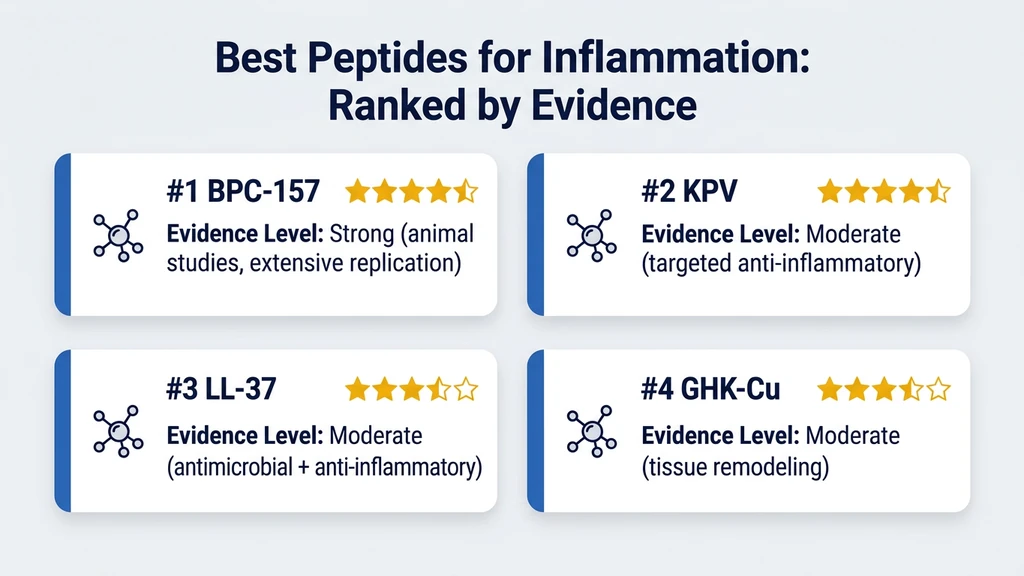
Each peptide is ranked by the quality and volume of published research specifically relevant to inflammation. Evidence grades:
- Strong: Multiple human trials or large-scale systematic reviews
- Moderate: Smaller human trials or extensive, consistent preclinical data
- Low-Moderate: Animal studies with promising signals, no human trials
1. BPC-157: Best All-Around Anti-Inflammatory Peptide
BPC-157 (Body Protection Compound-157) is a 15-amino-acid peptide derived from human gastric juice. It earns the top ranking because it reduces inflammation through more pathways than any other peptide on this list while simultaneously repairing damaged tissue.
Anti-inflammatory evidence. A 2025 American College of Gastroenterology systematic review analyzed 36 studies and confirmed healing effects across IBD, GI ulcers, NSAID injury, and fistula models. No adverse effects were reported across organ systems (ACG 2025). A separate 2025 systematic review of orthopedic applications confirmed improved structural and functional outcomes, including significant inflammation reduction, in 36 preclinical studies (PMC12313605).
How it fights inflammation. BPC-157 modulates the nitric oxide system, regulates prostaglandin pathways, inhibits mast cell degranulation, and reduces TNF-alpha and IL-6 production. It also counteracts the gastric damage caused by NSAIDs, making it the only peptide that protects against anti-inflammatory drug side effects while providing its own anti-inflammatory action (PubMed 29998800).
Dosage for inflammation. 250 to 500 mcg per day. Oral for gut inflammation (BPC-157 is stable in gastric acid). Subcutaneous injection for systemic or joint inflammation. Protocols run 4 to 8 weeks. See how to take BPC-157 for administration details.
Best for. Gut inflammation (IBD, NSAID damage, leaky gut), systemic inflammation, joint inflammation, post-injury inflammatory responses. Use our BPC-157 dosage calculator for precise dosing.
2. KPV: Best for NF-kB-Driven Autoimmune Inflammation
KPV (Lys-Pro-Val) is a tripeptide fragment of alpha-melanocyte stimulating hormone. Three amino acids that punch far above their molecular weight.
Anti-inflammatory evidence. Dalmasso et al. (2008) demonstrated a 50% reduction in DSS-induced colitis severity with oral KPV in mice. The peptide inhibited NF-kB activation and shifted macrophage polarization from M1 to M2 (PMC2431115). A 2024 study showed KPV nanoparticle delivery improved colitis outcomes further (Frontiers in Pharmacology 2024). Getting et al. (2005) found alpha-MSH fragments including KPV attenuated arthritis in rats comparably to prednisolone, without steroid side effects (PMC2095288).
Unique mechanism. The intestinal PepT1 transporter absorbs KPV directly into epithelial cells. PepT1 is upregulated during inflammation. Sicker tissue absorbs more KPV. The peptide concentrates precisely where inflammation is worst.
Dosage for inflammation. 200 to 500 mcg per day. Oral for gut and autoimmune inflammation (leveraging PepT1 absorption). Subcutaneous for systemic inflammation. See the KPV dosage guide for complete protocols.
Best for. Ulcerative colitis, Crohn's disease, autoimmune joint inflammation, chronic NF-kB-driven conditions. KPV is the preferred choice when the immune system is overactive rather than weak.
3. Thymosin Alpha-1: Best for Immune-Mediated Chronic Inflammation
Thymosin Alpha-1 is a 28-amino-acid peptide naturally produced by the thymus gland. It holds the strongest human clinical data of any peptide on this list: over 30 trials involving 11,000+ patients. Approved as Zadaxin in 30+ countries.
Anti-inflammatory evidence. Ta1 does not suppress inflammation directly. It rebalances immune function so the body resolves inflammation on its own. Romani et al. (2012) demonstrated that Ta1 modulates Th1/Th2 balance and regulates IL-10, TGF-beta, and inflammatory cytokine production (PMC3488143). A 2020 study showed Ta1 reduced inflammatory markers and mortality in severe COVID-19 patients with lymphocytopenia (PubMed 32425645). A comprehensive safety review confirmed favorable tolerability across all studied populations (PubMed 38308608).
How it modulates inflammation. Ta1 restores dendritic cell function, increases T-regulatory cell activity (which suppresses autoimmune responses), and normalizes the cytokine environment. It is an immunomodulator, not an immunosuppressant.
Dosage for inflammation. 1.6 mg subcutaneous injection, twice weekly. This is the standard clinical protocol. See thymosin alpha-1 benefits for the full evidence profile.
Best for. Chronic infections driving inflammation, cancer-related immune dysfunction, post-viral inflammatory syndromes, age-related immune dysregulation. Use cautiously in autoimmune conditions: Ta1 activates T-cells, which may worsen an already overactive response.
4. LL-37: Best for Infection-Driven Inflammation
LL-37 is the only human cathelicidin: a 37-amino-acid antimicrobial peptide your body produces naturally. It kills the pathogens causing the inflammation rather than just suppressing the inflammatory response.
Anti-inflammatory evidence. LL-37 disrupts bacterial membranes, breaks apart biofilms, and neutralizes lipopolysaccharide (LPS), the bacterial endotoxin that triggers systemic inflammation. A randomized clinical trial confirmed LL-37 accelerated wound healing in venous leg ulcers, with the lower dose healing wounds roughly six times faster than placebo (Gronberg et al. 2014, PubMed 25041740). Shih et al. (2023) showed LL-37 preserves goblet cells, increases mucin-2 production, and activates the Nrf2 antioxidant pathway in intestinal tissue (PubMed 36958193).
The vitamin D connection. LL-37 production depends on vitamin D status. The CAMP gene requires adequate vitamin D to produce the precursor protein that becomes LL-37. Low vitamin D means low LL-37 means weaker antimicrobial defense and more infection-driven inflammation.
Dosage for inflammation. 50 to 100 mcg per day, subcutaneous injection. See LL-37 benefits for complete evidence and protocols.
Best for. Chronic infections, biofilm-related inflammation, gut dysbiosis, LPS-driven systemic inflammation, wound-related inflammation.
5. GHK-Cu: Best for Aging-Related and Joint Inflammation
GHK-Cu is a naturally occurring copper-binding tripeptide. Your body produces it, but plasma levels decline sharply after age 25. That decline correlates with rising chronic inflammation, a phenomenon researchers call "inflammaging."
Anti-inflammatory evidence. Pickart et al. (2018) documented that GHK-Cu modulates over 4,000 human genes, including those governing inflammation. It downregulates TNF-alpha, IL-6, and NF-kB target genes while upregulating tissue repair pathways (PMC6073405). GHK-Cu also increases superoxide dismutase (SOD) activity, neutralizing the free radicals that perpetuate inflammatory tissue damage. A 2020 study confirmed anti-fibrotic effects through TGF-beta suppression (PubMed 32032527).
How it differs. Most anti-inflammatory peptides block a specific pathway. GHK-Cu reprograms gene expression broadly, resetting damaged tissue toward a younger, less inflammatory profile. Think of it as a system-wide software update rather than a single patch.
Dosage for inflammation. 1 to 2 mg per day, subcutaneous injection. Topical for accessible joints and skin. Protocols run 4 to 8 weeks. See the GHK-Cu injection dosage guide for complete protocols.
Best for. Age-related chronic inflammation, joint inflammation, skin inflammation, fibrotic conditions. Pairs well with BPC-157 and TB-500 in the GHK-Cu + BPC-157 + TB-500 blend.
6. TB-500: Best for Multi-Site Tissue Inflammation
TB-500 is a synthetic fragment of Thymosin Beta-4, a 43-amino-acid protein present in nearly every human cell. Where BPC-157 targets a specific area, TB-500 works systemically.
Anti-inflammatory evidence. TB-500 suppresses NF-kB activation in macrophages, reducing TNF-alpha and IL-1beta production. It also promotes actin polymerization, which accelerates immune cell and repair cell migration to inflamed sites. Grant et al. (2002) found a 20-fold increase in Thymosin Beta-4 expression in mechanically stressed cartilage, suggesting the body upregulates this pathway naturally during joint inflammation (PubMed 12440937). A review of TB-4 confirmed broad anti-inflammatory and regenerative properties across multiple tissue types (PubMed 20507882).
Dosage for inflammation. Loading phase: 2 to 2.5 mg subcutaneous, twice weekly for 4 to 6 weeks. Maintenance: 2 mg per week. See the TB-500 dosage chart and what does TB-500 do for detailed protocols.
Best for. Multi-joint inflammation, widespread tissue damage, post-surgical inflammation, chronic tendon and ligament inflammation. Often stacked with BPC-157 for combined localized and systemic coverage.
7. Selank: Best for Stress-Driven Inflammation
Selank is a synthetic heptapeptide analog of tuftsin, an immunomodulatory peptide derived from immunoglobulin G. It addresses the often-overlooked connection between chronic stress and chronic inflammation.
Anti-inflammatory evidence. Selank modulates IL-6 production and interferon balance, shifting the immune environment away from chronic inflammatory signaling. Clinical studies conducted in Russia demonstrate both immune-modulating and anxiolytic effects. It is approved as a prescription medication in Russia.
The stress-inflammation connection. Chronic stress activates the HPA axis, elevating cortisol. Short-term cortisol suppresses inflammation. Long-term cortisol elevation dysregulates the immune system, leading to cortisol resistance in immune cells and paradoxically increased inflammation. Selank interrupts this cycle by reducing anxiety through GABA modulation while simultaneously regulating cytokine production.
Dosage for inflammation. 250 to 500 mcg per day, intranasal (nasal spray). This route provides rapid absorption and bypasses GI degradation.
Best for. Inflammation worsened by chronic stress, anxiety-related immune dysfunction, combined mood and inflammatory conditions. See peptides for anxiety for more on the stress-immune connection.
Which Type of Inflammation Does Each Peptide Target?
Inflammation is not one condition. The term covers at least four distinct categories, each requiring a different approach. Matching the peptide to the inflammation type is the difference between targeted treatment and wasted effort.
| Inflammation Type | Primary Peptides | Supporting Peptides | Key Mechanism |
|---|---|---|---|
| Gut (IBD, colitis, NSAID damage) | BPC-157, KPV | LL-37 | Barrier repair + NF-kB inhibition |
| Joint (osteoarthritis, tendinitis) | BPC-157, TB-500 | GHK-Cu, KPV | Angiogenesis + cytokine modulation |
| Systemic (chronic, whole-body) | KPV, Thymosin Alpha-1 | BPC-157, Selank | Immune rebalancing + NF-kB inhibition |
| Autoimmune (RA, lupus, Hashimoto's) | KPV, BPC-157 | Selank | Modulation without stimulation |
Gut Inflammation
The intestinal lining replaces itself every 3 to 5 days. When inflammation outpaces this turnover, the barrier erodes. Bacteria cross into the bloodstream. The immune system responds with more inflammation. The cycle is self-perpetuating.
BPC-157 breaks this cycle by accelerating mucosal repair. Oral BPC-157 contacts the gut lining directly and is stable in gastric acid. KPV enters inflamed epithelial cells through the PepT1 transporter, delivering anti-inflammatory action precisely where it is needed. LL-37 clears pathogenic bacteria contributing to dysbiosis without harming beneficial flora.
The gold standard gut inflammation stack: BPC-157 (250 to 500 mcg/day oral) plus KPV (200 to 500 mcg/day oral). See peptides for gut health for condition-specific protocols.
Joint Inflammation
Joint tissue is poorly vascularized. Blood delivers immune cells and repair molecules, so joints heal slowly and inflammation lingers. This is why a sprained ankle swells for days while a cut on your hand resolves in hours.
BPC-157 promotes angiogenesis through VEGF upregulation, bringing blood supply to avascular joint tissue. TB-500 reduces inflammation systemically through NF-kB suppression while accelerating repair cell migration. GHK-Cu downregulates inflammatory gene expression in cartilage and synovial tissue.
For localized joint pain: BPC-157 (300 to 500 mcg/day injected near the affected joint). For multiple joints: TB-500 (2 to 2.5 mg twice weekly). See peptides for joint pain for ranked protocols and evidence.
Systemic Chronic Inflammation
Systemic inflammation shows up on blood work as elevated CRP, ESR, TNF-alpha, and IL-6 without a clear localized source. It drives cardiovascular disease, neurodegeneration, metabolic syndrome, and accelerated aging.
KPV addresses this by inhibiting NF-kB at the cellular level throughout the body. Thymosin Alpha-1 rebalances the immune system so it stops producing excessive inflammatory signals. BPC-157 repairs the gut barrier, removing a major source of chronic immune activation.
For systemic inflammation: KPV (200 to 500 mcg/day subcutaneous) plus BPC-157 (250 to 500 mcg/day oral). Add Thymosin Alpha-1 (1.6 mg twice weekly) when immune markers show dysfunction. Use the peptide interaction checker to verify stack compatibility.
Autoimmune Inflammation
Autoimmune conditions are inflammation caused by an immune system attacking healthy tissue. The key distinction: the immune system is not weak. It is misdirected and overactive. This changes which peptides are safe.
KPV modulates inflammation without stimulating immune cells. BPC-157 repairs gut barrier damage, which contributes to molecular mimicry and autoimmune triggers. Selank reduces stress-driven HPA axis dysfunction that worsens autoimmune flares.
Critical warning: Thymosin Alpha-1 activates T-cells. In autoimmune conditions where T-cells are already attacking healthy tissue, Ta1 may amplify the damage. Use only under medical supervision. LL-37 is generally safe in autoimmune contexts because it targets pathogens, not immune regulation.
For autoimmune inflammation: KPV (200 to 500 mcg/day) plus BPC-157 (250 to 500 mcg/day oral). See peptides for immune system for detailed autoimmune versus immunocompromised guidance.
Anti-Inflammatory Peptides vs. NSAIDs and Conventional Treatments
NSAIDs, corticosteroids, and biologics each have a clear role in inflammation management. Peptides are not replacements. They occupy a different position in the treatment landscape.
| Treatment | How It Works | Speed | Duration | Major Risks | Tissue Repair? |
|---|---|---|---|---|---|
| NSAIDs (ibuprofen, naproxen) | COX-1/COX-2 enzyme inhibition | Hours | 4-8 hours per dose | GI bleeding (3-4% annual risk with chronic use), kidney damage, cardiovascular risk | No. May impair healing. |
| Corticosteroids | Broad immune suppression | Hours | Days to weeks | Osteoporosis, diabetes, adrenal suppression, cataracts with long-term use | No. Accelerates cartilage degradation. |
| Biologics (adalimumab, infliximab) | Targeted TNF-alpha or IL-6 blockade | Weeks | Weeks to months | Infection risk, injection reactions, cost ($2,000-5,000/month) | No |
| Anti-inflammatory peptides | NF-kB modulation + barrier repair + tissue regeneration | Days to weeks | Weeks | Limited human safety data, regulatory gray area | Yes. Multiple peptides promote tissue repair. |
The critical difference: conventional anti-inflammatories suppress the inflammatory response. Peptides modulate it while simultaneously repairing the tissue damage that triggers inflammation. A burned-out house still smells like smoke even after you extinguish the fire. Peptides aim to rebuild the house.
Practical guidance. Peptides are not first-line treatments for acute inflammation. NSAIDs handle acute pain effectively. Peptides suit chronic inflammation where conventional treatments have failed, caused side effects, or only provided temporary relief. Some practitioners combine both: short-term NSAIDs for immediate relief, peptides for underlying repair.
BPC-157 specifically counteracts NSAID-induced gastric damage. If you rely on ibuprofen or naproxen and experience stomach symptoms, BPC-157 protects the gastric mucosa while providing its own anti-inflammatory action (PubMed 29998800). See BPC-157 and alcohol for data on gastric cytoprotection.
Stacking Protocols for Different Inflammation Types
Single peptides produce results. Stacking compounds them by addressing multiple inflammatory pathways simultaneously. Three protocols cover the most common scenarios.
Stack 1: Gut Inflammation (IBD, Colitis, NSAID Damage)
Peptides: BPC-157 + KPV (+ optional LL-37)
BPC-157 rebuilds the mucosal barrier. KPV shuts down the NF-kB signaling driving tissue destruction. LL-37 clears pathogenic bacteria contributing to dysbiosis.
Protocol: - BPC-157: 250-500 mcg/day oral, empty stomach - KPV: 200-500 mcg/day oral - LL-37 (if infection-related): 50-100 mcg/day subcutaneous - Duration: 4-8 weeks, reassess at week 4
This is the same stack recommended in our peptides for gut health guide. Build your protocol with the peptide stack calculator.
Stack 2: Joint and Tissue Inflammation
Peptides: BPC-157 + TB-500 (+ optional GHK-Cu)
BPC-157 delivers localized anti-inflammatory and repair effects near the affected joint. TB-500 provides systemic inflammation reduction and accelerates repair cell migration. GHK-Cu resets gene expression in aging tissue toward a less inflammatory profile.
Protocol: - BPC-157: 300-500 mcg/day subcutaneous near the affected joint - TB-500: 2-2.5 mg twice weekly subcutaneous (abdomen) - GHK-Cu (for aging joints): 1-2 mg/day subcutaneous or topical - Duration: 6-8 weeks
This stack is covered in detail in our peptides for joint pain and best peptides for tendon repair guides.
Stack 3: Systemic and Autoimmune Inflammation
Peptides: KPV + BPC-157 (+ optional Selank)
KPV suppresses NF-kB-driven inflammation systemically. BPC-157 repairs gut barrier dysfunction that feeds chronic immune activation. Selank addresses the stress-inflammation axis when chronic stress is a contributing factor.
Protocol: - KPV: 200-500 mcg/day subcutaneous or oral - BPC-157: 250-500 mcg/day oral - Selank (if stress-related): 250-500 mcg/day intranasal - Duration: 8-12 weeks
Do NOT add Thymosin Alpha-1 to autoimmune protocols without medical supervision. Ta1 activates T-cells, which may worsen autoimmune conditions where T-cells are already attacking healthy tissue.
What Happens When You Ignore the Inflammation Type
Using the wrong anti-inflammatory peptide is not dangerous in most cases. It is wasteful. Two scenarios illustrate the cost of mismatching.
Scenario 1: Thymosin Alpha-1 for autoimmune arthritis. A 45-year-old woman with rheumatoid arthritis reads that Ta1 is the "strongest immune peptide." She starts 1.6 mg twice weekly. Ta1 activates her T-cells. Her T-cells are already attacking her joint tissue. Within 3 weeks, her joint swelling worsens. CRP rises from 8 to 14 mg/L. She spent $400 on peptide and made her condition measurably worse. The correct choice was KPV plus BPC-157: modulation, not stimulation.
Scenario 2: TB-500 for gut inflammation. A 38-year-old man with ulcerative colitis starts TB-500 at 2.5 mg twice weekly because he read it "reduces inflammation." TB-500 acts systemically through NF-kB suppression, but it does not contact the intestinal mucosa and does not use the PepT1 pathway. After 6 weeks and $600, his symptoms are unchanged. Oral BPC-157 plus oral KPV would have delivered anti-inflammatory compounds directly to his inflamed gut lining through targeted transport mechanisms.
Match the peptide to the inflammation. The table in the previous section is the map.
Administration and Practical Protocols
Route of administration changes effectiveness significantly. An oral peptide for gut inflammation works better than an injected one. An injected peptide for joint inflammation works better than an oral one. Getting this right matters as much as choosing the right compound.
Oral Administration (Gut Inflammation Focus)
BPC-157 and KPV are both effective orally for gut-targeted inflammation. BPC-157 is stable in gastric acid, unlike most peptides. KPV uses the PepT1 transporter in inflamed epithelial cells.
Take on an empty stomach, 30 minutes before food. Morning or evening. Consistency matters more than timing. See can you take BPC-157 orally for a detailed breakdown of oral versus injectable administration.
Subcutaneous Injection (Systemic and Joint Inflammation)
TB-500, LL-37, Thymosin Alpha-1, GHK-Cu, and BPC-157 (for non-gut targets) are administered via subcutaneous injection. Insert the needle at a 45-degree angle into the fat layer beneath the skin. Common sites: abdomen, outer thigh, or near the inflamed area for localized effect.
Bioavailability is approximately 90%. See how to inject peptides for step-by-step instructions and how to inject BPC-157 for BPC-157 specifically. For reconstitution, see how to reconstitute peptides and our reconstitution calculator.
Intranasal (Stress-Driven Inflammation)
Selank is administered as a nasal spray. This route provides rapid absorption through the nasal mucosa, reaches the brain within minutes for anxiolytic effects, and bypasses GI degradation. Typical protocol: 1 to 2 sprays per nostril, 2 to 3 times daily.
Safety, Side Effects, and Contraindications
Anti-inflammatory peptides generally carry favorable safety profiles. Thymosin Alpha-1 has the longest track record. No peptide on this list is FDA-approved for inflammatory conditions.
| Peptide | Common Side Effects | Serious Risks | Key Contraindication |
|---|---|---|---|
| BPC-157 | Mild nausea, injection site redness | Limited human safety data | Active cancer (promotes angiogenesis) |
| KPV | Mild GI discomfort (oral) | None reported in animal studies | No human safety trials completed |
| Thymosin Alpha-1 | Injection site redness | Phase 3 sepsis trial showed no mortality benefit | Autoimmune conditions (without supervision) |
| LL-37 | Injection site reaction | Cytotoxicity possible at high doses | Use within recommended dose range |
| GHK-Cu | Injection site irritation | Copper toxicity at excessive doses | Wilson's disease |
| TB-500 | Transient fatigue (week 1) | Limited human safety data | Active cancer, WADA-tested athletes |
| Selank | Mild fatigue | None significant | Limited Western clinical data |
Universal contraindications: Active cancer (BPC-157, TB-500, GHK-Cu promote cell proliferation and angiogenesis). Pregnancy and breastfeeding (all peptides). Competitive athletes subject to WADA testing (BPC-157 and TB-500 are prohibited).
Product quality warning. Published analyses have found peptide products contaminated with heavy metals at 10x acceptable limits, bacterial endotoxins, and purity as low as 5%. Third-party certificate of analysis (COA) verification is essential. See the peptide safety guide and where to buy peptides in 2026 for sourcing guidance.
Frequently Asked Questions
What is the best peptide for reducing inflammation?
BPC-157 is the most versatile anti-inflammatory peptide, with 36 preclinical studies confirming efficacy across gut, joint, and systemic inflammation. For NF-kB-driven autoimmune inflammation specifically, KPV produces stronger targeted results. Thymosin Alpha-1 has the strongest human clinical data (11,000+ patients) for immune-mediated inflammatory conditions.
Can peptides replace NSAIDs for inflammation?
Peptides are not direct replacements for NSAIDs in acute inflammation. NSAIDs provide faster pain relief (hours versus days). Peptides suit chronic inflammation where NSAIDs have failed or caused side effects. BPC-157 specifically protects against NSAID-induced gastric damage, making it a useful adjunct for people who rely on ibuprofen or naproxen long-term.
How long do anti-inflammatory peptides take to work?
Injectable peptides like BPC-157 and TB-500 typically reduce inflammation within 1 to 2 weeks, with significant improvement by weeks 4 to 6. Oral KPV shows effects within 2 to 4 weeks. GHK-Cu requires 4 to 8 weeks for gene expression changes to translate into measurable inflammation reduction. Full protocols run 4 to 12 weeks.
Are anti-inflammatory peptides safe for autoimmune conditions?
KPV and BPC-157 are the safest choices for autoimmune inflammation because they modulate the immune response without stimulating it. Thymosin Alpha-1 activates T-cells and may worsen autoimmune conditions where T-cells attack healthy tissue. Use Ta1 only under medical supervision in autoimmune contexts. Selank addresses stress-driven autoimmune flares safely.
What is the best peptide stack for gut inflammation?
BPC-157 (250 to 500 mcg per day oral) plus KPV (200 to 500 mcg per day oral) is the gold standard gut inflammation stack. BPC-157 repairs the mucosal barrier through angiogenesis. KPV inhibits NF-kB inflammatory signaling through the PepT1 transporter. Add LL-37 (50 to 100 mcg per day subcutaneous) when bacterial infection contributes to the inflammation.
Do peptides reduce CRP levels?
Preclinical evidence suggests BPC-157, KPV, and GHK-Cu reduce pro-inflammatory markers including CRP, TNF-alpha, and IL-6. Thymosin Alpha-1 improved inflammatory markers in COVID-19 patients in a 2020 clinical study. No large-scale human trial has measured peptide effects on CRP specifically. Individual monitoring through blood work is the best way to track your response.
Can you take anti-inflammatory peptides with prescription medications?
No published interaction studies exist between most peptides and prescription anti-inflammatories. BPC-157 has been studied alongside NSAIDs and appears to protect against their gastric side effects. Biologics (adalimumab, infliximab) and peptides both modulate the immune system, so combining them requires medical supervision. Always disclose peptide use to your prescribing physician.
How do peptides compare to biologics for inflammation?
Biologics like adalimumab target a single cytokine (TNF-alpha) with precision and have extensive Phase 3 clinical data. Anti-inflammatory peptides modulate broader pathways (NF-kB, macrophage polarization, barrier repair) and promote tissue regeneration. Biologics cost $2,000 to $5,000 per month. Peptides cost $100 to $300 per month. Biologics have stronger evidence; peptides have broader mechanisms and lower cost.
The Bottom Line
Seven peptides. Four inflammation types. One principle: match the compound to the mechanism driving your inflammation.
BPC-157 leads the field for versatility, addressing gut, joint, and systemic inflammation through cytokine modulation and tissue repair across 36 published studies. KPV is the precision tool for NF-kB-driven autoimmune conditions. Thymosin Alpha-1 holds the strongest human clinical data for immune-mediated inflammation. LL-37 eliminates the pathogens causing infection-driven inflammation. GHK-Cu resets inflammatory gene expression in aging tissue. TB-500 handles multi-site tissue inflammation systemically. Selank breaks the stress-inflammation cycle.
For gut inflammation, start with oral BPC-157 plus KPV. For joint inflammation, BPC-157 plus TB-500 injected near the affected area. For autoimmune conditions, KPV plus BPC-157 without Thymosin Alpha-1. For systemic chronic inflammation, KPV subcutaneous plus oral BPC-157.
All evidence cited here links to its source. Most of it is preclinical. Human trials are underway but incomplete. Work with a qualified healthcare provider. Verify peptide quality through third-party COA testing.
Use the peptide stack calculator to build your protocol and the peptide interaction checker to verify compatibility. For all dosage references, see the peptide dosage chart. For storage, see how to store peptides. For sourcing, see where to buy peptides in 2026. For safety, see the peptide safety guide. For stacking principles, see the peptide stacking guide. New to peptides? Start with our getting started with peptides guide.
Vasoactive intestinal peptide comes up constantly in this space. VIP peptide separates its real physiology from the mold-illness protocol built on top of it.
Helpful Tools
Related Articles
Peptides for Immune System: 7 Best
Best peptides for immune system support ranked by clinical evidence. Thymosin Alpha-1, LL-37, KPV, BPC-157, Selank dosages, stacking protocols, and safety data.
Peptides for Recovery: 7 Best Ranked by Evidence
Top 7 peptides for recovery ranked: BPC-157, TB-500, GHK-Cu, ipamorelin, CJC-1295, MOTS-c, thymosin alpha-1. Post-workout and injury protocols.
Best Peptides for Joint Pain: 6 Ranked
BPC-157, TB-500, collagen peptides, GHK-Cu, KPV, and AOD-9604 ranked for joint pain by evidence strength. Dosages, studies, and safety data included.
Peptides for Psoriasis: The Evidence
Peptides for psoriasis: the honest evidence on KPV, GHK-Cu, BPC-157, and why LL-37 drives the disease rather than treating it. See a dermatologist.