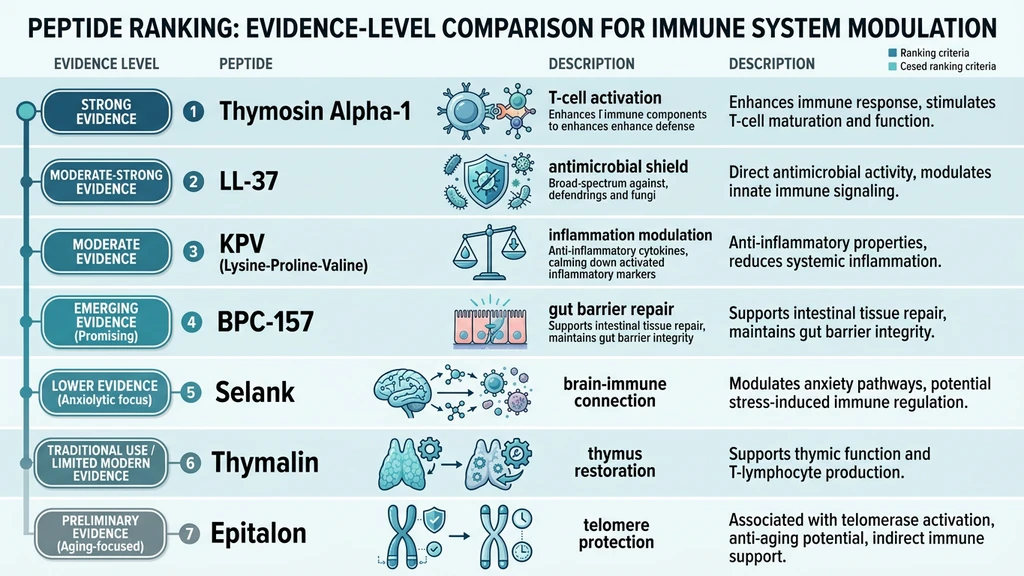
The most effective peptides for immune system support are Thymosin Alpha-1 (strongest clinical evidence, approved in 30+ countries), LL-37 (broad-spectrum antimicrobial defense), KPV (anti-inflammatory immune modulation), BPC-157 (gut-immune barrier repair), Selank (immune-anxiety dual action), Thymalin (thymic restoration), and Epitalon (immune recalibration via telomere support).
Thymosin Alpha-1 is the only immune peptide backed by large-scale randomized controlled trials involving over 11,000 patients. The others range from small human studies to robust preclinical data.
| Peptide | Primary Mechanism | Evidence Level | Best For | Typical Dosage |
|---|---|---|---|---|
| Thymosin Alpha-1 | T-cell activation | Strong (RCTs, 11,000+ patients) | Chronic infection, cancer support, vaccines | 1.6 mg 2x/week |
| LL-37 | Antimicrobial defense | Moderate (2 RCTs) | Bacterial/viral infections, biofilms | 50-100 mcg/day |
| KPV | NF-kB inhibition | Preclinical (animal models) | Autoimmune inflammation, gut-immune | 200-500 mcg/day |
| BPC-157 | Gut barrier + cytokine modulation | Preclinical (extensive animal) | Gut-immune repair, post-illness recovery | 250-500 mcg/day |
| Selank | Tuftsin-based immunomodulation | Moderate (clinical data) | Immune + anxiety support | 250-500 mcg/day |
| Thymalin | Thymic restoration complex | Moderate (clinical studies) | Age-related immune decline | 10 mg/day x 5-10 days |
| Epitalon | Telomere-mediated recalibration | Emerging (early human + animal) | Longevity + immune aging | 5-10 mg/day x 10-20 days |
No peptide covered here is FDA-approved for immune conditions in the United States. Consult a healthcare provider before acting on any information.
Get your custom peptide protocol:
- Tailored to your body and goals
- Precise dosing and cycle length
- Safe stacking combinations
- Backed by peer-reviewed studies
- Ready in under 2 minutes
How Your Immune System Works (Simple Overview)
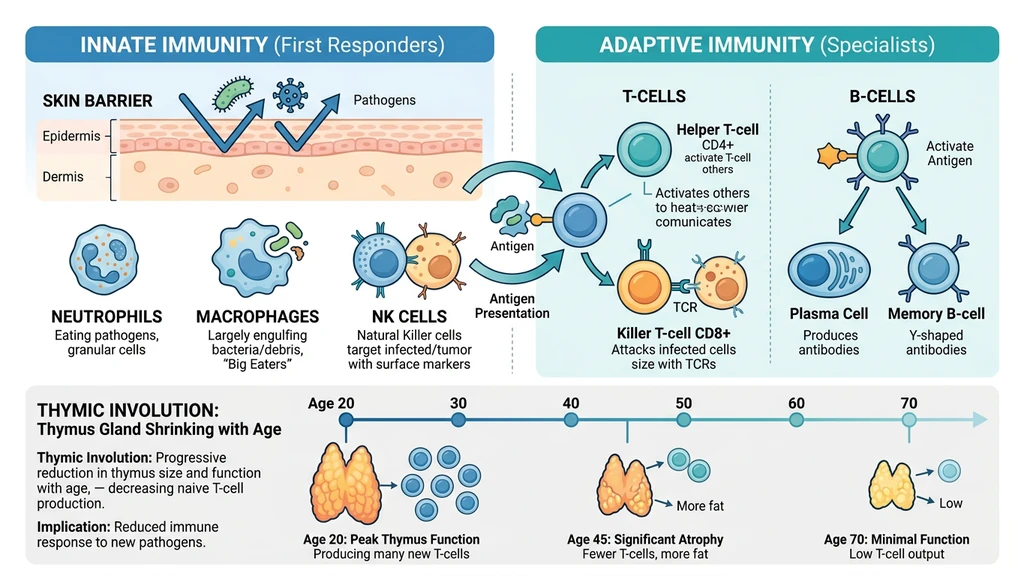
Your immune system operates in two layers, each with a distinct job.
Innate immunity is the first responder. Skin, mucous membranes, and cells like natural killer (NK) cells react within minutes to anything foreign. This system does not learn or adapt. It attacks broadly.
Adaptive immunity is the specialist. T-cells and B-cells learn to recognize specific threats, then remember them for future encounters. Vaccines work by training this system. Adaptive immunity takes days to activate the first time, but responds within hours on subsequent exposures.
Why Immunity Declines with Age
The thymus gland sits behind your breastbone. It trains immature immune cells into functional T-cells. Think of it as a military academy for your immune system.
The problem: your thymus starts shrinking after puberty. By age 50, most of its functional tissue has been replaced by fat. By 70, T-cell production has dropped dramatically. Researchers call this process thymic involution.
The consequences are measurable. Older adults catch infections more easily, respond poorly to vaccines, and develop cancers at higher rates. Immune function declines roughly 2-3% per year after age 20 (PMC7747025).
This decline is the central reason immune peptides exist. Most of them target the thymus pathway: restoring T-cell function, activating NK cells, or rebalancing immune signaling that has drifted with age.
How Peptides Support the Immune System
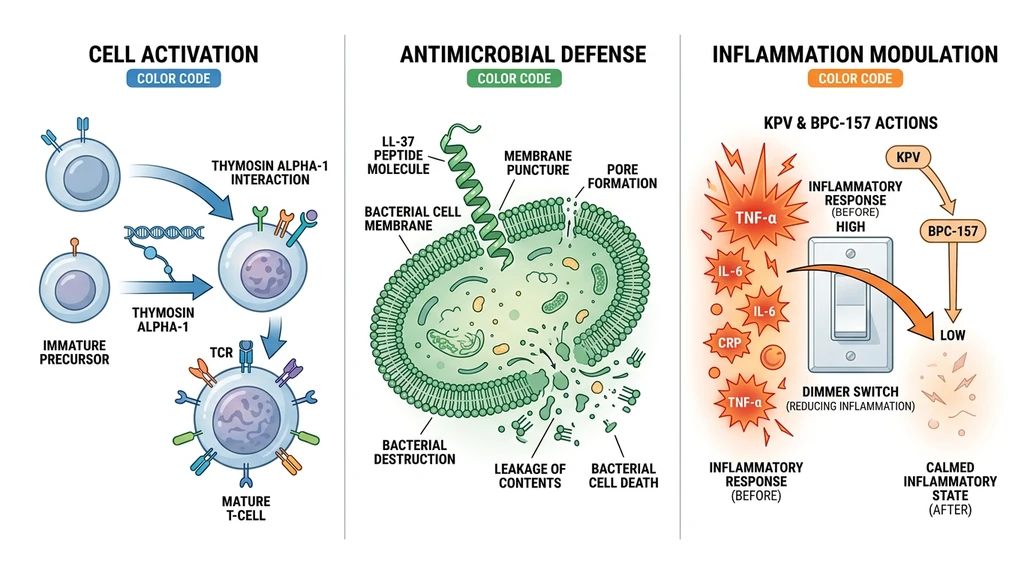
Immune peptides work through three distinct mechanisms. Understanding these pathways explains why different peptides suit different situations.
Direct Immune Cell Activation
Thymosin Alpha-1 and Thymalin push immature immune cells to mature into functional T-cells. They also increase NK cell activity and improve dendritic cell function (the "scouts" that identify threats and present them to T-cells).
The result: more trained immune soldiers with better communication equipment. This pathway is most relevant for people with weakened immunity from aging, illness, or medical treatment.
Antimicrobial Defense
LL-37 takes a different approach. Rather than training immune cells, it kills pathogens directly. LL-37 punctures bacterial cell membranes, disrupts viral envelopes, and breaks apart biofilms (the protective shields bacteria build around themselves).
LL-37 is the only human cathelicidin. Your body produces it naturally, but production depends on adequate vitamin D levels. Low vitamin D means low LL-37, which means a weaker first line of defense (Nature 2020).
Inflammation Modulation
KPV and BPC-157 work by regulating inflammation rather than attacking pathogens or activating immune cells.
KPV inhibits NF-kB, the master switch for inflammatory gene expression. When NF-kB goes into overdrive, the immune system attacks healthy tissue. KPV turns this switch down without shutting it off entirely.
BPC-157 repairs the gut barrier. This matters because approximately 70% of your immune cells reside in gut-associated lymphoid tissue (GALT). When the gut barrier breaks down, bacteria and food particles enter the bloodstream and trigger chronic immune activation.
A critical distinction: most immune peptides are modulators, not stimulators. They balance the immune response rather than simply cranking it up. This difference matters enormously for autoimmune conditions, where the immune system is already overactive (PMC4201125).
7 Best Peptides for Immune System Support
Each peptide below includes an evidence grade, key studies, practical dosage information, and the specific situations where it performs best. Evidence grades follow this scale:
- Strong: Multiple randomized controlled trials in humans
- Moderate: Smaller human trials or consistent clinical data
- Emerging/Preclinical: Animal studies and early-stage research with promising signals
1. Thymosin Alpha-1: The Gold Standard
What it is: A 28-amino-acid peptide naturally produced by your thymus gland. Sold as Zadaxin in countries where it is approved.
How it works: Ta1 pushes immature immune cells to become functional T-cells (both CD4+ helper cells and CD8+ killer cells). It increases NK cell activity, improves dendritic cell antigen presentation, and boosts IL-2 receptor expression on T-cells. In practical terms, Ta1 produces more immune soldiers and gives them better communication tools.
Evidence level: Strong. Over 30 clinical trials involving 11,000+ patients. Approved in more than 30 countries for hepatitis B, hepatitis C, and as an immune adjunct during cancer treatment.
Key findings: - Chronic hepatitis B: sustained viral clearance rates of 25-35% as monotherapy (PubMed 18042265) - Cancer support: improved response rates when combined with checkpoint inhibitors in advanced liver cancer (Nature Scientific Reports 2025) - Vaccine enhancement: reduced influenza incidence from 19% to 6% in elderly nursing home residents (PubMed 17600281) - Safety: comprehensive review confirms favorable safety profile across all studied populations (PubMed 38308608)
Important nuance: A Phase 3 sepsis trial found no mortality benefit, demonstrating that Ta1 is not a universal fix. It works best for chronic immune weakness, not acute critical illness (PubMed 39814420).
Dosage: 1.6 mg subcutaneous injection, twice weekly. This is the standard Zadaxin protocol established in clinical trials.
Best for: Chronic infections, cancer adjunct therapy, vaccine enhancement in the elderly, age-related immune decline.
For a deep dive into all eight evidence-backed benefits, see our Thymosin Alpha-1 benefits guide.
2. LL-37: The Antimicrobial Shield
What it is: A 37-amino-acid cathelicidin. It is the only human antimicrobial peptide in the cathelicidin family. Other mammals produce dozens. Humans produce just this one.
How it works: LL-37 kills pathogens through direct membrane disruption. It punches holes in bacterial cell walls, disrupts viral envelopes, and destroys fungal membranes. Beyond direct killing, LL-37 breaks apart biofilms (the protective shields bacteria build that make infections resistant to antibiotics) and recruits additional immune cells to the site of infection.
Evidence level: Moderate. Two randomized clinical trials confirm that topical LL-37 accelerates wound healing in venous leg ulcers. The lower dose healed wounds roughly six times faster than placebo (Gronberg et al. 2014, PubMed 25041740). Extensive in vitro and animal data support broader antimicrobial applications.
The vitamin D connection: Your body produces LL-37 through a specific pathway. Vitamin D activates the CAMP gene, which produces a precursor protein (hCAP-18), which is then cleaved into active LL-37. Low vitamin D levels mean low LL-37 production. This connection explains part of why vitamin D deficiency increases infection risk.
Dosage: 50-100 mcg/day subcutaneous injection.
Best for: Acute infections, antibiotic-resistant bacteria, viral defense, wound healing, biofilm-related chronic infections.
For the full evidence breakdown, see our LL-37 peptide benefits guide.
3. KPV: The Inflammation Controller
What it is: A tripeptide (three amino acids: Lysine-Proline-Valine) derived from alpha-melanocyte-stimulating hormone (alpha-MSH).
How it works: KPV inhibits NF-kB nuclear translocation. NF-kB is a protein complex that controls the expression of inflammatory genes. When NF-kB is chronically activated, the immune system produces excessive TNF-alpha, IL-6, and IL-1beta, driving tissue damage.
KPV blocks this process without shutting down immunity entirely. It also shifts macrophages from M1 (pro-inflammatory, tissue-destroying) to M2 (anti-inflammatory, tissue-repairing) phenotype.
A unique feature: KPV enters intestinal cells via the PepT1 transporter, which means oral administration delivers the peptide directly to gut immune tissue. This makes KPV one of the few immune peptides that works well orally for gut-specific applications.
Evidence level: Preclinical. Robust animal models demonstrate efficacy. A DSS-induced colitis study showed significant inflammation reduction via the PepT1 pathway (PMC2431115). A separate study confirmed KPV inhibits inflammation in bronchial epithelial cells (PMC3403564). No human clinical trials yet.
Dosage: 200-500 mcg/day. Oral for gut-focused applications (leveraging PepT1 absorption). Subcutaneous for systemic anti-inflammatory effects.
Best for: Autoimmune flares, gut inflammation, chronic systemic inflammation. KPV is the preferred choice when the immune system is overactive rather than weak.
See our KPV dosage guide for detailed protocols.
4. BPC-157: The Gut-Immune Bridge
What it is: A 15-amino-acid peptide derived from human gastric juice. BPC stands for Body Protection Compound.
How it works: BPC-157 repairs the gut barrier by promoting angiogenesis (new blood vessel formation), stimulating fibroblast migration, and upregulating growth factors including VEGF. It also modulates cytokine production to reduce excessive inflammation.
Why does a gut-healing peptide belong on an immune system list? Because approximately 70% of your immune cells live in gut-associated lymphoid tissue. When the intestinal barrier breaks down ("leaky gut"), bacteria, food particles, and toxins enter the bloodstream and trigger chronic immune activation. BPC-157 repairs this barrier, which resolves the downstream immune dysfunction.
Evidence level: Preclinical. A 2025 American College of Gastroenterology systematic review analyzed 36 studies and confirmed BPC-157's healing effects across IBD, GI ulcers, NSAID injury, and fistula models (ACG 2025). No human randomized controlled trials exist yet.
Dosage: 250-500 mcg/day. Oral administration is preferred for gut-specific applications (BPC-157 is stable in gastric acid). Subcutaneous injection for systemic effects.
Best for: Post-illness gut recovery, leaky gut-driven immune issues, gut-immune axis restoration. BPC-157 is the right choice when gut damage is the root cause of immune problems.
Learn more: Peptides for gut health | BPC-157 side effects
5. Selank: The Immune-Anxiety Dual Agent
What it is: A synthetic heptapeptide (seven amino acids) designed as an analog of tuftsin, a natural immune peptide produced from immunoglobulin G.
How it works: Selank operates on two systems simultaneously. On the immune side, it stimulates the secretion of interferons (proteins that alert neighboring cells to viral threats), modulates IL-6 production, and enhances overall immune surveillance. On the neurological side, it regulates GABA receptors, producing an anxiolytic (anti-anxiety) effect comparable to benzodiazepines in clinical studies, but without sedation or dependency risk.
This dual action matters because chronic stress and anxiety suppress immune function through the hypothalamic-pituitary-adrenal (HPA) axis. Cortisol, the primary stress hormone, directly inhibits T-cell production and NK cell activity. By reducing anxiety at the neurological level, Selank indirectly supports immune function.
Evidence level: Moderate. Clinical studies conducted in Russia demonstrate immune-enhancing effects and anxiety reduction. Selank is approved in Russia as a prescription medication. Western clinical trial data is limited.
Dosage: 250-500 mcg/day, intranasal administration (nasal spray). This route provides rapid absorption and bypasses gastrointestinal degradation.
Best for: Immune support when stress or anxiety is a contributing factor. Selank is the right choice for people whose immune problems correlate with high stress levels.
Related reading: Peptides for anxiety
6. Thymalin: The Thymus Restorer
What it is: A polypeptide complex extracted from calf thymus tissue. It contains several short peptides (including the dipeptides KE and EW) that work together to restore thymic function.
How it works: Thymalin stimulates T-lymphocyte differentiation, modulates NK cell activity, and regulates the expression of genes involved in immune aging. Its primary value lies in partially reversing thymic involution: the age-related shrinking of the thymus that reduces T-cell production.
Evidence level: Moderate. Clinical studies from Russian research institutions show improvements in immune parameters. A COVID-19 pilot study in elderly patients demonstrated improved T-cell counts and faster recovery when Thymalin was added to standard treatment (Springer 2021).
Dosage: 10 mg/day intramuscular injection for 5-10 consecutive days. Protocols are typically repeated every 3-6 months. This pulsed approach differs from the continuous dosing used with most other immune peptides.
Best for: Age-related immune decline (immunosenescence), particularly in adults over 50. Thymalin is often combined with Thymosin Alpha-1 for a comprehensive thymus-restoration approach.
7. Epitalon: The Immune Aging Reset
What it is: A tetrapeptide (four amino acids: Ala-Glu-Asp-Gly) that activates telomerase, the enzyme responsible for maintaining telomere length.
How it works: Telomeres are protective caps on the ends of chromosomes. Each time a cell divides, telomeres shorten. When they become too short, the cell stops dividing and enters senescence (a state where it is alive but no longer functional). Immune cells divide frequently to fight infections, which means they are particularly vulnerable to telomere shortening.
Epitalon activates telomerase to maintain telomere length, which allows immune cells to continue dividing and functioning for longer. It also normalizes circadian rhythm, which governs the timing of immune cell production and activity. Research confirms that Epitalon increases telomere length in human cell lines (PMC12411320).
Evidence level: Emerging. In vitro telomere elongation is confirmed. Animal studies show improved immune markers and lifespan extension. Human clinical data is limited to small studies.
Dosage: 5-10 mg/day subcutaneous injection for 10-20 consecutive days. Cycle every 4-6 months. Like Thymalin, Epitalon uses a pulsed protocol rather than continuous dosing.
Best for: Long-term immune aging prevention. Epitalon is typically stacked with Thymosin Alpha-1 in longevity-focused protocols where the goal is to slow immune decline over years.
Learn more: Epitalon profile
Immune Peptide Stacking: How to Combine Them
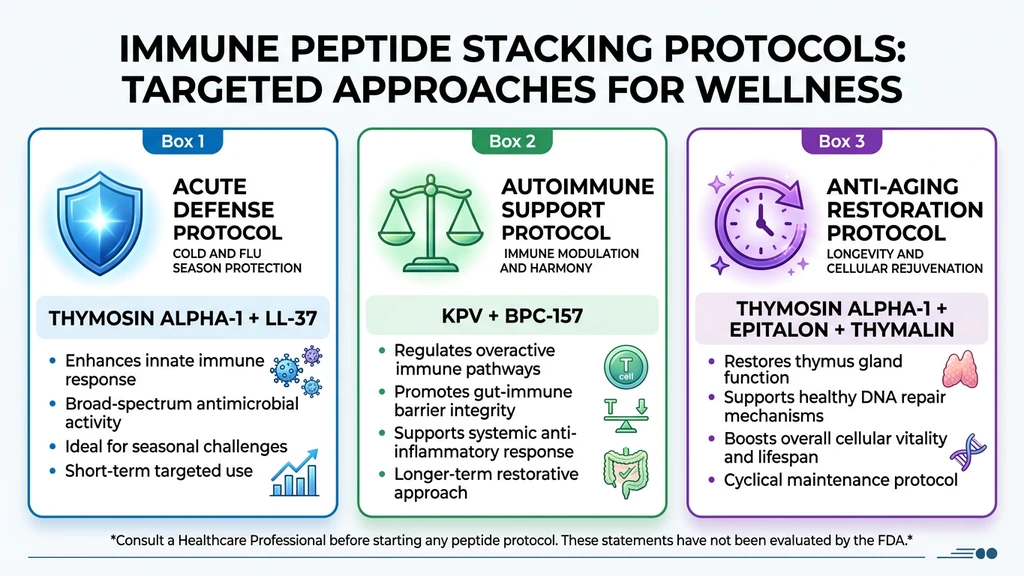
Using multiple immune peptides together can produce stronger results than any single compound. The key is matching the stack to your specific situation. Below are three protocols built on complementary mechanisms.
Stack 1: Acute Immune Defense (Cold and Flu Season)
Peptides: Thymosin Alpha-1 + LL-37
Why this works: Ta1 activates and trains T-cells to recognize and fight threats. LL-37 kills pathogens directly through membrane disruption. Together, they strengthen both the adaptive response (Ta1) and the innate response (LL-37).
Protocol: - Ta1: 1.6 mg subcutaneous, twice weekly - LL-37: 50-100 mcg subcutaneous, daily - Duration: 4-8 weeks during high-risk periods
Who should consider this: Adults over 50, people preparing for flu season, anyone recovering from a recent infection, or individuals who want to enhance vaccine response.
Stack 2: Autoimmune and Chronic Inflammation
Why this works: KPV controls NF-kB-driven inflammation at the molecular level. BPC-157 repairs the gut barrier where 70% of immune cells reside. Many autoimmune conditions involve gut barrier dysfunction as a contributing factor. This stack addresses both the inflammation and its root cause.
Protocol: - KPV: 200-500 mcg oral (for gut) or subcutaneous (for systemic), daily - BPC-157: 250-500 mcg oral, daily - Duration: 8-12 weeks
Important warning: Do NOT add Thymosin Alpha-1 to autoimmune protocols without medical supervision. Ta1 activates T-cells, which may worsen an already overactive immune response. See the section below on autoimmune vs. weakened immunity for details.
Stack 3: Anti-Aging Immune Restoration
Peptides: Thymosin Alpha-1 + Epitalon + Thymalin
Why this works: Three complementary mechanisms targeting immune aging. Ta1 restores T-cell function today. Epitalon extends immune cell lifespan by maintaining telomeres. Thymalin partially reverses thymic involution, allowing the gland to produce more T-cells.
Protocol: - Ta1: 1.6 mg subcutaneous, twice weekly (ongoing) - Epitalon: 5-10 mg subcutaneous, daily for 10-20 days, then off for 4-6 months - Thymalin: 10 mg intramuscular, daily for 5-10 days, then off for 3-6 months - Duration: Epitalon and Thymalin are cycled. Ta1 can be used continuously.
Who should consider this: Adults over 50 focused on long-term immune health and longevity.
Build your own protocol: Peptide Stack Calculator | Peptide Interaction Checker
Autoimmune Conditions vs. Weakened Immunity: A Critical Distinction
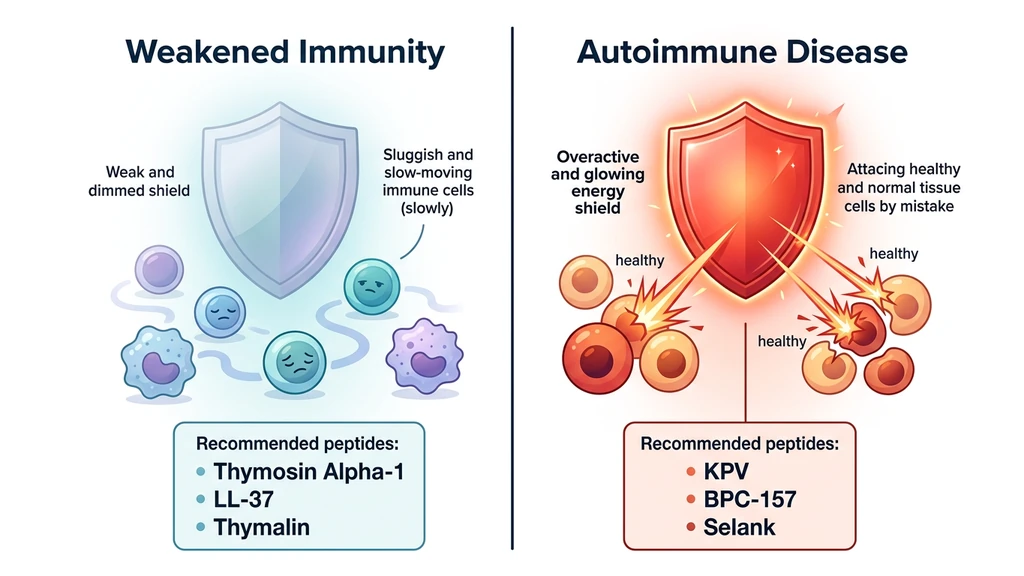
This section addresses the single most important nuance that other guides miss. Autoimmune disease and immunodeficiency require opposite approaches, and using the wrong peptide can make things worse.
Weakened immunity (immunocompromised): The immune system is too weak. It fails to fight infections, responds poorly to vaccines, and allows abnormal cells to grow unchecked. Causes include aging, chemotherapy, HIV, chronic stress, and post-surgical recovery.
Autoimmune disease: The immune system is misdirected. It attacks the body's own tissues. Conditions include rheumatoid arthritis, lupus, Hashimoto's thyroiditis, Crohn's disease, and multiple sclerosis. The immune system is not weak; it is overactive and targeting the wrong things.
Which peptides for which situation:
| Situation | Recommended Peptides | Avoid |
|---|---|---|
| Weakened immunity | Thymosin Alpha-1, LL-37, Thymalin | None (these activate appropriately) |
| Autoimmune disease | KPV, BPC-157, Selank | Thymosin Alpha-1 without supervision |
| Age-related decline | Thymosin Alpha-1, Epitalon, Thymalin | None (these restore function) |
| Post-illness recovery | BPC-157, LL-37, Selank | None |
Why this matters: Thymosin Alpha-1 activates T-cells. In someone with a weakened immune system, this is beneficial. In someone with active autoimmune disease, it could amplify the very cells that are attacking healthy tissue. KPV and BPC-157, by contrast, modulate inflammation without stimulating immune cell production. They calm the immune response rather than amplifying it.
This distinction between immunomodulation (balancing) and immunostimulation (boosting) is fundamental. If you have an autoimmune condition, consult a healthcare provider before using any immune-activating peptide.
How to Take Immune Peptides: Administration Guide
Most immune peptides are administered via subcutaneous injection. A few exceptions use different routes for specific reasons.
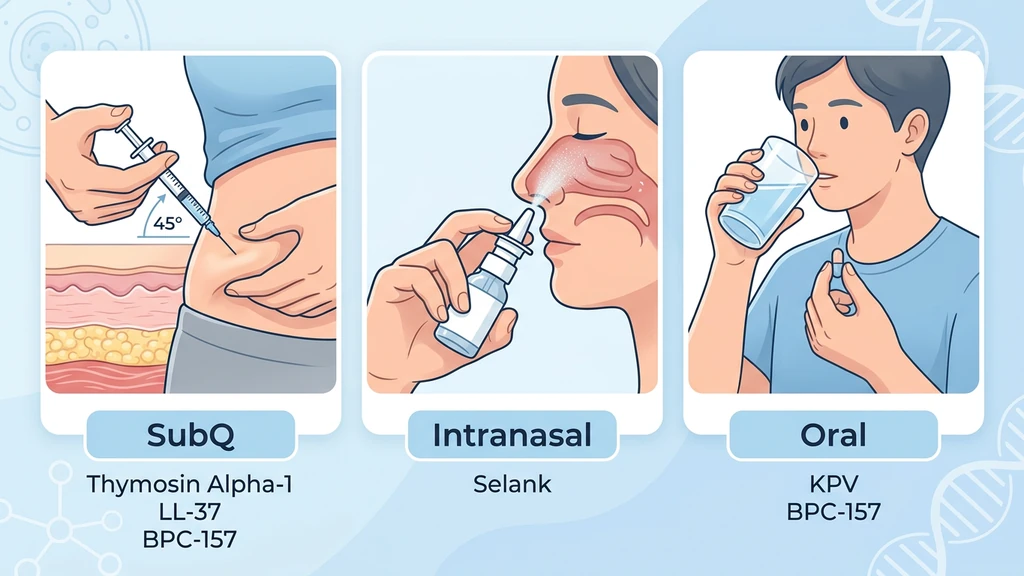
Subcutaneous Injection (Most Peptides)
Thymosin Alpha-1, LL-37, BPC-157 (systemic), KPV (systemic), and Epitalon are all injected subcutaneously. The process involves inserting a thin needle into the fat layer beneath the skin at a 45-degree angle. Common injection sites include the abdomen, outer thigh, and back of the upper arm.
Bioavailability is 90-100%, meaning nearly all of the peptide reaches your bloodstream. Most users report discomfort comparable to a mosquito bite.
For a complete step-by-step guide, see Peptide Injections: Complete Guide. For reconstitution instructions, see How to Reconstitute Peptides.
Intranasal (Selank)
Selank is administered as a nasal spray because it is absorbed rapidly through the nasal mucosa and reaches the brain within minutes. This route is essential for the anxiolytic effects. Intranasal delivery also bypasses gastrointestinal degradation. Typical protocol: 1-2 sprays per nostril, 2-3 times daily.
Oral (KPV and BPC-157 for Gut Applications)
KPV enters intestinal cells via the PepT1 transporter, making oral administration effective specifically for gut immune tissue. BPC-157 is stable in gastric acid (unlike most peptides), so oral delivery puts it in direct contact with the GI lining.
For gut-specific immune support, oral administration is preferred over injection because it delivers higher local concentrations to the intestinal immune tissue.
For proper storage and handling of all peptide forms, see our how to store peptides guide.
Side Effects and Safety
Immune peptides generally carry favorable safety profiles. Thymosin Alpha-1 has the longest safety record. Below is a summary of what the research shows for each compound.
| Peptide | Common Side Effects | Serious Concerns | Key Safety Note |
|---|---|---|---|
| Thymosin Alpha-1 | Injection site redness | None significant in 11,000+ patients | Safest immune peptide by data volume |
| LL-37 | Injection site reaction | Cytotoxicity possible at very high doses | Use within recommended dose range |
| KPV | Mild GI discomfort (oral) | None reported in animal studies | No human safety trials yet |
| BPC-157 | Mild nausea | Limited human safety data | Extensive animal data shows no toxicity |
| Selank | Mild fatigue | None significant | Approved prescription drug in Russia |
| Thymalin | Injection site redness | None significant | Not FDA-approved |
| Epitalon | Injection site reaction | Theoretical cancer risk (telomerase in tumors) | Avoid with active cancer |
General safety principles: - Start with the lowest recommended dose and increase gradually - Use one peptide at a time initially to identify any individual reactions - Pharmaceutical-grade sourcing matters. Impure peptides carry contamination risks that have nothing to do with the peptide itself - People with active cancer should avoid Epitalon (telomerase activation could theoretically promote tumor growth) - People with autoimmune conditions should use Ta1 only under medical supervision
For dosage reference across all peptides, see the peptide dosage chart.
Frequently Asked Questions
What is the best peptide for immune system support?
Thymosin Alpha-1 has the strongest clinical evidence, with over 11,000 patients studied in 30+ clinical trials and regulatory approval in more than 30 countries. For acute infections, LL-37 provides direct antimicrobial action that kills pathogens on contact. For autoimmune inflammation, KPV is preferred because it modulates the immune response without overstimulating it.
Can peptides help with autoimmune disease?
KPV and BPC-157 show the most promise for autoimmune conditions. KPV inhibits NF-kB, the master switch for inflammatory gene expression, reducing the signals that cause the immune system to attack healthy tissue. BPC-157 repairs the gut barrier, which is relevant because gut permeability contributes to many autoimmune conditions. Thymosin Alpha-1 should be used cautiously with autoimmune conditions because it activates T-cells, which may worsen an overactive immune response.
How long do immune peptides take to work?
Initial improvements such as reduced brain fog, fewer inflammatory flares, and improved energy typically appear within 2-4 weeks. Measurable changes in immune markers (T-cell counts, inflammatory panels) take 8-12 weeks. Sustained symptom improvement generally requires 3-6 months of consistent use. Peptides like Thymosin Alpha-1 that activate T-cell production need time for new immune cells to mature and reach functional levels.
Are immune peptides safe?
Thymosin Alpha-1 has the strongest safety record, with no significant adverse events reported in trials involving over 11,000 patients across 30+ clinical studies. Most immune peptides cause only mild injection site reactions. BPC-157 and KPV lack large-scale human safety data, though extensive animal research shows no toxicity. All immune peptides should be used under medical guidance, particularly for autoimmune conditions where the wrong choice could worsen symptoms.
Can I take immune peptides with vitamins?
Yes. Certain vitamins are synergistic with specific immune peptides. Vitamin D is particularly relevant because it drives the production of LL-37 through the CAMP gene pathway. Low vitamin D means low LL-37 production. Zinc supports T-cell function and complements Thymosin Alpha-1. Vitamin C supports general antioxidant defense. Peptides and vitamins work through different mechanisms and do not interfere with each other.
Do I need a prescription for immune peptides?
Thymosin Alpha-1 (brand name Zadaxin) is a prescription medication in countries where it is approved. In the United States, most immune peptides are available through compounding pharmacies with a prescription or as research chemicals. KPV is sometimes available in oral supplement form. Regulations vary significantly by country. Check your local laws before purchasing.
What is the connection between gut health and the immune system?
Approximately 70% of immune cells reside in gut-associated lymphoid tissue (GALT). The intestinal barrier separates gut contents from the bloodstream. When this barrier breaks down (often called "leaky gut"), bacteria, food particles, and toxins cross into the blood and trigger chronic immune activation. BPC-157 and KPV target this barrier directly: BPC-157 repairs the physical structure, while KPV calms the inflammatory response. Restoring gut barrier integrity often resolves downstream immune dysfunction. Learn more in our peptides for gut health guide.
Frequently Asked Questions
What is the best peptide for immune system support?
Thymosin Alpha-1 has the strongest clinical evidence for immune support, with over 11,000 patients studied in 30+ clinical trials and approval in more than 30 countries. For acute infections, LL-37 provides direct antimicrobial action. For autoimmune inflammation, KPV is preferred because it modulates without overstimulating.
Can peptides help with autoimmune disease?
KPV and BPC-157 show the most promise for autoimmune conditions because they reduce inflammation without stimulating the immune system. KPV inhibits NF-kB signaling, the master switch for inflammatory gene expression. Thymosin Alpha-1 should be used cautiously in autoimmune cases because it activates T-cells, which may worsen an overactive immune response.
How long do immune peptides take to work?
Initial improvements (reduced brain fog, fewer inflammatory flares) typically appear within 2-4 weeks. Measurable changes in immune markers and autoimmune panels take 8-12 weeks. Sustained symptom improvement generally requires 3-6 months of consistent use.
Are peptides for immunity safe?
Thymosin Alpha-1 has the strongest safety record, with no significant adverse events in trials involving over 11,000 patients. Most immune peptides cause only mild injection site reactions. However, BPC-157 and KPV lack large human safety trials. All immune peptides should be used under medical supervision, especially for autoimmune conditions.
Can I take immune peptides with vitamins?
Yes. Vitamin D is particularly synergistic with LL-37 because vitamin D upregulates the gene that produces LL-37. Zinc supports T-cell function alongside Thymosin Alpha-1. Vitamin C supports general immune function. Peptides and vitamins work through different mechanisms and are not contradictory.
Do I need a prescription for immune peptides?
Thymosin Alpha-1 (Zadaxin) is a prescription medication in countries where it is approved. In the US, most immune peptides are available through compounding pharmacies with a prescription or as research chemicals. Regulations vary by country. KPV is sometimes available as a supplement in oral form.
What is the connection between gut health and immune peptides?
Approximately 70% of immune cells reside in the gut-associated lymphoid tissue (GALT). Gut barrier breakdown allows bacteria and food particles to cross into the bloodstream, triggering immune responses. BPC-157 and KPV target gut barrier repair directly, which can resolve downstream immune dysfunction.
The Bottom Line
Thymosin Alpha-1 stands alone in terms of clinical evidence for immune support: 11,000+ patients across 30+ trials, regulatory approval in dozens of countries, and a strong safety record. For most people looking to strengthen their immune system, it is the starting point.
LL-37 adds direct pathogen-killing power. KPV and BPC-157 address the inflammation and gut-barrier side of immune health. Selank covers the often-overlooked stress-immunity connection. Thymalin and Epitalon target the long-term aging of the immune system itself.
The choice depends on your situation. Weakened immunity calls for activation (Ta1, LL-37). Autoimmune conditions call for modulation (KPV, BPC-157). Age-related decline benefits from restoration (Ta1 + Epitalon + Thymalin).
Start with one peptide, assess your response over 4-8 weeks, then consider adding a second based on the stacking protocols above. Use our Peptide Stack Calculator and Interaction Checker to build your protocol.
Glutathione is the other molecule that dominates these conversations. Glutathione peptide covers what it is, and why oral dosing mostly fails.
Related Articles
Peptides for Inflammation: 7 Best Ranked
Top 7 anti-inflammatory peptides ranked: BPC-157, KPV, LL-37, thymosin alpha-1, GHK-Cu, TB-500, Selank. Mechanisms, dosage protocols, and 10+ PubMed citations.
LL-37 Peptide Benefits: 8 Key Uses
LL-37 peptide benefits include antimicrobial defense, wound healing (6x faster in trials), antiviral activity, and gut protection. Dosage and safety data.
Peptides for Gut Health: 5 Best
BPC-157, KPV, LL-37, collagen peptides, and larazotide for gut healing. Condition-specific protocols for IBS, leaky gut, Crohn's, and bloating.
Peptides for Psoriasis: The Evidence
Peptides for psoriasis: the honest evidence on KPV, GHK-Cu, BPC-157, and why LL-37 drives the disease rather than treating it. See a dermatologist.