You are looking at a GLOW blend vial containing GHK-Cu, BPC-157, and TB-500 at a 5:1:1 ratio. You need to know how much to draw and how often to inject. The standard dosage is 2,000 to 2,500 mcg of total blend injected subcutaneously once daily for 4 weeks, followed by 2 to 4 weeks off. In a typical 70 mg vial reconstituted with 3 mL of bacteriostatic water, that translates to 10 units (0.10 mL) on an insulin syringe. A 42 mg vial reconstituted with 2 mL requires 7 units (0.07 mL) for a comparable daily dose.
| Quick Reference | Details |
|---|---|
| Blend ratio | 5:1:1 (GHK-Cu : BPC-157 : TB-500) |
| Standard daily dose | 2,000-2,500 mcg total blend |
| Per-injection breakdown (70 mg) | ~1,670 mcg GHK-Cu + 330 mcg BPC-157 + 330 mcg TB-500 |
| 70 mg vial reconstitution | 3.0 mL bac water, 10 units per shot |
| 42 mg vial reconstitution | 2.0 mL bac water, 7 units per shot |
| Cycle length | 4 weeks on, 2-4 weeks off |
| Route | Subcutaneous, daily, rotate sites |
| Vial duration | ~30 days |
| Hard contraindications | Active cancer, pregnancy, WADA-tested athletes |
If you are new to peptides entirely, start with getting started with peptides before continuing here. For the standalone GHK-Cu protocol, see the GHK-Cu injection dosage guide. For solo BPC-157 + TB-500 stacks, see BPC-157 + TB-500 dosage.
No form of GHK-Cu, BPC-157, or TB-500 is FDA-approved for human use. Consult a healthcare provider before acting on any information here.
Get your custom peptide protocol:
- Tailored to your body and goals
- Precise dosing and cycle length
- Safe stacking combinations
- Backed by peer-reviewed studies
- Ready in under 2 minutes
Why Stack GHK-Cu, BPC-157, and TB-500?
You have a torn tendon, a post-surgical wound, or skin that has started to look older than you feel. You could run a single peptide and address one aspect of the problem. Or you could run all three and cover the entire repair sequence from start to finish. That is the logic behind this blend.
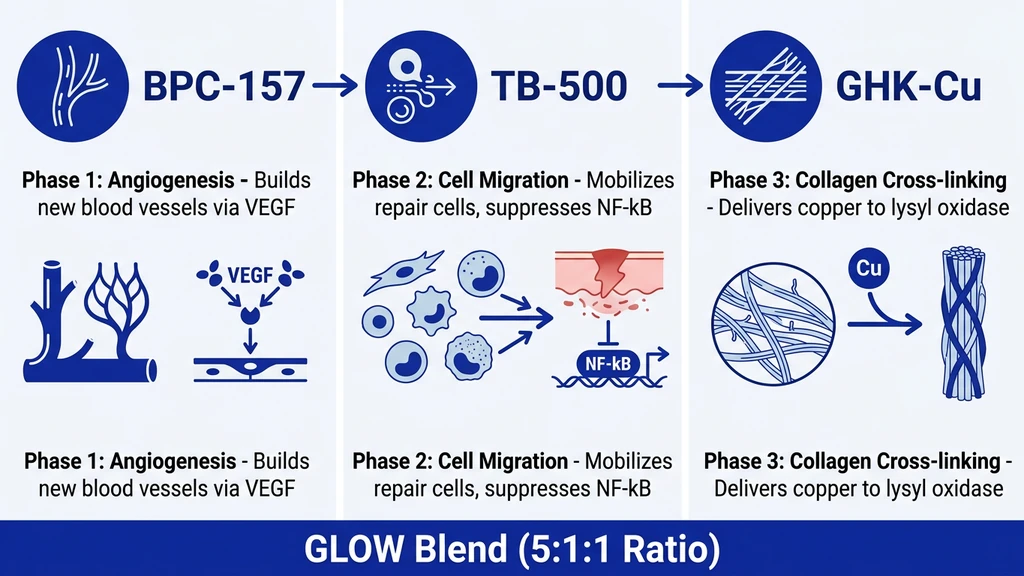
Each peptide targets a different bottleneck in tissue repair. BPC-157 (Body Protection Compound-157) upregulates vascular endothelial growth factor (VEGF) and drives angiogenesis, the construction of new blood vessels at the injury site. Without fresh vasculature, repair cells cannot reach damaged tissue in sufficient numbers (Sikiric et al., 2018).
TB-500, a synthetic fragment of Thymosin Beta-4, regulates actin polymerization and F-actin formation. This is the molecular machinery that allows cells to migrate. TB-500 also suppresses the NF-kB inflammatory pathway systemically, not just locally. Its half-life of roughly two days means a single injection distributes repair signals across the entire body (Ruff et al., 2017).
GHK-Cu (glycyl-L-histidyl-L-lysine copper) arrives last in the sequence but is arguably the most important. It delivers copper to lysyl oxidase, the enzyme responsible for cross-linking collagen types I and III into durable, organized fibers. Without proper cross-linking, new tissue is fragile. GHK-Cu also modulates over 4,000 human genes, suppressing IL-6 and TNF-alpha while stimulating antioxidant defenses (Pickart & Margolina, 2018). Dr. Loren Pickart first isolated GHK-Cu from human plasma albumin in 1973 and spent the next five decades mapping its regenerative potential.
Here is the synergy in one sentence. BPC-157 builds new blood vessels. TB-500 mobilizes repair cells along those vessels. GHK-Cu provides the structural copper needed to cross-link the collagen those cells produce. The result is faster, stronger tissue repair than any single peptide achieves alone. This three-peptide combination is commercially known as the GLOW blend, typically formulated at a 5:1:1 ratio (GHK-Cu : BPC-157 : TB-500).
For individual dosing protocols, see the GHK-Cu dosage guide, and for tendon-specific applications, see best peptides for tendon repair.
GHK-Cu + BPC-157 + TB-500 Blend Dosage Chart
The table below is the core reference for this article. It covers the two standard commercial vial sizes and a DIY option for users who prefer to mix separate vials themselves.
| Vial Config | Total Content | Reconstitution | Daily Dose (total blend) | Per-Injection Breakdown | Syringe Units | Vial Lasts |
|---|---|---|---|---|---|---|
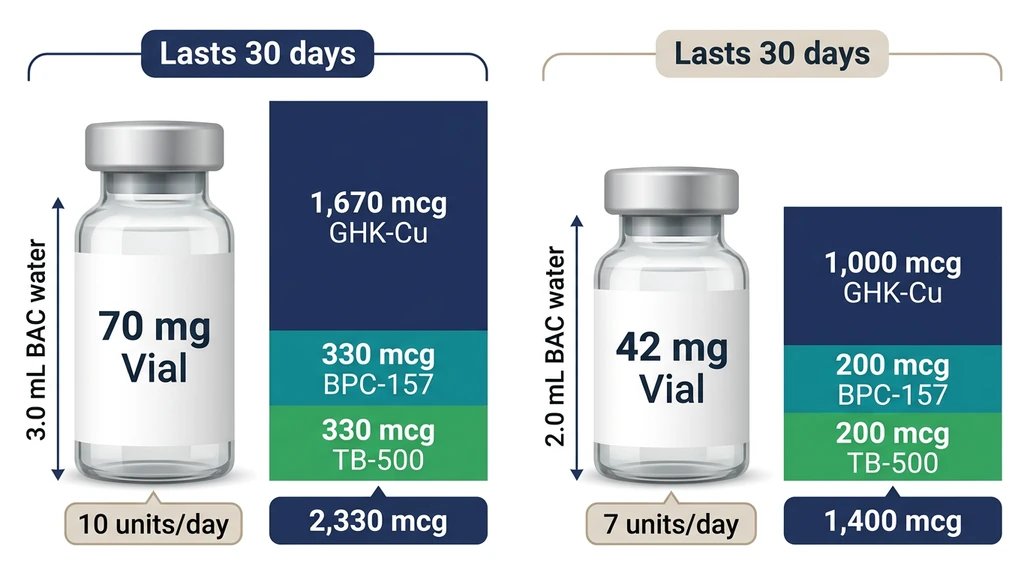
| 70 mg (5:1:1) | 50 mg GHK-Cu + 10 mg BPC-157 + 10 mg TB-500 | 3.0 mL bac water | ~2,330 mcg | ~1,670 mcg GHK-Cu + 330 mcg BPC-157 + 330 mcg TB-500 | 10 units (0.10 mL) | ~30 days |
| 42 mg (5:1:1) | 30 mg GHK-Cu + 6 mg BPC-157 + 6 mg TB-500 | 2.0 mL bac water | ~1,400 mcg | ~1,000 mcg GHK-Cu + 200 mcg BPC-157 + 200 mcg TB-500 | 7 units (0.07 mL) | ~30 days |
| DIY stack (separate vials) | Individual vials per peptide | Per peptide | User-defined | Adjust each peptide independently | Varies | Varies |
How to read this chart. A 70 mg vial contains 70 mg of total peptide. At 3 mL of bacteriostatic water, the concentration is 23.3 mg/mL. Drawing 10 units (0.10 mL) delivers approximately 2,330 mcg of total blend. Because the ratio is 5:1:1, that single injection contains roughly 1,670 mcg of GHK-Cu, 330 mcg of BPC-157, and 330 mcg of TB-500.
The 42 mg vial follows the same math at a smaller scale. At 2 mL of bacteriostatic water, the concentration is 21 mg/mL. Seven units delivers approximately 1,400 mcg total, broken down to 1,000 mcg GHK-Cu, 200 mcg BPC-157, and 200 mcg TB-500.
The DIY option uses separate vials of each peptide. You draw three separate doses and inject them at slightly different sites, or combine them in a single syringe. This approach sacrifices convenience but gives you complete control over how much of each peptide you administer. Use the BPC-157 Dosage Calculator and TB-500 Dosage Calculator for individual dose math.
For non-standard vial sizes or custom water volumes, use the Peptide Reconstitution Calculator to confirm your math before injecting.
How to Reconstitute the Blend
Reconstitution converts the lyophilized (freeze-dried) powder into an injectable solution. The process takes under five minutes. If you have reconstituted any peptide before, this is identical.
Step 1. Gather supplies: bacteriostatic water (BAC water, containing 0.9% benzyl alcohol), insulin syringes (29 to 31 gauge), and alcohol swabs. Do not use normal saline or sterile water. BAC water inhibits bacterial growth and extends shelf life to approximately 28 days. See where to buy bacteriostatic water for sourcing.
Step 2. Draw the correct volume of BAC water into a syringe. For a 70 mg vial, draw 3.0 mL. For a 42 mg vial, draw 2.0 mL.
Step 3. Wipe both vial stoppers with alcohol swabs. Insert the needle into the blend vial at an angle. Direct the water stream against the inner glass wall, not onto the powder cake. Disrupting the cake creates foam and can denature the peptides.
Step 4. Release the water slowly. Let it trickle down the inside of the vial. Remove the syringe. Gently swirl the vial until the powder dissolves completely, usually 1 to 2 minutes. Never shake. The solution should be clear to slightly blue-tinted from the copper in GHK-Cu. Discard if cloudy or if particles are visible.
Step 5. Label the vial with the reconstitution date. Store at 2 to 8 degrees Celsius (36 to 46 degrees Fahrenheit), protected from light. Use within 28 days.
For detailed storage guidance beyond these basics, see how to store peptides. For a walkthrough of the reconstitution math with any vial size, use the Peptide Reconstitution Calculator.
Injection Protocol and Frequency
Standard protocol: One subcutaneous injection per day, 5 to 7 days per week. Most practitioners recommend daily injection during the active cycle for consistent blood levels.
Injection sites: Rotate between the lower abdomen (at least two inches from the navel), outer thigh, and upper arm fat pad. Use a 29 to 31 gauge insulin syringe with a 0.5 inch needle. Pinch a fold of skin, insert at 45 to 90 degrees, inject slowly, hold for 5 to 10 seconds, then withdraw. Do not massage the site afterward.
Timing: Morning or evening. Consistency matters more than the specific hour. Pick a time you can maintain every day for four weeks.
Duration: 4 weeks on, 2 to 4 weeks off. This is the standard cycle discussed in the next section.
For users treating a localized injury, inject as close to the target area as practical. BPC-157 and GHK-Cu both produce higher local concentrations near the injection site, even though all three peptides distribute systemically.
Cycling Protocol: How Long and Why
Four weeks on, two to four weeks off. That is the standard cycle. Here is why it exists.
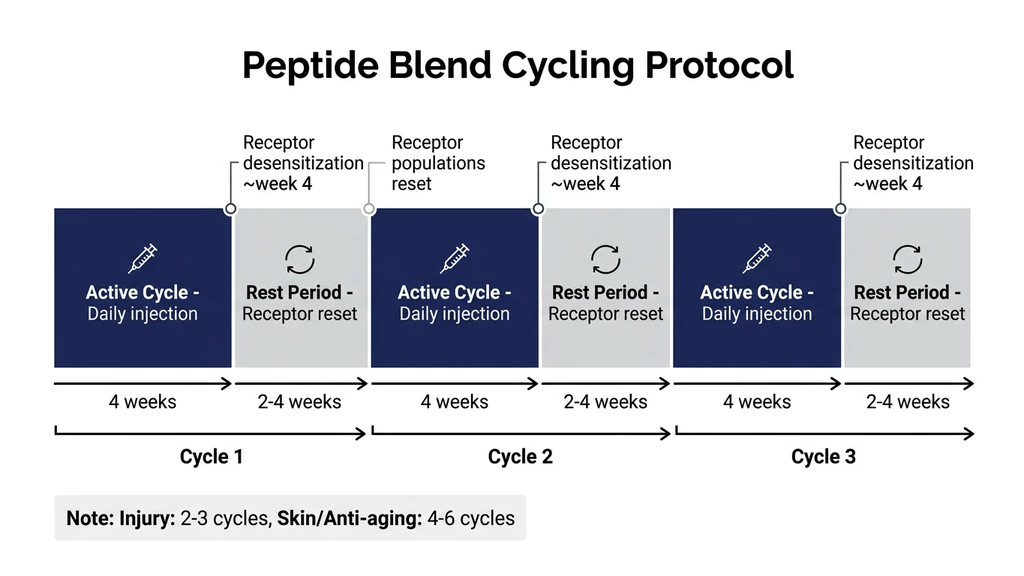
Receptor desensitization is the primary reason. BPC-157 and TB-500 both act through cell-surface receptors that internalize under sustained stimulation. After roughly four weeks of daily injection, the receptors begin downregulating. You inject the same dose but get progressively less response. Continuing past this point wastes product.
The rest period allows receptor populations to reset. Two weeks is the minimum for meaningful recovery. Four weeks is more conservative and preferred when running multiple cycles back to back.
Standard cycle: 4 weeks active, 2 to 4 weeks rest Extended cycle (under physician guidance): 6 to 8 weeks active, 4 weeks rest Signals to resume: Rest period complete, no lingering side effects, healing goals not yet fully achieved Signals to stop: Persistent side effects, goal achieved, or physician advises discontinuation
Most users complete two to three full cycles for injury recovery. Skin and anti-aging goals may require four to six cycles spread over six to twelve months.
Some practitioners add a fourth peptide, KPV, for enhanced anti-inflammatory action. This variant is known as the KLOW blend and is typically sold in 80 mg vials. The dosing protocol differs because of the added peptide mass. See the KPV dosage guide for details.
Blend Vial vs. Separate Vials: Which to Choose?
You can buy a pre-mixed GLOW blend or purchase individual vials of GHK-Cu, BPC-157, and TB-500. Both approaches work. The right choice depends on whether you need convenience or flexibility.
| Factor | Pre-Mixed Blend | Separate Vials |
|---|---|---|
| Convenience | One injection per day | 2 to 3 injections per day (or one combined draw) |
| Dose flexibility | Fixed 5:1:1 ratio | Adjust each peptide independently |
| Cost | Usually cheaper per mg total | More expensive but customizable |
| Best for | General healing, skin, maintenance | Targeted injury rehab, goal-specific dosing |
| Reconstitution | Single vial | Three separate vials |
| Error potential | Lower (pre-measured ratio) | Higher (three concentration calculations) |
The blend suits most users. The 5:1:1 ratio provides therapeutic doses of all three peptides in a single injection. If your goal is general tissue repair, skin quality, post-surgical recovery, or anti-aging maintenance, the blend is the simpler and more cost-effective option.
Separate vials make sense when you need to increase one peptide disproportionately. An acute Achilles tendon injury, for example, might warrant 500 mcg of BPC-157 per day rather than the 330 mcg delivered by the standard blend dose. A severe systemic injury might need higher TB-500. Separate vials give you that flexibility at the cost of more injections and more reconstitution math.
Use the Peptide Stack Calculator to plan multi-vial protocols and the Peptide Interaction Checker to verify compatibility.
What Happens When You Get the Dose Wrong
Three dosing errors account for most blend-related complications. The numbers below show what actually happens.
Scenario 1: Drawing 20 units instead of 10 from a 70 mg vial. A user misreads the syringe markings and pulls double the intended volume. That single injection delivers approximately 4,660 mcg of total blend: 3,340 mcg GHK-Cu, 660 mcg BPC-157, and 660 mcg TB-500. The GHK-Cu fraction is now twice the upper therapeutic threshold (2 mg/day). Acute consequences are mild for a single overdose, mostly transient nausea, lightheadedness, and a metallic taste from copper. Repeating this error daily for a week raises serum copper toward levels associated with hepatic stress in the literature on GHK-Cu liver safety. The fix: triple-check syringe markings against the chart before drawing.
Scenario 2: Using normal saline instead of bacteriostatic water for reconstitution. Normal saline contains no benzyl alcohol preservative. A 70 mg vial reconstituted with sterile saline becomes a bacterial culture after the first needle puncture. Shelf life drops from 28 days to roughly 48 hours. Users who do not realize this inject from a contaminated multi-use vial for 2-3 weeks and experience injection site abscesses, low-grade fever, and persistent redness. The total cost: one wasted $80-150 vial plus a course of antibiotics. The fix: confirm the diluent label reads "Bacteriostatic Water for Injection 0.9% Benzyl Alcohol." See bacteriostatic water vs sterile water.
Scenario 3: Running 12 continuous weeks with no rest period. A user feels good at week 4 and decides to keep going. By week 8, the dose that produced 30% reduction in tendinitis pain now produces 10%. By week 12, the same dose produces no measurable effect. The user has burned through 3 vials (~$300-450) chasing a fading signal because BPC-157 and TB-500 receptors have downregulated 60-80% under sustained stimulation. The fix: respect the 4-on, 2-to-4-off cycle even when results are still improving. The rest period is part of the protocol, not optional. See peptide stacking guide for full cycling rules.
Side Effects and Safety Considerations
Common: Mild injection site redness (resolves within an hour), transient fatigue during the first one to two days of use, and occasional light headache. These occur in a minority of users and rarely persist beyond the first week.
Uncommon: Nausea, dizziness, and a temporary flare of old injuries. The injury flare is sometimes called a "healing response" and is attributed to TB-500 reactivating the inflammatory cascade in previously quiescent tissue. It typically resolves within days.
Contraindications: Active cancer is the most important. All three peptides are pro-angiogenic, meaning they promote blood vessel formation. This property that makes them effective for healing also means they could theoretically support tumor vascularization. Pregnancy and breastfeeding are contraindicated because no human safety data exists. WADA-tested athletes should be aware that TB-500 (Thymosin Beta-4) is on the World Anti-Doping Agency prohibited list.
No human clinical trials exist for this specific three-peptide blend. All safety data extrapolates from individual peptide studies conducted primarily in animals. The long-term effects of repeated cycling are unknown. For individual peptide safety profiles, see BPC-157 side effects and the GHK-Cu dosage guide.
Adjusting Dose by Body Weight
The standard dosage chart assumes an average adult of 60 to 85 kg. If you are significantly lighter or heavier, the per-injection dose should scale accordingly. The individual peptide research that informs blend dosing used weight-based calculations, and applying the same logic to the blend improves precision.
BPC-157 weight-based dosing. Most BPC-157 studies in rodents use 10 mcg/kg as the therapeutic dose. Translated to a 70 kg human using allometric scaling, that yields approximately 250 to 500 mcg per day. The standard blend at 10 units (2,330 mcg total) delivers 330 mcg of BPC-157, which sits in the middle of this range.
TB-500 weight-based dosing. TB-500 protocols typically recommend 2 to 2.5 mg twice weekly during loading, then 750 mcg to 1 mg twice weekly for maintenance. The blend delivers 330 mcg per day (2,310 mcg per week on a 7-day schedule), which aligns with the lower end of maintenance dosing.
GHK-Cu weight-based dosing. The therapeutic dose is 1 to 2 mg per day for a 70 kg adult. At 1,670 mcg per injection from the standard blend, this falls within range.
| Body Weight | Daily Blend Dose | Syringe Units (70 mg / 3 mL) | Per-Injection Breakdown |
|---|---|---|---|
| Under 55 kg | 1,750 mcg | 7.5 units (0.075 mL) | ~1,250 mcg GHK-Cu + 250 mcg BPC + 250 mcg TB |
| 55-85 kg | 2,330 mcg | 10 units (0.10 mL) | ~1,670 mcg GHK-Cu + 330 mcg BPC + 330 mcg TB |
| 85-110 kg | 2,800 mcg | 12 units (0.12 mL) | ~2,000 mcg GHK-Cu + 400 mcg BPC + 400 mcg TB |
| Over 110 kg | 3,260 mcg | 14 units (0.14 mL) | ~2,330 mcg GHK-Cu + 465 mcg BPC + 465 mcg TB |
These are approximations. The blend's fixed 5:1:1 ratio means you cannot adjust one peptide without adjusting all three. If your weight places you at the extremes and you need more BPC-157 without proportionally more GHK-Cu, switch to separate vials.
For the 42 mg vial, apply the same proportional scaling. At 2 mL reconstitution, each unit delivers approximately 1.05 mg of total blend. Multiply the target dose by the concentration to find your syringe volume.
Week-by-Week Results Timeline
GHK-Cu, BPC-157, and TB-500 each operate on different timescales. BPC-157 produces noticeable anti-inflammatory effects within days. TB-500 systemic cell migration effects build over 1 to 2 weeks. GHK-Cu collagen cross-linking and gene modulation require 4 to 8 weeks for visible results. Running all three in a blend means you experience a layered progression of effects.
Days 1 to 3. Mild injection site redness that resolves within 30 to 60 minutes. Some users report a subtle reduction in general inflammation within 48 hours, attributed to BPC-157's rapid VEGF upregulation and TB-500's NF-kB suppression. These early effects are modest and may not be distinguishable from placebo.
Week 1. If treating a specific injury, localized swelling begins to decrease. Sleep quality may improve slightly. A small subset of users reports a temporary flare at old injury sites as TB-500 reactivates dormant inflammatory cascades. This flare is a recognized phenomenon, not a side effect. It typically resolves within 2 to 4 days.
Week 2. Recovery from physical activity accelerates. Bruises heal faster. Minor cuts close more quickly. If you track workout recovery with a wearable, heart rate variability (HRV) may trend upward as systemic inflammation decreases. Joint stiffness in the morning diminishes.
Week 3. Skin begins to feel different. Not dramatically younger, but more hydrated and slightly firmer. GHK-Cu glycosaminoglycan synthesis reaches a threshold where dermal hydration changes become palpable. Injury sites show measurable improvement: reduced pain, increased range of motion, or visible tissue filling.
Week 4 (end of standard cycle). The cumulative effect of all three peptides converges. Collagen cross-linking from GHK-Cu solidifies the tissue scaffolding that BPC-157 vascularized and TB-500 populated with repair cells. Skin quality improvement is visible in photos compared to week 1. Scars may appear flatter or softer. Joint and tendon injuries that plateaued with other treatments often show renewed improvement.
During the rest period (weeks 5 to 8). The structural changes do not reverse immediately. Collagen deposited during the active cycle persists for months. Some users report continued improvement during the first 1 to 2 weeks of rest as tissue remodeling continues without new peptide input. By week 3 of rest, improvement plateaus. This is the signal that a new cycle may be warranted if goals are not yet met.
Multiple cycles. Most injury protocols require 2 to 3 complete cycles (12 to 24 weeks total including rest). Skin and anti-aging protocols may run 4 to 6 cycles over 6 to 12 months. Diminishing returns become apparent after 4 to 6 months for skin-related goals, at which point maintenance frequency (2 to 3 injections per week) replaces loading.
Common Mistakes and How to Avoid Them
Seven mistakes appear repeatedly in peptide community forums. Each one reduces efficacy, wastes product, or introduces unnecessary risk.
1. Using normal saline instead of bacteriostatic water. Normal saline (0.9% NaCl) lacks the 0.9% benzyl alcohol preservative that inhibits bacterial growth. A multi-use vial reconstituted with normal saline becomes a bacterial culture after the first needle puncture. The shelf life drops from 28 days to roughly 48 hours. Always use bacteriostatic water. See how to reconstitute GHK-Cu for the full procedure.
2. Shaking the vial instead of swirling. All three peptides in this blend are proteins. Aggressive shaking creates foam and can denature the molecules at the air-liquid interface. Denatured peptide is biologically inactive. You inject the full volume but get reduced or zero effect. Swirl gently until dissolved. If foam forms, let it settle before drawing.
3. Injecting intramuscularly instead of subcutaneously. The blend is designed for subcutaneous injection. Intramuscular injection drives faster absorption but creates a sharper peak-and-trough cycle that does not match the pharmacokinetic profile these peptides work best with. It also hurts more, risks hitting a vein, and offers no benefit for a peptide blend that works through sustained tissue-level signaling.
4. Running cycles longer than 4 weeks without guidance. BPC-157 and TB-500 receptor desensitization begins around week 4. Continuing to inject past this point wastes product. You pay the same per-injection cost for progressively less response. Respect the 4-week cycle limit unless a physician specifically prescribes otherwise.
5. Skipping the rest period. The rest period is not optional. It allows receptor populations to reset and gives tissue time to consolidate structural changes. Users who run continuous cycles without rest report diminishing returns by the third month and significantly reduced response when they eventually do cycle back on.
6. Storing at room temperature. Reconstituted peptide solution degrades faster at room temperature. GHK-Cu's copper ion can catalyze oxidation reactions that break down BPC-157 and TB-500 in the same solution. Refrigerate at 2 to 8 degrees Celsius (36 to 46 degrees Fahrenheit) immediately after reconstitution. Keep the vial upright in a dark container. See how to store peptides for detailed storage guidance.
7. Doubling the dose for faster results. More is not better. Each peptide in the blend has a therapeutic window. BPC-157 above 500 mcg per day shows no additional benefit in published research. GHK-Cu above 2 mg per day increases copper load without documented improvement. TB-500 benefits plateau at standard loading doses. Doubling the blend dose doubles cost and copper exposure while providing marginal or zero additional benefit.
Injection Site Selection for the Blend
Where you inject the blend affects how much peptide reaches your target tissue. All three peptides distribute systemically after subcutaneous injection, but local tissue concentrations are highest within a 5 to 10 cm radius of the injection site.
For systemic goals (anti-aging, general wellness, skin quality): Inject in the lower abdomen, rotating left and right sides. Abdominal subcutaneous fat provides consistent, predictable absorption. The large surface area allows easy rotation to prevent injection site fatigue.
For localized injuries (tendons, joints, surgical sites): Inject as close to the target tissue as practical. A torn rotator cuff benefits from upper arm or deltoid-area injection. A knee injury benefits from injection in the fat pad just above or below the kneecap. An Achilles tendon injury benefits from injection in the lower calf subcutaneous tissue.
Injection depth matters. Use a 29 to 31 gauge insulin syringe with a half-inch needle. Pinch a fold of skin. Insert at a 45 to 90 degree angle depending on the amount of subcutaneous fat at the site. Leaner areas (shin, forearm) require a shallower angle. Fattier areas (abdomen, thigh) tolerate a 90 degree perpendicular insertion.
| Injection Site | Best For | Absorption Speed | Rotation Partners |
|---|---|---|---|
| Lower abdomen (L/R) | Systemic, skin, general healing | Fast | Thigh, flanks |
| Outer thigh (L/R) | Knee, hip, lower body injuries | Moderate | Abdomen, flanks |
| Upper arm (L/R) | Shoulder, rotator cuff injuries | Moderate | Abdomen, thigh |
| Near injury site | Localized repair | Variable | Nearest alternative site |
Post-injection protocol. Do not massage the site. Do not apply ice or heat for 30 minutes. Both alter local blood flow and can affect absorption kinetics. Let the peptide absorb naturally. Light physical activity (walking) is fine and may slightly improve distribution through increased circulation.
Frequently Asked Questions
What is the standard GHK-Cu + BPC-157 + TB-500 blend dosage?
The standard daily dose is 2,000 to 2,500 mcg of total blend, injected subcutaneously once daily. In a 70 mg GLOW vial reconstituted with 3 mL of bacteriostatic water, this equals approximately 10 units (0.10 mL) on an insulin syringe. The cycle runs 4 weeks on, 2 to 4 weeks off. See the GHK-Cu injection dosage guide for solo GHK-Cu protocols.
How long does a 70 mg blend vial last?
At the standard daily dose of approximately 2,330 mcg, a 70 mg vial lasts about 30 days. That is enough for one full 4-week cycle. A 42 mg vial also lasts approximately 30 days at its corresponding lower daily dose of 1,400 mcg. Use the Peptide Reconstitution Calculator to verify the math for any vial size.
Can I use the blend for injury recovery?
Yes. BPC-157 accelerates localized tissue repair through angiogenesis, TB-500 acts systemically via cell migration, and GHK-Cu supports collagen cross-linking at the repair site. For severe or targeted injuries, separate vials allow higher BPC-157 or TB-500 dosing beyond the fixed 5:1:1 ratio. The BPC-157 + TB-500 dosage guide covers two-peptide stacks.
How long until I see results?
Most users report reduced inflammation and improved recovery within 2 to 3 weeks. Skin quality improvements typically appear after 4 to 6 weeks. Hair-related effects, if any, may take 8 to 12 weeks. Consistency across the full 4-week cycle is essential for meaningful results. See how long does BPC-157 take to work for the underlying timeline.
Is the GLOW blend the same as the KLOW blend?
No. GLOW contains three peptides: GHK-Cu, BPC-157, and TB-500 at a 5:1:1 ratio. KLOW adds a fourth peptide, KPV, for enhanced anti-inflammatory action. KLOW vials are typically 80 mg and require a different dosing protocol because of the added peptide mass. See the KPV peptide dosage guide for the four-peptide stack.
Do I need to cycle off the blend?
Yes. The standard protocol is 4 weeks on, 2 to 4 weeks off. Cycling prevents receptor desensitization, the process by which sustained stimulation causes receptors to internalize and reduce their response. The rest period allows receptor populations to reset before the next cycle. For solo cycling guidance, see how often to inject GHK-Cu.
Should I adjust the blend dose for my body weight?
Yes. The standard dose of 2,330 mcg per day (10 units from a 70 mg vial in 3 mL) assumes a 60 to 85 kg adult. Users under 55 kg should reduce to 7.5 units. Users over 85 kg can increase to 12 units. Users over 110 kg may use up to 14 units. The fixed 5:1:1 ratio scales all three peptides proportionally. See BPC-157 dosage by body weight for granular weight tables.
Can I mix separate vials of GHK-Cu, BPC-157, and TB-500 in one syringe?
Yes. Draw each peptide sequentially into the same syringe and inject once. This is called backloading. The three peptides are physically and chemically compatible in solution for the short period between drawing and injecting. Do not pre-mix them into a single storage vial, as long-term stability of the DIY combination has not been tested. Verify compatibility with the Peptide Interaction Checker.
Is the GLOW blend legal in 2026?
No US compounding pharmacy can legally prepare this blend as of May 2026. BPC-157 and TB-500 remain on the FDA Category 2 'do not compound' list. Both are expected to move to Category 1 under the RFK reclassification, potentially mid-2026, which would open a legal compounding route with a physician's prescription. Until then, the blend is sold only by research peptide vendors. See where to buy peptides in 2026.
The Bottom Line
The GHK-Cu + BPC-157 + TB-500 blend covers the full tissue repair sequence: new blood vessels, cell migration, and collagen cross-linking. For most users, a pre-mixed blend at the 5:1:1 ratio delivers therapeutic doses of all three peptides in a single daily injection.
The numbers are straightforward. A 70 mg vial reconstituted with 3 mL of bacteriostatic water yields 10 units per injection and lasts one 30-day cycle. A 42 mg vial with 2 mL yields 7 units per injection for the same duration. Four weeks on, two to four weeks off. Rotate injection sites. Store refrigerated.
If your injury requires higher doses of one peptide, switch to separate vials. If convenience and cost matter more, the blend is the better choice. Use the Peptide Reconstitution Calculator to verify your math, the Peptide Stack Calculator for multi-peptide logistics, and the peptide dosage chart for cross-reference with other protocols.
Related Guides: - How to Reconstitute GHK-Cu - GHK-Cu-specific reconstitution with saline warnings - GHK-Cu Injection Frequency - cycling and scheduling for standalone GHK-Cu - Does GHK-Cu Cause Liver Damage? - copper safety when running blend protocols - BPC-157 and Alcohol - alcohol safety during healing cycles - Peptide Safety Guide - comprehensive safety reference for multi-peptide protocols - Where to Buy Peptides - verified sourcing for blend vials and individual peptides
Helpful Tools
Related Articles
GHK-Cu Dosage: Protocols & Charts
GHK-Cu dosage guide with injection protocols by goal (skin, hair, healing), reconstitution steps, dosage charts, side effects, and before/after timeline.
BPC-157 TB-500 Dosage: Combined Protocol
BPC-157 TB-500 dosage: 250-500 mcg BPC-157 + 2-2.5 mg TB-500 daily. Weight-adjusted charts, injury-type matrix, blend vial math, and cycle timing.
BPC-157 Dosage for 200lb Male
BPC-157 dosage for a 200lb male is 250-500mcg/day. Peptide dosing is not weight-dependent. Protocols, reconstitution math, cycle length, and stacking options.
Peptide Dosage Chart: 20+ Peptides
Peptide dosage chart with beginner, standard, and advanced doses for 24 peptides. Dosing frequency, timing, cycle length, and free calculators.