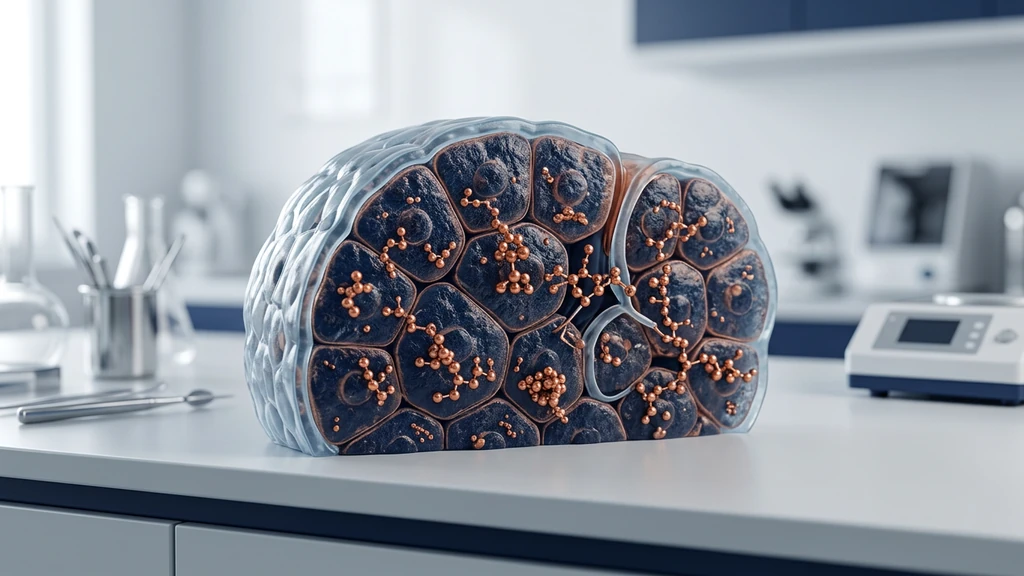
You read a forum post claiming that GHK-Cu floods your body with copper, and now you are wondering whether your liver is at risk. No published study has linked GHK-Cu at standard peptide doses to liver damage. A 1 mg dose of GHK-Cu delivers approximately 0.3 mg of copper. The tolerable upper intake for copper is 10 mg per day. You would need to inject over 30 mg of GHK-Cu daily to approach that ceiling, a dose no protocol recommends.
Research actually points in the opposite direction. GHK-Cu reduces oxidative stress markers in tissue, including liver tissue, through anti-inflammatory and remodeling pathways (Pickart et al., 2008).
| Quick Reference | Details |
|---|---|
| Copper per 1 mg GHK-Cu | ~0.3 mg |
| Copper per 2 mg GHK-Cu | ~0.6 mg |
| Daily dietary copper intake | 0.9-2.0 mg |
| Tolerable upper limit (copper) | 10 mg/day |
| Copper toxicity threshold | Sustained intake above 10 mg/day |
| Published cases of GHK-Cu liver damage | Zero |
| Evidence level | Preclinical and observational |
For dosing protocols, see our GHK-Cu injection dosage guide. For broader safety information, see our peptide safety guide. For proper preparation, see our GHK-Cu reconstitution guide.
Get your custom peptide protocol:
- Tailored to your body and goals
- Precise dosing and cycle length
- Safe stacking combinations
- Backed by peer-reviewed studies
- Ready in under 2 minutes
Why People Worry About GHK-Cu and the Liver
The concern is logical on the surface. Copper is a heavy metal. Heavy metals damage the liver. GHK-Cu contains copper. The conclusion seems straightforward, but it collapses under basic arithmetic.
Think of copper like salt in cooking. A pinch enhances the dish. A tablespoon ruins it. GHK-Cu at 1-2 mg per day adds the equivalent of a pinch: 0.3-0.6 mg of copper. Your daily diet already provides 0.9-2.0 mg. The combined total sits well below the 10 mg/day upper limit established by the Institute of Medicine (IOM, 2001).
The real dangers of copper toxicity come from occupational exposure, contaminated water supplies, or genetic conditions like Wilson's disease. These scenarios involve sustained copper intake many times higher than what any GHK-Cu protocol delivers.
How Much Copper Does GHK-Cu Actually Deliver?
GHK-Cu is a tripeptide (glycyl-L-histidyl-L-lysine) bound to a single copper(II) ion. The molecular weight of the peptide-copper complex is approximately 403 g/mol. Copper accounts for about 63.5 g/mol of that total, roughly 15.8% by weight.
Standard Dose: 1-2 mg/day
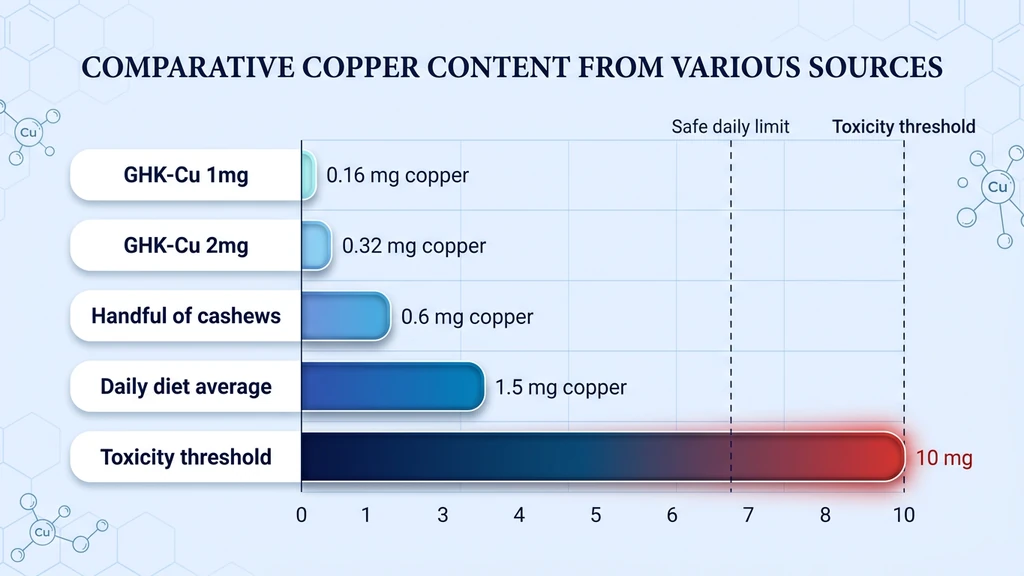
At 1 mg of GHK-Cu, you receive approximately 0.16 mg of elemental copper. At 2 mg, that rises to about 0.32 mg. For context, a single oyster contains 0.5-1.0 mg of copper. A serving of beef liver contains 12-16 mg. Your daily GHK-Cu injection delivers less copper than a handful of cashews.
Your body absorbs dietary copper at 30-40% efficiency. Injectable copper bypasses the gut, so bioavailability is higher. Even accounting for this difference, 0.3 mg of injected copper remains a fraction of the 10 mg daily threshold for toxicity.
Copper Toxicity Threshold
Acute copper poisoning requires ingestion of 1-2 grams in a single dose. Chronic toxicity develops from sustained daily intake above 10 mg over weeks to months. The gap between a 2 mg GHK-Cu injection (0.32 mg copper) and the chronic toxicity threshold (10 mg/day) is a factor of 31. No responsible protocol bridges that gap (Stern et al., 2007).
What Happens If You Take Too Much
A researcher decides to triple the standard GHK-Cu dose to 6 mg/day, chasing faster skin results. That delivers roughly 0.95 mg of copper per injection. Combined with dietary intake of 1.5 mg, the daily total reaches 2.45 mg. Still well under the 10 mg limit. Still no clinical concern.
Now consider a worst-case scenario. Someone injects 10 mg of GHK-Cu daily (five times the upper range) while also taking a 2 mg copper supplement and eating a copper-rich diet of 3 mg. The total reaches approximately 6.6 mg per day. This is elevated, yet still below the established toxicity threshold.
The body has robust copper regulation. Excess copper is excreted through bile. The liver protein metallothionein binds and sequesters free copper ions. Healthy livers manage copper fluctuations efficiently. Problems arise only when these systems are overwhelmed by sustained extreme exposure, or when they are genetically impaired.
GHK-Cu May Actually Protect the Liver
Research on GHK-Cu and liver tissue tells a story that contradicts the toxicity fears. The peptide activates pathways associated with tissue repair and inflammation reduction.
Anti-Inflammatory Properties
GHK-Cu suppresses pro-inflammatory cytokines including TNF-alpha and IL-6 in tissue models. These same cytokines drive liver inflammation in conditions like non-alcoholic fatty liver disease. By reducing their expression, GHK-Cu may offer protective effects in hepatic tissue (Pickart, 2008).
The Broad Institute's Connectivity Map project identified GHK as one of the compounds most effective at reversing disease-associated gene expression signatures, including those linked to liver fibrosis (Lamb et al., 2006).
Tissue Remodeling and Antioxidant Effects
GHK-Cu stimulates collagen synthesis and glycosaminoglycan production. In damaged tissue, it promotes organized remodeling rather than disordered scarring. This mechanism is relevant to liver fibrosis, where scar tissue replaces functional hepatocytes.
The peptide also acts as a potent superoxide dismutase (SOD) mimic. SOD neutralizes reactive oxygen species that damage hepatocytes during oxidative stress. GHK-Cu has demonstrated the ability to reduce lipid peroxidation markers in tissue studies (Pickart et al., 2012).
Age-Related Decline
GHK-Cu circulates naturally in human plasma. Levels peak around 200 ng/mL at age 20 and decline to approximately 80 ng/mL by age 60. This 60% drop correlates with increased rates of liver fibrosis, chronic inflammation, and impaired tissue repair in aging populations. Supplementation restores levels closer to youthful concentrations (Pickart et al., 2012).
Who Should Avoid GHK-Cu
While GHK-Cu is safe for most users at standard doses, specific populations face genuine risk from any supplemental copper exposure.
Wilson's Disease
Wilson's disease is a genetic disorder affecting approximately 1 in 30,000 people. The ATP7B gene mutation impairs biliary copper excretion. Copper accumulates in the liver, brain, and cornea. Even small additional copper inputs from GHK-Cu could accelerate hepatic damage. If you have Wilson's disease or carry the ATP7B mutation, GHK-Cu is contraindicated (Ala et al., 2007).
Pre-Existing Liver Disease
Cirrhosis, hepatitis, and advanced fatty liver disease impair copper metabolism. A healthy liver excretes excess copper through bile efficiently. A compromised liver does not. If you have elevated liver enzymes (ALT above 40 U/L, AST above 40 U/L) from a known hepatic condition, consult a hepatologist before starting GHK-Cu.
Copper Storage Disorders
Indian childhood cirrhosis and idiopathic copper toxicosis are rare conditions involving abnormal copper accumulation. Family history of unexplained liver disease in childhood warrants genetic screening before using any copper-containing compound, including GHK-Cu.
Monitoring Your Liver on GHK-Cu
Routine liver monitoring is prudent for any injectable peptide regimen. GHK-Cu does not demand extra vigilance compared to other peptides, but baseline and periodic testing protects against surprises.
Baseline Testing Before Starting
Get a comprehensive metabolic panel (CMP) before your first injection. Record your ALT, AST, alkaline phosphatase, and bilirubin levels. Also request serum copper and ceruloplasmin. Normal serum copper ranges from 70-140 mcg/dL. This baseline gives you a reference point for comparison.
Follow-Up at 6-8 Weeks
Repeat the CMP and serum copper at 6-8 weeks. Stable ALT and AST confirm your liver is handling the peptide without stress. A rise of more than 20% from baseline warrants attention, though the cause is more likely diet, alcohol, or another supplement than GHK-Cu.
Ongoing Monitoring
For cycles lasting beyond 3 months, repeat bloodwork every 8-12 weeks. Track trends rather than single values. A gradual upward drift in ALT over multiple tests is more informative than one slightly elevated reading. Maintain a log and share it with your healthcare provider.
What Does the Research Say?
Pickart et al. (2008, Dermatology Research and Practice) Comprehensive review of GHK-Cu biological activity. Documented anti-inflammatory effects, tissue remodeling properties, and antioxidant capacity across multiple tissue types including hepatic models. No hepatotoxicity observed at any studied concentration (PubMed).
Pickart et al. (2012, BioMed Research International) Detailed the gene-level effects of GHK, identifying activation of genes involved in tissue repair and suppression of genes linked to inflammation and fibrosis. Plasma GHK levels decline from ~200 ng/mL at age 20 to ~80 ng/mL at age 60 (PubMed).
Lamb et al. (2006, Science) The Connectivity Map project identified GHK among compounds capable of reversing disease-associated gene expression patterns, including liver fibrosis signatures. This finding positions GHK-Cu as potentially therapeutic rather than harmful to hepatic tissue (PubMed).
Institute of Medicine (2001, Dietary Reference Intakes) Established the tolerable upper intake level for copper at 10 mg/day for adults. Standard GHK-Cu protocols deliver 3-6% of this limit (PubMed).
Important Warnings
GHK-Cu is not approved by the FDA for any medical indication. All research cited here is preclinical or observational. Clinical trials in humans specifically evaluating hepatic effects of injectable GHK-Cu have not been conducted.
Do not assume safety from absence of evidence. The lack of published liver damage cases may reflect limited study rather than confirmed safety. Treat GHK-Cu as an investigational compound and monitor accordingly.
Never combine GHK-Cu with copper supplements without medical supervision. While the combined copper load from standard GHK-Cu doses plus a typical multivitamin (0.5-2.0 mg copper) remains safe, deliberate copper supplementation on top of GHK-Cu narrows the margin to the 10 mg/day upper limit.
If you experience right upper quadrant pain, dark urine, jaundice (yellowing of skin or eyes), or unexplained fatigue during GHK-Cu use, discontinue immediately and seek medical evaluation. For sourcing verified peptides with third-party testing, see where to buy peptides.
Related Side Effects
Does GHK-Cu Cause Hair Loss? Another common GHK-Cu safety concern. Research shows the peptide actually promotes hair growth through Wnt/beta-catenin activation and follicle enlargement.
Does BPC-157 Cause Liver Damage? A parallel analysis for BPC-157 users. Like GHK-Cu, BPC-157 shows hepatoprotective effects in animal models rather than liver damage.
GHK-Cu Microneedling Protocol Topical GHK-Cu combined with microneedling delivers the peptide through the skin without injectable copper exposure, a relevant consideration for liver-conscious users.
GHK-Cu Nasal Spray The nasal route provides an alternative delivery method with lower systemic copper exposure than injection.
GHK-Cu + BPC-157 + TB-500 Blend Stacking GHK-Cu with other peptides increases the total number of compounds processed by the liver. This guide covers safe blend dosing protocols.
Peptide Safety Guide Comprehensive overview of safety monitoring, bloodwork schedules, and risk mitigation for all injectable peptides, including GHK-Cu dosing protocols and liver enzyme baselines.
Frequently Asked Questions
Can GHK-Cu damage your liver?
No published study has documented liver damage from GHK-Cu at standard doses of 1-2 mg/day. A 2 mg injection delivers approximately 0.32 mg of copper, just 3.2% of the 10 mg/day tolerable upper limit. The peptide has shown anti-inflammatory and tissue-remodeling properties in hepatic models rather than toxic effects.
How much copper is in a GHK-Cu injection?
Copper comprises approximately 15.8% of GHK-Cu by molecular weight. A 1 mg dose delivers about 0.16 mg of elemental copper. A 2 mg dose delivers about 0.32 mg. For comparison, your daily diet provides 0.9-2.0 mg of copper, and a single oyster contains 0.5-1.0 mg.
Should I monitor liver enzymes while taking GHK-Cu?
Yes. Baseline liver panels (ALT, AST, alkaline phosphatase) before starting any injectable peptide are standard practice. Repeat testing at 6-8 weeks confirms stability. ALT and AST should remain below 40 U/L. A rise exceeding 20% from baseline warrants investigation, though GHK-Cu itself is unlikely the cause.
Can people with Wilson's disease use GHK-Cu?
No. Wilson's disease impairs copper excretion through a mutation in the ATP7B gene, affecting roughly 1 in 30,000 people. Even the small copper contribution from GHK-Cu (0.3 mg per 1 mg dose) could accelerate hepatic copper accumulation. GHK-Cu is contraindicated for anyone with Wilson's disease or known ATP7B mutations.
Is GHK-Cu safer for the liver than oral copper supplements?
GHK-Cu delivers far less copper per dose than most oral supplements: 0.16-0.32 mg versus 1-2 mg in a typical copper pill. GHK-Cu also demonstrates hepatoprotective properties including SOD-mimetic antioxidant activity and anti-inflammatory gene expression. Oral copper provides the mineral without these protective peptide effects.
What are the signs of copper toxicity to watch for?
Early symptoms include nausea, vomiting, and abdominal pain. Advanced copper toxicity produces jaundice, dark urine, and elevated liver enzymes (ALT above 3 times the upper limit). These symptoms require sustained daily copper intake above 10 mg. Standard GHK-Cu dosing at 1-2 mg/day contributes only 3-6% of that threshold.
The Bottom Line
GHK-Cu at standard doses of 1-2 mg per day does not pose a meaningful liver risk. The copper content per injection (0.16-0.32 mg) represents a small fraction of the 10 mg daily tolerable limit. Zero published studies link the peptide to hepatotoxicity. Preclinical evidence suggests the opposite: GHK-Cu activates anti-inflammatory and tissue-remodeling pathways that may protect liver tissue.
The one firm exception is Wilson's disease. If you carry the ATP7B mutation or have any copper metabolism disorder, avoid GHK-Cu entirely. For everyone else, standard bloodwork monitoring (CMP and serum copper at baseline and 6-8 weeks) provides adequate safety oversight.
For dosing information, see our GHK-Cu injection dosage guide. Use our peptide reconstitution calculator to plan your protocol. For reconstitution guidance, see the peptide reconstitution calculator. Learn how to store peptides to maintain the copper-peptide bond. For injection scheduling, see the GHK-Cu injection frequency guide. For a cross-reference of all peptide doses, see the peptide dosage chart.
Related Articles
Does GHK-Cu Cause Hair Loss?
GHK-Cu does not cause hair loss. Research shows it promotes hair growth by activating the Wnt/beta-catenin pathway and enlarging miniaturized follicles.
Copper Peptides Ruined My Skin: Why
Copper peptides ruined my skin? Why GHK-Cu can cause breakouts, redness, purging, and irritation, who is at risk, how to recover, and when to stop.
Can Copper Peptides Cause Acne? Purge vs Breakout
Can copper peptides cause acne? GHK-Cu itself is not comedogenic. How to tell purging from a breakout or a copper allergy, who is prone, and a 6-week plan.
Does Semaglutide Cause Heartburn?
Does semaglutide cause heartburn? Yes, in 1.9-5% of users. Delayed gastric emptying mechanism, GERD differences, and 7 ways to manage it.