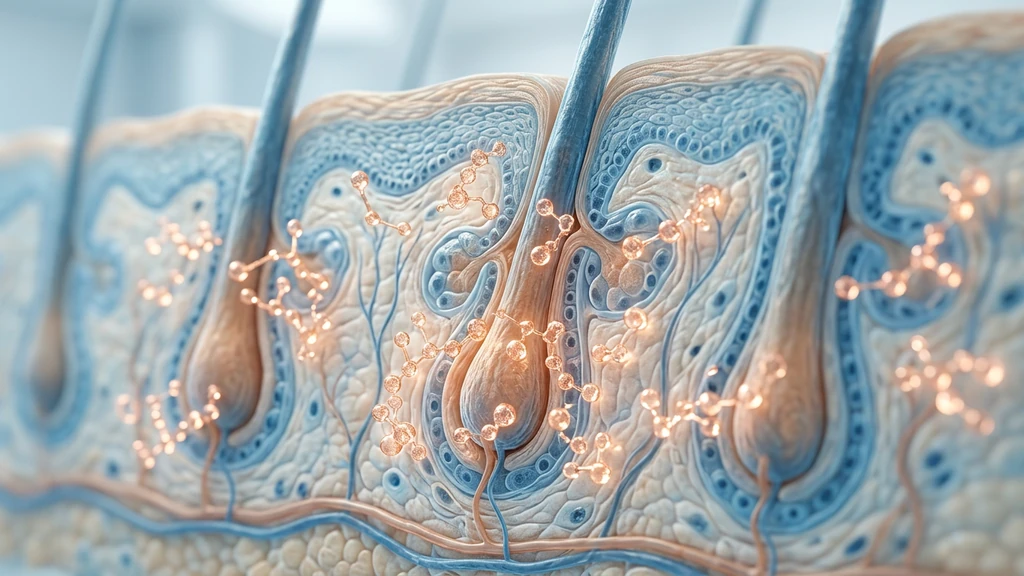
You found a few extra hairs on your pillow after starting GHK-Cu and now you are searching for answers. GHK-Cu does not cause hair loss. Published research consistently shows the opposite: this copper tripeptide promotes follicle growth, enlarges miniaturized follicles, and activates the Wnt/beta-catenin signaling pathway that governs hair cycling (Pickart & Margolina, 2018).
The confusion likely stems from two sources. First, some users experience a brief shedding phase during the first 2-4 weeks, a sign of follicle reactivation rather than damage. Second, high-dose copper supplementation (a separate practice entirely) can disrupt zinc balance and impair hair health.
| Quick Reference | Details |
|---|---|
| Does GHK-Cu cause hair loss? | No. Research shows it promotes hair growth |
| Mechanism | Wnt/beta-catenin activation, VEGF upregulation, follicle enlargement |
| Initial shedding? | Possible in weeks 1-4 (follicle reactivation, not damage) |
| Key study | Pickart (2008): GHK-Cu enlarged miniaturized follicles |
| Visible results | 3-6 months of consistent use |
| Standard dose | 1-2 mg/day subcutaneous, or topical application |
| Evidence level | In vitro, animal models, preliminary human data |
For injectable dosing details, see our GHK-Cu injection dosage guide. For a deep dive on growth protocols, see our GHK-Cu hair growth guide. For proper preparation, see our GHK-Cu reconstitution guide.
Get your custom peptide protocol:
- Tailored to your body and goals
- Precise dosing and cycle length
- Safe stacking combinations
- Backed by peer-reviewed studies
- Ready in under 2 minutes
Why GHK-Cu Promotes Hair Growth, Not Hair Loss
Think of a miniaturized hair follicle as a factory running at 20% capacity. The assembly line still works; it just lacks the signal to ramp up production. GHK-Cu acts as that signal. It switches on the Wnt/beta-catenin pathway, the master control system that tells dormant follicles to re-enter the growth (anagen) phase.
Pyo et al. (2007) at Seoul National University demonstrated that GHK-Cu stimulated human follicle elongation and dermal papilla cell proliferation at concentrations as low as 1 picomolar (PubMed). Follicles exposed to GHK-Cu did not shrink or die. They grew larger and cycled faster.
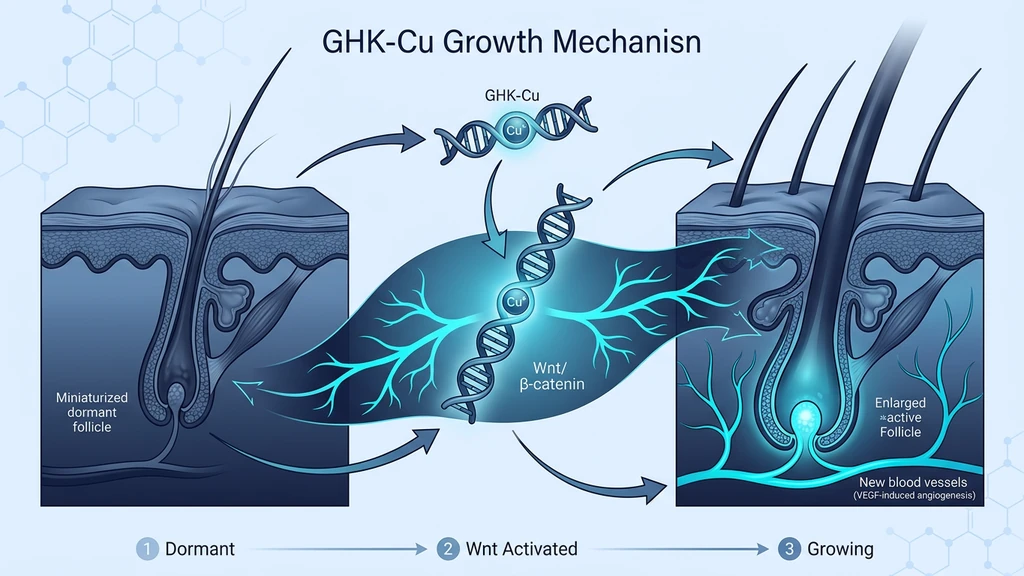
Four distinct mechanisms explain how GHK-Cu supports hair:
- Wnt/beta-catenin activation: triggers the telogen-to-anagen transition, restarting dormant follicles
- VEGF upregulation: increases blood vessel formation around follicles, delivering more oxygen and nutrients
- TGF-beta1 suppression: reduces the signaling molecule responsible for premature follicle regression (Pickart et al., 2012)
- Follicle enlargement: GHK-Cu reverses miniaturization by stimulating dermal papilla cells that control hair thickness
The Early Shedding Phase: What Happens in Weeks 1-4
Some users notice increased hair fall during the first 2-4 weeks of GHK-Cu use. This shedding alarms people, but the biology behind it is reassuring.
Picture a garden bed in late winter. Old, dead stems still occupy the soil. New growth cannot emerge until those spent stems are pushed out. GHK-Cu reactivates dormant follicles, and those follicles push out old, weak club hairs to make room for thicker replacements. The process mirrors the "dread shed" that minoxidil users experience during weeks 2-6.
The distinguishing features of reactivation shedding versus genuine hair loss:
| Feature | Reactivation Shedding | Genuine Hair Loss |
|---|---|---|
| Timing | Weeks 1-4 after starting | Progressive over months |
| Duration | 2-4 weeks, then stops | Continues or worsens |
| Pattern | Diffuse, uniform | Patches or receding hairline |
| Hair quality | Shed hairs are thin, short | Shed hairs vary in size |
| Follicle health | New thicker hairs follow | No regrowth follows |
| Scalp condition | Normal | May show redness or scarring |
If shedding continues beyond 6 weeks or produces visible thinning patches, the cause is likely unrelated to GHK-Cu. Consult a dermatologist to evaluate for androgenetic alopecia, thyroid dysfunction, or other conditions.
The Copper Toxicity Confusion
Online discussions sometimes conflate GHK-Cu with copper supplementation. These are fundamentally different substances with different safety profiles.
GHK-Cu is a tripeptide (glycyl-L-histidyl-L-lysine) bound to a single copper ion. At standard doses of 1-2 mg/day, the copper delivered is roughly 0.2-0.4 mg. The adult recommended daily allowance for copper is 0.9 mg. GHK-Cu at therapeutic doses delivers less than half of that.
Copper toxicity becomes a concern at sustained intake above 10 mg/day of elemental copper (European Food Safety Authority, 2006). Symptoms include nausea, liver damage, and, in chronic cases, disruption of zinc-copper balance that can impair hair growth. You would need to inject 25-50 mg of GHK-Cu daily to approach problematic copper levels. Standard protocols use 1-2 mg.
| Copper Source | Daily Copper Delivered | Hair Risk |
|---|---|---|
| GHK-Cu 1-2 mg/day | 0.2-0.4 mg | None documented |
| Copper supplement 2 mg/day | 2 mg | Low at this dose |
| Copper supplement 10+ mg/day | 10+ mg | Zinc depletion, possible hair effects |
| GHK-Cu at toxic threshold | Would require 25-50 mg GHK-Cu | Theoretical only |
The concern about copper and hair loss is valid for people taking high-dose copper supplements. It does not apply to GHK-Cu at standard peptide doses.
What the Research Shows: GHK-Cu and Hair
Three lines of evidence support GHK-Cu as a hair growth promoter, not a cause of hair loss.
Follicle Enlargement Studies
Pickart (2008) demonstrated that GHK-Cu enlarges miniaturized follicles. In tissue culture, follicles treated with GHK-Cu showed increased size and prolonged anagen duration. The effect was dose-dependent: higher concentrations (within therapeutic range) produced larger follicles (Pickart, Skin Biology, 2008).
This matters because androgenetic alopecia (pattern baldness) is fundamentally a miniaturization disease. Follicles do not die; they shrink. A compound that reverses miniaturization addresses the root mechanism.
Gene Expression Analysis
Pickart et al. (2012) analyzed GHK-Cu's effects on gene expression in human skin tissue. The peptide upregulated 31 genes involved in hair growth and follicle maintenance, including components of the Wnt signaling pathway and beta-catenin (PubMed). Simultaneously, it suppressed 15 genes linked to follicle regression (catagen induction).
The net effect: a molecular environment that favors growth over dormancy. No hair-loss-promoting gene expression patterns were identified.
Clinical and Observational Data
A 2025 clinical trial using copper peptides combined with microneedling measured 26.5% hair regrowth over 5 monthly sessions (Kuceki et al., 2025). A Japanese study of topical GHK-Cu at 0.02% concentration showed a 7% increase in hair count after 16 weeks of daily application.
These results are modest compared to finasteride (30-40% improvement) but meaningful for a compound with minimal side effects. GHK-Cu's safety profile makes it suitable for long-term use where other treatments carry hormonal risks.
Realistic Expectations: Hair Growth Timeline
GHK-Cu is not a fast-acting hair treatment. Follicle biology operates on cycles measured in months, not days. Setting accurate expectations prevents premature discontinuation.
Weeks 1-4: Possible initial shedding (reactivation phase). No visible improvement. Some users notice softer skin texture and improved nail quality before hair changes become apparent.
Months 2-3: Shedding subsides. Fine vellus hairs may appear in thinning areas. These are early-stage regrowth hairs that will thicken over subsequent cycles. Changes are subtle and often invisible without close inspection.
Months 3-6: Measurable improvement begins. Hair density scans or comparison photos show the first quantifiable differences. Existing hairs may appear thicker. New growth transitions from vellus to intermediate thickness.
Months 6-12: Peak results with consistent use. Follicles that responded to GHK-Cu have completed 1-2 full growth cycles. Users who combine topical GHK-Cu with microneedling typically see stronger results during this window.
The 26.5% regrowth measured by Kuceki et al. (2025) required 5 months of treatment. Abandoning GHK-Cu at week 6 because you see no change misses the biological timeline entirely.
For complete protocols and delivery methods, see our dedicated GHK-Cu hair growth guide.
When Hair Loss During GHK-Cu Use Signals a Different Problem
GHK-Cu does not cause hair loss, but starting GHK-Cu does not make you immune to other causes. If you experience significant thinning while using GHK-Cu, consider these possibilities:
Androgenetic alopecia progression. Pattern baldness is genetic and progressive. GHK-Cu may slow it, but a receding hairline or crown thinning during treatment likely reflects the underlying condition advancing. DHT-blocking treatments (finasteride, dutasteride) address a different mechanism than GHK-Cu.
Telogen effluvium from other causes. Stress, illness, surgery, medication changes, or rapid weight loss can trigger diffuse shedding regardless of GHK-Cu use. If you started GHK-Cu around the same time as a major life change, the timing is coincidental.
Nutritional deficiencies. Ferritin below 30 ng/mL, vitamin D below 30 ng/mL, or zinc deficiency all cause hair thinning independently. A blood panel at baseline and 3 months into treatment helps isolate the cause.
Thyroid dysfunction. Both hypothyroidism and hyperthyroidism cause diffuse hair loss. If thinning is accompanied by fatigue, weight changes, or temperature sensitivity, request TSH and free T4 testing.
Attributing hair loss to the most recent addition to your routine is natural. Correlation does not indicate causation. The published data on GHK-Cu consistently points toward hair growth promotion, not hair loss induction.
Dosing for Hair: Standard Protocols
GHK-Cu for hair applications follows two main delivery routes, each with distinct advantages.
Topical application places the peptide directly on the scalp where follicles can absorb it locally. Copper peptide serums (typically 1-2% GHK-Cu concentration) applied once daily to thinning areas represent the most common hair-specific protocol. Combining topical GHK-Cu with weekly microneedling (0.5-1.0 mm depth) increases absorption by creating microchannels in the scalp. The Kuceki et al. (2025) trial used this combination approach.
Subcutaneous injection delivers GHK-Cu systemically at 1-2 mg/day. This route benefits hair through improved circulation and systemic gene expression changes, though scalp-specific concentrations are lower than with topical delivery. Injectable GHK-Cu is more commonly chosen for skin, wound healing, or anti-aging goals, with hair benefits as a secondary outcome. For injection scheduling, see our GHK-Cu injection frequency guide.
| Delivery Method | Dose | Hair Benefit | Best For |
|---|---|---|---|
| Topical serum | 1-2% concentration, daily | Direct follicle contact | Targeted hair growth |
| Topical + microneedling | 1-2%, weekly sessions | 26.5% regrowth (Kuceki, 2025) | Maximum hair results |
| Subcutaneous injection | 1-2 mg/day | Systemic follicle support | Multi-benefit protocols |
Use our peptide reconstitution calculator to determine reconstitution volumes for injectable protocols.
Important Warnings
GHK-Cu is not FDA-approved for hair loss treatment. No copper peptide product has regulatory approval for androgenetic alopecia. All evidence cited here comes from in vitro studies, animal models, and preliminary human trials.
Do not combine high-dose copper supplements with GHK-Cu. The copper content of GHK-Cu at standard doses (0.2-0.4 mg/day) is safe. Adding 5-10 mg copper supplements on top risks zinc-copper imbalance.
People with Wilson's disease (a genetic condition causing copper accumulation) should avoid GHK-Cu entirely. Consult a healthcare provider before starting any peptide protocol, particularly if you take medications that affect copper metabolism. For sourcing verified peptides, see where to buy peptides.
If you experience persistent hair loss lasting beyond 6 weeks after starting GHK-Cu, seek evaluation for other causes. GHK-Cu is unlikely to be responsible, but underlying conditions require proper diagnosis.
Related Side Effects and Guides
GHK-Cu for Hair Growth: Mechanisms, Protocols & Evidence Our comprehensive guide covers delivery methods, microneedling protocols, and clinical evidence for GHK-Cu as a hair growth treatment. If you are using GHK-Cu specifically for hair, start there.
GHK-Cu Microneedling Protocol Combining GHK-Cu with microneedling produced 26.5% hair regrowth in a 2025 study. The microneedling guide covers scalp-specific needle depths and technique.
Does GHK-Cu Cause Liver Damage? Another common safety concern for GHK-Cu users. The copper content at standard doses is far below toxicity thresholds and may actually protect hepatic tissue.
GHK-Cu Nasal Spray An alternative delivery route for GHK-Cu that bypasses the blood-brain barrier. The nasal route provides systemic benefits without injection.
GHK-Cu + BPC-157 + TB-500 Blend For users combining GHK-Cu with other healing peptides, the blend protocol covers dosing ratios and cycling schedules.
Peptide Safety Guide Comprehensive safety overview for all research peptides, including storage, injection technique, and bloodwork monitoring.
Frequently Asked Questions
Does GHK-Cu cause hair loss?
No. Published research consistently shows GHK-Cu promotes hair growth. Pickart et al. (2012) demonstrated that GHK-Cu upregulates 31 genes involved in hair growth and suppresses 15 genes linked to follicle regression. Some users experience brief shedding in weeks 1-4, which reflects follicle reactivation, not damage.
Why am I shedding hair after starting GHK-Cu?
Early shedding during weeks 1-4 is a reactivation response. GHK-Cu stimulates dormant follicles to push out old club hairs and begin new growth. The same pattern occurs with minoxidil. If shedding lasts beyond 6 weeks, consult a dermatologist to evaluate other causes.
Can copper peptides damage hair follicles?
At standard GHK-Cu doses (1-2 mg/day), copper delivery is 0.2-0.4 mg, well below the 0.9 mg daily recommended intake. Copper toxicity begins above 10 mg/day of elemental copper. GHK-Cu at therapeutic doses does not deliver enough copper to cause follicle damage or zinc-copper imbalance.
How long before GHK-Cu improves hair growth?
Visible improvement typically appears at 3-6 months with consistent use. Initial shedding may occur in weeks 1-4. Fine vellus regrowth hairs emerge by months 2-3. Measurable density changes require 6-12 months. The Kuceki et al. (2025) trial showed 26.5% regrowth over 5 monthly sessions.
Is GHK-Cu better than minoxidil for hair loss?
They work through different mechanisms and are often complementary. Minoxidil extends the anagen phase and improves blood flow. GHK-Cu activates Wnt/beta-catenin signaling and enlarges miniaturized follicles. GHK-Cu has fewer documented side effects, but minoxidil has stronger clinical trial data in humans.
Should I use topical or injectable GHK-Cu for hair?
Topical GHK-Cu (1-2% serum) delivers higher concentrations directly to follicles and is preferred for hair-specific goals. Injectable GHK-Cu (1-2 mg/day subcutaneous) provides systemic benefits with hair as a secondary outcome. Combining topical GHK-Cu with weekly microneedling produced the strongest clinical results.
The Bottom Line
GHK-Cu does not cause hair loss. The published evidence points consistently in the opposite direction: this copper tripeptide activates hair growth pathways, enlarges miniaturized follicles, and upregulates genes essential for follicle cycling.
Early shedding in weeks 1-4 reflects follicle reactivation, not damage. Concerns about copper toxicity apply to high-dose copper supplementation, not to GHK-Cu at standard doses of 1-2 mg/day. Visible hair improvements require 3-6 months of consistent use.
For detailed protocols, see our GHK-Cu hair growth guide. Use our GHK-Cu dosage calculator to plan your protocol. For reconstitution math, use the peptide reconstitution calculator. Learn how to store peptides to maintain the copper-peptide bond throughout your cycle. For a complete overview of peptide options, see the peptide dosage chart.
Related Articles
Does GHK-Cu Cause Liver Damage?
GHK-Cu delivers only 0.3 mg copper per 1 mg dose, far below toxic thresholds. Learn what research says about GHK-Cu liver safety and who should avoid it.
Retatrutide Hair Loss: Prevention & Fix
Does retatrutide cause hair loss? Telogen effluvium from rapid weight loss (up to 24%) is the likely cause. Prevention protocol and GHK-Cu options.
Does Tirzepatide Cause Hair Loss?
Tirzepatide-related hair thinning affects 5.7% of users at the highest dose. Learn why it happens, how it compares to semaglutide, and how to minimize it.
Copper Peptides Ruined My Skin: Why
Copper peptides ruined my skin? Why GHK-Cu can cause breakouts, redness, purging, and irritation, who is at risk, how to recover, and when to stop.