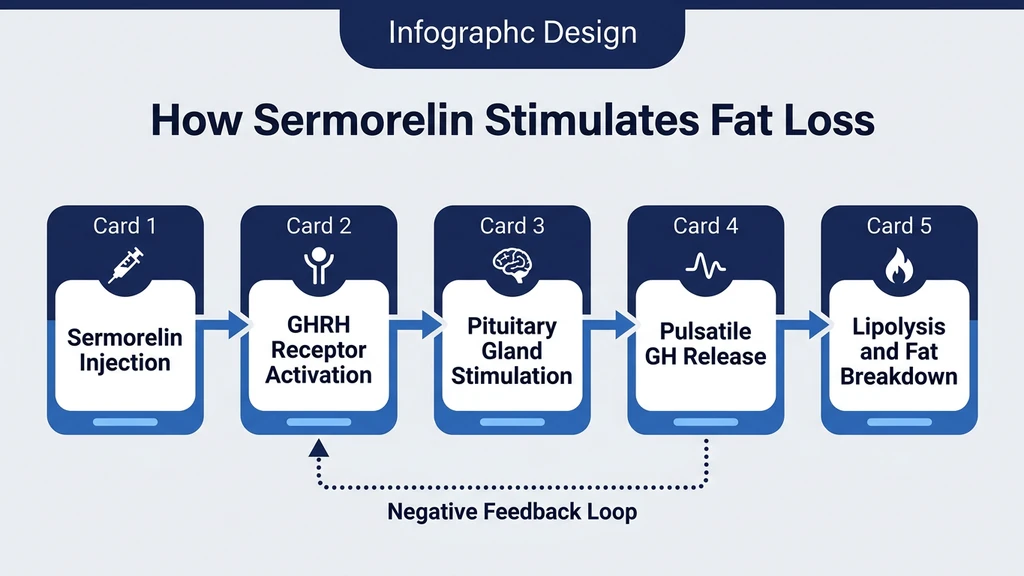
You turned 40 and your midsection started expanding even though your diet stayed the same. Growth hormone output has been declining roughly 14% per decade since your late twenties, and that slow erosion is partly why fat accumulates faster and leaves slower with each passing year. Sermorelin (GRF 1-29) is a GHRH analog that stimulates natural, pulsatile growth hormone release from the pituitary gland, and the resulting GH elevation enhances lipolysis, the breakdown of stored triglycerides into free fatty acids for energy. A six-month clinical trial in GH-deficient adults showed that sermorelin treatment significantly increased lean body mass and reduced adiposity compared to placebo (Vittone et al., 1997).
| Quick Reference | Details |
|---|---|
| What it is | Synthetic GHRH analog (first 29 amino acids of GHRH) |
| Fat loss mechanism | Stimulates natural GH release, which drives lipolysis |
| Typical dose | 100-300 mcg/day subcutaneous before bed |
| Cycling | 5 days on / 2 days off, or 12-16 weeks on / 4-8 weeks off |
| Timeline for visible fat loss | 8-16 weeks with consistent use |
| FDA history | Approved 1997 (Geref) for pediatric GH deficiency; withdrawn 2008 for commercial reasons |
| Evidence level | Human clinical trials + mechanistic GH/lipolysis research |
| Best stacking partners | Ipamorelin, CJC-1295 |
For a broader overview of fat loss peptides, see best peptides for weight loss. For general dosing guidance, check the peptide dosage chart. If you are new to peptides, start with getting started with peptides.
Get your custom peptide protocol:
- Tailored to your body and goals
- Precise dosing and cycle length
- Safe stacking combinations
- Backed by peer-reviewed studies
- Ready in under 2 minutes
How Sermorelin Drives Fat Loss: The GH-Lipolysis Connection
Sermorelin does not burn fat directly. It triggers a chain reaction that begins in the pituitary and ends in your fat cells. Understanding that chain explains why timing, fasting state, and dosing protocol all matter for results.
Sermorelin binds to the growth hormone-releasing hormone receptor (GHRHR) on somatotroph cells in the anterior pituitary. This activates a G-protein coupled signaling cascade that raises intracellular cyclic AMP, which triggers the release of stored GH granules into the bloodstream. The GH pulse peaks within 15-30 minutes of injection and returns to baseline within 60-90 minutes because sermorelin has a plasma half-life of only 10-20 minutes.
That pulsatile GH release is the engine of fat loss. Growth hormone acts on adipocytes through the GH receptor, activating hormone-sensitive lipase (HSL). HSL breaks down stored triglycerides into glycerol and free fatty acids, which enter the bloodstream and travel to muscle and liver cells for beta-oxidation. A landmark study by Moller and Jorgensen demonstrated that GH administration increased the rate of lipid oxidation by 30-50% in healthy adults, with the effect most pronounced in visceral adipose depots (Moller & Jorgensen, 2009).
The second pathway involves IGF-1. Sermorelin-induced GH travels to the liver and stimulates production of insulin-like growth factor 1. IGF-1 promotes nutrient partitioning toward lean tissue rather than fat storage. It also improves insulin sensitivity, which reduces the tendency of excess calories to be deposited as adipose tissue. In GH-deficient adults, sermorelin treatment raised IGF-1 levels by 30-60% within 8 weeks, correlating with improved body composition markers (Walker et al., 1994).
One critical advantage over exogenous GH injections: sermorelin preserves the hypothalamic-pituitary feedback loop. When GH and IGF-1 rise high enough, somatostatin release increases and the pituitary dials back its output. This self-limiting mechanism keeps GH within a physiological range, avoiding the side effects of supraphysiological dosing. For reconstitution details, use our peptide reconstitution calculator.
Clinical Evidence for Sermorelin and Body Composition
The clinical data on sermorelin and fat loss comes from GH deficiency trials, aging studies, and body composition analyses. The evidence is consistent: sermorelin increases lean mass and reduces fat mass, though the magnitude is more modest than what direct GH injections or GLP-1 agonists produce.
The Vittone Two-Year GHRH Trial
Vittone et al. conducted one of the longest studies on GHRH 1-29 (sermorelin) in adults. Over two years of daily subcutaneous injections in GH-deficient adults, participants showed significant increases in lean body mass and reductions in adipose tissue. The GH response was sustained throughout the treatment period without evidence of pituitary desensitization, a finding that distinguished sermorelin from some GH-releasing peptides like hexarelin that can lose efficacy over time (Vittone et al., 1997).
The two-year duration is important. Many fat loss interventions show results at 12 weeks but fade by 6 months. Sermorelin maintained its GH-releasing effect and body composition benefits across 24 months, supporting its use in longer protocols.
GH Deficiency and Visceral Fat: The Somatopause Connection
Adults over 30 experience a gradual decline in GH secretion called somatopause. By age 60, 24-hour integrated GH output has dropped by approximately 75%. This decline correlates directly with increased visceral adiposity, reduced lean mass, and decreased bone density. Corpas et al. documented that GHRH 1-29 administration in elderly men restored nocturnal GH pulsatility to levels comparable to younger adults, with concurrent improvements in body composition (Corpas et al., 1992).
A separate analysis by Veldhuis et al. showed that age-related GH decline is driven primarily by decreased GHRH pulse amplitude rather than increased somatostatin tone. This means the pituitary retains the ability to respond to GHRH stimulation well into old age, making sermorelin effective even in users over 60, provided the pituitary gland is intact (Veldhuis et al., 1995).
GH and Fat Oxidation: Direct Metabolic Evidence
The link between GH and fat metabolism has been established in dozens of human studies. Gravholt et al. demonstrated that GH infusion in healthy adults increased whole-body fat oxidation by 40% over an 8-hour period, measured by indirect calorimetry. The effect was accompanied by a rise in circulating free fatty acids and a suppression of glucose oxidation, confirming that GH shifts the body's fuel preference from carbohydrates to fat (Gravholt et al., 1999).
Nam et al. further clarified the mechanism by showing that GH activates hormone-sensitive lipase in adipocytes while simultaneously suppressing lipoprotein lipase, which normally promotes fat storage. The net effect is a shift from fat accumulation to fat mobilization. This bidirectional control explains why even modest GH elevations from sermorelin can meaningfully alter body composition over 8-16 weeks (Nam & Marcus, 2000).
For context on how other peptides approach fat loss through different mechanisms, see does tirzepatide burn fat and how does retatrutide work.
Dosing Protocols for Fat Loss
Sermorelin dosing for fat loss follows the same principles as general anti-aging protocols, with a few optimizations that maximize the lipolytic window. The key variables are dose, timing, fasting state, and cycling schedule.

Starting Dose: 100-200 mcg/day
Beginners should start at 100-200 mcg injected subcutaneously 30 minutes before bed. This dose produces a meaningful GH pulse while allowing you to assess tolerance. Injection site flushing, mild headache, and lightheadedness are the most common first-week side effects. They typically resolve within 3-5 days.
Inject into the abdominal area, rotating sites to prevent lipodystrophy. The subcutaneous route allows slow absorption that better mimics the natural GH pulse pattern. Use bacteriostatic water for reconstitution and store the reconstituted vial in the refrigerator. For storage guidance, see how to store peptides and how long do reconstituted peptides last.
Standard Fat Loss Dose: 200-300 mcg/day
The most common community protocol for body composition improvement is 300 mcg injected subcutaneously before bed. This dose consistently elevates GH above the threshold needed to activate hormone-sensitive lipase in adipocytes.
A 90-minute pre-injection fast is non-negotiable. Insulin suppresses GH release at the pituitary level. Eating carbohydrates or protein within 90 minutes of injection blunts the GH pulse by 50-70%, negating much of the fat loss benefit. Similarly, avoid eating for 30 minutes after injection to let the GH pulse reach its peak without insulin interference.
For a complete overview of peptide dosing across categories, see the peptide dosage chart.
Cycling: 5 On / 2 Off and Longer Cycles
Two cycling approaches are standard in the community.
Weekly cycling (5/2): Inject for 5 consecutive days, then take 2 days off. The off days prevent potential receptor downregulation and mimic the natural variation in GHRH signaling. Most users take weekends off for convenience.
Block cycling: Run 12-16 weeks on, then 4-8 weeks off. This approach allows the pituitary to reset and prevents any gradual decline in GH response. Blood work at weeks 8 and 12 (measuring IGF-1) helps confirm the protocol is still producing adequate GH elevation.
Block cycling is particularly relevant for fat loss because the most significant body composition changes occur between weeks 8 and 16. Running shorter cycles may not provide enough time for cumulative lipolytic effects to manifest visibly.
For information on combining cycling with other peptide protocols, see the peptide stacking guide.
Timing: Why Bedtime Dosing Maximizes Fat Loss
The largest natural GH pulse occurs during slow-wave sleep, typically within the first 90 minutes of falling asleep. Injecting sermorelin 30 minutes before bed amplifies this nocturnal pulse, riding the wave of your body's own GHRH release for a synergistic effect.
Kang et al. showed that nocturnal GH secretion accounts for approximately 70% of daily GH output in healthy adults. Amplifying this pulse with sermorelin produces a fat-burning window that extends through the overnight fasting period, when insulin is naturally low and lipolysis is already favored (Kang et al., 2003).
Some advanced protocols add a second injection upon waking (before eating), creating two GH pulses per day. This approach is more aggressive and should be reserved for experienced users who have confirmed their IGF-1 response on a single daily dose. The morning injection dose is typically 100-200 mcg, lower than the evening dose.
Timeline of Fat Loss Results
Setting realistic expectations prevents discouragement. Sermorelin fat loss is gradual because it works by restoring physiological GH levels, not by creating the dramatic caloric deficits that GLP-1 agonists produce. The timeline below reflects typical results when sermorelin is combined with moderate caloric restriction and regular exercise.
Weeks 1-4: Metabolic Priming
During the first month, GH pulsatility increases and IGF-1 levels begin to rise. Most users notice improved sleep quality within 7-14 days, often described as deeper, more restorative sleep with more vivid dreams. This sleep improvement is itself a fat loss accelerator, since poor sleep increases cortisol and reduces GH output.
Measurable fat loss during weeks 1-4 is minimal. The body is recalibrating its GH-IGF-1 axis. Some users notice mild water retention in the first week due to GH's effect on sodium reabsorption. This resolves by week 2-3 and can mask early fat loss on the scale. Body measurements (waist circumference) are more reliable than scale weight during this phase.
Weeks 4-8: Early Recomposition
By week 4-6, the lipolytic effects of sustained GH elevation become measurable. Users who track body composition with calipers or DEXA scans typically see a 1-2% reduction in body fat percentage during this window, accompanied by a slight increase in lean mass.
The recomposition effect is what distinguishes sermorelin from caloric restriction alone. Pure dieting reduces both fat and muscle. Sermorelin-enhanced GH signaling preferentially channels energy toward fat oxidation while supporting muscle protein synthesis through IGF-1. The result is simultaneous fat loss and lean mass preservation, even at a modest caloric deficit of 300-500 calories per day.
Recovery from exercise also improves noticeably during this phase. Faster recovery allows more training volume, which compounds the fat loss effect over time.
Weeks 8-16: Peak Body Composition Changes
The most visible changes in body shape typically emerge between weeks 8 and 16. Visceral fat deposits shrink, the midsection tightens, and users report seeing definition in areas that were previously resistant to fat loss, particularly the lower abdomen and flanks.
Clinical studies in GH-deficient populations show that the greatest rate of fat mass decline occurs during months 2-4 of treatment, after which the curve gradually flattens. Total body fat reductions of 5-10% relative to baseline are realistic for users who combine sermorelin with a structured exercise program and moderate caloric deficit.
Lean mass gains of 2-5 pounds are commonly reported during this period, especially in users performing resistance training. The combination of GH-driven lipolysis and IGF-1-mediated anabolism creates a body recomposition effect that pure dieting cannot match.
Months 4-6 and Beyond: Sustained Maintenance
After 16 weeks, fat loss rate slows as the body reaches a new equilibrium at higher GH levels. Continued use maintains the improved body composition rather than producing further dramatic changes. This is the phase where cycling becomes important: taking 4-8 weeks off before starting a new 12-16 week block can restore pituitary sensitivity and reinvigorate the GH response.
Long-term users (6-12+ months with appropriate cycling) report sustained improvements in body fat distribution, skin quality, and energy levels. The Vittone two-year study confirmed that these benefits persisted throughout extended treatment without significant adverse effects or loss of efficacy.
Sermorelin vs CJC-1295, Ipamorelin, Tesamorelin, and Direct GH
Choosing the right GH-enhancing compound depends on your goals, budget, and risk tolerance. Each option has a distinct mechanism, half-life, and evidence base for fat loss.
| Compound | Mechanism | Half-Life | Fat Loss Evidence | Cost |
|---|---|---|---|---|
| Sermorelin (GRF 1-29) | GHRH receptor agonist | 10-20 min | Clinical trials in GH-deficient adults | $$ |
| CJC-1295 (with DAC) | Modified GHRH analog | 6-8 days | Sustained GH/IGF-1 elevation; limited fat-specific trials | $$ |
| Ipamorelin | Ghrelin receptor agonist (GHRP) | 2 hours | GH pulse amplification; body composition studies | $$ |
| Tesamorelin | GHRH analog (44 AA) | 26-38 min | FDA-approved for HIV lipodystrophy; strong visceral fat data | $$$ |
| Exogenous GH (HGH) | Direct GH replacement | 3-5 hours | Extensive; 10-20% body fat reduction in GH-deficient adults | $$$$ |
Sermorelin vs CJC-1295
Both are GHRH receptor agonists, but they differ fundamentally in duration. Sermorelin creates a sharp, brief GH pulse that mimics natural physiology. CJC-1295 with DAC (Drug Affinity Complex) binds to albumin in the blood, extending its half-life to 6-8 days and producing sustained, continuous GH elevation.
For fat loss, the choice depends on your philosophy. Pulsatile GH release (sermorelin) more closely matches the body's natural pattern and may produce a cleaner lipolytic signal. Sustained elevation (CJC-1295 with DAC) keeps GH and IGF-1 elevated around the clock, which some users find more convenient since it only requires 1-2 injections per week.
Many experienced users combine both: sermorelin at 200-300 mcg before bed for the nocturnal GH pulse, plus CJC-1295 with DAC at 2 mg per week for sustained baseline elevation. This dual approach covers both acute and chronic GH signaling. To explore combinations, see our peptide stacking guide.
Sermorelin vs Ipamorelin
Sermorelin and ipamorelin work through entirely different receptors. Sermorelin activates the GHRH receptor. Ipamorelin activates the ghrelin receptor (GHS-R). The GH pulse from each is additive when combined because they trigger release through separate intracellular pathways.
Ipamorelin has two advantages for fat loss: it does not significantly raise cortisol or prolactin (unlike other GHRPs such as GHRP-6 or GHRP-2), and it has a longer half-life of approximately 2 hours, producing a more sustained GH elevation per injection.
The sermorelin + ipamorelin stack (300 mcg + 200-300 mcg before bed) is widely considered the gold standard for GH optimization in the peptide community. The combination produces GH pulses 3-5 times larger than either peptide alone, translating to meaningfully greater lipolysis. Use the peptide cost calculator to compare the expense of single vs stacked protocols.
Sermorelin vs Tesamorelin
Tesamorelin is the compound with the strongest clinical evidence for peptide-driven fat loss. It is a full-length GHRH analog (44 amino acids versus sermorelin's 29) with an added trans-3-hexenoic acid group that extends its half-life to 26-38 minutes.
Tesamorelin received FDA approval in 2010 for reducing visceral adipose tissue in HIV-positive patients with lipodystrophy. In placebo-controlled trials, tesamorelin reduced trunk fat by 15-18% over 26 weeks and visceral adipose tissue by approximately 15% as measured by CT scan (Falutz et al., 2007). This is the strongest clinical evidence any GHRH analog has for targeted visceral fat reduction.
Sermorelin is less potent per milligram and has a shorter half-life, but it is substantially cheaper and more widely available through compounding pharmacies. Users who want the most evidence-backed option for visceral fat specifically should consider tesamorelin. Those who want a cost-effective GH restoration approach with good overall body composition benefits will find sermorelin sufficient.
Sermorelin vs Exogenous Growth Hormone
Direct GH injections bypass the pituitary entirely, delivering a flat dose of recombinant human GH. Studies in GH-deficient adults show 10-20% reductions in total body fat over 6-12 months at therapeutic doses. The effect is more pronounced and faster than any GHRH analog can produce.
The trade-off is side effects and cost. Exogenous GH at supraphysiological doses causes water retention, joint pain, carpal tunnel syndrome, insulin resistance, and potential long-term cancer risk through elevated IGF-1. Monthly costs for pharmaceutical GH run $800-2,000+. Sermorelin at 300 mcg/day typically costs $150-300 per month.
Sermorelin's self-limiting feedback loop is its greatest safety advantage. The pituitary responds to sermorelin within its physiological capacity. If IGF-1 rises too high, somatostatin increases and dampens further GH release. Exogenous GH offers no such safeguard. For a complete safety overview, see our peptide safety guide.
Who Is a Good Candidate for Sermorelin Fat Loss Protocols
Sermorelin works best in a specific subset of people. Understanding whether you fit the profile prevents wasted time and money.
Ideal Candidates
Adults over 30 with age-related GH decline. The somatopause begins in the late twenties. By 40, most adults have lost 20-30% of their peak GH output. Sermorelin restores what time has taken. Users in this group notice the most dramatic before-and-after changes because they are correcting a genuine hormonal deficit.
People with stubborn fat despite consistent diet and exercise. If you maintain a caloric deficit and exercise regularly but still carry resistant fat, particularly around the midsection, declining GH may be a contributing factor. Sermorelin addresses this root cause rather than just increasing the caloric deficit.
Those seeking body recomposition rather than pure weight loss. Sermorelin's combination of lipolysis enhancement and IGF-1-driven anabolism makes it ideal for users who want to lose fat while maintaining or gaining lean mass. This is fundamentally different from GLP-1 agonists like semaglutide or tirzepatide, which create dramatic weight loss but require careful attention to prevent lean mass depletion.
Users who want to avoid supraphysiological hormone levels. Athletes and health-conscious individuals who want GH benefits without the risks of direct GH injection find sermorelin's self-limiting mechanism reassuring. The pituitary cannot be forced to produce more GH than it is capable of releasing.
Poor Candidates
People with pituitary damage or insufficiency. Sermorelin requires a functioning pituitary to work. If the pituitary has been damaged by surgery, radiation, or a tumor, the somatotroph cells may not respond to GHRH stimulation. These individuals need exogenous GH, not a secretagogue.
Those expecting GLP-1-level weight loss. Sermorelin will not produce 15-22% total body weight loss. That magnitude requires the appetite suppression and caloric deficit of tirzepatide or retatrutide. Sermorelin produces 5-10% reductions in body fat over 3-4 months, which is meaningful but more subtle.
Individuals with active cancer. GH and IGF-1 are growth factors. Elevating them in someone with active malignancy could promote tumor proliferation. This is a hard contraindication for sermorelin and all GH secretagogues.
Those with BMI over 35. Obesity blunts the pituitary's GH response to GHRH stimulation. Users with severe obesity may get a diminished GH pulse from sermorelin, reducing its fat loss effectiveness. Addressing caloric balance and insulin resistance first through diet, exercise, or GLP-1 agonist therapy will improve sermorelin responsiveness later.
Side Effects and Safety Profile
Sermorelin has one of the most favorable safety profiles among GH-enhancing compounds. Its FDA approval history (Geref, 1997-2008) and decades of clinical use provide a substantial safety record. The voluntary market withdrawal in 2008 was driven by commercial factors, not safety signals.
Common Side Effects
Injection site reactions occur in approximately 15-20% of users. Redness, mild swelling, and itching at the injection site are the most frequent complaints. These reactions are typically mild and resolve within 30 minutes. Rotating injection sites reduces their frequency.
Facial flushing happens in roughly 10% of users, usually appearing within 5-10 minutes of injection and lasting 15-30 minutes. The mechanism involves transient vasodilation triggered by the GH pulse. It is cosmetically annoying but medically benign.
Headache affects some users during the first 3-5 days of treatment. It typically resolves as the body adjusts to altered GH pulsatility. If headaches persist beyond one week, reducing the dose by 50% for several days before titrating back up usually resolves the issue.
Mild dizziness or lightheadedness can occur immediately after injection, particularly in users who are fasting. Sitting or lying down for 10-15 minutes after injection prevents any risk from transient blood pressure changes.
Rare Side Effects and Contraindications
Difficulty swallowing and changes in taste perception have been reported in clinical trials at low rates. These effects are transient and resolve upon dose reduction or discontinuation.
Water retention can occur during the first 1-2 weeks due to GH's effect on renal sodium handling. This is self-limiting and does not indicate a dangerous condition. It can temporarily mask fat loss on the scale.
Contraindications: Active malignancy (GH promotes cell growth), pregnancy and breastfeeding, known pituitary tumors, and use of medications that strongly affect GH secretion (high-dose glucocorticoids, somatostatin analogs like octreotide). Users on thyroid hormones or insulin should inform their prescriber, as GH can alter the metabolism of both.
Blood work monitoring is recommended at baseline and every 8-12 weeks during treatment. Key markers include IGF-1 (to confirm GH response), fasting glucose and HbA1c (GH can mildly increase insulin resistance), and a basic metabolic panel. If IGF-1 rises above the upper end of the age-adjusted normal range, reduce the dose.
For more on safely handling peptides, see where to buy peptides 2026 and FDA peptide crackdown 2026.
Optimizing Fat Loss: Diet, Exercise, and Lifestyle Synergy
Sermorelin is a tool, not a solution. The GH pulse it generates is only as effective as the metabolic environment it enters. Three controllable variables determine whether that GH pulse translates into meaningful fat loss or gets wasted.
Caloric Deficit: Modest and Sustainable
A deficit of 300-500 calories per day is the sweet spot when using sermorelin. Unlike GLP-1 agonists that suppress appetite dramatically, sermorelin does not reduce hunger. You are responsible for creating the deficit through dietary choices.
The reason for keeping the deficit modest: aggressive caloric restriction (below 1,200 calories or more than a 750-calorie daily deficit) raises cortisol. Cortisol directly suppresses GH release from the pituitary, working against the sermorelin signal. It also promotes visceral fat deposition, exactly the opposite of what you want. A moderate deficit keeps cortisol in check while providing the energy gap that forces the body to mobilize stored fat.
Prioritize protein at 1.2-1.6 grams per kilogram of body weight daily. GH and IGF-1 support muscle protein synthesis, but only if the raw materials are available. Without adequate protein, the anabolic benefit of sermorelin is largely wasted. For fat loss comparisons across peptide categories, see best peptides for weight loss.
Exercise: Resistance Training Amplifies the GH Pulse
Resistance training produces its own GH release, independent of sermorelin. Combining the two creates an additive effect. Studies show that high-intensity resistance exercise elevates GH by 300-500% above baseline for 30-60 minutes post-workout. If sermorelin is injected the same evening, the total daily GH exposure is substantially greater than either stimulus alone.
A minimum of 2-3 resistance training sessions per week, focusing on compound movements (squats, deadlifts, rows, pressing), provides the mechanical loading signal that protects lean mass during fat loss. Muscle tissue that is regularly stressed is muscle the body prioritizes preserving, even in a caloric deficit.
Cardiovascular exercise contributes to the caloric deficit but does not produce the same GH amplification as resistance training. Moderate steady-state cardio (walking, cycling) for 30-45 minutes on non-lifting days supports fat oxidation without raising cortisol excessively.
For peptides that support joint health during training, see peptides for joint pain.
Sleep: The Non-Negotiable Variable
Sermorelin's fat loss mechanism depends on the nocturnal GH pulse. Poor sleep quality directly undermines this by reducing slow-wave sleep duration, which is when the largest natural GH pulse occurs.
Sleeping fewer than 6 hours per night reduces 24-hour GH secretion by approximately 50%. Fragmented sleep (frequent waking) disrupts the continuous slow-wave sleep blocks needed for maximum GH release. Alcohol consumption within 3 hours of bedtime suppresses slow-wave sleep by 20-40%, even at moderate intake.
Practical sleep optimization for sermorelin users: maintain a consistent bedtime (within 30 minutes each night), keep the bedroom cool (65-68 degrees F), eliminate blue light exposure 60 minutes before bed, and avoid caffeine after 2 PM. These interventions sound basic, but they determine whether the sermorelin injection translates into a strong or weak GH pulse.
Stacking Sermorelin with Other Peptides for Enhanced Fat Loss
Sermorelin stacks well with several other compounds because it acts through a specific receptor (GHRHR) that does not overlap with most other peptide mechanisms. Strategic stacking amplifies fat loss without multiplying side effects proportionally.
Sermorelin + Ipamorelin: The Gold Standard GH Stack
This combination pairs GHRH receptor activation (sermorelin) with ghrelin receptor activation (ipamorelin). Because they trigger GH release through separate intracellular cascades, the resulting pulse is 3-5 times larger than either peptide alone. The standard protocol is 300 mcg sermorelin + 200-300 mcg ipamorelin, both injected subcutaneously 30 minutes before bed on an empty stomach.
Ipamorelin adds approximately 2 hours of GH elevation beyond sermorelin's brief 30-60 minute pulse, extending the lipolytic window through the early sleep period. Importantly, ipamorelin does not raise cortisol or prolactin at standard doses, keeping the hormonal environment favorable for fat loss.
Run this stack for 12-16 weeks, then take 4-8 weeks off. Track IGF-1 at weeks 8 and 12 to confirm response. Use the peptide half-life tracker to understand timing dynamics.
Sermorelin + CJC-1295 (No DAC): Pulsatile Enhancement
CJC-1295 without DAC (also called Modified GRF 1-29) is structurally similar to sermorelin but has four amino acid substitutions that extend its half-life to approximately 30 minutes. Combining it with sermorelin at bedtime provides a stronger and slightly longer GHRH signal compared to sermorelin alone.
The typical protocol is 100 mcg sermorelin + 100 mcg CJC-1295 (no DAC) before bed. Some users alternate: sermorelin one night, CJC-1295 the next, to vary the GHRH signal pattern. Both approaches produce meaningful GH elevation.
This stack is less potent than sermorelin + ipamorelin because both compounds work through the same receptor. The combination with ipamorelin (a different receptor class) produces a larger overall GH pulse.
Sermorelin + MOTS-c: GH Plus Metabolic Activation
MOTS-c is a mitochondria-derived peptide that activates AMPK, the cellular energy sensor. AMPK activation increases fat oxidation independently of GH signaling. Combining sermorelin (GH-driven lipolysis) with MOTS-c (AMPK-driven fat oxidation) attacks fat stores through two completely independent pathways.
For MOTS-c dosing protocols, see MOTS-c peptide dosage. The combination is particularly interesting for users over 40 who are dealing with both GH decline and declining mitochondrial efficiency.
Practical Considerations: Sourcing, Reconstitution, and Cost
Sermorelin is available through compounding pharmacies with a prescription and through research peptide suppliers. Since the FDA-approved formulation (Geref) was voluntarily withdrawn in 2008, all current sermorelin is compounded or research-grade.
When purchasing, verify that the supplier provides third-party purity testing (HPLC analysis showing 98%+ purity). Sermorelin is a 29-amino-acid peptide that degrades if improperly handled. For verified supplier options, see where to buy peptides 2026.
Reconstitution follows the standard peptide protocol. Add bacteriostatic water slowly down the side of the vial, letting it dissolve without shaking. Typical reconstitution: 2 mL of bacteriostatic water into a 5 mg vial produces a concentration of 2.5 mg/mL (2,500 mcg/mL). At 300 mcg per injection, one vial lasts approximately 16 days. Use our peptide reconstitution calculator for precise measurements.
Store reconstituted sermorelin in the refrigerator at 36-46 degrees F. Properly stored, reconstituted sermorelin remains stable for 2-3 weeks. Do not freeze reconstituted solution. For more on bacteriostatic water, see where to buy bacteriostatic water for injection and how long does bacteriostatic water last.
Monthly costs for sermorelin at 300 mcg/day typically range from $150-300 depending on supplier and quantity. Stacking with ipamorelin adds approximately $100-200 per month. Compare this to pharmaceutical GH at $800-2,000+ per month or GLP-1 agonists at $800-1,200+ per month. Use the peptide cost calculator for detailed cost breakdowns.
Important Warnings
Sermorelin is a research compound available through compounding pharmacies with a prescription. While it has a legitimate FDA approval history (Geref, 1997-2008), its current use for fat loss and anti-aging is off-label. Medical supervision is recommended for all users.
Do not use sermorelin if you have active cancer or a personal history of malignancy within the past 5 years. GH and IGF-1 are growth factors that do not discriminate between healthy and malignant cells.
Do not combine sermorelin with exogenous GH injections. Using a GHRH analog alongside direct GH replacement creates unpredictable hormonal spikes and increases the risk of insulin resistance, water retention, and joint pain.
Users with a history of pituitary tumors, pituitary surgery, or cranial radiation should consult an endocrinologist before starting sermorelin. The pituitary may not respond normally to GHRH stimulation in these cases.
Monitor blood glucose if you are diabetic or pre-diabetic. GH can increase insulin resistance, particularly at higher doses or during the first 4-6 weeks of treatment. Fasting glucose and HbA1c should be checked at baseline and at 8-12 week intervals.
Sermorelin is not a substitute for diet and exercise. It enhances the fat loss effects of a caloric deficit and training program. Without those foundations, the GH elevation alone will not produce meaningful body composition changes.
This article is educational content for research purposes. Consult a qualified healthcare provider before starting, adjusting, or discontinuing any peptide protocol.
Frequently Asked Questions
How much fat can you lose with sermorelin in 3 months?
Clinical data and user reports suggest a 5-10% relative reduction in body fat over 12 weeks when sermorelin is combined with a moderate caloric deficit and regular exercise. For someone starting at 25% body fat, that translates to roughly 1.5-2.5 percentage points of body fat lost. The effect is gradual but tends to target visceral fat preferentially due to the high density of GH receptors in abdominal adipose tissue.
Is sermorelin better than ipamorelin for fat loss?
They work through different mechanisms and are best used together rather than compared as alternatives. Sermorelin activates the GHRH receptor while ipamorelin activates the ghrelin receptor. Combined, they produce a GH pulse 3-5 times larger than either alone. If forced to choose one, ipamorelin's longer half-life (2 hours vs 10-20 minutes) provides a more sustained lipolytic window, but the combination is superior to either peptide individually.
Does sermorelin reduce belly fat specifically?
Sermorelin does not spot-reduce fat, but the GH it releases has a preferential effect on visceral abdominal fat. Visceral adipocytes have a higher density of GH receptors and hormone-sensitive lipase than subcutaneous fat cells, making them more responsive to GH-driven lipolysis. Clinical studies with GHRH analogs consistently show greater reductions in trunk fat compared to peripheral fat, which users experience as a tighter midsection.
Can you take sermorelin long-term for fat loss?
Yes, with appropriate cycling. The Vittone two-year GHRH study showed sustained GH response and body composition benefits without pituitary desensitization. Standard practice is 12-16 weeks on, 4-8 weeks off, repeating as needed. Blood work every 8-12 weeks monitoring IGF-1, fasting glucose, and HbA1c ensures the protocol remains safe. Long-term users should not exceed age-adjusted normal ranges for IGF-1.
Why do I need to fast before injecting sermorelin?
Insulin directly suppresses GH release at the pituitary level. Eating carbohydrates or protein raises insulin, which blunts the GH pulse sermorelin is designed to produce by 50-70%. A 90-minute pre-injection fast and a 30-minute post-injection fast ensure low insulin levels during the critical window when sermorelin stimulates GH release. This is why bedtime dosing on an empty stomach produces the strongest response.
How does sermorelin compare to tirzepatide for weight loss?
They serve fundamentally different purposes. Tirzepatide is a GLP-1/GIP dual agonist that suppresses appetite and creates large caloric deficits, producing 15-22% total body weight loss in clinical trials. Sermorelin enhances GH-driven fat oxidation and body recomposition without significant appetite effects, producing 5-10% body fat reduction. Tirzepatide is better for substantial weight loss. Sermorelin is better for body recomposition with lean mass preservation in people closer to their target weight.
What time of day should I inject sermorelin for fat loss?
Thirty minutes before bedtime is optimal. The largest natural GH pulse occurs during early slow-wave sleep, and sermorelin amplifies this pulse synergistically. Injecting at bedtime also means the GH-driven lipolytic window coincides with the overnight fasting period, when insulin is naturally low and fat oxidation is already favored. Some advanced protocols add a second lower-dose injection upon waking, but most users achieve strong results with a single bedtime dose.
Does sermorelin cause water retention or weight gain?
Mild water retention occurs in approximately 10-15% of users during the first 1-2 weeks due to GH's effect on renal sodium reabsorption. This can temporarily increase scale weight by 1-3 pounds, masking early fat loss. The water retention is self-limiting and typically resolves by week 2-3 as the body adjusts. It does not represent fat gain. Body measurements and body fat calipers are more accurate than scale weight during the initial adjustment period.
The Bottom Line
Sermorelin restores the pulsatile GH release that declines with age, and the resulting elevation in growth hormone and IGF-1 drives lipolysis, improves nutrient partitioning, and supports lean mass preservation during caloric restriction. Clinical evidence from GHRH trials confirms that sustained treatment reduces adiposity and increases lean body mass, with the strongest effects between weeks 8 and 16.
The protocol is straightforward: 200-300 mcg injected subcutaneously before bed on an empty stomach, cycled 5 days on / 2 off within a 12-16 week block. Stacking with ipamorelin amplifies the GH pulse 3-5 fold. A moderate caloric deficit, adequate protein intake, and resistance training convert that GH pulse into measurable fat loss.
Sermorelin will not match the dramatic weight loss of GLP-1 agonists like tirzepatide. It is built for a different goal: gradual body recomposition that favors fat loss over lean mass loss, with a safety profile that allows years of cycled use. For users over 30 dealing with age-related fat accumulation despite consistent effort, it addresses a root hormonal cause that diet and exercise alone cannot fix.
Use our peptide reconstitution calculator for preparation details and the peptide cost calculator to plan your budget. For reconstitution supplies, see where to buy bacteriostatic water for injection.
Related articles: - Best Peptides for Weight Loss - compare all peptide options for fat loss - Peptide Dosage Chart - dosing reference for all major peptides - Hexarelin Dosage - another GH secretagogue with different receptor dynamics - Follistatin 344 Dosage - myostatin inhibition for lean mass - Does Tirzepatide Burn Fat? - GLP-1/GIP approach to fat loss - Retatrutide vs Tirzepatide - triple agonist vs dual agonist comparison - GHK-Cu Injection Dosage - copper peptide protocols for recovery and repair
Explore all peptide profiles and tools at PeptidesExplorer.
Related Articles
AOD-9604 Before and After: Results
AOD-9604 before and after results are modest: 2-3 kg fat loss over 12 weeks in clinical trials. Learn realistic timelines and dosing protocols.
Ipamorelin vs Sermorelin: Mechanism, Safety, Cost
Ipamorelin vs sermorelin: ghrelin-receptor agonist vs GHRH analog, 2-hour vs 4-minute half-life, cortisol selectivity, FDA history, cost, and who picks which.
Does Tirzepatide Burn Fat?
Tirzepatide produced 33.9% fat mass loss in SURMOUNT-1. Learn how GLP-1/GIP dual agonism drives fat loss, body composition data, and how to protect lean mass.
9 Best Peptides for Weight Loss Ranked (2026 Data)
The 9 best peptides for weight loss, ranked by results: retatrutide (24%), tirzepatide (21%), semaglutide (17%), AOD-9604, CJC-1295, plus doses and costs.