You are over 50 and wondering whether peptide therapy is still safe and effective at your age. The safest evidence-backed peptides for men over 50 are Sermorelin (gentle GH boost), BPC-157 (joint recovery), Tesamorelin (FDA-approved visceral fat loss), Thymosin Alpha-1 (immune support), and GHK-Cu (tissue repair). Growth hormone output at 50 is roughly one-third of what it was at 25, and sarcopenia begins accelerating (Ho et al., J Clin Endocrinol Metab, 1987). Safety monitoring is non-negotiable at this age.
| Quick Reference | Details |
|---|---|
| #1 Safest GH peptide | Sermorelin (FDA history) |
| #1 Joint recovery | BPC-157 |
| #1 Visceral fat | Tesamorelin (FDA-approved) |
| #1 Immune support | Thymosin Alpha-1 |
| Key rule | Lower starting doses than men in their 40s |
| Blood work | Required before starting, every 3 months |
| Cardiac screening | EKG recommended before GH peptides |
| PSA monitoring | Every 3-6 months on protocol |
Use our peptide dosage calculator to tailor doses. For the 40-49 age range, see our peptides for men over 40 guide.
Get your custom peptide protocol:
- Tailored to your body and goals
- Precise dosing and cycle length
- Safe stacking combinations
- Backed by peer-reviewed studies
- Ready in under 2 minutes
Why Peptide Therapy Matters More After 50
The biological changes that started in your 30s and 40s accelerate after 50. Hormone decline is steeper, recovery windows are longer, and the immune system begins losing effectiveness. Peptides address these specific deficits, but the margin for error narrows with age.
Hormone Levels at 50 vs 30
By age 50, growth hormone secretion is roughly 25-30% of peak levels. Total testosterone sits 30-50% below the 25-year-old baseline. Free testosterone drops even further because SHBG continues to climb. The combination produces measurable effects: reduced lean mass, increased body fat, lower bone mineral density, and diminished cognitive sharpness (Harman et al., J Clin Endocrinol Metab, 2001).
These are not optional features of aging. They are biological realities that peptide therapy can partially offset.
Sarcopenia and Muscle Loss
Sarcopenia, the age-related loss of skeletal muscle mass and function, begins around age 40 and accelerates after 50. Men lose 3-5% of muscle mass per decade after 30. By 50, grip strength, leg press capacity, and overall functional strength decline measurably (Cruz-Jentoft et al., Lancet, 2019).
GH-releasing peptides like Sermorelin and CJC-1295 can slow this trajectory by supporting muscle protein synthesis. They do not replace resistance training. They amplify its effects.
Joint Degeneration and Recovery
Osteoarthritis prevalence rises sharply after 50. Cartilage erosion, meniscal thinning, and ligament laxity make injuries more frequent and recovery slower. A knee injury at 52 heals fundamentally differently than the same injury at 35.
BPC-157 and TB-500 accelerate tissue repair through distinct but complementary pathways. BPC-157 upregulates growth hormone receptors and stimulates angiogenesis. TB-500 promotes cell migration and reduces fibrotic scarring.
Immune System Decline: Immunosenescence
The thymus, which produces T-cells, begins shrinking in puberty and is substantially atrophied by age 50. This process, called immunosenescence, reduces the body's ability to fight infections, clear senescent cells, and mount effective immune surveillance against emerging cancers (Pawelec, Nat Rev Immunol, 2018).
Thymosin Alpha-1 directly supports T-cell maturation and function. It is the only peptide on this list that targets the immune decline specific to aging.
Top 8 Peptides for Men Over 50: Safety-First Ranking
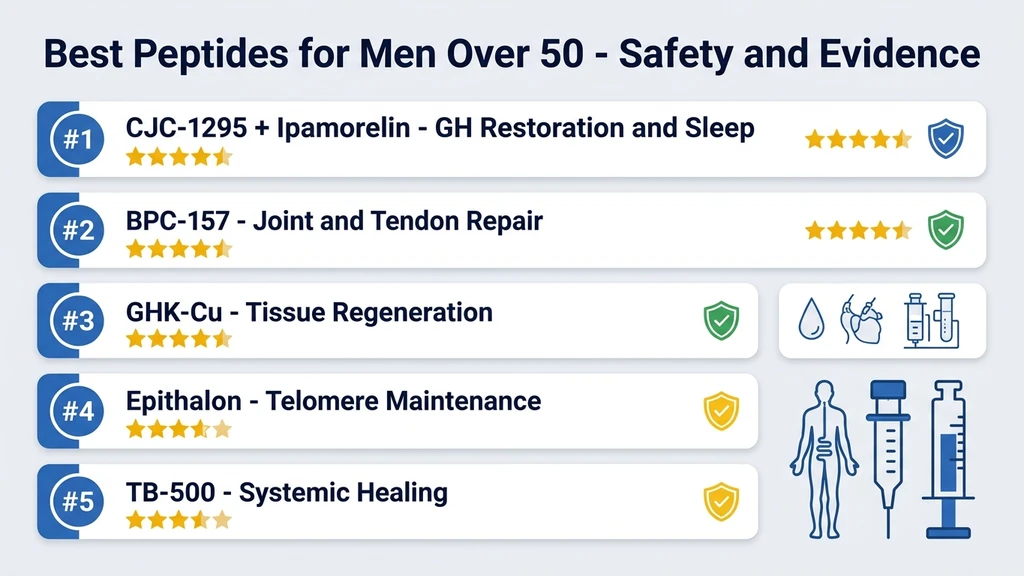
This ranking prioritizes safety and clinical evidence over potency. Men over 50 benefit from a conservative approach: lower starting doses, longer monitoring intervals, and peptides with established safety records.
1. Sermorelin: Safest GH Release with FDA History
Sermorelin was FDA-approved for pediatric GH deficiency and has decades of safety data. It stimulates the pituitary gland to release GH in physiological pulses, meaning it works with your body's natural feedback loop rather than overriding it (PMC5632578).
For men over 50, this self-limiting mechanism is the key safety advantage. If your pituitary senses enough GH, it reduces the response. This prevents the supraphysiological spikes that carry risks in older populations.
| Sermorelin for Men 50+ | Details |
|---|---|
| Starting dose | 200 mcg subcutaneous, before bed |
| Maintenance dose | 200-300 mcg, 5 days per week |
| Key benefit | Improved sleep, gradual body recomposition |
| Safety advantage | Self-limiting GH release (pituitary feedback) |
| Monitor | IGF-1 at baseline, 6 weeks, then quarterly |
| Results timeline | 2-4 weeks (sleep); 3-6 months (body composition) |
Sermorelin does not raise cortisol, prolactin, or ACTH. It is the peptide with the widest safety margin for older men.
2. BPC-157: Joint and Tendon Recovery
BPC-157 remains the top recovery peptide regardless of age. For men over 50, it addresses the chronic tendinopathies, rotator cuff issues, and arthritic joint pain that limit daily function. Its mechanisms include VEGF-mediated angiogenesis, anti-inflammatory cytokine modulation, and growth hormone receptor upregulation (PMC12446177).
Dose adjustment for 50+: Start at 200 mcg per day (vs 250-500 mcg for younger men). Increase to 300 mcg after 2 weeks if well tolerated. Inject subcutaneously near the affected area. Run 4-8 week cycles with 2-4 week breaks. See our BPC-157 benefits guide for protocols.
3. Tesamorelin: FDA-Approved Visceral Fat Reduction
Tesamorelin is the only peptide on this list that is FDA-approved for fat reduction (specifically HIV-associated lipodystrophy). In clinical trials, it reduced visceral fat by 15-18% over 26 weeks and improved lipid profiles (Falutz et al., JAMA, 2007).
For men over 50, visceral fat is more than a cosmetic problem. It correlates directly with cardiovascular risk, insulin resistance, and systemic inflammation. Tesamorelin at 2 mg daily addresses this specific fat depot. Monitor fasting glucose because Tesamorelin can transiently raise blood sugar. Full dosing details at our tesamorelin dosage guide.
4. Thymosin Alpha-1: Immune Support
Thymosin Alpha-1 (Ta1) is approved in over 35 countries for hepatitis B and C treatment. It enhances T-cell maturation, dendritic cell function, and natural killer cell activity. For men over 50 experiencing immunosenescence, it restores some of the immune surveillance capacity lost to thymic atrophy (Romani et al., Immunol Lett, 2007).
Standard dose: 1.6 mg subcutaneous, 2-3 times per week. Courses typically run 4-8 weeks, repeated as needed. Side effects are rare: mild injection site reactions and occasional low-grade flu-like symptoms in the first week. Read more in our Thymosin Alpha-1 benefits overview.
5. GHK-Cu: Skin, Hair, and Tissue Repair
GHK-Cu is a naturally occurring tripeptide that declines with age. At 20, plasma levels are approximately 200 ng/mL. By 60, they drop to 80 ng/mL. Supplementation restores the gene-modulating effects that support collagen synthesis, wound healing, and antioxidant enzyme production (Pickart et al., Int J Mol Sci, 2018).
For men over 50, GHK-Cu addresses visible aging (skin thinning, wrinkles) and internal tissue quality. It can be used topically for skin or injected subcutaneously at 1-2 mg per day for systemic effects. Explore all applications in our GHK-Cu benefits guide.
6. MOTS-c: Metabolic Optimization
MOTS-c activates AMPK and improves mitochondrial function, addressing the cellular energy decline that underlies metabolic syndrome in aging men. In human research, MOTS-c improved insulin sensitivity and glucose disposal in obese adults (Lee et al., Cell Metab, 2015).
Dose for 50+: Start at 5 mg subcutaneous, 3 times per week. Monitor fasting glucose and HbA1c at 4-week intervals. MOTS-c may interact with diabetes medications, so men on metformin or sulfonylureas need prescriber coordination. Full protocol in our MOTS-c dosage guide.
7. PT-141: Sexual Function with Cardiac Screening
PT-141 works for men who do not respond to PDE5 inhibitors like Viagra. At 50+, erectile dysfunction is common: roughly 50% of men between 50-60 report some degree of ED. PT-141 addresses the desire component through melanocortin receptor activation in the brain, not blood vessel dilation (Wessells et al., Urology, 2003).
Critical safety note for 50+: PT-141 raises systolic blood pressure by approximately 6 mmHg and diastolic by 3 mmHg. Men over 50 must have a baseline EKG and blood pressure assessment. Those on antihypertensives should coordinate with their prescriber. See our PT-141 for men guide for full details.
8. Epithalon: Telomere Support for Longevity
Epithalon activates telomerase, which maintains telomere length. Telomeres shorten with each cell division. By 50, this accumulation contributes to cellular senescence and age-related disease. In a 6-year study, epithalon administration in elderly patients reduced mortality 1.6-fold compared to controls (Khavinson, Neuroendocrinol Lett, 2003).
Protocol: 5-10 mg daily for 10-20 days, repeated every 4-6 months. This peptide has the most speculative evidence base on the list. Consider it a long-term addition after establishing a core protocol with better-studied peptides.
Key Safety Considerations for Men Over 50
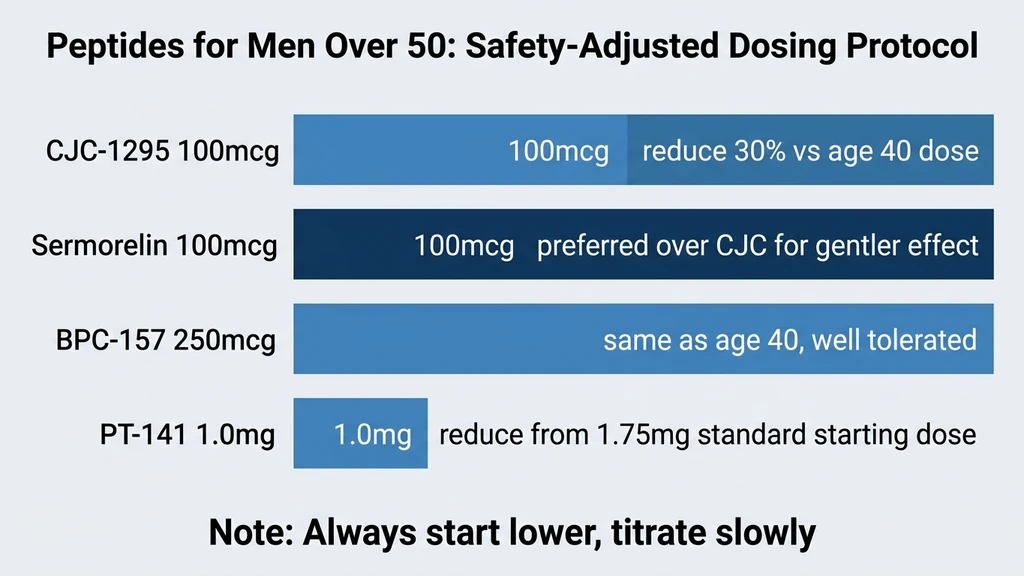
Safety screening for men over 50 is more extensive than for younger men. The stakes are higher because subclinical cardiovascular disease, prostate issues, and metabolic disorders are more prevalent.
Required Blood Work Before Starting
Every man over 50 must have these labs before starting any peptide:
- IGF-1 (baseline GH status; do not use GH peptides if already elevated)
- Total and free testosterone (establish hormonal baseline)
- PSA (prostate-specific antigen; elevated levels contraindicate GH peptides)
- Complete metabolic panel (liver, kidney, electrolytes)
- Fasting glucose + HbA1c (diabetes screening)
- Lipid panel (cardiovascular risk assessment)
- CBC with differential (immune baseline for Thymosin Alpha-1)
- Thyroid panel (TSH, free T3, free T4)
Recheck IGF-1 at 4-6 weeks after starting GH peptides. Recheck PSA every 3-6 months. Full monitoring details in our peptide safety guide.
Cardiovascular Screening
An EKG is recommended before starting GH-releasing peptides or PT-141 for men over 50. GH stimulation can increase cardiac output and blood pressure transiently. Men with a history of atrial fibrillation, coronary artery disease, or uncontrolled hypertension should proceed with extra caution.
Blood pressure should be measured at each follow-up visit. PT-141 specifically raises systolic pressure by 6 mmHg on average, which matters if your resting BP is already above 140/90.
Prostate Health and PSA Monitoring
Growth hormone and IGF-1 stimulate cell proliferation, including prostate cells. While no clinical trial has demonstrated that GH peptides cause prostate cancer, the theoretical risk demands monitoring. A PSA above 4.0 ng/mL before starting peptides warrants urology referral before proceeding.
Men already diagnosed with benign prostatic hyperplasia (BPH) should use GH peptides cautiously and monitor for symptom changes (urgency, frequency, nocturia).
Drug Interactions Common in Men Over 50
Many men over 50 take daily medications. Key interactions to consider:
| Medication Class | Interaction Concern | Peptide Affected |
|---|---|---|
| Statins | GH peptides may alter lipid metabolism | CJC-1295, Sermorelin |
| Blood pressure meds | PT-141 raises BP transiently | PT-141 |
| Insulin/metformin | GH peptides can raise blood sugar | All GH peptides |
| Blood thinners | Injection site bleeding risk | All injectable peptides |
| Immunosuppressants | Thymosin Alpha-1 stimulates immunity | Thymosin Alpha-1 |
Coordinate all peptide use with your prescriber, especially if you take three or more daily medications.
Lower Starting Doses: Start Low, Go Slow
The single most important rule for men over 50: start at 50-75% of the standard adult dose. Older kidneys clear peptides more slowly. Reduced liver metabolism extends half-lives. Receptor sensitivity may be altered.
A 50-year-old starting Sermorelin should begin at 200 mcg (not 300 mcg). A 55-year-old trying BPC-157 should start at 200 mcg (not 500 mcg). Increase by 25% every 2 weeks only if well tolerated and blood work remains normal.
How This Differs from Peptides for Men Over 40
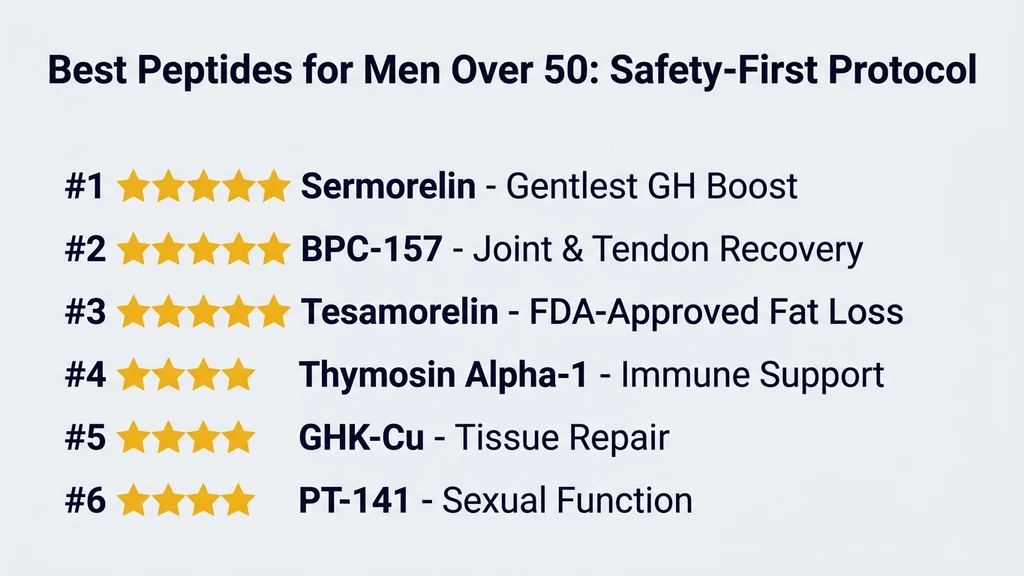
The peptide toolkit is similar, but the application changes. Men over 50 require more screening, lower starting doses, and a safety-first ranking that prioritizes peptides with established track records.
| Factor | Men Over 40 | Men Over 50 |
|---|---|---|
| #1 GH peptide | CJC-1295/Ipamorelin | Sermorelin (safer) |
| Starting dose | Standard adult dose | 50-75% of standard |
| Cardiac screening | Optional | Recommended (EKG) |
| PSA monitoring | Annual | Every 3-6 months |
| IGF-1 monitoring | Every 6 months | Every 3 months |
| Immune support | Optional | Thymosin Alpha-1 recommended |
| Stacking | 2-3 peptides common | Start with 1; max 2 initially |
| Drug interaction risk | Low | Moderate to high |
| Cancer screening | Standard | Enhanced (PSA, IGF-1 limits) |
For the more aggressive protocols appropriate at 40-49, read our peptides for men over 40 guide.
Peptide Stacking for Men Over 50
Conservative stacking is the rule. Start with a single peptide for 4-8 weeks, confirm tolerability with blood work, then consider adding a second compound.
Conservative Anti-Aging Stack: Sermorelin + GHK-Cu
Sermorelin provides gentle GH stimulation for sleep quality, body composition, and recovery. GHK-Cu supports tissue repair and skin health without hormonal effects. Both have minimal side effects and no significant drug interactions.
Protocol: Sermorelin 200 mcg before bed, 5 nights per week. GHK-Cu 1 mg subcutaneous daily or topical application. This is the safest combination for men over 50 who want a low-risk introduction to peptides.
Joint Recovery Stack: BPC-157 + TB-500
For men dealing with chronic joint pain, tendinitis, or post-surgical recovery. BPC-157 promotes tendon and ligament healing. TB-500 reduces fibrosis and promotes systemic tissue repair.
Protocol: BPC-157 200-300 mcg near the injury site, daily. TB-500 2-5 mg subcutaneous, twice per week. Run for 6-8 weeks. No hormonal effects, so drug interactions are minimal. This stack is appropriate even for men on cardiovascular medications.
Comprehensive Longevity Stack: Thymosin Alpha-1 + MOTS-c + Epithalon
This advanced stack addresses three pillars of aging after 50: immune decline (Thymosin Alpha-1), metabolic dysfunction (MOTS-c), and cellular aging (Epithalon). It requires the most monitoring but targets the systems that deteriorate most significantly after 50.
Protocol: Thymosin Alpha-1 1.6 mg subcutaneous, 2-3 times per week, ongoing. MOTS-c 5 mg subcutaneous, 3 times per week. Epithalon 5 mg daily for a 10-20 day course, every 6 months. Monitor CBC, fasting glucose, and metabolic panel quarterly.
Frequently Asked Questions
What is the safest peptide for men over 50?
Sermorelin has the longest safety track record among GH-releasing peptides. It was previously FDA-approved and stimulates GH release within physiological limits through pituitary feedback. It does not elevate cortisol, prolactin, or ACTH. Start at 200 mcg before bed, 5 nights per week.
Should men over 50 use CJC-1295?
CJC-1295 is effective but more potent than Sermorelin. Men over 50 should start at 50-75% of the standard dose (75-100 mcg instead of 100-150 mcg) and monitor IGF-1 closely at 4-week intervals. If IGF-1 exceeds age-adjusted upper limits, reduce the dose or switch to Sermorelin.
Do I need blood work before starting peptides at 50?
Yes, without exception. Minimum panel: IGF-1, total and free testosterone, PSA, complete metabolic panel, fasting glucose, HbA1c, lipid panel, CBC, and thyroid function. An EKG is recommended before GH peptides or PT-141. Recheck IGF-1 and PSA every 3-6 months while on protocol.
Can peptides help with sarcopenia?
GH-releasing peptides like Sermorelin and CJC-1295 support muscle protein synthesis and can slow sarcopenia when combined with resistance training. They do not replace exercise. Clinical data shows GH secretagogues improve lean body mass by 2-4% over 6-12 months in older adults (PMC5632578).
Are peptides safe with blood pressure medication?
Most peptides do not significantly affect blood pressure. The exception is PT-141, which raises systolic BP by approximately 6 mmHg. Men on antihypertensives should coordinate PT-141 use with their prescriber. GH peptides, BPC-157, and GHK-Cu have no clinically significant blood pressure interactions.
How do peptides for men over 50 differ from those at 40?
The key differences are lower starting doses (50-75% of standard), mandatory cardiac screening (EKG), more frequent PSA and IGF-1 monitoring (every 3 months vs 6), preference for Sermorelin over CJC-1295 as the first GH peptide, and the addition of Thymosin Alpha-1 for age-related immune decline.
Can peptides interact with statins or diabetes medications?
GH-releasing peptides can raise fasting glucose and alter lipid metabolism, potentially affecting statin and diabetes drug efficacy. Men on metformin should monitor blood sugar more frequently when starting GH peptides. Discuss dose adjustments with your prescriber. BPC-157 and GHK-Cu have no known metabolic drug interactions.
Is it too late to start peptides at 55 or 60?
No. Sermorelin, BPC-157, GHK-Cu, and Thymosin Alpha-1 can all be started safely in the 55-65 range with proper screening. GH-releasing peptides still stimulate the pituitary in older adults, though the response is lower than in younger men. Start at the lowest recommended dose and titrate up based on bloodwork.
The Bottom Line
Men over 50 benefit from peptide therapy when safety comes first. Sermorelin offers the gentlest GH boost with the longest safety record. BPC-157 addresses the chronic joint and tendon issues that limit physical function. Tesamorelin targets the visceral fat that drives cardiovascular risk. Thymosin Alpha-1 restores immune capacity lost to age-related thymic atrophy.
Start with one peptide at 50-75% of the standard dose. Get comprehensive blood work before your first injection: IGF-1, PSA, metabolic panel, and an EKG. Monitor every 3 months. Add a second peptide only after confirming tolerability for 4-8 weeks.
Use our peptide dosage calculator to calculate age-adjusted doses. For the broader peptide landscape at a younger age, see our peptides for men over 40 guide. Begin with our getting started guide if this is your first peptide protocol. Physician oversight is mandatory for men over 50.
Helpful Tools
Related Articles
Best Peptides for Men Over 40: Ranked Guide (2026)
Top 10 peptides for men over 40: CJC-1295, BPC-157, PT-141, Tesamorelin ranked by evidence. Stacking protocols, dosing, and safety monitoring guide.
Best Peptides for Women Over 40: Guide
Top 8 peptides for women over 40: GHK-Cu, collagen peptides, BPC-157, PT-141. Perimenopause vs menopause protocols, dosing, and safety guide.
Thymosin Alpha-1 Benefits Guide
Thymosin Alpha-1 (Ta1) benefits backed by clinical trials: immune support, cancer adjunct therapy, vaccine enhancement, and anti-aging. Dosage and safety.
Peptides for Men: Best Options by Goal (2026 Guide)
Best peptides for men ranked by goal: muscle growth, fat loss, libido, testosterone, sleep, hair loss, and longevity. Protocols with doses.