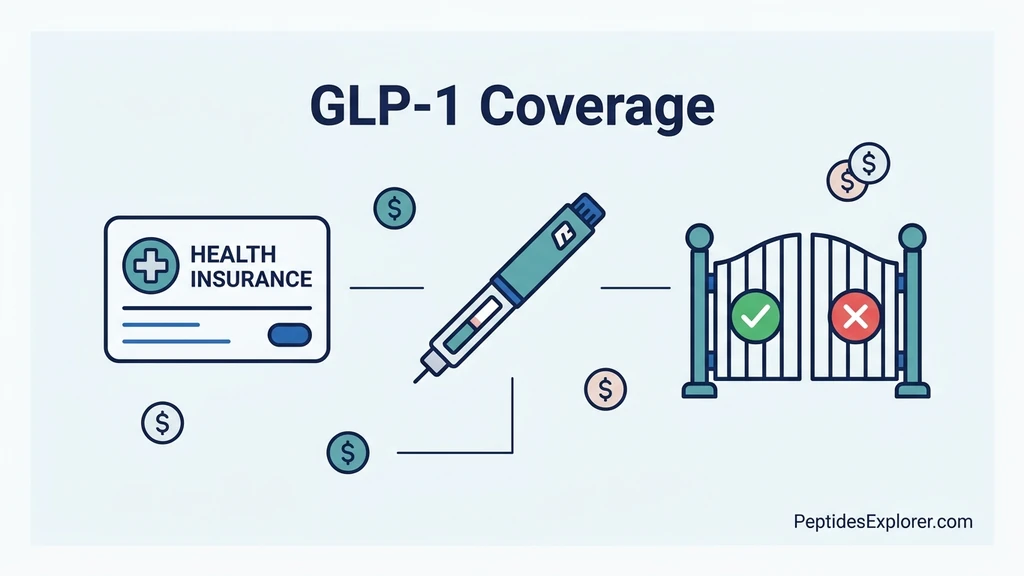
You are staring at a $1,000 pharmacy quote, an Anthem member card in your hand, wondering if your plan will pay for the GLP-1 your provider just prescribed. Here is the direct answer: Anthem (Elevance Health) broadly covers GLP-1 drugs prescribed for type 2 diabetes (Ozempic, Mounjaro, Rybelsus) with prior authorization, but coverage for weight-loss GLP-1 drugs (Wegovy, Zepbound, Saxenda) depends entirely on your specific plan and is often excluded or gated behind BMI rules.
The split comes down to what the drug is prescribed for, not the molecule itself. Semaglutide and tirzepatide exist under two brand names each, one for diabetes and one for obesity, and your plan treats them very differently.
Coverage varies by plan. The only way to know yours is to verify it directly, and this guide shows you exactly how.
This is educational content. Consult your insurer and healthcare provider.
Get your custom peptide protocol:
- Tailored to your body and goals
- Precise dosing and cycle length
- Safe stacking combinations
- Backed by peer-reviewed studies
- Ready in under 2 minutes
Quick Reference: Anthem GLP-1 Coverage by Use
Coverage hinges on the diagnosis on your prescription, not the active ingredient.
| Drug | Approved For | Typical Anthem Coverage | Gates |
|---|---|---|---|
| Ozempic | Type 2 diabetes | Broadly covered | Prior auth |
| Mounjaro | Type 2 diabetes | Broadly covered | Prior auth |
| Rybelsus | Type 2 diabetes | Broadly covered | Prior auth |
| Wegovy | Weight loss | Plan-dependent | PA, BMI, step therapy |
| Zepbound | Weight loss | Plan-dependent | PA, BMI, step therapy |
| Saxenda | Weight loss | Plan-dependent | PA, BMI |
The diabetes drugs share active ingredients with the weight-loss versions. Ozempic and Wegovy are both semaglutide. Mounjaro and Zepbound are both tirzepatide. Your plan still treats them by their FDA-approved indication, so a diabetes diagnosis opens doors a weight-loss diagnosis does not. For a broader cost picture across drugs, our GLP-1 cost statistics breakdown shows national averages.
Why Diabetes and Weight Loss Get Treated Differently
Think of your formulary like an airline fare class. The same seat on the same plane costs $200 or $900 depending on the fare rules attached to it. A GLP-1 molecule works the same way: the chemistry is identical, but the indication printed on the prescription changes the price the insurer is willing to pay.
For type 2 diabetes, Anthem covers GLP-1 drugs as a recognized standard of care that prevents costly complications like kidney failure and cardiovascular events. The American Diabetes Association lists GLP-1 receptor agonists as a preferred class for many patients (ADA Standards of Care, 2025).
For weight loss, the calculus changes. Anti-obesity GLP-1 drugs are often classified as a "lifestyle" or excluded category in commercial formularies, and many employer plans carve them out entirely to control cost. Coverage for Wegovy or Zepbound is the exception, not the default, on a large share of Anthem plans in 2026.
The Four Gates: Prior Auth, Tiers, Step Therapy, BMI
Even when a GLP-1 is on your formulary, four hurdles stand between the prescription and the pharmacy counter.
Prior authorization (PA). Your provider must submit clinical documentation before Anthem approves the fill. For diabetes drugs this usually means proof of a type 2 diabetes diagnosis and recent A1C labs. PA decisions typically take 1 to 5 business days.
Formulary tiers. GLP-1 drugs usually sit on Tier 2 or Tier 3, which carry higher copays than generic Tier 1 medications. The same drug can be a $25 copay on one Anthem plan and a 30% coinsurance charge on another.
Step therapy. For weight-loss GLP-1 drugs, many plans require you to try and fail cheaper options first, such as metformin or phentermine-based therapy, before approving the GLP-1. This can add weeks to the process.
BMI and comorbidity criteria. Weight-loss coverage, when it exists, typically requires a BMI of 30 or higher, or a BMI of 27 or higher with a weight-related condition like hypertension or sleep apnea. These thresholds mirror the FDA labels for Wegovy and Zepbound.
Employer Carve-Outs: The Hidden Variable
Your card may say Anthem, but your employer often writes the rules. Most large employers self-fund their health plans and contract Anthem only to administer them. That means the employer, not Anthem, decides whether weight-loss GLP-1 drugs are covered at all.
This is why two coworkers with identical Anthem cards can get opposite answers at the same pharmacy. One employer opted into anti-obesity drug coverage; the other excluded it to save money.
A 2024 to 2026 trend has made this worse. Facing GLP-1 costs that can exceed $1,000 per member per month, a growing number of employers and payers have tightened criteria, added step therapy, or dropped weight-loss GLP-1 coverage entirely. Several large plan sponsors removed Wegovy and Zepbound from their formularies in 2025. Diabetes coverage has been largely spared from these cuts. If you want a sense of the out-of-pocket gap this creates, the tirzepatide cost with insurance guide walks through real copay ranges.
How to Check Your Specific Anthem Plan
Do not guess. Run these four steps before you fill anything.
- 1.Call the member services number on your card. Ask directly: "Is [drug name] covered for [diabetes / weight loss], and what is my copay?" Use the exact brand name, because Ozempic and Wegovy get different answers.
- 2.Ask the specific gate questions. "Does this require prior authorization? Is there step therapy? What are the BMI criteria for weight-loss coverage?" Write down the rep's name and reference number.
- 3.Pull your plan's formulary PDF. Log into the Anthem member portal or Sydney Health app, find your drug list, and search the drug. The PDF shows the tier and any PA or step-therapy flag next to the drug.
- 4.Have your provider submit the PA early. If the drug is on formulary, the prior authorization is the real bottleneck. A complete PA with labs and diagnosis codes moves fastest.
If you hit a denial, ask about the appeals process and whether a formulary exception is possible. Your provider can request an exception when a covered alternative has failed or is contraindicated. For the broader landscape of getting a GLP-1 prescription filled, see how to get semaglutide.
Cost With Coverage vs Without
The dollar gap between an approved claim and a denial is enormous, which is why verification is worth the phone call.
Scenario 1: Diabetes, covered. You have type 2 diabetes, your provider submits a PA with your A1C, and Anthem approves Ozempic on Tier 2. Your copay lands at $0 to $25 per month. Annual cost: roughly $0 to $300.
Scenario 2: Weight loss, covered. Your employer opted into anti-obesity coverage, your BMI is 32, and you clear step therapy. Wegovy comes through at a Tier 3 copay of $25 to $75 per month. Annual cost: roughly $300 to $900.
Scenario 3: Weight loss, excluded. Your employer carved out weight-loss drugs. The PA is denied, and you pay full cash price. Wegovy and Zepbound run roughly $1,000 to $1,350 per month at retail. Annual cost: $12,000 or more.
The difference between Scenario 1 and Scenario 3 is more than $11,000 a year for chemically similar drugs. When coverage falls through, some patients turn to manufacturer savings cards, cash-pay telehealth, or compounded alternatives, though compounded semaglutide and tirzepatide availability tightened after 2025 FDA actions. Our how much is semaglutide guide covers the cash-pay numbers, and the peptide cost calculator helps you model monthly spend.
Common Mistakes
Assuming the molecule determines coverage. Patients see that Ozempic is covered and expect Wegovy to be too. They are both semaglutide, but Anthem prices them by indication. The fix: always verify the exact brand name you were prescribed, since Wegovy and Ozempic follow different formulary rules.
Skipping the prior authorization. Filling without a completed PA triggers a rejection at the counter and a surprise full-price quote. The fix: confirm your provider submitted the PA and that Anthem received it before your pharmacy date.
Ignoring the employer carve-out. Calling Anthem and being told a drug "is on the formulary" does not guarantee your employer plan includes it. The fix: ask specifically whether your plan covers anti-obesity medications, not just whether the drug exists on the national list.
Giving up after one denial. A first denial is often a paperwork gap, not a final no. The fix: ask about formulary exceptions and appeals, and have your provider document failed alternatives. Comparing options like Qsymia versus a GLP-1 can also surface a covered path.
Frequently Asked Questions
Does Anthem cover Ozempic?
Yes, Anthem broadly covers Ozempic when it is prescribed for type 2 diabetes, with prior authorization required. Coverage varies by plan, and Ozempic typically sits on Tier 2 or Tier 3 with a copay of $0 to $25 for many members. Verify your tier in your plan's formulary PDF, and see our how much is semaglutide guide for cash prices if denied.
Does Anthem cover Wegovy or Zepbound for weight loss?
Sometimes. Anthem weight-loss GLP-1 coverage is plan-dependent and often excluded, especially when your employer carves out anti-obesity drugs. When covered, expect prior authorization, a BMI of 30 or higher (or 27 with a comorbidity), and possible step therapy. Check your specific plan, and review tirzepatide cost with insurance for likely copay ranges.
Why does Anthem cover Ozempic but not Wegovy if they're the same drug?
Both are semaglutide, but Anthem prices drugs by their FDA-approved indication, not the molecule. Ozempic is approved for diabetes, a covered standard of care. Wegovy is approved for weight loss, which many plans classify as an excluded category. See phentermine vs GLP-1 for alternative covered weight-loss options.
What BMI does Anthem require for GLP-1 weight-loss coverage?
When a plan covers weight-loss GLP-1 drugs, it typically requires a BMI of 30 or higher, or 27 or higher with a weight-related condition like hypertension or sleep apnea. These thresholds match the FDA labels. Your provider documents this in the prior authorization. For the broader process, see how to get semaglutide.
How do I find out if my Anthem plan covers a GLP-1?
Call the member services number on your card and ask about the exact brand name for your specific diagnosis, then pull your plan's formulary PDF from the Anthem portal or Sydney Health app. Ask about prior auth, step therapy, and BMI criteria. Our GLP-1 cost statistics page shows what coverage saves on average.
What does a GLP-1 cost without Anthem coverage?
Without coverage, Wegovy and Zepbound run roughly $1,000 to $1,350 per month at retail, or over $12,000 a year. Covered diabetes scripts can cost $0 to $25 per month. The gap exceeds $11,000 annually. Use the peptide cost calculator to model your spend and compare cash-pay paths.
Did Anthem drop GLP-1 weight-loss coverage in 2025 or 2026?
Many employer plans administered by Anthem tightened or dropped weight-loss GLP-1 coverage in 2025 and 2026 due to high cost, while diabetes coverage was largely spared. Because employers set these rules on self-funded plans, your coworker's coverage may differ from yours. Compare retail options in our where to buy tirzepatide guide.
Can I appeal an Anthem GLP-1 denial?
Yes. A first denial is often a paperwork gap rather than a final answer. Ask Anthem about the appeals process and request a formulary exception, which your provider can support by documenting failed or contraindicated alternatives. If coverage still fails, the retatrutide and other emerging options are worth discussing with your provider.
The Bottom Line
Anthem covers GLP-1 drugs broadly for type 2 diabetes (Ozempic, Mounjaro, Rybelsus) with prior authorization, while weight-loss coverage (Wegovy, Zepbound, Saxenda) is plan-dependent and frequently excluded or gated behind BMI rules, step therapy, and employer carve-outs.
The principle is simple: your plan prices a GLP-1 by what it was prescribed for, not by the molecule, so the diagnosis on your script drives the answer more than the drug itself. Coverage varies by plan, so verify yours by calling member services and reading your formulary PDF before you fill.
Model your costs with the peptide cost calculator, and compare cash-pay figures in our how much do peptides cost guide. Learn more at https://peptidesexplorer.com.
This is educational content. Consult your insurer and healthcare provider.
Helpful Tools
Related Articles
Where to Inject IGF-1 LR3: Sites, SubQ vs IM, Rotation
Where to inject IGF-1 LR3: abdomen, thigh or glute, subcutaneous, 29-31G needle. Why site-specific growth is a myth, a rotation map, and the hypoglycemia rule.
When to Take IGF-1 LR3: Best Time & Fed vs Fasted
When to take IGF-1 LR3: post-workout with carbs on training days, morning with breakfast on rest days, never fasted. Half-life, spacing from GH peptides, FAQ.
Where to Inject BPC-157 for Back Pain: Lower Back Sites
Where to inject BPC-157 for lower back pain, herniated disc, sciatica and SI joint pain: abdomen vs paraspinal sites, landmarks, zones to avoid, red flags.
Best Time to Take Retatrutide: Morning or Night?
Best time to take retatrutide: any hour, same weekday. Evening blunts nausea, morning suits diarrhea. Missed-dose rule, day switching, food, travel, alcohol.