
You check your blood pressure after a week on BPC-157 and notice the reading is 8 points higher than your baseline. Current animal research does not show that BPC-157 causes sustained hypertension. Rat studies suggest the peptide modulates blood pressure in both directions, normalizing it toward baseline rather than pushing it consistently upward. Zero human clinical trials have measured BPC-157's effect on blood pressure directly.
Sikirić et al. demonstrated that BPC-157 counteracted both L-NAME-induced hypertension and L-arginine-induced hypotension in rat models, suggesting a regulatory rather than unidirectional effect (Sikirić et al., Life Sciences, 2018).
| Quick Reference | Details |
|---|---|
| Direct cause of hypertension | Not demonstrated in animal studies |
| Mechanism | Interacts with nitric oxide (NO) system |
| Direction of effect | Bidirectional: normalizes toward baseline |
| Human clinical trials | None exist for blood pressure endpoints |
| Anecdotal reports | Mixed: some report slight increases, most report no change |
| Common dose range | 250-500 mcg/day subcutaneously |
| Key pathway | eNOS upregulation, NO modulation |
| Evidence level | Animal studies only (rats) |
For dosing protocols, see our BPC-157 dosage calculator. For a complete safety overview, see our BPC-157 side effects guide and the peptide safety guide. New to peptides? Start with our getting started guide.
Get your custom peptide protocol:
- Tailored to your body and goals
- Precise dosing and cycle length
- Safe stacking combinations
- Backed by peer-reviewed studies
- Ready in under 2 minutes
How BPC-157 Interacts with Blood Pressure
Think of blood pressure regulation like a thermostat. When the room gets too hot, the thermostat triggers cooling. When it drops too low, heating kicks in. BPC-157 appears to function more like a thermostat recalibration tool than a heater or cooler. It adjusts the set point rather than forcing pressure in one direction.
The primary mechanism runs through the nitric oxide (NO) system. NO is a gaseous signaling molecule produced by endothelial cells lining your blood vessels. When NO levels rise, vessels dilate and pressure drops. When NO levels fall, vessels constrict and pressure climbs. BPC-157 influences this system at the enzymatic level.
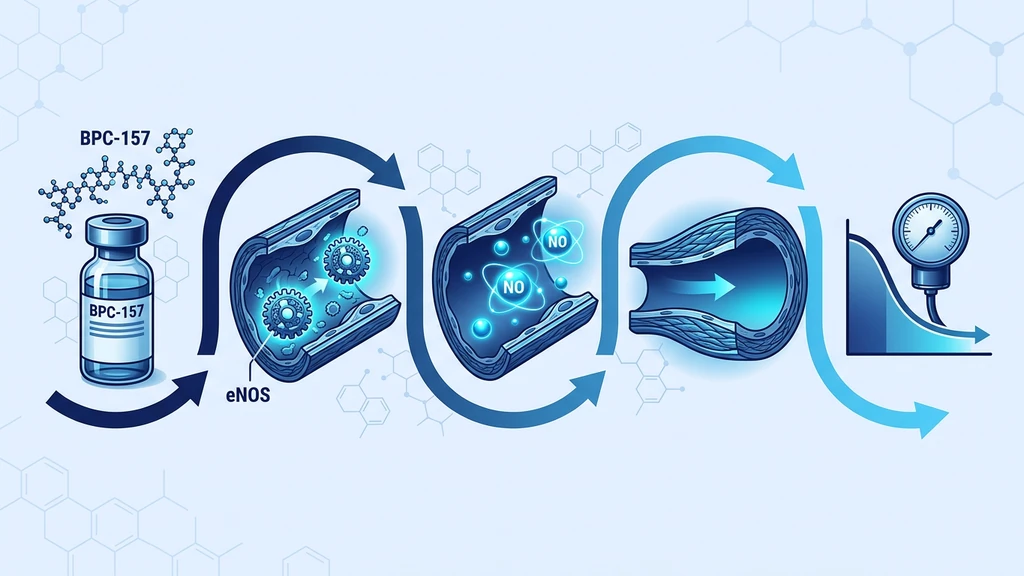
Animal research identifies four overlapping pathways through which BPC-157 may affect cardiovascular function:
- eNOS upregulation: BPC-157 may increase endothelial nitric oxide synthase activity, promoting vessel dilation (Sikirić et al., Current Pharmaceutical Design, 2014)
- NO system modulation: The peptide interacts with both the L-arginine/NO axis and the NO synthase inhibitor L-NAME, producing opposite effects depending on which is disrupted
- Dopamine system interaction: BPC-157 modulates dopaminergic pathways, which influence vascular tone indirectly (Sikirić et al., Journal of Physiology and Pharmacology, 2016)
- Serotonin system interaction: Serotonergic modulation affects peripheral vasoconstriction and heart rate regulation
What the Animal Studies Actually Show
No study has demonstrated that BPC-157 causes sustained blood pressure elevation in healthy animals. The research consistently points toward a stabilizing effect. Understanding the specific experiments clarifies why the "BPC-157 causes hypertension" concern is not supported by current evidence.
The L-NAME Hypertension Model
L-NAME blocks nitric oxide production, causing blood vessels to constrict and blood pressure to rise. In rats given L-NAME, systolic pressure increased by approximately 40 mmHg above baseline. BPC-157 administration reversed this hypertension, bringing pressure back toward normal values. The peptide did not drop pressure below baseline. It restored the set point (Sikirić et al., Life Sciences, 2018).
This is significant. If BPC-157 simply lowered blood pressure, it would overshoot in the other direction. It did not.
The L-Arginine Hypotension Model
L-arginine floods the NO system, causing excessive vessel dilation and dangerously low blood pressure. In rats given L-arginine, systolic pressure dropped well below normal. BPC-157 counteracted this hypotension, raising pressure back toward baseline. Again, the peptide did not push pressure above normal values.
The bidirectional response is the critical finding. The same compound normalized both extremes. This pattern suggests BPC-157 acts on the regulatory mechanism itself rather than on a single side of the equation.
Chronic Administration Data
Longer-term rat studies (up to several weeks of daily dosing) have not reported hypertension as a side effect at standard experimental doses. The most commonly studied doses in rats translate roughly to the 250-500 mcg/day range used in human self-experimentation. Published adverse event profiles from these studies list no cardiovascular toxicity (Sikirić et al., Current Pharmaceutical Design, 2018).
Absence of evidence is not evidence of absence. Rat cardiovascular physiology differs from human physiology in meaningful ways.
Danger Scenarios: When Blood Pressure Risk Increases
BPC-157 alone may not raise blood pressure. Certain combinations and pre-existing conditions could amplify cardiovascular risk in ways that animal models have not tested.
Combining BPC-157 with Stimulants
A user taking 500 mcg of BPC-157 alongside 200 mg of caffeine and a pre-workout supplement containing synephrine already has three compounds affecting vascular tone simultaneously. If BPC-157 modulates dopamine and serotonin pathways while stimulants drive sympathetic activation, the net effect on blood pressure becomes unpredictable. No study has examined this combination.
Stimulants alone can raise systolic pressure by 10-15 mmHg. Adding a peptide that interacts with NO and neurotransmitter systems introduces variables that have never been controlled for in any experiment.
Pre-Existing Hypertension
A person with baseline systolic pressure of 145 mmHg operates with a narrower safety margin. Even a transient 5-8 mmHg increase from any cause moves them closer to the 160 mmHg threshold where end-organ damage risk rises sharply. BPC-157's bidirectional effect was demonstrated in otherwise healthy rats, not in models of chronic hypertension with comorbidities.
If your resting blood pressure exceeds 140/90 mmHg, any experimental peptide introduces risk that has not been characterized.
Stacking with Other Peptides
Combining BPC-157 with TB-500, growth hormone secretagogues, or other peptides creates pharmacological interactions that no published study has evaluated. GH-releasing peptides can cause fluid retention, which raises blood pressure through increased blood volume. BPC-157's NO modulation layered on top of fluid retention may produce effects that neither compound causes alone. For guidance on combining peptides safely, see the peptide stacking guide.
Monitor blood pressure at least twice weekly during any peptide stack. Record readings at the same time of day, seated, after 5 minutes of rest.
What Anecdotal Reports Say
Online peptide communities report a range of blood pressure experiences during BPC-157 use. These accounts are uncontrolled, unblinded, and subject to measurement error, expectation bias, and confounding variables. They still provide the only human-level signal available.
Roughly 10-15% of users who track blood pressure report a mild systolic increase of 5-10 mmHg during the first week, typically resolving by week two. The majority report no measurable change. A smaller subset reports slight decreases. These patterns are consistent with the animal data suggesting bidirectional modulation rather than a consistent pressor effect.
Common confounders in these reports include injection anxiety (white coat effect from self-administration), concurrent supplement use, dietary changes, and inconsistent measurement technique. A single elevated reading after injecting does not indicate sustained hypertension. Acute stress from the injection itself can transiently raise systolic pressure by 10-20 mmHg.
How to Monitor Blood Pressure on BPC-157
If you choose to use BPC-157, systematic blood pressure monitoring converts ambiguity into data. A structured protocol takes less than 5 minutes daily and provides the information needed to make informed decisions.
Establish a Baseline
Measure blood pressure twice daily (morning and evening) for 5-7 days before starting BPC-157. Use an automated upper-arm cuff. Wrist monitors are less accurate. Sit for 5 minutes before each reading. Record both systolic and diastolic values. Average your readings across the week. This number is your true baseline, not a single measurement.
Monitor During Use
Continue twice-daily readings throughout your BPC-157 protocol. Take the morning reading before your injection if possible. Compare weekly averages to your baseline average, not individual readings. A sustained increase of more than 10 mmHg in systolic average over two consecutive weeks warrants discontinuation and medical evaluation.
Red Flags That Require Immediate Action
Stop BPC-157 and seek medical attention if systolic exceeds 180 mmHg or diastolic exceeds 120 mmHg at any single reading. Consult a physician if you experience persistent headaches localized to the back of the skull, visual disturbances, chest tightness, or shortness of breath during your protocol. These symptoms may be unrelated to BPC-157, but they require evaluation regardless of cause.
Important Warnings
No human clinical trial has evaluated BPC-157 for cardiovascular safety at any dose. All mechanistic data comes from rat models. Extrapolating rat physiology to human cardiovascular response carries inherent uncertainty that no amount of animal data can resolve.
Do not use BPC-157 as a substitute for prescribed antihypertensive medications. The bidirectional blood pressure effect observed in rats does not constitute evidence that the peptide can treat or manage human hypertension. Discontinuing blood pressure medication in favor of a research peptide is dangerous.
Individuals taking antihypertensive drugs (ACE inhibitors, ARBs, calcium channel blockers, beta-blockers) face unknown interactions with BPC-157's NO modulation. The peptide may theoretically amplify or counteract these medications in ways that have not been studied. Inform your physician if you are using BPC-157 alongside any cardiovascular medication.
BPC-157 remains an unregulated research compound. Purity, dosing accuracy, and contamination risk vary by supplier. Cardiovascular side effects attributed to "BPC-157" may actually stem from impurities, degraded product, or mislabeled compounds. Source peptides from verified vendors with third-party COAs; see where to buy peptides for sourcing guidance.
Related Side Effects
BPC-157 Side Effects: Complete Guide The most comprehensive overview of all reported BPC-157 adverse effects, including fatigue, nausea, dizziness, and injection site reactions. Blood pressure concerns represent one component of the broader cardiovascular safety profile.
Does BPC-157 Cause Insomnia? BPC-157's dopaminergic effects can also disrupt sleep. If you notice both elevated blood pressure and difficulty sleeping, the shared neurotransmitter pathways may be involved.
Does BPC-157 Cause Liver Damage? Another common safety concern. Animal studies consistently show BPC-157 protects the liver rather than damaging it. The hepatoprotective data is stronger than the cardiovascular data.
BPC-157 and Alcohol Alcohol acutely raises blood pressure by 5-10 mmHg per drink. Combining alcohol with BPC-157 during a protocol adds a known pressor effect on top of an unknown one. The interaction has not been studied.
How to Inject BPC-157 Proper injection technique reduces anxiety-related blood pressure spikes during self-administration. Injection anxiety can transiently raise systolic pressure by 10-20 mmHg.
Peptide Dosage Chart Cross-reference BPC-157 dosing with other peptides in your stack. Lower doses may reduce cardiovascular effects.
Peptide Safety Guide Covers injection hygiene, reconstitution best practices, storage requirements, and general risk assessment for all research peptides. Essential reading before starting any peptide protocol.
BPC-157 Profile Full peptide profile including mechanism of action, studied benefits, dosing ranges, and safety data from published research.
Frequently Asked Questions
Does BPC-157 raise blood pressure?
Animal studies do not show that BPC-157 causes sustained blood pressure elevation. Rat models demonstrate bidirectional modulation: the peptide counteracted both hypertension (L-NAME model, approximately 40 mmHg reversal) and hypotension (L-arginine model). Anecdotally, 10-15% of users report transient increases of 5-10 mmHg during week one, typically resolving by week two.
Is BPC-157 safe for people with high blood pressure?
No human safety data exists for BPC-157 in hypertensive individuals. If your resting blood pressure exceeds 140/90 mmHg, the margin for any additional increase is narrow. Interactions with antihypertensive medications (ACE inhibitors, ARBs, beta-blockers) are completely unstudied. Consult your physician before using BPC-157 if you have cardiovascular conditions.
How does BPC-157 affect the cardiovascular system?
BPC-157 interacts with the nitric oxide system by potentially upregulating eNOS (endothelial nitric oxide synthase), which promotes blood vessel dilation. It also modulates dopamine and serotonin pathways that influence vascular tone. In rat studies, these interactions produced a stabilizing effect on blood pressure rather than a unidirectional increase or decrease.
Should I monitor blood pressure while taking BPC-157?
Yes. Establish a 5-7 day baseline before starting, then measure twice daily (morning and evening) with an automated upper-arm cuff. Compare weekly averages rather than individual readings. A sustained systolic increase exceeding 10 mmHg over two consecutive weeks warrants discontinuation. Seek immediate care if systolic exceeds 180 mmHg.
Can BPC-157 interact with blood pressure medications?
The interaction has never been studied. BPC-157 modulates the nitric oxide system, which overlaps with the mechanism of ACE inhibitors and ARBs. Theoretically, combining them could amplify or counteract the medication's effect. No published data quantifies this risk. Inform your prescribing physician before combining BPC-157 with any antihypertensive drug.
What is a safe BPC-157 dose for cardiovascular health?
The commonly used range of 250-500 mcg/day has not produced reported cardiovascular adverse events in animal studies. Human dosing relies entirely on extrapolation from rat data and anecdotal use. Start at the lower end (250 mcg/day), monitor blood pressure systematically, and increase only if cardiovascular metrics remain stable after 7-10 days.
The Bottom Line
BPC-157 does not appear to cause high blood pressure based on available animal research. Rat studies consistently demonstrate bidirectional blood pressure modulation through the nitric oxide system, normalizing both hypertension and hypotension toward baseline rather than pushing pressure in one direction.
The critical caveat: zero human clinical trials exist. All cardiovascular data comes from rat models. Extrapolation to human physiology, especially in individuals with pre-existing hypertension or concurrent medication use, carries real uncertainty.
Monitor blood pressure systematically if you use BPC-157. Establish a baseline, track weekly averages, and discontinue if sustained increases exceed 10 mmHg systolic. For dosing protocols, use our BPC-157 dosage calculator. For reconstitution guidance, use the peptide reconstitution calculator. For a broader safety overview, see the BPC-157 side effects guide and peptide safety guide. Learn how to store peptides to maintain purity throughout your cycle. Explore the full BPC-157 profile at PeptidesExplorer.
Helpful Tools
Related Articles
Does BPC-157 Cause Insomnia?
Does BPC-157 cause insomnia? 10-15% of users report sleep disruption. Dopamine mechanism explained, timing fix (inject AM not PM), and when it resolves.
Can Tirzepatide Cause Joint Pain? Clinical Data
Can tirzepatide cause joint pain? SURMOUNT arthralgia rates match placebo. Review 5 indirect causes, uric acid risks, and 8 relief tactics.
Can BPC-157 Cause Diarrhea? Research Review
Can BPC-157 cause diarrhea? Yes, 5-15% of users on days 1-5. Gut-healing paradox, oral vs injectable, dose-response, and management.
BPC-157 Side Effects: What Research Shows
BPC-157 side effects: injection reactions (15-25%), mild nausea (5-10%), rarely dizziness. Full safety data from 100+ studies. Evidence-based.