You picked up your Mounjaro or Zepbound refill this morning. Your Wellbutrin bottle is sitting on the same counter. And somewhere between the pen and the pill, you thought: *can I actually take both of these at the same time?* It is a reasonable question. Both drugs mess with appetite. Both touch mood. One of them carries a black-box note about seizures. And your prescriber mentioned neither of them when writing the other.
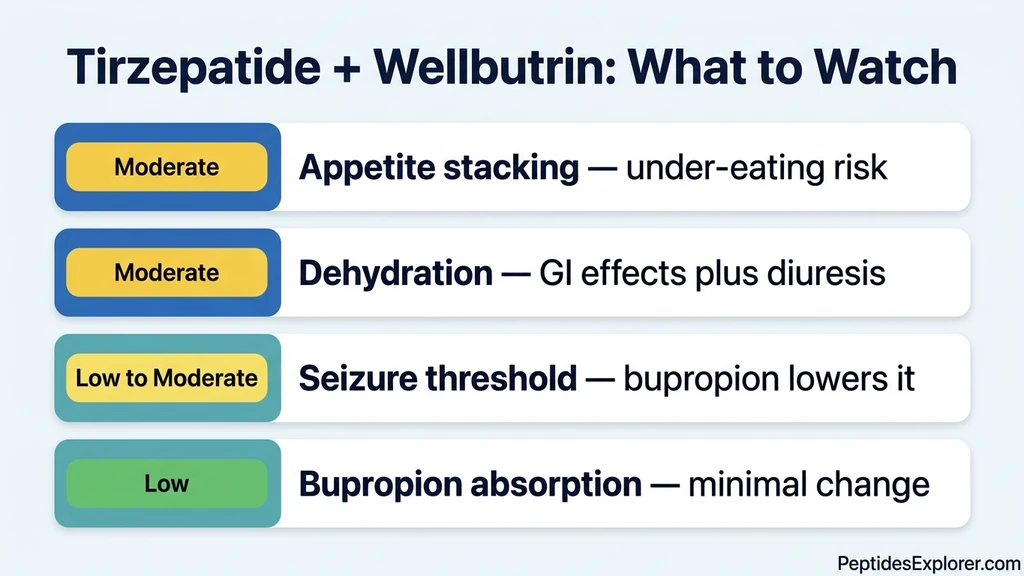
Short answer: there is no direct pharmacokinetic drug-drug interaction between tirzepatide and bupropion (Wellbutrin). They are co-prescribed routinely in real-world practice, especially in patients who need an antidepressant for depression or ADHD adjunct therapy while also pursuing weight loss. But "no formal interaction" is not the same as "no clinical consequence." The two drugs stack on appetite, stack on mood, and interact with the same physiological levers that govern hydration, seizure threshold, and nutrient intake. That is what this guide is about.
| What to watch | Risk level | Why it matters |
|---|---|---|
| Appetite stacking (under-eating) | Moderate | Both drugs suppress appetite; muscle loss and fatigue if intake drops below ~1,200 kcal/day |
| Seizure threshold | Low to moderate | Bupropion lowers it; rapid weight loss and dehydration from GLP-1 GI effects can compound risk |
| Mood changes | Low to moderate | Both affect mood pathways; monitor for new anxiety, irritability, or depressive symptoms |
| Dehydration | Moderate | Tirzepatide nausea/vomiting plus bupropion's mild diuretic effect |
| Bupropion absorption | Minimal | GLP-1 slows gastric emptying; oral absorption timing may shift slightly |
| Hypoglycemia | Not applicable | Neither drug causes hypoglycemia on its own |
| Blood pressure | Low | Bupropion can raise BP; tirzepatide usually lowers it. Net effect varies |
If you are on both, the combination is usually safe when monitored. If you are considering starting one while already on the other, the sequencing and dose titration matter. For a broader view of what tirzepatide interacts with, see tirzepatide drug interactions. For the long-term safety picture, see tirzepatide long-term side effects.
This is educational content, not medical advice. Any decision to start, stop, or combine these medications belongs to you and your prescribing clinician.
Get your custom peptide protocol:
- Tailored to your body and goals
- Precise dosing and cycle length
- Safe stacking combinations
- Backed by peer-reviewed studies
- Ready in under 2 minutes
What Each Drug Is Actually Doing
Before you can reason about the combination, you need a clear picture of each drug in isolation.
Tirzepatide (Mounjaro, Zepbound) is a dual GLP-1 / GIP receptor agonist. It mimics two gut hormones that signal "you've eaten, stop being hungry, release insulin, slow down the stomach." Injected once weekly. Peak plasma concentration at about 24 hours; half-life around 5 days. Primary effects: appetite suppression, slowed gastric emptying, improved insulin sensitivity, weight loss of 15 to 22% over 72 weeks at full dose.
Bupropion (Wellbutrin, Wellbutrin SR, Wellbutrin XL, Zyban) is an atypical antidepressant. It is a norepinephrine-dopamine reuptake inhibitor (NDRI), meaning it keeps more dopamine and norepinephrine in the synaptic cleft. Bupropion is metabolized primarily by CYP2B6 to hydroxybupropion, which is itself active and contributes to the therapeutic and convulsant profile (Faucette et al., 2000). Uses: major depressive disorder, seasonal affective disorder, smoking cessation (as Zyban), and off-label for ADHD, weight loss adjunct, and sexual dysfunction caused by SSRIs. Taken orally, once or twice daily depending on formulation. Effects on weight: usually weight-neutral or modest weight loss (1 to 3 kg), especially in patients who had prior SSRI-induced weight gain.
The two mechanisms do not overlap pharmacokinetically. Tirzepatide is a peptide metabolized by proteolytic degradation. Bupropion is metabolized by CYP2B6 (primarily) to hydroxybupropion, which is itself active. Neither drug induces or inhibits the enzymes the other depends on. There is no shared elimination pathway. The FDA prescribing information for tirzepatide does not list bupropion as a concerning interaction, and the bupropion label does not list GLP-1 agonists either.
What they do share is *downstream physiological territory*: appetite regulation, mood circuitry, hydration balance, and seizure threshold. These are where thoughtful monitoring earns its keep. For how tirzepatide interacts with mood more broadly, see can tirzepatide cause anxiety.
Why Patients End Up on Both Drugs
A few common scenarios put a patient on the tirzepatide + Wellbutrin combination:
Scenario 1: Pre-existing depression or anxiety, now starting weight loss. The patient has been stable on Wellbutrin for months or years for depression, seasonal affective disorder, or as an SSRI add-on. They are now overweight or obese and qualify for tirzepatide. The prescriber adds tirzepatide without changing the Wellbutrin. This is the most common scenario.
Scenario 2: ADHD management with weight loss. Bupropion is used off-label for adult ADHD, especially when stimulants are contraindicated or when the patient wants to avoid controlled substances. The same patient may be on tirzepatide for obesity or type 2 diabetes. The two drugs run on parallel tracks.
Scenario 3: Smoking cessation plus weight loss. Bupropion (as Zyban) is FDA-approved for smoking cessation. Many smokers are also overweight or developing metabolic disease. A clinician may run both treatments simultaneously, especially in a bariatric or cardiometabolic clinic.
Scenario 4: Post-quit weight management. A patient quit smoking 6 months ago using Zyban, gained 15 pounds, and now wants tirzepatide to reverse it. They may still be on maintenance bupropion to prevent relapse.
Scenario 5: Mood support during GLP-1 weight loss. Some patients develop low mood, fatigue, or "weight loss grief" during aggressive tirzepatide-driven weight reduction. Adding bupropion (rather than an SSRI) is common because bupropion is weight-neutral or weight-positive, unlike most SSRIs which cause weight gain and would partially antagonize the tirzepatide goal. See does tirzepatide make you tired for more on GLP-1 fatigue and when antidepressant support is considered.
In all of these scenarios the drugs are co-administered, not sequential. They run indefinitely as long as both indications remain.
The Seizure Threshold Question
The number one concern people raise when asking about tirzepatide + Wellbutrin is seizure risk. Here is the honest picture.
Bupropion has a dose-dependent seizure risk. The observed incidence of seizures with bupropion doses of 450 mg/day or less ranges from 0.35% to 0.44%, with cumulative 2-year risk at the maximum recommended dose of approximately 0.48% (Davidson, 1989). At higher doses (>450 mg/day), the risk rises substantially. The sustained-release and extended-release formulations cluster at the lower end. Patients with pre-existing seizure disorders, eating disorders (anorexia or bulimia), or those undergoing abrupt benzodiazepine/alcohol withdrawal are at substantially higher risk and are often considered outright contraindicated.
Tirzepatide itself does not cause seizures. There is no seizure signal in the tirzepatide clinical trial database. The concern is indirect: rapid weight loss can cause electrolyte shifts, dehydration, and (rarely) hypoglycemia-like symptoms that can lower seizure threshold in a patient whose threshold is already compromised by bupropion.
The practical risk factors that matter when combining these: - Rapid weight loss (>2% body weight per week): thins out body water stores and shifts sodium, potassium, and magnesium. Aim for 1 to 2 pounds per week. - Dehydration from tirzepatide-induced nausea, vomiting, or diarrhea, especially during the first 8 to 12 weeks of titration. - Under-eating to the point where fasting blood glucose drops below 60 mg/dL in non-diabetics, which can trigger seizures in vulnerable patients. - Concurrent alcohol use, which bupropion already worsens, and which tirzepatide can worsen further due to altered gastric emptying changing absorption.
If you are on both drugs, the practical guardrails are: drink adequate fluids (typically 2.5 to 3 liters of water daily for adults), eat at least three meals even if small, avoid skipping meals for religious fasts without clinical supervision, limit alcohol, and do not stack weight-loss stimulants on top (no phentermine, no ephedrine-based supplements). For more on stimulant interactions with GLP-1s, see phentermine vs GLP-1. The alcohol question has its own guide, can you drink alcohol on peptides, which covers GLP-1 drugs alongside research peptides.
Appetite Stacking and Why Under-Eating Is the Real Risk
The most common practical problem with tirzepatide + Wellbutrin is not a seizure. It is that you are simply not eating enough.
Tirzepatide is a powerful appetite suppressant. At the 10 to 15 mg weekly doses, many patients report dropping from 2,500 kcal/day to 900 to 1,200 kcal/day without trying. Bupropion adds a mild but persistent appetite reduction on top, especially in the first 4 to 6 weeks of starting it. In the first-person reports on patient forums, people describe forcing themselves to eat because food has "lost its appeal."
This is where damage happens, not through a dramatic interaction, but through quiet undernutrition:
Muscle loss. When caloric intake drops below the threshold needed to preserve lean mass (typically <1.2 g protein per kg body weight, <1,200 kcal/day for most adults), the body catabolizes muscle. A patient losing 15 pounds on aggressive tirzepatide + Wellbutrin can easily have 30 to 40% of that loss be lean tissue instead of the target 15 to 25%. The scale looks good; body composition is deteriorating.
Micronutrient deficiency. Low total intake usually means low B vitamins, low iron, low magnesium, low potassium. Bupropion's activating effect (dopamine/norepinephrine) can mask the fatigue that would otherwise signal the problem. You feel fine energetically until you crash.
Hair thinning. Ferritin below 40 ng/mL, zinc below 70 µg/dL, and protein intake below 0.8 g/kg all contribute. This usually shows up at month 3 to 4 of aggressive weight loss. See does tirzepatide cause hair loss for the broader picture of visible weight-loss side effects.
Sleep disruption. Bupropion is stimulating; it often interferes with sleep onset. Tirzepatide can cause night-time GI discomfort. Under-eating sets off a stress response that further interferes with sleep. You end up sleeping 5 hours, dopamine-saturated, under-fed, and working out hard. This is a poor state. See does tirzepatide cause insomnia for specific insomnia management.
Guardrails: - Track intake for the first 8 weeks of combination therapy. A simple phone app is enough. Aim for at least 1.4 g protein per kg bodyweight, minimum 1,200 kcal for most adults. - Lift weights at least twice weekly during weight loss. Protein plus resistance training is what preserves muscle. - Check ferritin, B12, vitamin D, and basic metabolic panel every 3 months. - If weight loss exceeds 2% of body weight per week, dial back tirzepatide dose or push food intake up. Fast loss is not better loss.
Mood Effects When Both Drugs Touch Brain Chemistry
Both drugs affect mood, and both have been linked to mood side effects in their respective safety databases.
Bupropion is an antidepressant, so its net mood effect in patients with depression is positive. But it can cause agitation, anxiety, irritability, and sleep disruption, especially in the first 2 to 4 weeks. Patients with a history of bipolar disorder can be tipped into hypomania or mixed states.
Tirzepatide has a mood profile that is still being characterized. The FDA adverse event database includes spontaneous reports of depression and suicidal ideation with GLP-1 agonists, though large cohort studies have so far not found a causal signal. What *is* established: rapid weight loss (from any cause) often produces a "weight loss grief" phenomenon where patients feel emotionally flat, anhedonic, or newly anxious about regaining weight. Appetite was previously a source of reward, and removing it removes a chunk of daily pleasure. Some patients find this destabilizing. See can semaglutide cause depression for the parallel discussion in the semaglutide literature, which generalizes to tirzepatide.
When the combination is working well, the bupropion is maintaining mood baseline and the tirzepatide is producing weight loss without a mood cost. This is the outcome in the majority of patients.
When the combination is not working well, the patient may report one of these patterns: - New anxiety or jitteriness, especially in the morning after dosing bupropion. The tirzepatide-induced low blood sugar (especially in non-diabetics who under-eat) amplifies bupropion's stimulating effect. - Irritability and short fuse, often coupled with poor sleep. - Emotional flatness or loss of interest in food, social meals, or cooking, the "weight loss grief" pattern. - Rebound depression in a patient whose bupropion dose is no longer adequate because of shifted absorption or changed body composition.
If mood deteriorates on the combination, do not stop either drug without clinician input. The usual first step is to adjust bupropion dose or formulation (splitting an XL dose, or switching from SR to XL for smoother levels). Tirzepatide dose reduction is sometimes warranted if weight loss is too fast or nausea is preventing adequate eating.
Absorption, Timing, and Practical Dosing
Tirzepatide slows gastric emptying by roughly 30 to 60% at therapeutic doses. This is central to how it suppresses appetite, but it raises a question for oral medications taken alongside: does the slowed stomach delay or reduce absorption of the pill?
For bupropion specifically, the answer is: a small, clinically minor shift. The sustained-release (SR) and extended-release (XL) formulations are designed to release bupropion over 8 to 24 hours, so the exact timing of gastric passage matters less. Immediate-release bupropion (dosed 3 times daily) may show a delayed peak by about 30 to 60 minutes under tirzepatide, but total absorption (AUC) is essentially unchanged in the small pharmacokinetic studies that exist for GLP-1 + oral drug combinations.
Practical implications: - If you take bupropion SR twice daily or XL once daily, no timing adjustment is needed. Keep your usual morning or morning + early afternoon dosing. - Take bupropion with water, consistent with meals or consistent without. Just stay consistent. - If you are on the immediate-release formulation (IR, 3x daily), the afternoon dose is the one most likely to be affected by post-breakfast gastric slowing. Your clinician may prefer to switch you to SR or XL for smoother levels, which is often a better choice anyway for adherence. - Do not take bupropion late at night. It is activating and will worsen insomnia, which is already a risk on both drugs. See does tirzepatide cause insomnia for how to structure the evening when on GLP-1 therapy. - Tirzepatide injection timing is flexible (any day of the week, any time of day, with or without food). Bupropion timing does not need to coordinate with tirzepatide injection day. They are independent.
One more consideration: if you change tirzepatide dose (stepping up from 5 mg to 7.5 mg, for example), gastric emptying slows further. Watch for any shift in how bupropion "feels" during that titration step. If bupropion feels delayed or blunted, the solution is usually not a higher bupropion dose. It is patience through the titration period, which lasts 3 to 4 weeks.
Wellbutrin + Naltrexone (Contrave) vs Wellbutrin + Tirzepatide
A quick clarifying point because the topic comes up often: Wellbutrin (bupropion) is one of two active ingredients in Contrave, an FDA-approved weight loss drug. Contrave combines bupropion 90 mg with naltrexone 8 mg (opioid receptor antagonist). The combination is dosed as four tablets daily (two in the morning, two in the evening) at full titration, delivering 360 mg bupropion and 32 mg naltrexone per day.
Contrave's weight loss effect is modest compared to GLP-1 drugs: about 4 to 6% body weight over 12 months, versus 15 to 22% for tirzepatide. Some clinicians stack Contrave with tirzepatide in patients who have plateaued on tirzepatide alone, though this is off-label and not well-studied.
If you are on Contrave and considering tirzepatide, you essentially have bupropion already in your regimen. Adding tirzepatide means you are on tirzepatide + bupropion + naltrexone. The naltrexone component adds its own considerations: opioid receptor blockade, caution in patients on opioid pain medications, and occasional mood side effects.
If you are on Wellbutrin alone and your prescriber suggests "switching to Contrave" when you start tirzepatide, there is rarely a reason. Contrave provides no added weight loss benefit in the presence of tirzepatide that bupropion monotherapy does not also provide. The naltrexone component may actually be counterproductive if you develop tirzepatide nausea, because naltrexone can also cause nausea and the two will compound. Most endocrinologists keep patients on their existing Wellbutrin rather than switching to Contrave when tirzepatide is added.
For the broader comparison of weight loss drug mechanisms, see phentermine vs GLP-1 and is compound tirzepatide safe for how to evaluate combination therapy safely.
What to Tell Your Prescriber Before You Start
If you are starting one drug while already on the other, bring this list to the visit:
If you are adding tirzepatide to existing Wellbutrin: - Your current Wellbutrin dose and formulation (IR, SR, or XL) - Duration of use and current effect on mood - Any history of seizures, head injury, or eating disorders - Alcohol use pattern (Wellbutrin + heavy drinking + tirzepatide is a bad stack) - Baseline weight, fasting glucose, and recent labs - Current protein intake and exercise pattern
If you are adding Wellbutrin to existing tirzepatide: - Your current tirzepatide dose and how long you have been on it - Recent weight loss rate (pounds per week) and current body weight trajectory - Any GI side effects (nausea, vomiting, delayed stomach emptying symptoms) - Recent hydration and electrolyte status if known - Your total daily caloric intake if you are tracking it - History of seizures, eating disorders, or bipolar disorder
Safety-first questions to ask: 1. Is my current caloric intake adequate to support adding a second appetite-suppressing drug? 2. How will we monitor for seizure risk, and what symptoms should I report? 3. Should I adjust Wellbutrin dose or formulation during tirzepatide titration? 4. What is the plan if I develop nausea, poor appetite, or rapid weight loss? 5. When do we schedule follow-up labs (metabolic panel, CBC, ferritin)?
The peptide interaction checker is a reasonable first-pass tool before your visit, but it cannot replace a clinician who knows your full history. Print the results and bring them along.
Frequently Asked Questions
Can I take Wellbutrin with tirzepatide?
Yes, in most cases. There is no direct pharmacokinetic interaction between bupropion (Wellbutrin) and tirzepatide. The two drugs are routinely co-prescribed. Monitor for appetite over-suppression, dehydration, and any new mood or neurological symptoms. See tirzepatide drug interactions for the full interaction picture.
Does Wellbutrin increase seizure risk when combined with tirzepatide?
Bupropion has a baseline seizure risk of about 0.1% at standard doses. Tirzepatide does not directly cause seizures, but rapid weight loss, dehydration, or severe under-eating from tirzepatide can lower seizure threshold in susceptible patients. The practical risk is low for most patients at standard doses, but it is higher if you have a history of seizures, eating disorders, or alcohol misuse. See does tirzepatide cause headaches for related neurological considerations.
Will Wellbutrin blunt the weight loss from tirzepatide?
No. Bupropion is weight-neutral or mildly weight-positive in most patients, and it is one of the few antidepressants that does not cause weight gain. In the tirzepatide + Wellbutrin combination, weight loss typically tracks the tirzepatide-expected range (15 to 22% over 72 weeks) without attenuation from the Wellbutrin. For context on how tirzepatide compares to stimulant-based weight loss options, see phentermine vs GLP-1.
Can tirzepatide make my Wellbutrin less effective because it slows the stomach?
Minor timing shifts are possible (absorption peak delayed by about 30 to 60 minutes), but total absorption is essentially unchanged. The sustained-release (SR) and extended-release (XL) formulations of Wellbutrin are particularly unaffected because they release over hours anyway. If you notice a change in how Wellbutrin feels during tirzepatide dose titration, give it 3 to 4 weeks to stabilize. See does tirzepatide cause insomnia for related timing concerns.
I am on tirzepatide and feeling anxious. Could Wellbutrin be making it worse?
Possibly. Bupropion is stimulating (norepinephrine and dopamine reuptake inhibition) and can cause or amplify anxiety, especially in the first 2 to 4 weeks or after a dose change. Tirzepatide-induced low blood sugar from under-eating can amplify bupropion's stimulating effect further. Do not stop either drug without clinician input. See can tirzepatide cause anxiety for how to parse GLP-1-related anxiety.
Is Contrave the same as Wellbutrin plus tirzepatide?
No. Contrave is bupropion (Wellbutrin) plus naltrexone (an opioid receptor antagonist), and it is FDA-approved for weight loss. Wellbutrin plus tirzepatide is a different combination: bupropion plus a GLP-1/GIP agonist. Contrave produces 4 to 6% weight loss over 12 months; tirzepatide produces 15 to 22%. For more on combination weight loss strategies, see is compound tirzepatide safe.
Should I stop Wellbutrin before starting tirzepatide?
No, in nearly all cases you should not. If your Wellbutrin is working for depression, ADHD, or smoking cessation, stopping it to start tirzepatide creates a higher risk of relapse than any benefit from simplified drug regimen. Tirzepatide can be added on top of stable Wellbutrin. Consult your prescriber first. See does tirzepatide make you tired for related considerations if fatigue prompted the question.
Can I drink alcohol on Wellbutrin and tirzepatide?
Minimize it. Bupropion lowers seizure threshold, and alcohol withdrawal (even mild rebound after regular drinking) further lowers it. Tirzepatide can change alcohol absorption due to slowed gastric emptying, producing more intense effects from less alcohol in some patients. The combination is not a prohibition, but heavy or binge drinking is a real risk. See tirzepatide long-term side effects for related safety considerations.
The Bottom Line
Tirzepatide and Wellbutrin (bupropion) do not have a direct pharmacokinetic interaction. They are commonly co-prescribed, particularly in patients who need antidepressant or ADHD support while pursuing weight loss, or who are on bupropion for smoking cessation while also treating obesity or type 2 diabetes. The FDA labels for both drugs do not list the other as a concerning interaction.
What the combination does require is thoughtful monitoring. Both drugs suppress appetite (tirzepatide strongly, bupropion mildly), and the combined effect can push food intake below the threshold needed to preserve muscle, energy, and micronutrient status. Bupropion's seizure threshold effect compounds with any rapid weight loss, dehydration, or electrolyte shift that tirzepatide might produce. Both drugs touch mood circuitry in different ways, so new anxiety, irritability, or flat affect should be reported rather than tolerated.
Practical guardrails: eat at least 1.4 g protein per kg body weight, drink 2.5 to 3 liters of water daily, lift weights twice weekly during weight loss, limit alcohol, track intake during the first 8 weeks, and get labs every 3 months for the first year. Do not stop either drug on your own if mood or side effects change. Work with your prescriber on formulation or dose adjustments instead.
For the full picture of tirzepatide safety and what else interacts with it, see tirzepatide drug interactions, tirzepatide long-term side effects, and is compound tirzepatide safe. For mood-related considerations specifically, see can tirzepatide cause anxiety and can semaglutide cause depression. Use the peptide interaction checker as a first-pass screen before your clinical visit.
Related Articles: - Tirzepatide Drug Interactions - Can Tirzepatide Cause Anxiety - Does Tirzepatide Cause Insomnia - Phentermine vs GLP-1 - Can Semaglutide Cause Depression - Is Compound Tirzepatide Safe
Related Articles
Tirzepatide Drug Interactions: Safety Guide
Tirzepatide drug interactions: 427 known, 16 major. Oral contraceptives (59% Cmax drop), insulin, warfarin, and levothyroxine carry top risk.
What Color Is Tirzepatide? Complete Color Guide
Properly reconstituted tirzepatide is clear and colorless. Red or pink means B12 was added. Cloudy or dark yellow means discard. Complete color reference chart.
Cheapest Tirzepatide: Every Route Priced (2026)
The cheapest tirzepatide in 2026: manufacturer self-pay vials from $299/month, $25 insured copays, true cost per milligram, and why compounded copies ended.
Tirzepatide and Pregnancy: Safety & Risks
Tirzepatide is not recommended in pregnancy. Stopping window, the oral birth control interaction, breastfeeding, and what to do if you conceive on it.