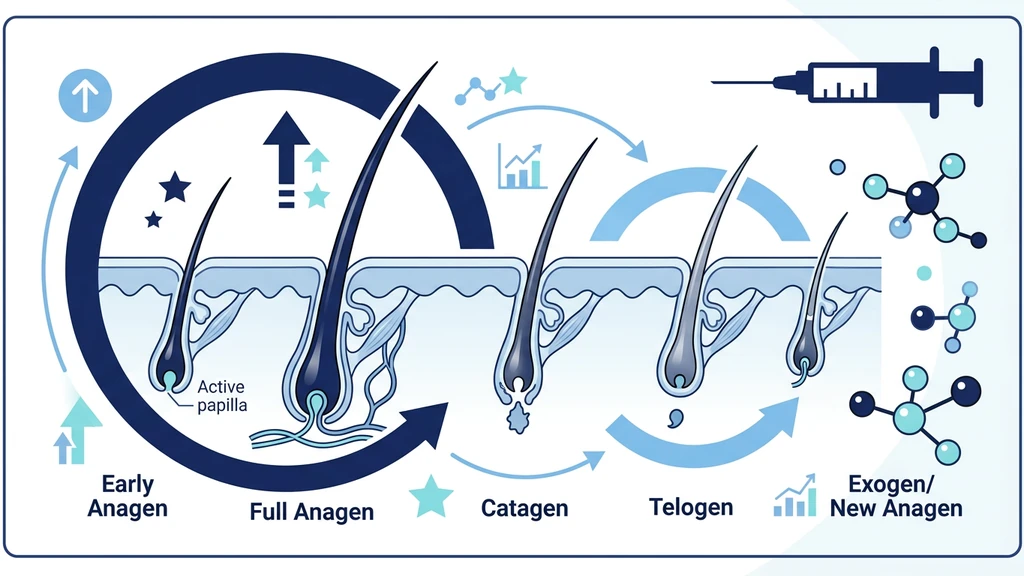
You are three months into semaglutide and noticing more hair in the shower drain than usual. Your brush collects a small clump every morning. Semaglutide does not directly damage hair follicles. The thinning that 3-5% of users experience results from rapid weight loss, not the drug itself. The condition is called telogen effluvium. It is temporary, and over 95% of cases resolve within 6-12 months once weight stabilizes.
The STEP 1 trial documented alopecia in 3.0% of semaglutide 2.4 mg users versus 1.0% on placebo. The incidence correlates with the rate of weight loss, not the dose (Wilding et al., NEJM 2021).
| Quick Reference | Details |
|---|---|
| Prevalence | 3-5% of users (vs 1% placebo) |
| Cause | Rapid weight loss, not semaglutide itself |
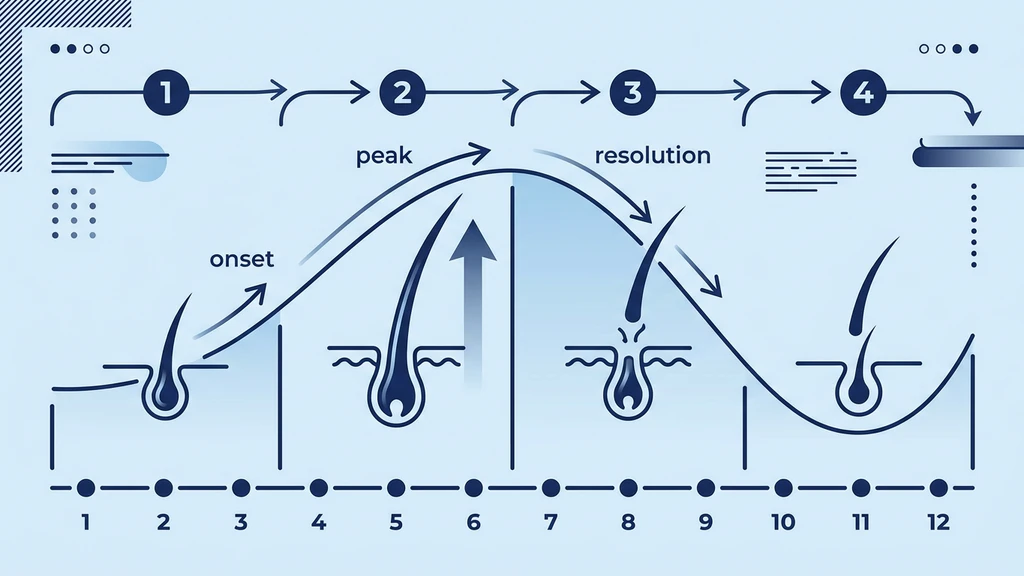
| Onset | Months 3-4 after starting treatment |
| Peak shedding | Months 4-6 |
| Resolution | 6-12 months after weight stabilizes |
| Key prevention | Protein intake: 0.7-1.0g per pound body weight |
| Evidence level | Human clinical trials (STEP 1, STEP 5) |
For dosing protocols, see our semaglutide dosage chart. For safety information, see our peptide safety guide.
Get your custom peptide protocol:
- Tailored to your body and goals
- Precise dosing and cycle length
- Safe stacking combinations
- Backed by peer-reviewed studies
- Ready in under 2 minutes
What Causes Hair Loss on Semaglutide?
Think of your body like a company facing sudden budget cuts. When revenue (calories) drops sharply, the company shuts down non-essential departments first. Hair growth is the first department to close. Your body redirects protein and energy to the heart, brain, and liver. Follicles get the memo and go dormant.
The technical term is telogen effluvium. When you lose more than 1-2% of body weight per month, follicles shift from anagen (growth) to telogen (rest) prematurely. After 2-3 months in telogen, those hairs shed simultaneously. The result: visible thinning that appears months after the weight loss started.
The same pattern occurs after bariatric surgery, crash dieting, or any intervention that produces rapid weight loss. Semaglutide is not unique. Five overlapping pathways drive the process:
- Caloric deficit stress: The body's survival response prioritizes vital organs over follicle maintenance
- Protein redistribution: Available protein goes to muscle preservation, leaving less for keratin synthesis
- Anagen-to-telogen shift: Follicles exit growth 2-3 months before visible shedding begins
- Micronutrient depletion: Reduced food intake lowers iron, zinc, and biotin levels
- Nutrient partitioning: The body routes resources to the heart, brain, and liver first
What Happens If You Ignore the Warning Signs
A woman eating 800 calories daily on semaglutide lost 12% of her body weight in 8 weeks. By month 5, she had lost roughly 40% of her visible hair volume. Her protein intake averaged 35 grams per day, less than half of what follicles need to maintain growth during weight loss.
Had she tracked calories and maintained 1,200+ daily with 100 grams of protein, the deficit would have been moderate enough to keep most follicles in the growth phase. The difference between 800 and 1,200 calories is not dramatic on the scale (you still lose weight at 1,200), but it is dramatic on your scalp.
A second scenario: a man on Wegovy 2.4 mg lost 40 pounds in 4 months — a pace faster than how long semaglutide typically takes to work might suggest. He supplemented nothing. His ferritin dropped to 15 ng/mL (the threshold for hair loss is roughly 30 ng/mL). Iron supplementation after bloodwork corrected the deficiency in 8 weeks, and shedding slowed within a month. A simple blood test at week 6 would have caught it before visible thinning started.
When Does Semaglutide Hair Loss Start and Stop?
Hair thinning follows a predictable timeline linked to the hair growth cycle, not to semaglutide pharmacology.
Onset: Months 3-4
Shedding begins 3-4 months after starting semaglutide. This delay reflects biology, not drug accumulation. Follicles stressed by caloric deficit in month 1 enter telogen immediately, but the resting phase lasts 2-3 months before the hair falls out. The shedding you see in month 4 was triggered by the weight loss in month 1.
Peak: Months 4-6
Shedding is heaviest when weight loss is fastest. This aligns with dose titration, when appetite suppression is strongest and caloric deficits are largest. More hair on the pillow, in the drain, on the brush. It looks alarming. It is not permanent.
Resolution: Months 8-12
Shedding slows by months 8-10 as weight loss decelerates at maintenance dose, and most semaglutide side effects resolve on a similar timeline. Full regrowth takes 12-18 months from when weight stabilizes. The STEP 5 trial (304 participants, 2-year follow-up) confirmed that thinning occurred during year one and resolved during year two as weight plateaued (Jastreboff et al., 2022).
When to See a Dermatologist
Telogen effluvium causes uniform thinning across the scalp. If you see distinct bald patches or a receding hairline, that is a different condition (alopecia areata or androgenic alopecia). Seek evaluation if shedding continues beyond 12 months after weight has stabilized, or if you have a family history of pattern baldness.
How to Manage Hair Loss on Semaglutide
Five strategies reduce the severity and duration of semaglutide-related thinning. None completely prevents telogen effluvium during significant weight loss, but they meaningfully limit the damage.
Prioritize Protein Intake
Consume 0.7-1.0 grams of protein per pound of body weight daily. Hair is 95% keratin, a protein. Inadequate intake during caloric deficit accelerates follicle shutdown. Distribute protein across 3-4 meals: Greek yogurt, eggs, chicken, fish, whey shakes.
Semaglutide suppresses appetite aggressively. Many users eat far less protein than they realize. Track your intake for one week. If you are below 0.7g per pound, protein shakes are the fastest fix. If appetite suppression is so strong you struggle to eat, see not losing weight on semaglutide for strategies to maintain adequate nutrition without undermining weight loss.
Slow Down the Rate of Weight Loss
If shedding is severe, hold your current dose for an extra 4-8 weeks before escalating. Your provider can adjust the titration schedule to slow things down. Losing 1-2 pounds per week instead of 3-4 reduces telogen effluvium risk significantly. The weight loss still happens. It just takes longer. Follicles tolerate gradual deficit much better than aggressive restriction. A microdosing semaglutide protocol can slow weight loss to a rate that minimizes telogen effluvium risk.
Supplement Key Micronutrients
Biotin (5,000 mcg/day) supports keratin production. Zinc (30 mg/day) is essential for follicle cycling. Iron: supplement only if bloodwork confirms low ferritin. Excess iron is toxic. Vitamin D below 30 ng/mL correlates with thinning. Get bloodwork 6-8 weeks after starting semaglutide.
Biotin interferes with thyroid function tests and troponin assays. Tell your lab before any blood draws. For proper medication storage that maintains potency, see does semaglutide need to be refrigerated.
Use Minoxidil Topically
Over-the-counter 5% minoxidil extends the anagen (growth) phase. A 2019 meta-analysis showed it increases hair density by 12-18% over 24 weeks. Start as soon as shedding becomes noticeable. Results take 3-4 months. Both men and women can use the 5% formulation.
Avoid Harsh Hair Practices
Reduce heat styling, tight hairstyles, and chemical treatments during the shedding phase. Use a gentle sulfate-free shampoo. These measures will not stop telogen effluvium, but they prevent mechanical breakage on top of it. Every hair saved from damage is one that stays visible while new growth comes in.
What Does the Research Say?
STEP 1 Trial (Wilding et al., 2021) 1,961 participants. Alopecia in 3.0% of semaglutide 2.4 mg users versus 1.0% placebo. Incidence correlated with percentage body weight loss, not dose (PubMed).
STEP 5 Trial (Jastreboff et al., 2022) 304 participants, 2-year follow-up. Alopecia incidence 2.6%. Thinning occurred during year one (rapid weight loss). Resolved during year two (weight plateau). Best evidence that the condition is self-limiting (PubMed).
Telogen Effluvium Review (Grover and Khurana, 2013) Systematic review confirming rapid weight loss (more than 20 pounds in under 3 months) as a recognized trigger. Self-limiting in 95% of cases. Complete regrowth within 6-12 months of removing the trigger (PubMed).
Important Warnings
Semaglutide hair loss is almost always telogen effluvium (diffuse thinning). Distinct bald patches or a receding hairline indicate a separate condition. See a dermatologist.
Do not stop semaglutide for hair thinning alone. The drug has a long half-life and remains active for weeks, so stopping does not provide immediate relief from shedding, and two-thirds of lost weight returns within 12 months of discontinuation per STEP 1 extension data. The metabolic benefits of sustained weight loss outweigh temporary cosmetic changes.
Supplement iron only after bloodwork confirms low ferritin. Excess iron is toxic and will not improve hair growth if levels are normal.
Women experiencing hair loss with irregular periods on semaglutide should request thyroid function and hormonal panels. Rapid weight loss can unmask subclinical thyroid dysfunction or polycystic ovary syndrome. If you are considering switching medications, see semaglutide to tirzepatide conversion for equivalent doses.
Related Side Effects
Does Semaglutide Cause Fatigue? Fatigue (11% of users) and hair loss share the same root cause: caloric deficit redirecting resources from non-vital functions. If you experience both, inadequate calorie or protein intake is the most likely culprit.
Does Semaglutide Cause Nausea? Nausea (40-45% of users) reduces food intake further, deepening the deficit that drives hair loss. Managing nausea with smaller meals and proper titration indirectly reduces thinning severity.
Does Tirzepatide Cause Hair Loss? Tirzepatide shows 5.7% thinning at 15 mg in SURMOUNT-1. The higher rate reflects more aggressive weight loss (22.5% vs 14.9%). Per pound lost, shedding rates are comparable.
Frequently Asked Questions
How common is hair loss on semaglutide?
Clinical trials report 3-5% of users experience noticeable thinning. STEP 1 documented 3.0% versus 1.0% on placebo across 1,961 participants. Real-world rates may be slightly higher because patients often lose weight faster than trial protocols allow. The risk tracks with weight loss speed, not dose.
Is semaglutide hair loss permanent?
No. Telogen effluvium resolves in over 95% of cases within 6-12 months once weight stabilizes. Follicles are not damaged. They enter a resting phase prematurely and resume growth when the caloric deficit moderates. STEP 5 confirmed resolution during year two.
Does Ozempic cause more hair loss than Wegovy?
Ozempic (up to 2.0 mg) and Wegovy (2.4 mg) are the same molecule. Hair loss correlates with weight loss speed, not dose. Wegovy at 2.4 mg produces faster loss, so it may trigger more shedding. Losing 20 pounds on Ozempic carries lower risk than losing 40 pounds on Wegovy.
Will biotin help with semaglutide hair loss?
Biotin (5,000 mcg/day) supports keratin production and may shorten shedding by 2-4 weeks. It cannot override telogen effluvium caused by caloric deficit. Protein intake (0.7-1.0g per pound body weight) matters more. Biotin interferes with certain lab tests; inform your doctor before blood draws.
Should I stop semaglutide if I notice hair thinning?
No. Stopping leads to weight regain: two-thirds returns within 12 months per STEP 1 extension data. Cardiovascular and metabolic benefits of maintained weight loss outweigh temporary thinning. Instead, slow your weight loss rate, increase protein to 0.7-1.0g per pound, and supplement biotin and zinc.
When does semaglutide hair loss start and stop?
Shedding begins at months 3-4, peaks around months 5-6, and resolves by months 10-12. The 3-month delay reflects hair biology: stressed follicles enter telogen (rest) immediately but only shed 2-3 months later. Once weight stabilizes, new growth resumes within 4-6 weeks.
The Bottom Line
Semaglutide does not directly cause hair loss. The 3-5% incidence is telogen effluvium triggered by rapid weight loss. The same pattern follows bariatric surgery, crash dieting, or any large caloric deficit.
Maintain protein at 0.7-1.0g per pound body weight. Get bloodwork at week 6 to catch iron and vitamin D deficiencies early. If shedding starts, topical minoxidil accelerates regrowth. The condition resolves on its own in over 95% of cases.
For dosing information, see our semaglutide dosage chart in mL. Use our semaglutide dosage calculator to plan your titration.
Related Articles: - How Long Does Semaglutide Take to Work? — timeline for weight loss at each dose level - How Long Does Semaglutide Side Effects Last? — when hair loss and other effects resolve - Best Peptides for Weight Loss — compare GLP-1 options - Does Tirzepatide Make You Tired? — fatigue as a related caloric-deficit symptom - Semaglutide Before and After — clinical results timeline showing when hair regrowth typically begins
Related Articles
Does Semaglutide Cause Heartburn?
Does semaglutide cause heartburn? Yes, in 1.9-5% of users. Delayed gastric emptying mechanism, GERD differences, and 7 ways to manage it.
Can Semaglutide Cause Depression?
Clinical trials show semaglutide does not increase depression risk. FDA cleared GLP-1 drugs of suicidality concerns in 2025. Evidence and mechanisms.
Can Semaglutide Cause Diarrhea?
Diarrhea affects 8-30% of semaglutide users depending on dose. Learn the GLP-1 mechanism, STEP trial incidence data, timeline, and 6 management strategies.
Semaglutide Nausea Relief: 9 Proven Tips
Relieve semaglutide nausea with 9 actionable strategies: ondansetron dosing, ginger protocols, dietary timing, acupressure, and when to call your doctor.