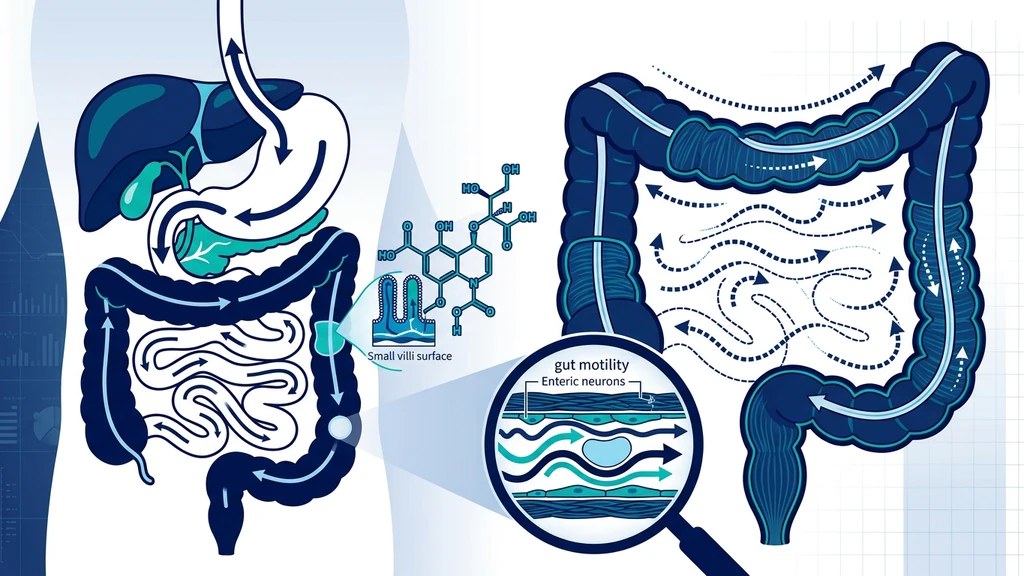
You started tirzepatide three weeks ago. You have not had a bowel movement in four days. The bloating makes your waistband tighter than before you lost any weight. Tirzepatide causes constipation in 6-12% of users depending on dose. The drug slows gut transit by 30-40%, giving the colon extra time to absorb water from stool. Most cases are mild, resolve within 4-6 weeks at a stable dose, and respond to fiber, hydration, and magnesium.
The SURMOUNT-1 trial documented constipation in 6.2% at 5 mg rising to 11.7% at 15 mg, compared to 3.9% on placebo. Fewer than 1% discontinued treatment (Jastreboff et al., NEJM 2022).
| Quick Reference | Details |
|---|---|
| Prevalence | 6.2% (5 mg), 9.2% (10 mg), 11.7% (15 mg) |
| Cause | GLP-1 receptor slowing of gut motility + colonic water absorption |
| Onset | Weeks 1-2 at each dose level |
| Peak | Weeks 2-4 |
| Resolution | 4-6 weeks at a stable dose |
| Key fix | Psyllium husk (1 tbsp/day) + 80-100 oz water |
| Evidence level | Human clinical trials (SURMOUNT-1, SURPASS-2) |
For dosing protocols, see our tirzepatide dosage chart. For safety information, see our peptide safety guide.
Get your custom peptide protocol:
- Tailored to your body and goals
- Precise dosing and cycle length
- Safe stacking combinations
- Backed by peer-reviewed studies
- Ready in under 2 minutes
What Causes Constipation on Tirzepatide?
Think of your digestive tract like a conveyor belt. Food enters at one end, waste exits at the other, and the belt runs at a steady speed. Tirzepatide turns the speed dial down by 30-40%. Everything still moves, but slower. The colon, which absorbs water from passing waste, now has extra time to pull out moisture. The stool dries and hardens.

Tirzepatide activates both GLP-1 and GIP receptors. GLP-1 receptor stimulation slows gastric emptying and intestinal motility through vagal nerve pathways. A comprehensive review confirmed the 30-40% transit slowdown and noted that the effect partially attenuates as the gut adapts to sustained receptor stimulation (Nauck et al., 2021).
Reduced food intake compounds the problem. Tirzepatide suppresses appetite aggressively, meaning less food and less fecal bulk. Smaller volume is harder to push through a sluggish colon.
The dose-response pattern from SURMOUNT-1 confirms the mechanism:
| Tirzepatide Dose | Constipation Rate | Placebo |
|---|---|---|
| 5 mg | 6.2% | 3.9% |
| 10 mg | 9.2% | 3.9% |
| 15 mg | 11.7% | 3.9% |
Higher doses slow the gut more. More slowing means drier, harder stool.
What Happens When You Ignore the Warning Signs
A man on tirzepatide 10 mg went 6 days without a bowel movement. He assumed it was normal because "the drug just does that." He drank 3 cups of coffee daily and 40 ounces of water. By day 7, he developed severe abdominal cramping and nausea. His urgent care visit revealed fecal impaction requiring manual disimpaction and an enema. The fix was simple: psyllium husk daily, 90 ounces of water, and 400 mg magnesium citrate at bedtime. He never missed another day.
A second scenario: a woman on 15 mg relied on senna (a stimulant laxative) daily for 5 weeks because it worked faster than fiber. When she stopped, her constipation was worse than before she started. Stimulant laxatives reduce the colon's natural contractile ability with prolonged use. Switching to magnesium citrate and polyethylene glycol restored regularity within 10 days. Stimulant laxatives are a rescue tool, not a daily strategy.
When Does Tirzepatide Constipation Start and Stop?
Constipation follows a pattern tied to dose changes.
Onset: Weeks 1-2 at Each Dose Level
Constipation appears within 1-2 weeks of starting tirzepatide or after each dose increase. The gut adjusts to a new level of motility slowdown. You may notice less frequent bowel movements, harder stools, or a feeling of incomplete evacuation.
Peak: Weeks 2-4
Constipation is worst during weeks 2-4 at each new dose. The 10 mg to 15 mg transition tends to be the hardest. Gut motility hits its lowest point before adaptation begins. SURPASS-2 found constipation rates of 5.8-7.2% with tirzepatide versus 5.0% with semaglutide 1 mg. The difference was not statistically significant (Frias et al., 2021).
Resolution: 4-6 Weeks at a Stable Dose
Most users adapt within 4-6 weeks. The gut partially adjusts to sustained GLP-1 receptor stimulation and motility improves, consistent with the broader pattern of how long tirzepatide takes to work. Some users experience ongoing mild constipation throughout treatment, manageable with fiber and hydration. Severe persistent constipation affects fewer than 2% of users.
When to Seek Medical Help
No bowel movement for 4+ days. Severe abdominal pain. Blood in stool. Nausea and vomiting alongside constipation (possible bowel obstruction). These are uncommon but require prompt evaluation.
How to Manage Constipation on Tirzepatide
Five strategies work. Most cases resolve with the first three alone.
Increase Fiber Gradually
Add 25-35 grams of fiber daily from psyllium husk, chia seeds, flaxseed, and vegetables. Increase by 5 grams per week to avoid bloating. Soluble fiber (psyllium) draws water into stool, making it softer. Insoluble fiber (vegetables, bran) adds bulk and stimulates motility. One tablespoon of psyllium husk in water daily is the single most effective over-the-counter remedy.
Drink 80-100 Ounces of Water Daily
Tirzepatide's slowed gut transit gives the colon extra time to absorb water from stool. If you are not drinking enough, stool hardens regardless of fiber intake. Spread water throughout the day. Chugging at meals worsens the bloating that accompanies delayed gastric emptying.
Take Magnesium Citrate at Bedtime
200-400 mg of magnesium citrate draws water into the intestines osmotically and relaxes smooth muscle in the colon wall. Start at 200 mg and increase as needed. It also supports sleep and muscle recovery. This is one of the most effective remedies for GLP-1 agonist constipation.
Walk 30 Minutes Daily
Walking stimulates peristalsis, the wave-like contractions that move stool through the colon. A 10-minute walk after meals makes a noticeable difference. Physical activity also reduces the bloating sensation. Gentle movement is enough. Intense exercise is not required.
Use an Osmotic Laxative if Needed
Polyethylene glycol (MiraLAX) pulls water into the colon. It is non-stimulant, does not cause dependency, and is safe for long-term use. Discuss with your prescriber if you need daily use beyond 2 weeks.
Avoid stimulant laxatives (senna, bisacodyl) daily for more than 1-2 weeks. Unlike osmotic laxatives, stimulant laxatives reduce natural colon contractility with prolonged use.
What Does the Research Say?
SURMOUNT-1 (Jastreboff et al., 2022) 2,539 participants. Constipation in 6.2% (5 mg), 9.2% (10 mg), 11.7% (15 mg) versus 3.9% placebo. Most cases mild to moderate. Fewer than 1% discontinued treatment for constipation (PubMed).
SURPASS-2 Head-to-Head (Frias et al., 2021) Tirzepatide versus semaglutide in type 2 diabetes. Constipation rates: 5.8-7.2% with tirzepatide versus 5.0% with semaglutide 1 mg. Not statistically significant. Similar GI impact across the GLP-1 class (PubMed).
Mechanistic Review (Nauck et al., 2021) GLP-1 receptor agonists slow gastric emptying by 30-40% and reduce small intestinal motility through vagal nerve pathways. Effects are strongest during dose titration and partially attenuate over weeks (PubMed).
Important Warnings
Severe constipation (no bowel movement for 4+ days) combined with nausea and vomiting requires immediate medical attention. This can indicate bowel obstruction, a rare but documented complication of GLP-1 agonists.
Do not use stimulant laxatives daily for more than 1-2 weeks without medical guidance. They reduce natural colon contractility with prolonged use.
If you have a history of gastroparesis, inflammatory bowel disease, or bowel obstruction, discuss these conditions with your prescriber before starting tirzepatide. Pre-existing motility disorders increase constipation risk significantly. Note that tirzepatide stays in your system for weeks, so constipation may persist after stopping the drug.
Blood in stool, unexplained weight changes, or a sudden shift from normal habits to severe constipation (especially in adults over 50) warrants prompt evaluation. If you are also experiencing headaches alongside constipation, dehydration is the likely common cause.
Related Side Effects
Does Tirzepatide Cause Hair Loss? Constipation reduces nutrient absorption, contributing to deficiencies that worsen hair thinning during tirzepatide treatment. Adequate fiber and hydration help both issues.
Does Semaglutide Cause Nausea? Nausea and constipation share the same root mechanism: GLP-1 receptor slowing of gastric emptying and gut transit. Managing one often helps the other.
Does Semaglutide Cause Fatigue? Persistent constipation and bloating contribute to fatigue across GLP-1 agonists. Resolving constipation often improves energy levels.
Frequently Asked Questions
How common is constipation on Mounjaro?
SURMOUNT-1 data: 6.2% at 5 mg, 9.2% at 10 mg, 11.7% at 15 mg, versus 3.9% placebo. Most cases are mild to moderate. Fewer than 1% of the 2,539 participants stopped treatment because of constipation. The rate tracks with dose because higher doses slow gut transit more.
Does tirzepatide constipation go away?
For most users, yes. The gut adapts to GLP-1 receptor stimulation within 4-6 weeks at each dose level. Some experience ongoing mild constipation throughout treatment, manageable with psyllium husk (1 tbsp/day) and 80-100 ounces of water. Severe persistent cases affect fewer than 2% of users.
What helps with constipation on tirzepatide?
Psyllium husk (1 tablespoon in water daily), 80-100 ounces of water, magnesium citrate (200-400 mg at bedtime), and 30 minutes of daily walking. If those are insufficient, polyethylene glycol (MiraLAX) is safe for longer-term use. Avoid stimulant laxatives like senna beyond 1-2 weeks.
Is tirzepatide constipation worse than semaglutide?
SURPASS-2 found comparable rates: 5.8-7.2% with tirzepatide versus 5.0% with semaglutide 1 mg. The difference is not statistically significant. Both drugs slow gut transit through GLP-1 receptor activation. Switching between them for constipation alone is unlikely to help.
Can constipation from tirzepatide cause weight gain?
Constipation does not cause fat gain. Retained stool and water can add 2-5 pounds to the scale temporarily. Weigh yourself after a bowel movement for accuracy. Tirzepatide's weight loss effect continues regardless of constipation — see why am I not losing weight on tirzepatide for other causes of stalls. The scale fluctuation resolves once regularity returns.
The Bottom Line
Tirzepatide constipation affects 6-12% of users. The cause: GLP-1 receptor slowing of gut motility gives the colon extra time to absorb water from stool. Most cases resolve within 4-6 weeks at a stable dose.
Psyllium husk (1 tablespoon daily), 80-100 ounces of water, and magnesium citrate (200-400 mg at bedtime) fix most cases. Daily walking stimulates gut motility. For persistent cases, polyethylene glycol is safe for long-term use. Avoid stimulant laxatives beyond 1-2 weeks.
Use our tirzepatide dosage calculator to plan your titration. For dosing details, see our tirzepatide dosage chart in units. For switching considerations, see semaglutide to tirzepatide switching guide.
Related Articles: - Does Tirzepatide Cause Diarrhea? — the opposite GI symptom from the same mechanism - Does Tirzepatide Make You Tired? — fatigue often accompanies GI discomfort - Can You Drink on Tirzepatide? — alcohol worsens dehydration and constipation - Tirzepatide Maintenance Dose After Weight Loss — constipation often stabilizes at maintenance dose - How to Inject Tirzepatide — proper technique for subcutaneous administration - Is Compound Tirzepatide Safe? — quality considerations for compounded products
Related Articles
Does Tirzepatide Cause Insomnia?
Does tirzepatide cause insomnia? Trials say no, but 5 indirect pathways explain lost sleep. GI, blood sugar, and caloric deficit fixes.
Does Tirzepatide Affect Your Period?
Does tirzepatide affect your period? Yes, via rapid fat loss and estrogen shifts. Cycle changes, PCOS fertility, and birth control warning.
Can Tirzepatide Cause Joint Pain? Clinical Data
Can tirzepatide cause joint pain? SURMOUNT arthralgia rates match placebo. Review 5 indirect causes, uric acid risks, and 8 relief tactics.
Does Tirzepatide Cause Muscle Loss?
SURMOUNT-1 DEXA data: 25% of tirzepatide weight loss is lean mass (5.6 kg at 72 weeks). Protein targets, resistance training, and supplements.