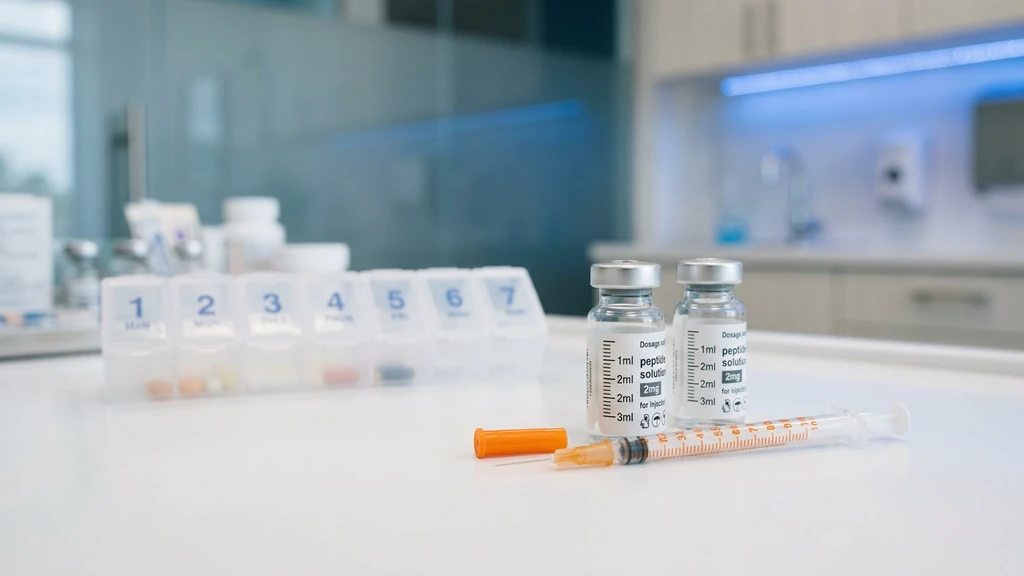
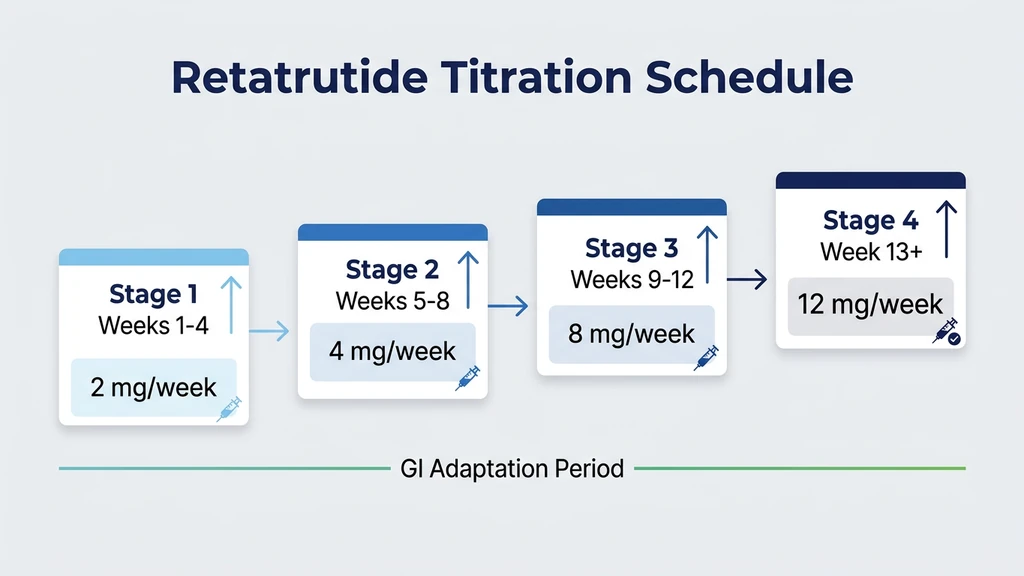
Your retatrutide vial arrived. It is sitting in a cold shipping box with a lyophilized powder inside, and the gap between holding an investigational triple agonist and actually using it correctly feels enormous. Inject 2mg subcutaneously once per week for four weeks, then escalate to 4mg, 8mg, and finally 12mg at four-week intervals. That is the entire titration in one sentence.
| Quick Reference | Details |
|---|---|
| Administration | Subcutaneous injection |
| Frequency | Once weekly, same day each week |
| Starting dose | 2mg for 4 weeks |
| Titration | 2mg to 4mg to 8mg to 12mg (every 4 weeks) |
| Time to full dose | 12 weeks |
| Half-life | ~6 days |
| Injection sites | Abdomen, thigh, upper arm |
| Needle gauge | 29 to 31 gauge insulin syringe |
| Storage | 2 to 8 degrees Celsius (refrigerated) |
This guide covers every step from reconstitution to injection technique, the complete titration schedule, injection site rotation, meal timing, what to expect week by week, and the mistakes that derail protocols before they start working. For your exact syringe volumes, use the retatrutide dosage calculator. For a broader overview of this peptide, see our complete retatrutide guide.
Retatrutide is not FDA-approved. It is an investigational drug in Phase 3 clinical trials. All information below is drawn from published clinical trial data and is intended for educational purposes only. Consult a licensed healthcare provider before using any peptide.
Get your custom peptide protocol:
- Tailored to your body and goals
- Precise dosing and cycle length
- Safe stacking combinations
- Backed by peer-reviewed studies
- Ready in under 2 minutes
What Is Retatrutide and Why Does the Protocol Matter?
Retatrutide (LY3437943) is a 39-amino-acid synthetic peptide developed by Eli Lilly. It activates three hormone receptors simultaneously: GLP-1, GIP, and glucagon. No other weight loss compound targets all three. In the Phase 3 TRIUMPH-4 trial, the 12mg dose produced 28.7% body weight loss over 68 weeks, the largest reduction ever recorded for any anti-obesity medication (Lilly Press Release, Dec 2025).
The protocol matters because how you take retatrutide directly determines whether you tolerate it or spend weeks battling nausea and vomiting. The Phase 2 trial proved this quantitatively: one group that started directly at 4mg experienced nearly double the gastrointestinal side effects compared to a group that started at 2mg and escalated (Jastreboff et al., NEJM 2023). Skipping the titration does not speed up weight loss. It speeds up quitting.
Think of retatrutide like adjusting to altitude. Climbers ascending Kilimanjaro do not sprint from base camp to the summit. They ascend gradually, allowing their physiology to adapt at each level. Your GI tract needs the same gradual exposure to triple receptor activation. Rush it, and the body rebels. Pace it, and the body adjusts quietly. For a full breakdown of how each receptor contributes to weight loss, see how does retatrutide work.
Step 1: Reconstitute Your Retatrutide
Research-grade retatrutide arrives as a lyophilized (freeze-dried) white powder in a sealed glass vial, typically 5mg or 10mg. You must reconstitute it with bacteriostatic water before injection. The process takes under 3 minutes and requires no special skills. For the full reconstitution walkthrough with photos, see how to reconstitute retatrutide.
Supplies You Need
Gather everything before you start:
- Retatrutide vial (lyophilized powder, 5mg or 10mg)
- Bacteriostatic water (0.9% benzyl alcohol preserved)
- Insulin syringes: 29 to 31 gauge, 0.5 inch needle, 1mL capacity
- Alcohol swabs (70% isopropyl alcohol)
- Sharps container for used needles
- Fine-tip marker for labeling the vial
Use bacteriostatic water, not sterile water. The benzyl alcohol preservative prevents bacterial growth for up to 30 days. Sterile water has no preservative and risks contamination within 24 to 48 hours. For sourcing, see where to buy bacteriostatic water for injection. For the difference between the two, see bacteriostatic water vs sterile water.
Reconstitution Steps
- 1.Remove the plastic cap from the retatrutide vial to expose the rubber stopper.
- 2.Swab the stopper with an alcohol pad. Let it air dry for 10 seconds.
- 3.Draw bacteriostatic water into a syringe. For a 10mg vial, draw 1mL to create a 10mg/mL concentration (easiest for weekly dosing).
- 4.Insert the needle through the rubber stopper at a slight angle.
- 5.Release the water slowly down the inside wall of the vial. Never spray it directly onto the powder. Direct impact can denature the peptide structure.
- 6.Swirl gently in small circular motions. Never shake. Shaking creates foam and causes aggregation that reduces potency.
- 7.Wait until the powder is fully dissolved. The solution should be clear and colorless. If slightly cloudy, refrigerate for 15 to 30 minutes and swirl again.
- 8.Label the vial with the date, concentration (e.g., "10mg/1mL"), and your name if storing alongside other peptides.
- 9.Refrigerate immediately at 2 to 8 degrees Celsius.
Use the peptide reconstitution calculator for custom vial sizes and water volumes.
Concentration and Volume Reference
The amount of water you add determines how many units you draw per dose. Choosing the right dilution makes weekly dosing practical across all titration levels.
| Vial Size | Water Added | Concentration | 2mg Dose | 4mg Dose | 8mg Dose | 12mg Dose |
|---|---|---|---|---|---|---|
| 10mg | 1mL | 10mg/mL | 20 units | 40 units | 80 units | N/A (exceeds 1mL) |
| 10mg | 2mL | 5mg/mL | 40 units | 80 units | N/A | N/A |
| 5mg | 1mL | 5mg/mL | 40 units | 80 units | N/A | N/A |
| 5mg | 0.5mL | 10mg/mL | 20 units | 40 units | 80 units | N/A |
For the 8mg and 12mg maintenance doses, the 10mg/mL concentration (10mg vial + 1mL water) is most practical. At 10mg/mL, 8mg equals 80 units in a single 1mL syringe draw. For 12mg, you need two draws (80 units + 40 units from a fresh vial or the same vial if enough remains).
For automated volume calculations, use the peptide unit converter.
Step 2: The Complete Titration Schedule
The titration schedule is the single most important part of taking retatrutide. Every Phase 3 TRIUMPH trial uses the same 4-week escalation pattern starting at 2mg. This protocol was designed based on Phase 2 data showing that gradual dose increases cut gastrointestinal side effects roughly in half compared to direct-start approaches (Jastreboff et al., NEJM 2023).
Weeks 1 to 4: Starting at 2mg
Every person begins at 2mg once weekly, regardless of body weight, prior GLP-1 experience, or target maintenance dose. This is non-negotiable based on the clinical evidence.
What 2mg does: The GLP-1 receptor activation begins suppressing appetite within 2 to 3 days of the first injection. You will likely notice that portion sizes feel larger than usual, and cravings for calorie-dense foods may diminish. The GIP component starts improving insulin signaling. The glucagon component is active but at a low enough level to let your liver adapt gradually.
Expected side effects at 2mg: Mild nausea in the first 2 to 3 days (resolves by day 5 for most people), reduced appetite, and occasionally loose stools. If nausea is more than mild, see the side effect management section below.
Weight loss at this phase: Modest. In the Phase 2 trial, participants on the 12mg track had lost approximately 3 to 5% of body weight by the end of week 4. The real acceleration comes later. Do not evaluate the drug's effectiveness at this stage.
If you have used semaglutide or tirzepatide previously, you still start at 2mg. Prior GLP-1 tolerance does not eliminate the need for retatrutide-specific titration because the glucagon receptor component is entirely new to your body. For more on switching between these drugs, see semaglutide to tirzepatide switching.
Weeks 5 to 8: Escalation to 4mg
At week 5, double the dose to 4mg once weekly. Appetite suppression becomes noticeably stronger. Most users report a meaningful reduction in food cravings and a natural shift toward smaller meals.
What changes at 4mg: GLP-1 receptor activation intensifies, further slowing gastric emptying. GIP-mediated metabolic improvements become more pronounced. You may notice that meals you previously finished easily now leave you uncomfortably full halfway through. This is the drug working as intended.
Expected side effects: GI symptoms may briefly return during the first 1 to 2 weeks at the new dose. Nausea, diarrhea, and reduced appetite are the most common. These typically resolve within 7 to 10 days as the GI tract adapts. If symptoms remain severe after 2 weeks, hold at 4mg for an additional 2 to 4 weeks before escalating.
Weight loss at this phase: Accelerating. The Phase 2 trial showed the 4mg group lost 12.9% of body weight by week 24. By the end of week 8, you should see measurable changes on the scale and in how clothing fits. For detailed weight loss data by dose, see the retatrutide dosage guide.
Weeks 9 to 12: Escalation to 8mg
At week 9, the dose increases to 8mg once weekly. This is where the glucagon receptor activation becomes more pronounced and energy expenditure increases measurably.
What changes at 8mg: The thermogenic effect of glucagon receptor activation becomes a meaningful contributor to weight loss. Your body burns more calories at rest. Liver fat oxidation accelerates. The Phase 2 trial showed the 8mg group achieved 22.8% body weight loss at 48 weeks, only 1.4 percentage points less than the 12mg group.
Decision point: For some individuals, 8mg is the optimal maintenance dose. If side effects are tolerable and weight loss is progressing well, there is no strict requirement to escalate to 12mg. Discuss this with your healthcare provider based on your response, goals, and tolerability.
Expected side effects: Similar pattern as the previous escalation. Transient nausea and GI discomfort that resolve within 1 to 2 weeks. At 8mg, a small percentage of users report dysesthesia (altered skin sensation, tingling, or numbness). This was noted in the Phase 2 trial and appears to be dose-dependent. For a full breakdown of side effects by dose, see retatrutide side effects.
Week 13 Onward: Maintenance at 12mg
At week 13, the dose reaches 12mg once weekly. This is the maximum studied dose and the one that produced the strongest results in every clinical trial.
Clinical results at 12mg:
| Metric | 12mg Group |
|---|---|
| Weight loss at 48 weeks (Phase 2) | 24.2% |
| Weight loss at 68 weeks (Phase 3 TRIUMPH-4) | 28.7% |
| Patients losing 5% or more body weight | 100% |
| Patients losing 10% or more body weight | 93% |
| Patients losing 15% or more body weight | 83% |
Every single participant on 12mg lost at least 5% of their body weight, a response rate no other obesity medication has achieved (Jastreboff et al., NEJM 2023).
Continue the 12mg maintenance dose for as long as treatment is needed. The Phase 3 TRIUMPH-4 trial showed continued weight loss at 68 weeks with no plateau, suggesting longer treatment durations may produce even greater reductions.
Alternative: Slower 2mg-Increment Titration
Some practitioners prefer a more gradual escalation using 2mg increments every four weeks. This approach is useful if you have a history of poor GLP-1 tolerance, experienced significant nausea on tirzepatide or semaglutide, or simply prefer a conservative approach.
| Weeks | Dose | Notes |
|---|---|---|
| 1 to 4 | 2mg | Starting dose |
| 5 to 8 | 4mg | First escalation |
| 9 to 12 | 6mg | Intermediate step |
| 13 to 16 | 8mg | Second major level |
| 17 to 20 | 10mg | Intermediate step |
| 21 onward | 12mg | Maximum maintenance |
This schedule takes 20 weeks to reach full dose instead of 12. The tradeoff is slower initial weight loss in exchange for fewer GI side effects during each escalation. For patients who quit tirzepatide due to nausea, this gentler approach often makes the difference between completing the protocol and abandoning it.
Step 3: Injection Technique
Retatrutide is administered as a subcutaneous injection, meaning the needle enters the fat layer just beneath the skin. The technique is identical to injecting tirzepatide or injecting BPC-157. If you have self-injected any peptide before, you already know the process.
Drawing Your Dose
- 1.Wash your hands with soap and water for at least 20 seconds.
- 2.Remove the vial from the refrigerator. If the solution is very cold, let it sit at room temperature for 2 to 3 minutes. Cold injections sting more than room-temperature ones.
- 3.Swab the vial stopper with an alcohol pad and let it air dry for 10 seconds.
- 4.Pull back the syringe plunger to the number of units you need for your current dose.
- 5.Insert the needle through the center of the rubber stopper.
- 6.Push air into the vial to equalize pressure and make drawing easier.
- 7.Invert the vial so the needle tip is submerged in liquid.
- 8.Pull the plunger back slowly to your target volume. If you see air bubbles, flick the syringe gently and push them back into the vial.
- 9.Withdraw the needle from the vial.
Double-check your volume against the concentration table above before injecting. A miscalculation here means injecting half or double your intended dose.
Choosing Your Injection Site
Three subcutaneous injection sites are standard for retatrutide:
Abdomen: The most common site. Pinch a fold of skin at least 2 inches from the navel. Avoid the area directly around the belly button. This site has the most consistent subcutaneous fat layer and is the easiest for self-injection.
Front of thigh: The middle third of the upper leg, on the outer or front surface. Good alternative when the abdomen is sore. Avoid the inner thigh where larger blood vessels run closer to the surface.
Back of upper arm: The fatty area on the outer, upper portion of the arm. Harder to self-inject without assistance, but viable with practice or a helper.
Rotation is mandatory. Do not inject in the same spot two weeks in a row. Repeated injections in the same location cause lipodystrophy (localized fat tissue changes), inflammation, and inconsistent absorption. Rotate between all three sites on a weekly cycle: abdomen one week, right thigh the next, left thigh the next, upper arm the next. For more on injection site reactions and how to manage them, see tirzepatide injection site reaction.
Performing the Injection
- 1.Swab the injection site with a fresh alcohol pad. Let it air dry completely. Injecting through wet alcohol stings and can irritate the tissue.
- 2.Pinch a fold of skin between your thumb and index finger. This lifts the subcutaneous fat away from the muscle layer beneath.
- 3.Insert the needle at a 45-degree angle in one smooth, confident motion. Hesitating or jabbing increases discomfort.
- 4.Release the skin pinch.
- 5.Push the plunger slowly and steadily over 5 to 10 seconds. Rushing creates pressure buildup that causes stinging and post-injection lumps.
- 6.Count to 5 with the needle still inserted. This allows the liquid to disperse before withdrawal.
- 7.Withdraw the needle at the same angle you inserted it.
- 8.Press gently with a clean cotton pad if there is any bleeding. Do not rub the site, as rubbing can push the peptide out of the subcutaneous layer.
- 9.Dispose of the syringe in a sharps container immediately. Never recap or reuse needles.
The entire process takes under 2 minutes. Most users describe the sensation as a brief pinch followed by nothing. If you experience burning, the solution may be too cold. Let the vial warm at room temperature for 3 to 5 minutes before drawing your next dose. For comprehensive peptide injection safety protocols, see the peptide safety guide.
Injection Timing: Day of Week, Time of Day, and Meals
Retatrutide has a half-life of approximately 6 days, which means it maintains therapeutic blood levels throughout the week regardless of when you inject (Coskun et al., Nature 2022). This gives you considerable flexibility in timing.
Choosing Your Injection Day
Pick one day per week and stick with it. The specific day does not matter pharmacologically. Most users choose a day that is easy to remember and when they are home: Sunday morning, Monday evening, or Friday afternoon are common choices.
Consistency is more important than optimization. Injecting every Monday at 8 AM is better than injecting whenever you remember, even if some other day would be theoretically optimal. Set a recurring alarm on your phone.
If you miss your scheduled day, inject as soon as you remember within 3 days. If more than 3 days have passed since the missed dose, skip it entirely and resume on the next scheduled day. Do not double up on doses.
Morning vs. Evening Injection
Both work. The data from clinical trials does not indicate a significant difference in efficacy based on time of day. However, practical considerations favor one over the other depending on your lifestyle.
Evening injection (after dinner): Many users prefer injecting after their last meal of the day. The reason is strategic: GLP-1 activation peaks within hours of injection, and any nausea tends to be strongest during this window. If you inject at 8 PM and go to sleep at 10 PM, you sleep through the worst of any GI discomfort. By morning, the nausea has typically passed.
Morning injection: Preferred by users who do not experience significant nausea. Morning injection allows you to monitor for any injection site reactions during waking hours. Some users report that appetite suppression feels stronger when the injection aligns with the start of the eating day.
There is no wrong answer. Try one timing for 2 to 3 weeks and switch if it does not suit your schedule or symptom pattern.
Meal Timing Around Injection
Retatrutide can be injected with or without food. The clinical trials did not require fasting or specific meal timing around injection, and absorption is not meaningfully affected by food intake.
Practical meal guidelines during retatrutide use:
- Eat smaller, more frequent meals. Five small meals per day works better than three large ones when gastric emptying is slowed. A large meal on top of delayed emptying is the fastest route to nausea.
- Prioritize protein. Retatrutide produces significant weight loss, and protein intake protects muscle mass during caloric deficit. Aim for 0.7 to 1.0 grams of protein per pound of goal body weight daily (Heymsfield et al., 2024).
- Reduce dietary fat on injection day. Fat is the slowest macronutrient to digest. Combining high-fat meals with GLP-1-mediated gastric slowing amplifies nausea risk.
- Stay hydrated. Aim for at least 2 to 3 liters of water daily. GI side effects like diarrhea and vomiting can cause dehydration, and retatrutide's appetite suppression may reduce your natural thirst cues.
- Avoid alcohol within 24 hours of injection. Alcohol adds a second GI stressor on top of the drug's gastric effects. There is no published interaction data, but the pharmacological reasoning is straightforward: delayed gastric emptying plus alcohol equals amplified nausea.
Storage: Before and After Reconstitution
Peptide potency degrades with improper storage. Retatrutide, like all synthetic peptides, requires temperature-controlled handling from the moment you receive it. For the complete storage guide covering all peptides, see how to store peptides.
Unreconstituted (Lyophilized Powder)
| Storage Condition | Stability |
|---|---|
| Refrigerator (2 to 8 degrees Celsius) | 12 to 24 months |
| Room temperature (up to 25 degrees Celsius) | 3 to 6 months |
| Freezer (-20 degrees Celsius) | 2 or more years |
| Direct sunlight or above 30 degrees Celsius | Rapid degradation |
Lyophilized peptide is relatively resilient. A few hours at room temperature during shipping will not destroy the product. But once it arrives, store it in the refrigerator or freezer immediately. If you plan to use the vial within a few weeks, refrigerate. If storing for months, freeze.
After Reconstitution (Liquid Form)
| Storage Condition | Maximum Use Window |
|---|---|
| Refrigerator (2 to 8 degrees Celsius) | 28 to 30 days |
| Room temperature | Potency loss within 7 to 10 days |
| Freezer | Do not freeze (ice crystals damage peptide structure) |
Once reconstituted, the clock starts. Write the date on the vial with a marker. Remove the vial from the fridge only long enough to draw your dose (under 2 minutes), then return it immediately.
A 10mg vial at 12mg per week provides less than 1 full week of dosing at maintenance. Plan your vial purchases accordingly. During the 2mg starting phase, a single 10mg vial lasts 5 weeks (5 doses). At 12mg maintenance, you need more than one 10mg vial per week unless you source larger vials. For shelf life details, see how long do reconstituted peptides last.
What to Expect: Week-by-Week Timeline
Understanding the typical progression of effects prevents both premature quitting and unrealistic expectations. These timelines are based on Phase 2 trial data and clinical observations. Individual responses vary based on starting weight, metabolic health, diet, and activity level.
| Timeframe | What Happens Biologically | What You Experience |
|---|---|---|
| Days 1 to 3 | GLP-1 receptors activate, gastric emptying slows | Mild appetite reduction, possible light nausea |
| Week 1 | GIP receptors engage, insulin signaling improves | Reduced cravings, smaller portion sizes feel satisfying |
| Weeks 2 to 4 (2mg) | All three receptors active at starting level | 2 to 4 lbs lost, clothing fits slightly looser |
| Weeks 5 to 8 (4mg) | Increased receptor activation, glucagon begins contributing | Appetite suppression intensifies, 8 to 15 lbs total lost |
| Weeks 9 to 12 (8mg) | Glucagon-driven thermogenesis becomes significant | Energy expenditure rises, fat loss accelerates visibly |
| Weeks 13 to 24 (12mg) | Full triple activation, steady-state blood levels | 15 to 25% body weight lost by week 24 |
| Weeks 24 to 48 | Continued loss, no plateau observed in trials | 20 to 28% body weight lost by week 48 |
| Weeks 48 to 68 | Sustained triple mechanism | Up to 28.7% body weight lost at 68 weeks |
The weight loss curves in the Phase 2 trial had not plateaued at 48 weeks. The 8mg and 12mg groups were still losing weight when the study ended, which is why the Phase 3 TRIUMPH trials extended to 68 weeks and beyond (Jastreboff et al., NEJM 2023).
The First Week: What Nausea Feels Like
Most first-week nausea on retatrutide is not the violent, debilitating kind. It is a persistent low-grade queasiness, like the feeling you get after eating one too many bites at a buffet. Some people describe it as fullness that borders on discomfort rather than actual nausea.
At the 2mg starting dose, roughly 30 to 40% of users experience some GI discomfort. Of those, the majority describe it as mild. Severe nausea requiring intervention occurs in fewer than 10% of participants at the starting dose. The discomfort typically peaks on days 2 to 3 after the first injection and resolves by day 5 to 7.
If you feel nothing at all during the first week, that is normal too. Absence of side effects does not mean the drug is not working. Some people simply tolerate GLP-1 activation well. The appetite suppression will still build over the coming weeks.
Weeks 4 to 8: When Weight Loss Becomes Visible
The inflection point for most users occurs between weeks 4 and 8. By this time, you have been on 2mg for a month and then moved to 4mg. Cumulative caloric deficit from sustained appetite suppression starts producing visible changes.
Clothing becomes noticeably looser. The number on the scale drops consistently. Friends and family begin commenting. In the Phase 2 trial, participants on the highest dose track had lost an average of 12.9% body weight by week 24, with much of that acceleration happening between weeks 4 and 16.
This is also when the psychological shift happens. You stop thinking about food as much. The mental chatter about what to eat next, the cravings for sugar and fried food, the urge to snack at 10 PM, these gradually quiet. This is not willpower. It is GLP-1 and GIP modulating hypothalamic appetite circuits. The drug changes the signal, and the behavior follows.
Months 3 to 6: Metabolic Adaptation and the Glucagon Advantage
Between months 3 and 6, you are at or near the 12mg maintenance dose. This is where retatrutide's third receptor separates it from every other weight loss drug.
With semaglutide, weight loss typically slows around this timepoint as metabolic adaptation kicks in. Your resting metabolic rate drops, leptin decreases, ghrelin increases, and the body fights to restore lost weight. GLP-1 alone cannot fully overcome this compensation. For more on this pattern, see semaglutide before and after.
Retatrutide counteracts metabolic adaptation through glucagon receptor activation. Glucagon stimulates thermogenesis and hepatic fat oxidation, increasing resting energy expenditure by an estimated 15 to 20% (Habegger et al., 2010). Your body tries to conserve energy. Glucagon forces it to burn more. This is why the retatrutide weight loss curve continues climbing when semaglutide's curve flattens.
The liver fat data illustrates this vividly. In the MASLD substudy, retatrutide 12mg reduced liver fat by 82.4% at 48 weeks. Nearly 80% of participants saw their liver fat drop below the 5% threshold defining a healthy liver (Hartman et al., Nature Medicine 2024). No GLP-1-only drug comes close to this level of hepatic fat clearance.
Managing Side Effects During Titration
GI side effects are the primary challenge during retatrutide titration. They are dose-dependent, predictable, and nearly always transient. Understanding their pattern and having management strategies ready makes the difference between completing the protocol and quitting at week 3.
Side Effect Frequency by Dose
Data from the Phase 2 trial provides dose-specific safety data (Jastreboff et al., NEJM 2023):
| Side Effect | 2mg | 4mg | 8mg | 12mg | Placebo |
|---|---|---|---|---|---|
| Nausea | Mild | Moderate | Moderate | Moderate to severe | Rare |
| Diarrhea | Rare | Mild | Moderate | Moderate | Rare |
| Vomiting | Rare | Mild | Mild to moderate | Moderate | Rare |
| Decreased appetite | Mild | Moderate | Strong | Strong | None |
| Constipation | Rare | Mild | Mild | Mild | Rare |
| Dysesthesia | None | Rare | Rare to mild | Mild | None |
The majority of GI events were classified as mild to moderate and were partially mitigated by the gradual titration protocol. Serious adverse events requiring hospitalization were rare across all dose groups.
Practical Strategies That Work
Eat smaller meals. This is the single most effective countermeasure. Large meals overwhelm a stomach that is emptying 30 to 40% slower than normal. Five small meals of 300 to 400 calories each outperforms three meals of 600 to 800 calories.
Avoid high-fat foods on injection day and the day after. Fat takes the longest to digest. When gastric emptying is already delayed, dietary fat sits in the stomach and amplifies nausea.
Time your injection after your last meal. Injecting at bedtime means any nausea peaks during sleep. By morning, the acute phase has typically passed.
Stay hydrated aggressively. Diarrhea and vomiting deplete fluids faster than you think. Add electrolytes if needed. Aim for 2.5 to 3 liters of water daily.
Ginger tea or ginger chews. Ginger has modest antiemetic properties. No clinical data specific to GLP-1 agonist nausea, but no risk and anecdotally helpful.
Delay escalation if needed. If side effects at any dose level remain intolerable after 2 weeks, hold at the current dose for an additional 2 to 4 weeks before escalating. The Phase 2 trial protocol permitted dose delays for this reason. Reaching 12mg in 16 weeks instead of 12 will not compromise your long-term results.
For a comprehensive breakdown of each side effect and its management, see retatrutide side effects.
When to Stop and Seek Medical Attention
Retatrutide has a strong safety profile in clinical trials, but certain symptoms require immediate medical evaluation:
- Persistent vomiting that prevents keeping fluids down for more than 24 hours. Dehydration from prolonged vomiting can become dangerous quickly.
- Severe abdominal pain that differs from typical nausea. This could indicate pancreatitis, which has been reported rarely with GLP-1 agonists as a class (Egan et al., 2022).
- Signs of allergic reaction: hives, swelling of face or throat, difficulty breathing. Stop the drug and seek emergency care.
- Significant injection site reaction: redness that spreads beyond 3 cm, warmth, hardening, or pus. These suggest infection, not a normal reaction.
- Sudden vision changes. While not specifically reported in retatrutide trials, rapid weight loss with GLP-1 agonists has been associated with diabetic retinopathy progression in patients with pre-existing diabetes (Davies et al., NEJM 2017).
Do not attempt to manage these symptoms at home. Contact your healthcare provider immediately.
Common Mistakes That Derail Retatrutide Protocols
These errors appear repeatedly in community reports and clinical observations. Every one of them is preventable with basic knowledge.
Dosing and Titration Mistakes
Mistake 1: Skipping the 2mg starting phase. The most common and most consequential error. Starting at 4mg or 8mg because you "already tolerated semaglutide" ignores the fact that retatrutide adds glucagon receptor activation. The Phase 2 trial proved that skipping the 2mg start nearly doubled GI side effect rates. Every Phase 3 trial mandates the 2mg start. Follow the evidence.
Mistake 2: Escalating too fast because results seem slow. Weight loss at 2mg is modest by design. The starting dose is about GI adaptation, not maximum fat loss. Jumping to 8mg at week 5 because you only lost 3 pounds sets you up for severe nausea and potential protocol abandonment.
Mistake 3: Injecting more than once per week. Retatrutide's half-life is approximately 6 days. A single weekly injection maintains therapeutic blood levels continuously. Injecting twice per week does not double the benefit. It doubles the side effects and waste.
Mistake 4: Miscalculating concentration after reconstitution. A 10mg vial reconstituted in 1mL gives 10mg/mL. The same vial reconstituted in 2mL gives 5mg/mL. Confusing these two concentrations means injecting half or double your intended dose. Always label your vial with the exact concentration immediately after reconstitution. Use the peptide reconstitution calculator to verify your math.
Storage and Handling Mistakes
Mistake 5: Using sterile water instead of bacteriostatic water. Sterile water has no preservative. Bacteria colonize the vial within 24 to 48 hours. By your second weekly injection, you may be injecting a contaminated solution. Always use bacteriostatic water (0.9% benzyl alcohol). For more on the difference, see is reconstitution solution the same as bacteriostatic water.
Mistake 6: Leaving the vial at room temperature. Every minute your reconstituted vial spends outside the fridge reduces potency. Over a month of daily room-temperature exposure (pulling it out, forgetting it on the counter for 30 minutes), cumulative degradation becomes significant. Pull the vial out, draw your dose in under 2 minutes, and return it immediately.
Mistake 7: Shaking instead of swirling. Aggressive shaking denatures the peptide chain through agitation-induced aggregation. The molecules unfold and clump together, reducing potency and potentially creating particles that cause injection site irritation. Always swirl gently.
Mistake 8: Reusing needles. A single-use insulin syringe costs pennies. Reusing a needle introduces bacteria into your vial and into your tissue. The needle tip also dulls after one use, making subsequent injections more painful and more likely to cause tissue damage. Use a fresh syringe for every injection. For more on injection supplies and safety, see getting started with peptides.
Retatrutide vs. Tirzepatide vs. Semaglutide: How They Compare
If you are choosing between these three peptides, the comparison comes down to mechanism, efficacy, and availability. All three use once-weekly subcutaneous injection, but they differ in every other dimension.
| Parameter | Semaglutide | Tirzepatide | Retatrutide |
|---|---|---|---|
| Mechanism | GLP-1 | GLP-1 + GIP | GLP-1 + GIP + Glucagon |
| Brand names | Ozempic, Wegovy | Mounjaro, Zepbound | Investigational (LY3437943) |
| Starting dose | 0.25mg | 2.5mg | 2mg |
| Max dose | 2.4mg | 15mg | 12mg |
| Titration duration | 16 to 20 weeks | 16 to 20 weeks | 12 weeks |
| Max weight loss (trials) | ~15% | ~22.5% | ~28.7% |
| Liver fat reduction | ~40 to 50% | ~55% | ~82% |
| FDA approved | Yes (2021) | Yes (2022) | No (expected 2027) |
| Availability | Prescription | Prescription | Research or clinical trial |
Retatrutide reaches its maximum dose faster (12 weeks vs 16 to 20 weeks) and produces greater weight loss at a lower milligram dose. The glucagon component drives energy expenditure in a way the other two cannot replicate. For a detailed head-to-head analysis, see retatrutide vs tirzepatide. For current availability options, see how to get retatrutide. For the latest on the regulatory landscape affecting peptide access, see FDA peptide crackdown 2026.
Stacking Considerations
Retatrutide is a potent triple agonist that already activates three major metabolic pathways. Stacking it with other GLP-1 agonists (semaglutide, tirzepatide) is contraindicated because you would be doubling up on the same receptor targets, amplifying side effects without meaningful additional benefit.
However, some practitioners explore stacking retatrutide with peptides that target entirely different systems. Common considerations include tissue-repair peptides like BPC-157 for joint or tendon issues that arise during increased physical activity, or cosmetic peptides like GHK-Cu for skin elasticity during rapid weight loss.
No published research examines retatrutide combined with any other peptide. Any stacking protocol exists in the realm of clinical observation and individual experimentation. Verify potential interactions using the peptide interaction checker and discuss stacking plans with your healthcare provider. For general stacking principles, see the peptide stacking guide.
Sourcing and Quality Verification
Retatrutide is not FDA-approved and not available at retail pharmacies. Research-grade retatrutide is purchased through peptide suppliers, and quality varies dramatically between vendors.
Non-negotiable quality checks:
- Certificate of Analysis (COA): Every reputable supplier provides a COA for each batch. The COA should include HPLC purity testing (98% or higher) and mass spectrometry confirmation of molecular identity.
- Lot number match: The lot number on the COA must match the lot number on your vial.
- Third-party testing: The best suppliers use independent laboratories, not in-house testing.
- Proper packaging: Lyophilized powder should be sealed under vacuum or inert gas. The powder should be white and fluffy, not yellow, clumped, or wet.
Counterfeit, underdosed, and contaminated vials circulate widely in an unregulated market. A vial labeled "10mg retatrutide" might contain 3mg, 0mg, or an entirely different compound. Buying from the cheapest source is the most expensive mistake you can make.
For a curated list of tested suppliers, see where to buy peptides in 2026. For the full breakdown of safety considerations in peptide use, see the peptide safety guide. For the complete peptide dosage reference, see the peptide dosage chart. And to plan the financial cost of your protocol, use the peptide cost calculator.
Frequently Asked Questions
How often do you inject retatrutide?
Once per week, subcutaneously, on the same day each week. Retatrutide's half-life is approximately 6 days, which maintains therapeutic blood levels for a full 7-day interval. The specific day and time of day do not affect efficacy. Choose a day you will remember and stick with it.
Can you take retatrutide orally?
No. All clinical trials administer retatrutide by subcutaneous injection. No oral formulation exists or has been announced. Eli Lilly's oral GLP-1 candidate (orforglipron) is a separate compound with a different receptor profile. Retatrutide's 39-amino-acid peptide structure would be destroyed by stomach acid within minutes.
What happens if you miss a weekly dose?
If fewer than 3 days have passed since the missed injection, administer it as soon as you remember. If more than 3 days have passed, skip the missed dose entirely and resume on the next scheduled injection day. Never double up by injecting two doses in one week. One missed dose in a 12-plus-week protocol will not derail your results.
Do you need to refrigerate retatrutide?
Yes. Unreconstituted powder should be stored at 2 to 8 degrees Celsius and is stable for 12 to 24 months. After reconstitution with bacteriostatic water, keep the vial refrigerated and use within 28 to 30 days. Never freeze reconstituted peptide, as ice crystals damage the molecular structure.
How long does it take to see weight loss on retatrutide?
Appetite suppression begins within the first week. Measurable scale changes typically appear by weeks 3 to 4. Visible body composition changes become apparent between weeks 6 and 10 as cumulative caloric deficit compounds. In the Phase 2 trial, participants lost an average of 17.5% body weight by week 24 on the 12mg dose.
Is it safe to start retatrutide at a higher dose to lose weight faster?
No. The Phase 2 trial demonstrated that skipping the 2mg starting dose nearly doubled gastrointestinal side effect rates. All Phase 3 TRIUMPH trials mandate the 2mg start. Higher starting doses do not accelerate long-term weight loss. They increase nausea, vomiting, and the likelihood of discontinuing treatment.
Can you drink alcohol while taking retatrutide?
No specific interaction study exists, but pharmacological reasoning advises caution. Retatrutide slows gastric emptying by 30 to 40%. Alcohol in a slower-emptying stomach means prolonged exposure to gastric lining and amplified nausea. Minimize alcohol during treatment, and avoid it entirely within 24 hours of injection.
What is the difference between retatrutide and tirzepatide?
Tirzepatide activates two receptors (GLP-1 and GIP), producing roughly 22.5% weight loss. Retatrutide activates three (GLP-1, GIP, and glucagon), producing 28.7% weight loss. The additional glucagon receptor increases resting energy expenditure and drives direct liver fat oxidation, an effect tirzepatide cannot replicate.
The Bottom Line
Taking retatrutide correctly comes down to four principles: start at 2mg, escalate every 4 weeks, inject once weekly in the same subcutaneous site rotation, and store the vial properly.
The titration schedule exists for a reason. Phase 2 data proved that skipping the starting dose doubles GI side effects without improving long-term outcomes. Twelve weeks of gradual escalation buys you 68 or more weeks of effective treatment. Rushing the first month to save 4 weeks is a losing trade.
What separates the 28.7% weight loss achievers from those who quit at week 3 is not genetics or willpower. It is protocol adherence. Start at 2mg even if you feel nothing. Escalate on schedule unless side effects demand a pause. Inject consistently on the same day each week. Eat smaller meals. Stay hydrated. Let the triple agonist mechanism do what no single- or dual-receptor drug has been able to do.
Use the retatrutide dosage calculator to plan your exact syringe volumes. Use the reconstitution calculator to verify your concentration math. For the full mechanism explanation, see how does retatrutide work. For side effect details, see retatrutide side effects. For the current availability landscape, see how to get retatrutide.
Retatrutide is investigational and not FDA-approved. Consult a licensed healthcare provider before beginning any peptide protocol.
Related articles: - Retatrutide: Complete Guide - Retatrutide Dosage Guide - Retatrutide Side Effects - How Does Retatrutide Work? - Retatrutide vs Tirzepatide - How to Get Retatrutide - How to Reconstitute Retatrutide - How to Store Peptides - Peptide Safety Guide - FDA Peptide Crackdown 2026
Helpful Tools
Related Articles
Retatrutide Cost: 2026 Price Guide
Retatrutide cost in 2026: research vial pricing, projected prescription price, per-mg breakdown, and what drives the numbers. Why no insurance covers it yet.
Retatrutide Dosage: Titration Schedule
Retatrutide dosage chart with weekly titration schedule. Phase 2 & 3 trial data: up to 28.7% weight loss at 12 mg. Dose escalation and side effects.
Switching Tirzepatide to Retatrutide
Switching from tirzepatide to retatrutide: dose conversion logic, washout, titration restart, side effects to expect, and why a clean restart matters.
How to Reconstitute Retatrutide
How to reconstitute retatrutide step by step for 5mg, 10mg, and 20mg vials. Concentration tables, BAC water volumes, syringe units per dose, and storage guide.