You noticed a new serum listing "peptides" on the label. Or your dermatologist mentioned copper peptides for post-procedure healing. Either way, you want specifics. Peptides signal skin cells to produce more collagen, accelerate wound repair, and strengthen the moisture barrier. A double-blind, placebo-controlled trial found that specific bioactive collagen peptides increased procollagen type I by 65% and elastin by 18% after eight weeks of intake (Proksch et al., 2014). These are not vague promises. They are measurable changes in dermal architecture.
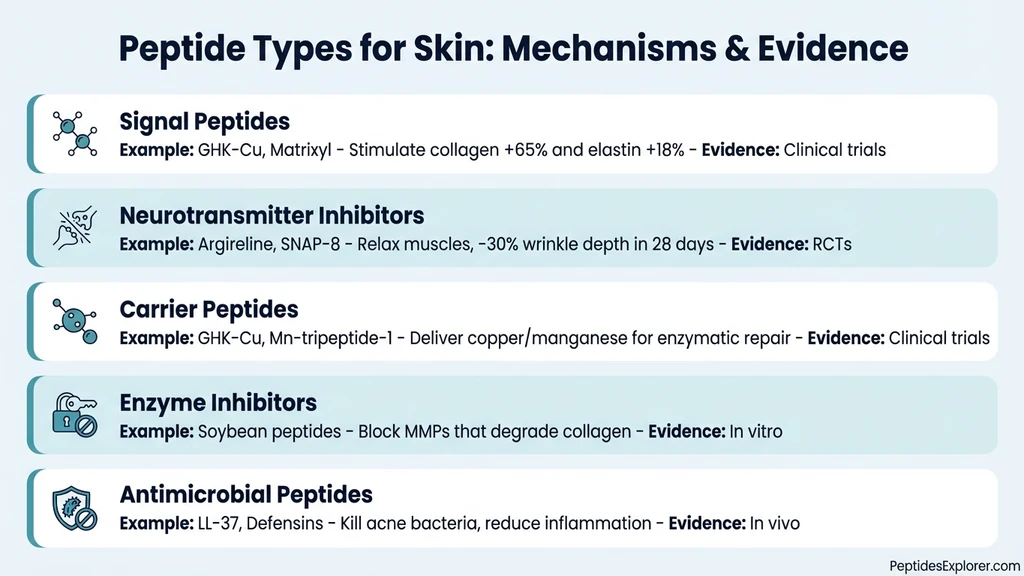
Different peptide categories target different problems. Signal peptides like GHK-Cu drive collagen remodeling. Neurotransmitter-inhibitor peptides like argireline relax expression lines. Carrier peptides deliver copper and manganese into the dermis. This guide breaks down each type, cites the clinical data, and shows you exactly how to use peptides for skin results you can verify.
| Peptide Type | Example | Primary Skin Mechanism | Evidence Level |
|---|---|---|---|
| Signal peptides | GHK-Cu, Matrixyl | Stimulate collagen and elastin synthesis | Clinical trials, gene data |
| Neurotransmitter inhibitors | Argireline (acetyl hexapeptide-3) | Relax facial muscles, reduce expression lines | RCTs, in vivo studies |
| Carrier peptides | GHK-Cu, manganese tripeptide-1 | Deliver trace minerals for enzymatic repair | Clinical trials |
| Enzyme inhibitors | Soybean peptides, silk fibroin peptides | Block MMPs that degrade collagen | In vitro, early clinical |
| Antimicrobial peptides | LL-37, defensins | Kill acne bacteria, reduce inflammation | In vivo, clinical studies |
Use the peptide reconstitution calculator if you are preparing injectable peptides like GHK-Cu for skin protocols.
Get your custom peptide protocol:
- Tailored to your body and goals
- Precise dosing and cycle length
- Safe stacking combinations
- Backed by peer-reviewed studies
- Ready in under 2 minutes
How Peptides Work in Skin: The Signaling Mechanism
Think of your skin as a construction site. Collagen fibers are the steel beams. Elastin provides the cables that let the structure flex without breaking. Fibroblasts are the construction workers. Peptides are the foremen handing out specific work orders.
When collagen breaks down from UV exposure, aging, or injury, the fragments become matrikines: peptide signals that tell fibroblasts to build replacement collagen. Synthetic peptides mimic these natural signals. They trick fibroblasts into ramping up production even when breakdown has not occurred yet. The result is a net gain in collagen density (Pickart et al., 2015).
This mechanism explains why peptides work differently from retinoids. Retinoids increase cell turnover and force new collagen indirectly. Peptides send a direct order to the fibroblast: "Build more collagen now." The two approaches complement each other. Neither replaces the other.
Signal Peptides: The Collagen Builders
Signal peptides are the most studied category in dermatology. They bind to fibroblast receptors and upregulate genes for collagen I, collagen III, elastin, and glycosaminoglycans.
GHK-Cu (copper tripeptide-1) is the most clinically validated signal peptide for skin. It occurs naturally in human plasma, saliva, and urine. Plasma levels drop from 200 ng/mL at age 20 to 80 ng/mL by age 60. This decline correlates directly with visible skin aging (Pickart et al., 2018). For a complete breakdown of its mechanisms, read our GHK-Cu benefits guide.
Matrixyl (palmitoyl pentapeptide-4) mimics a collagen fragment. It signals fibroblasts to synthesize collagen I, collagen III, and fibronectin. A 12-week clinical trial showed a 27% reduction in wrinkle depth with twice-daily topical application (Lintner et al., 2009).
Matrixyl 3000 (palmitoyl tripeptide-1 + palmitoyl tetrapeptide-7) combines a collagen-stimulating signal with an anti-inflammatory pathway. The dual action repairs existing damage while preventing new inflammatory degradation.
Neurotransmitter-Inhibitor Peptides: The Wrinkle Relaxers
These peptides work like a mild, topical version of botulinum toxin. They interfere with the SNARE complex, the molecular machinery that releases acetylcholine at the neuromuscular junction. Less acetylcholine means weaker muscle contraction. Weaker contraction means shallower expression lines.
Argireline (acetyl hexapeptide-3) is the best-known example. A clinical study showed a 30% reduction in wrinkle depth around the eyes after 28 days of twice-daily application at 10% concentration. The effect reverses when you stop using the product. These peptides do not permanently alter muscle function.
SNAP-8 (acetyl octapeptide-3) extends the argireline concept with a longer peptide chain that inhibits the SNARE complex more effectively. Early studies suggest greater wrinkle reduction, though head-to-head comparisons remain limited.
The limitation: topical peptides cannot penetrate deeply enough to affect large muscles. They work best on fine lines around the eyes and forehead, where the skin is thin and the muscles are small.
Carrier Peptides: The Mineral Couriers
Carrier peptides bind to trace elements like copper, manganese, and zinc, then deliver them into the dermis. Copper is essential for lysyl oxidase, the enzyme that cross-links collagen fibers into a stable matrix. Without adequate copper delivery, new collagen remains weak and disorganized.
GHK-Cu functions as both a signal peptide and a carrier peptide. It delivers copper directly to wound sites and fibroblasts. This dual role is why GHK-Cu outperforms many single-function peptides in clinical comparisons. A study found GHK-Cu creams increased collagen production in 70% of women after one month of application (Pickart et al., 2015).
Manganese tripeptide-1 delivers manganese, a cofactor for superoxide dismutase (SOD). SOD neutralizes free radicals that damage collagen. This carrier peptide protects existing collagen while signal peptides build new fibers.
GHK-Cu: The Most Studied Peptide for Skin Regeneration
GHK-Cu deserves its own section because no other peptide matches its breadth of evidence for skin applications. It stimulates collagen synthesis, accelerates wound healing, reduces inflammation, remodels scar tissue, and modulates over 4,000 human genes relevant to skin health (Pickart et al., 2018).
| GHK-Cu Skin Benefit | Measured Outcome | Source |
|---|---|---|
| Collagen production | Increased in 70% of women after 1 month | Pickart et al., 2015 |
| Wrinkle volume reduction | 31.6% vs. Matrixyl 3000 in head-to-head trial | Clinical comparison study |
| Skin firmness | Significant increase in skin density and thickness | Placebo-controlled trials |
| Wound healing | Accelerated closure, reduced scarring | Multiple in vivo studies |
| Anti-inflammatory | Suppresses TNF-alpha, IL-6, TGF-beta | Gene expression studies |
GHK-Cu exists in three practical forms for skin use: topical serums, injectable solutions, and microneedling protocols. Each delivery method has distinct advantages depending on your goal.
Topical GHK-Cu: Daily Maintenance
Topical GHK-Cu serums at 1-3% concentration provide steady collagen stimulation with minimal risk. Apply after cleansing, before moisturizer, twice daily. Results typically appear after 4-8 weeks of consistent use.
The challenge with topical peptides is penetration. GHK-Cu has a molecular weight of approximately 340 Da, small enough to cross the stratum corneum but not deeply enough for maximum fibroblast activation. Formulations with penetration enhancers (liposomes, nanoparticles) improve delivery significantly.
For users who experience sensitivity with copper peptides, our guide on copper peptides irritation explains how to manage reactions. If you have experienced a negative outcome with copper peptides, read copper peptides ruined my skin for a recovery protocol.
Injectable GHK-Cu: Targeted Regeneration
Subcutaneous injection delivers GHK-Cu directly to the dermis, bypassing the skin barrier entirely. Typical protocols use 1-2 mg per day for 4-12 week cycles. This route provides higher local concentrations than any topical product can achieve.
Injectable GHK-Cu is particularly effective for scar remodeling, post-surgical healing, and age-related skin thinning. The GHK-Cu injection dosage guide covers preparation, reconstitution, and injection frequency in detail. For side effect awareness, see GHK-Cu side effects.
A common question is whether injectable GHK-Cu affects DHT levels. Research suggests GHK-Cu may modulate androgen pathways. Read does GHK-Cu block DHT for the current evidence. For concerns about hair changes, see does GHK-Cu cause hair loss.
GHK-Cu and Microneedling: Enhanced Delivery
Microneedling creates thousands of micro-channels in the stratum corneum, increasing peptide absorption by 20-40x compared to passive topical application. Applying GHK-Cu serum immediately after microneedling allows the peptide to reach the mid-dermis where fibroblasts reside.
Our detailed protocol in GHK-Cu microneedling explains needle depth, timing, and concentration guidelines. The combination of controlled skin injury (microneedling) plus regenerative signaling (GHK-Cu) produces synergistic collagen remodeling that neither intervention achieves alone.
Protocol summary: Use a 0.5-1.0 mm derma roller or pen. Apply 1-2% GHK-Cu serum immediately post-treatment. Repeat every 2-4 weeks. Expect visible improvement in skin texture and firmness after 3-4 sessions.
GHK-Cu Nasal Spray: Systemic Skin Benefits
GHK-Cu nasal spray offers a needle-free route that delivers peptides directly to systemic circulation via the nasal mucosa. While primarily used for cognitive and anti-inflammatory effects, systemic GHK-Cu distribution also benefits skin by upregulating collagen genes throughout the body.
Nasal delivery bypasses first-pass liver metabolism, achieving higher bioavailability than oral peptide supplements. Users report improvements in skin quality, hair thickness, and wound healing speed when combining nasal GHK-Cu with topical protocols.
Beyond GHK-Cu: Other Peptides That Transform Skin
GHK-Cu dominates the research literature, but several other peptides contribute meaningful skin benefits through distinct mechanisms.
BPC-157: Accelerated Wound Healing
BPC-157 (Body Protection Compound-157) is a 15-amino-acid peptide derived from human gastric juice. Its primary skin application is wound healing and tissue repair. BPC-157 promotes angiogenesis (new blood vessel formation), which delivers oxygen and nutrients to damaged skin faster.
For post-surgical recovery, burns, and chronic wounds, BPC-157 accelerates closure timelines. It also reduces scar tissue formation by modulating the balance between collagen deposition and degradation. Read our complete BPC-157 benefits guide for the full evidence review.
BPC-157 does not directly stimulate collagen synthesis the way GHK-Cu does. Instead, it creates the vascular and inflammatory environment that allows optimal healing. Combining BPC-157 with GHK-Cu targets both the supply chain (blood vessels) and the factory (fibroblasts).
TB-500: Systemic Tissue Repair
TB-500 (Thymosin Beta-4) promotes cell migration, a critical step in wound closure. When skin is cut or burned, keratinocytes and fibroblasts must physically travel to the wound site. TB-500 accelerates this migration by upregulating actin polymerization, the molecular machinery cells use to move.
For skin applications, TB-500 is most useful after deep injuries, surgical procedures, or burns where tissue needs to be rebuilt from scratch. It works systemically, so subcutaneous injection anywhere in the body benefits skin healing everywhere. The synergy between TB-500 (cell migration), BPC-157 (blood vessel formation), and GHK-Cu (collagen synthesis) forms a comprehensive skin regeneration stack.
For joint pain and soft tissue injuries, TB-500 and BPC-157 are the primary choices. Their wound-healing mechanisms overlap with skin repair pathways.
Epitalon: Anti-Aging at the Cellular Level
Epitalon (epithalon) is a tetrapeptide that activates telomerase, the enzyme responsible for maintaining telomere length. Telomeres shorten with each cell division. When they become critically short, cells enter senescence and stop dividing. Skin fibroblasts that can no longer divide cannot produce new collagen.
Epitalon extends fibroblast replicative lifespan by maintaining telomere length. A 2025 study found telomere length increased by an average of 33.3% in human cell lines treated with epitalon (Boccardi et al., 2025). It also inhibits MMP9, an enzyme that degrades the extracellular matrix in aging skin.
Epitalon addresses the root cause of skin aging: cellular senescence. While GHK-Cu tells existing fibroblasts to work harder, epitalon keeps them alive and functional longer. The two peptides operate on completely different timescales and mechanisms, making them complementary.
Collagen Peptides (Oral Supplements): Inside-Out Support
Oral collagen peptides (hydrolyzed collagen) are the most accessible peptide form for skin. They are digested into dipeptides and tripeptides that reach the dermis via the bloodstream and stimulate fibroblast activity.
A meta-analysis of 19 randomized controlled trials found oral collagen peptide supplementation significantly improved skin hydration, elasticity, and wrinkle depth compared to placebo (Sionkowska et al., 2022). After 8 weeks, collagen density in the dermis increased significantly, with fragmentation of the collagen network decreasing after just 4 weeks (Asserin et al., 2015).
Typical dosing: 2.5-10 grams per day of hydrolyzed collagen peptides. Results appear in 4-12 weeks. Oral collagen provides the raw amino acid building blocks, while topical or injectable peptides provide the signaling. Using both is more effective than either alone.
Clinical Evidence: What the Trials Actually Show
Claims without data are marketing. Here are the specific, quantified results from peer-reviewed clinical trials on peptides for skin.
| Study | Peptide | Duration | Key Result | Citation |
|---|---|---|---|---|
| Proksch et al., 2014 | Bioactive collagen peptides (oral) | 8 weeks | Procollagen I increased 65%, elastin increased 18% | PubMed |
| Asserin et al., 2015 | Collagen peptides (oral) | 8 weeks | Skin hydration up significantly, collagen density increased | PubMed |
| Lintner et al., 2009 | Palmitoyl pentapeptide-4 (topical) | 12 weeks | 27% reduction in wrinkle depth | PubMed |
| GHK-Cu comparison trial | GHK-Cu vs. Matrixyl 3000 (topical) | 12 weeks | 31.6% wrinkle volume reduction with GHK-Cu | Pickart et al. |
| Pickart et al., 2015 | GHK-Cu (topical cream) | 4 weeks | Collagen increase in 70% of subjects | PMC |
| Boccardi et al., 2025 | Epitalon (in vitro) | Variable | 33.3% telomere length increase | PMC |
Important context: Most topical peptide studies are funded by cosmetic companies. Injectable peptide research tends to come from independent labs. Oral collagen trials have the largest sample sizes and strongest methodology. Weight the evidence accordingly.
What the Evidence Supports Strongly
Three claims have consistent support across multiple trials:
- 1.Oral collagen peptides improve skin hydration and elasticity. This is the most replicated finding, confirmed in meta-analyses of 16+ RCTs with over 1,200 participants.
- 1.GHK-Cu stimulates collagen synthesis and reduces wrinkles. Supported by both gene expression studies and clinical measurement of wrinkle volume and skin thickness.
- 1.Topical signal peptides (Matrixyl family) reduce wrinkle depth. Multiple placebo-controlled trials confirm 20-30% wrinkle reduction after 8-12 weeks of consistent use.
These findings justify using peptides as part of an anti-aging skincare strategy. The effect sizes are moderate but real, and they compound over months of use.
What Needs More Research
Several popular claims lack strong clinical evidence:
- 1.Argireline as a botox alternative. While it reduces wrinkle depth in studies, the effect is far weaker than injectable botulinum toxin. Calling it "topical botox" overpromises.
- 1.Topical peptides reversing deep wrinkles. Peptides improve fine lines. Deep, set wrinkles require more aggressive interventions (lasers, injectables, surgical). Peptides can slow deepening but rarely reverse it.
- 1.Single peptide products transforming skin. Most positive results come from multi-peptide formulations or combined oral plus topical protocols. A lone peptide serum delivers modest benefits.
- 1.Antimicrobial peptides for acne. LL-37 and defensins show promise in killing acne-causing bacteria, but topical formulation challenges limit practical application. Most antimicrobial peptide research remains preclinical.
Practical Application: How to Use Peptides for Skin
Knowing which peptides work means nothing without knowing how to use them correctly. Delivery method, concentration, timing, and combinations all affect outcomes.
Topical Peptides: The Daily Foundation
Product selection: Look for serums (not creams) with peptide concentrations of 1-5%. Serums have smaller molecular formulations that penetrate better. Key ingredients to look for: palmitoyl pentapeptide-4 (Matrixyl), acetyl hexapeptide-3 (Argireline), copper tripeptide-1 (GHK-Cu), or palmitoyl tripeptide-1.
Application order: Cleanse, then apply peptide serum to slightly damp skin. Wait 2-3 minutes. Follow with moisturizer, then sunscreen (morning) or retinol (evening). Peptides go on before heavier products.
Timing: Twice daily for best results. Morning application provides daytime collagen signaling. Evening application works alongside the skin's natural overnight repair cycle. Consistency over 8-12 weeks matters more than any single application.
Storage: Peptides degrade when exposed to heat, light, and oxygen. Store serums in a cool, dark place. Discard after the expiration date. Copper peptide serums that change color from blue to green or brown have oxidized and lost potency.
Injectable Peptides: Targeted Protocols
Injectable peptides like GHK-Cu, BPC-157, and TB-500 deliver higher concentrations directly to the dermis or systemic circulation. They require reconstitution with bacteriostatic water and subcutaneous injection technique.
GHK-Cu injectable protocol: 1-2 mg per day, subcutaneous, for 4-12 weeks. Rotate injection sites. Store reconstituted vials in the refrigerator. See the GHK-Cu injection dosage guide for step-by-step preparation.
BPC-157 for skin healing: 250-500 mcg per day, subcutaneous near the wound or scar. Duration: 4-8 weeks. Read how to inject BPC-157 for technique guidance.
Stacking for skin: GHK-Cu (collagen signal) + BPC-157 (vascular repair) + TB-500 (cell migration). This triple stack covers the three pillars of skin regeneration. Our GHK-Cu, BPC-157, TB-500 blend guide details the protocol. Use the peptide interaction checker to verify compatibility.
Oral Collagen Peptides: The Simplest Entry Point
If needles and serums feel overwhelming, start with oral collagen peptides. Dissolve 5-10 grams of hydrolyzed collagen powder in coffee, water, or a smoothie each morning. Results take 4-12 weeks but require zero skincare knowledge.
Look for hydrolyzed collagen peptides with a molecular weight under 5,000 Da. Smaller peptides absorb better in the gut. Marine collagen (from fish) and bovine collagen (from cattle) both work. Type I collagen is the most relevant for skin.
Oral collagen is not a replacement for topical sunscreen or retinoids. Think of it as the foundation layer. Topical peptides are the second layer. Injectable peptides are the third layer for those who want maximum results.
Timing tip: Take collagen peptides on an empty stomach or with vitamin C. Ascorbic acid is a required cofactor for prolyl hydroxylase, the enzyme that stabilizes collagen triple helix structure. A glass of orange juice with your collagen powder is not just habit; it is biochemistry.
Microneedling with Peptides: Amplified Results
Microneedling punches thousands of micro-channels through the stratum corneum, the waterproof barrier that blocks most topical ingredients. Applying a peptide serum immediately after microneedling allows molecules to reach the mid-dermis at concentrations impossible through passive application.
Our GHK-Cu microneedling guide provides the complete protocol: needle depth (0.5-1.0 mm for face), pen speed, serum concentration, aftercare, and expected timeline. For users concerned about irritation from copper peptides during microneedling, read copper peptides irritation before starting.
Frequency: Every 2-4 weeks. The skin needs time to complete collagen remodeling between sessions. More frequent treatment does not improve outcomes and increases irritation risk.
Comprehensive Comparison: All Skin Peptides Ranked
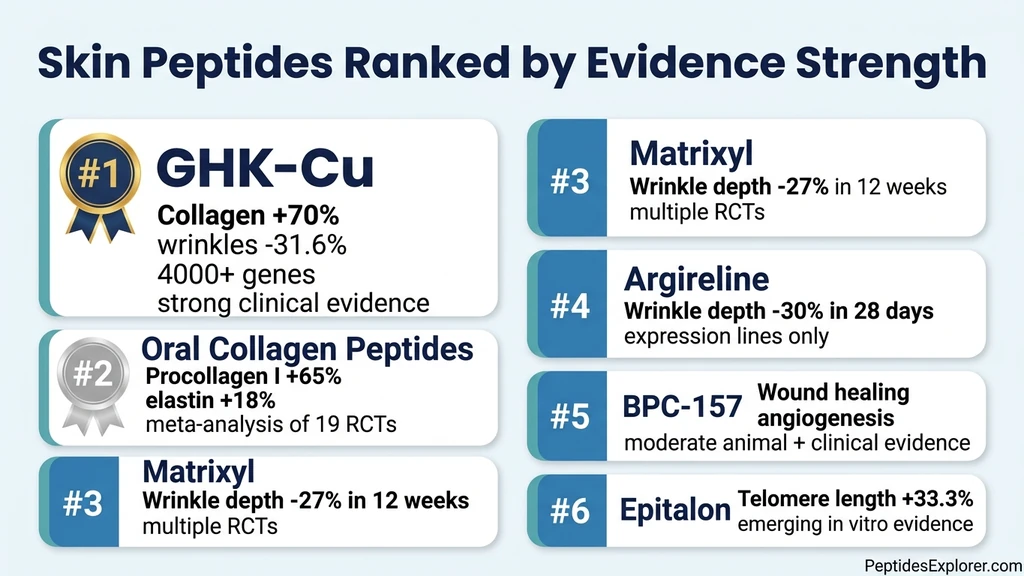
This table compares every major peptide used for skin, ranked by strength of evidence, practical accessibility, and breadth of benefits.
| Peptide | Delivery | Primary Benefit | Evidence | Onset | Cost | Best For |
|---|---|---|---|---|---|---|
| GHK-Cu | Topical, injectable, nasal | Collagen synthesis, wound healing, anti-inflammation | Strong (clinical + gene data) | 4-8 weeks | $$-$$$ | Aging skin, scars, post-procedure |
| Oral collagen peptides | Oral supplement | Hydration, elasticity, collagen density | Strong (meta-analyses) | 4-12 weeks | $ | General anti-aging, beginners |
| Matrixyl (pal-pentapeptide-4) | Topical serum | Collagen I/III stimulation | Moderate (RCTs) | 8-12 weeks | $$ | Fine lines, daily maintenance |
| Argireline (AH-3) | Topical serum | Expression line relaxation | Moderate (RCTs) | 2-4 weeks | $$ | Crow's feet, forehead lines |
| BPC-157 | Injectable, oral | Wound healing, angiogenesis | Moderate (animal + clinical) | 2-4 weeks | $$$ | Post-surgical, chronic wounds |
| TB-500 | Injectable | Cell migration, tissue repair | Moderate (animal studies) | 2-4 weeks | $$$ | Deep injuries, burns |
| Epitalon | Injectable | Telomere maintenance, anti-senescence | Emerging (in vitro + clinical) | 8-12+ weeks | $$$ | Long-term anti-aging |
| Matrixyl 3000 | Topical serum | Collagen + anti-inflammatory | Moderate (RCTs) | 8-12 weeks | $$ | Sensitive skin, rosacea-prone |
| SNAP-8 | Topical serum | Enhanced muscle relaxation | Limited (early studies) | 2-4 weeks | $$ | Deep expression lines |
Cost key: $ = under $30/month, $$ = $30-100/month, $$$ = over $100/month. Use the peptide cost calculator to estimate your specific protocol expenses.
Common Mistakes with Peptides for Skin
Peptides work, but only when used correctly. These four mistakes explain why some people see no results.
Mistake 1: Using peptides with strong acids in the same routine. AHAs (glycolic acid), BHAs (salicylic acid), and vitamin C at low pH can denature peptide bonds. Apply acids in the morning and peptides in the evening, or wait 20-30 minutes between layers. The acid drops the skin surface pH below 3.5, which disrupts the peptide's tertiary structure.
Mistake 2: Expecting overnight results. Collagen remodeling takes 4-12 weeks. Fibroblasts must synthesize procollagen, secrete it into the extracellular space, cross-link it with lysyl oxidase, and organize it into functional fibers. Each step takes time. Quitting after two weeks because "nothing happened" wastes money and misses the outcome.
Mistake 3: Relying on peptides alone. Peptides stimulate collagen production but cannot prevent collagen destruction from UV radiation. Without daily SPF 30+ sunscreen, UV-generated matrix metalloproteinases (MMPs) degrade new collagen as fast as peptides can build it. Sunscreen is the non-negotiable foundation. Peptides are the accelerator.
Mistake 4: Ignoring the rest of the skin barrier. A damaged moisture barrier cannot hold onto the hydration that peptides help attract. If your skin is chronically dry, flaky, or tight, repair the barrier first with ceramides, fatty acids, and cholesterol. Then add peptides. Building collagen in dehydrated skin is like painting over wet drywall.
Who Benefits Most from Peptides for Skin
Peptides are not universally necessary. Some skin profiles benefit far more than others.
High-value candidates: - Ages 30+: Natural GHK-Cu levels have already declined significantly. Exogenous peptides replace what the body no longer produces in adequate amounts. - Post-procedure recovery: After microneedling, chemical peels, laser resurfacing, or surgery, peptides accelerate tissue repair and reduce scar formation. - Chronic wound patients: BPC-157 and GHK-Cu speed closure of wounds that standard care has not resolved. - People who already use sunscreen and retinoids: Peptides layer on top of a solid foundation for compounding benefits.
Lower-value candidates: - Under 25 with healthy skin: Your body produces sufficient collagen and GHK-Cu. Focus on sun protection and basic hydration. - Anyone not using sunscreen: Peptides cannot outpace UV-induced collagen destruction. Fix the sunscreen gap first. - People expecting peptides to replace medical procedures: Deep wrinkles, severe laxity, and structural volume loss require fillers, lasers, or surgery. Peptides maintain and slowly improve. They do not reconstruct.
Age-specific considerations: After age 35, collagen production drops by roughly 1-1.5% per year. By 50, the cumulative deficit becomes visible as thinning skin, deeper lines, and slower wound healing. Starting peptide protocols at 35-40 prevents the deficit from accelerating. Starting at 50+ requires more aggressive protocols (injectable GHK-Cu, microneedling, oral collagen) to recover lost ground.
For women over 40 exploring broader peptide protocols beyond skin, our peptides for women over 40 guide covers hormonal support, bone density, and metabolism alongside skin applications. Men over 40 can find gender-specific guidance in peptides for men over 40.
Peptides and Hair: The Skin-Scalp Connection
The scalp is skin. Peptides that benefit facial skin also affect hair follicle health. GHK-Cu is the most researched peptide for both skin rejuvenation and hair growth.
GHK-Cu increases hair follicle size and extends the anagen (growth) phase of the hair cycle. Users applying GHK-Cu topically to the scalp report thicker, denser hair growth after 8-12 weeks. The mechanism mirrors what happens in facial skin: increased collagen around the follicle, improved blood supply via angiogenesis, and reduced inflammation that causes miniaturization.
The same fibroblast-activating signals that rebuild dermal collagen also strengthen the connective tissue sheath surrounding each hair follicle. Thicker sheaths anchor follicles more firmly and resist the miniaturization process that causes age-related thinning. This dual benefit is why GHK-Cu protocols increasingly target both facial skin and scalp simultaneously.
For comprehensive protocols, read our GHK-Cu hair growth guide. If you are considering peptides for muscle growth alongside a skin protocol, many peptides (GHK-Cu, BPC-157, TB-500) benefit both tissues simultaneously. Skin, muscle, and connective tissue share the same collagen types and growth factor pathways.
Frequently Asked Questions
How long do peptides take to improve skin?
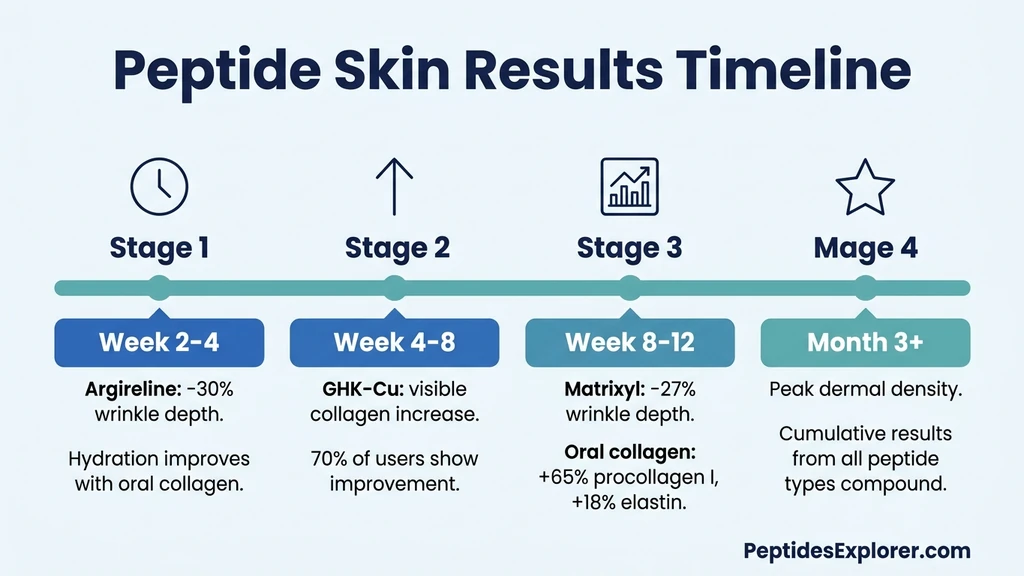
Topical peptides show measurable results in 4-12 weeks. Oral collagen peptides improve skin hydration after 4 weeks and collagen density after 8 weeks. Injectable GHK-Cu protocols typically show visible changes in 4-8 weeks. The timeline depends on the peptide type and delivery method. Use the peptide reconstitution calculator to prepare injectable solutions correctly.
Can peptides replace retinol for anti-aging?
No. Peptides and retinoids work through different mechanisms. Retinoids increase cell turnover and indirectly boost collagen. Peptides directly signal fibroblasts to produce collagen. The combination outperforms either alone. If retinol irritates your skin, GHK-Cu provides collagen stimulation without the flaking and redness that retinoids can cause.
Are peptides safe for sensitive skin?
Most peptides are well tolerated, including by sensitive skin. Signal peptides (Matrixyl) and oral collagen cause virtually no irritation. GHK-Cu can cause mild redness in some users. Our guide on copper peptides irritation covers how to patch-test and manage reactions. Start with lower concentrations and increase gradually.
Do oral collagen peptides actually reach the skin?
Yes. Randomized, placebo-controlled trials confirm that hydrolyzed collagen peptides survive digestion, enter the bloodstream as dipeptides and tripeptides, and accumulate in the dermis. An 8-week trial measured a 65% increase in procollagen type I in the skin of participants taking oral collagen versus placebo (Proksch et al., 2014). Read BPC-157 benefits for another example of oral peptide bioavailability.
Which peptide is best for acne scars?
GHK-Cu combined with microneedling is the strongest evidence-based approach for acne scars. The microneedling creates controlled injury. GHK-Cu stimulates collagen remodeling in the scar tissue. Read our GHK-Cu microneedling protocol for needle depth and serum concentration guidelines. BPC-157 can also accelerate healing when injected near deep scars.
Can I use peptides with vitamin C and retinol?
Yes, but not simultaneously. Vitamin C serums at low pH (below 3.5) can degrade peptides. Apply vitamin C in the morning and peptides in the evening. Retinol and peptides work well together at night. Layer peptide serum first, wait 5 minutes, then apply retinol. This avoids pH conflicts. See the GHK-Cu benefits guide for compatible skincare stacking protocols.
What is the difference between peptides and collagen supplements?
Collagen supplements provide raw amino acid building blocks (glycine, proline, hydroxyproline). Topical and injectable peptides send signals that tell fibroblasts to use those building blocks. Oral collagen is the supply. Signal peptides like GHK-Cu are the demand signal. Using both produces better results than either alone. Check the peptide interaction checker before combining injectable peptides.
Are injectable peptides for skin worth the cost?
For targeted skin concerns (scarring, post-surgical healing, significant collagen loss), injectable GHK-Cu and BPC-157 provide concentrations no topical can match. For general anti-aging maintenance, topical peptides and oral collagen are more cost-effective. Use the peptide cost calculator to compare protocol expenses before committing.
The Bottom Line
Peptides are not a skincare trend. They are molecular signals that directly instruct your skin cells to build collagen, repair wounds, and maintain the extracellular matrix. The evidence is specific: 65% more procollagen after 8 weeks of oral collagen, 31.6% wrinkle reduction with topical GHK-Cu, measurable improvements in hydration, elasticity, and dermal density across dozens of clinical trials.
The practical approach has three tiers. Start with oral collagen peptides (5-10 grams daily) and a topical peptide serum (Matrixyl or GHK-Cu). Add microneedling with GHK-Cu every 2-4 weeks for deeper delivery. For targeted regeneration of scars, wounds, or severe collagen loss, injectable GHK-Cu and BPC-157 provide the highest concentrations available.
Sunscreen remains the foundation. Retinoids remain the gold-standard active. Peptides are the third pillar that completes the anti-aging architecture. Without all three, you leave results on the table.
Not sure which peptide protocol fits your skin goals? Take our peptide quiz to get a personalized recommendation based on your age, skin concerns, and experience level.
Related Reading: - GHK-Cu Benefits: The Complete Guide - GHK-Cu Hair Growth: Dosage & Protocol - BPC-157 Benefits: Full Evidence Review - Copper Peptides Irritation: Causes & Solutions - Peptide Stacking Guide: How to Combine Safely
One cosmetic peptide is worth knowing by name. SNAP-8 peptide explains what the wrinkle percentages rest on and why it belongs on the skin surface.
Related Articles
GHK-Cu Benefits: 8 Research-Backed Effects
8 GHK-Cu benefits: skin rejuvenation, wound healing, hair growth, anti-inflammatory, and antioxidant effects. PubMed-cited research with dosages.
AHK-Cu vs GHK-Cu: Best Copper Peptide Guide
AHK-Cu vs GHK-Cu: AHK-Cu wins for hair follicle stimulation, GHK-Cu for skin anti-aging. PubMed evidence, DHT blocking, and synergy protocols.
GHK-Cu + BPC-157 + TB-500 Blend Dosage
GHK-Cu + BPC-157 + TB-500 blend dosage chart for 70 mg and 42 mg vials. Per-injection breakdown in mcg, reconstitution steps, and cycling protocol.
GHK-Cu Microneedling: Depths & Results
GHK-Cu microneedling protocol with needle depths by goal, step-by-step instructions, the copper uglies warning, and results timeline.