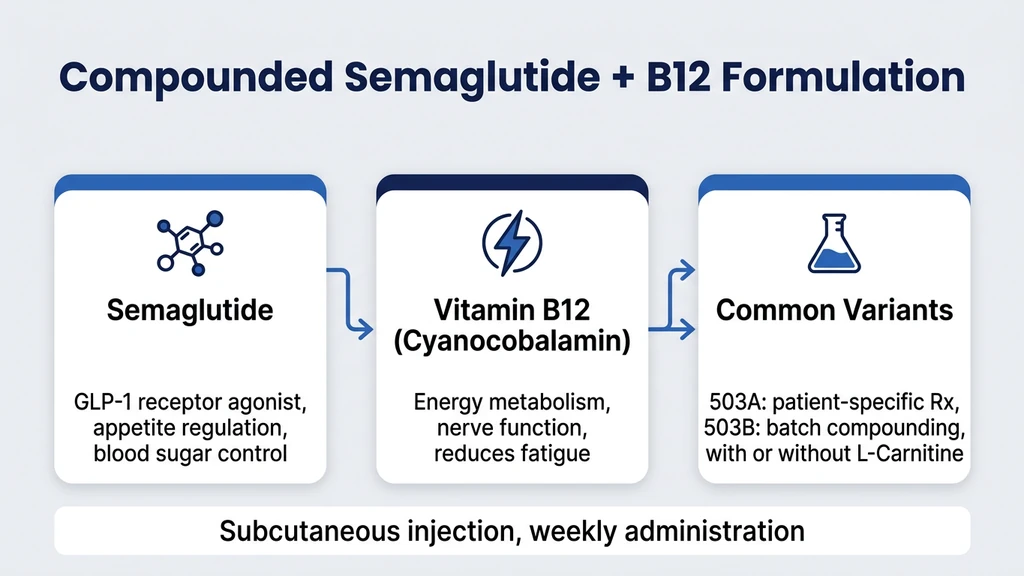
Your telehealth provider just offered you a semaglutide injection that comes bundled with vitamin B12, and you want to know what you are actually buying. Compounded semaglutide with B12 combines the GLP-1 receptor agonist semaglutide with cyanocobalamin (vitamin B12) in a single injection vial. B12 is added because semaglutide slows gastric emptying and reduces food intake, both of which can impair absorption of this essential vitamin. Clinics price it at $150 to $500 per month, roughly 70-85% less than brand-name Ozempic or Wegovy.
The combination is not FDA-approved as a finished product. It is prepared by compounding pharmacies under Section 503A or 503B of the Federal Food, Drug, and Cosmetic Act. That legal framework matters because it determines the quality controls applied to your vial, the testing it undergoes, and the recourse available if something goes wrong.
| Feature | Compounded Semaglutide + B12 | Brand Ozempic | Brand Wegovy |
|---|---|---|---|
| Active ingredient | Semaglutide + cyanocobalamin | Semaglutide only | Semaglutide only |
| FDA approval | No (compounded) | Yes (type 2 diabetes) | Yes (weight management) |
| Typical monthly cost | $150-$500 | $900-$1,350 | $1,300-$1,700 |
| B12 per dose | 500-1,000 mcg | None | None |
| Delivery | Multi-dose vial + syringe | Pre-filled pen | Pre-filled pen |
| Available strengths | Custom (0.25-2.5 mg/mL) | 0.25-2 mg fixed doses | 0.25-2.4 mg fixed doses |
| Regulatory framework | 503A or 503B pharmacy | NDA-approved | NDA-approved |
This article covers the science behind adding B12, the evidence for its weight-loss benefit, how compounding works, FDA regulatory considerations, cost breakdowns, safety red flags, and how to evaluate the pharmacy filling your prescription. If you need help calculating your dose in milliliters, use the semaglutide dosage calculator.
Get your custom peptide protocol:
- Tailored to your body and goals
- Precise dosing and cycle length
- Safe stacking combinations
- Backed by peer-reviewed studies
- Ready in under 2 minutes
Why B12 Is Added to Compounded Semaglutide
The rationale for combining B12 with semaglutide rests on three physiological mechanisms, each supported by published research. Understanding these mechanisms helps you assess whether the combination is clinically meaningful or primarily a marketing differentiator.
GI Malabsorption from Slowed Gastric Emptying
Semaglutide delays gastric emptying by 20-30% (Blundell et al., Diabetes Obes Metab, 2017). Food sits in the stomach longer before passing to the small intestine, where B12 absorption occurs. The intrinsic factor system that captures B12 in the terminal ileum has a saturation threshold. When a large bolus of food arrives slowly and unevenly, the kinetic window for B12 binding narrows.
A 2021 retrospective analysis of patients on GLP-1 receptor agonists found that 12-16% developed subnormal B12 levels within 12 months of treatment initiation (Aroda et al., J Clin Endocrinol Metab, 2016). The risk compounds over multi-year treatment courses, which is the expected duration for chronic weight management.
Metformin users already at risk for B12 deficiency face even steeper odds when semaglutide is added. The American Diabetes Association recommends periodic B12 monitoring for patients on metformin, and extending that monitoring to GLP-1 users is increasingly standard practice (de Jager et al., BMJ, 2010).
Reduced Caloric Intake and Nutrient Gaps
Semaglutide at the 2.4 mg weekly dose reduces caloric intake by approximately 30-40% (Wilding et al., N Engl J Med, 2021). Patients eating 1,200 to 1,500 calories per day instead of 2,000 to 2,200 inevitably consume less B12 from dietary sources. Meat, fish, eggs, and dairy are the primary B12-containing foods, and appetite suppression reduces consumption of all of them.
The recommended daily intake of B12 for adults is 2.4 mcg. A person eating 1,300 calories of mixed food may ingest only 1.5 to 2.0 mcg, assuming they still include animal products. Vegetarian or vegan patients on semaglutide face a near-certain deficit without supplementation.
If you are not losing weight on semaglutide, nutrient deficiency is rarely the cause. But fatigue and brain fog from low B12 can reduce exercise capacity and compliance, indirectly stalling progress. For a full breakdown of fatigue causes, see does semaglutide cause fatigue.
Energy and Metabolism Support
B12 is a cofactor in two enzymatic reactions critical to energy metabolism. It enables the conversion of methylmalonyl-CoA to succinyl-CoA in the mitochondrial citric acid cycle, and it supports the methionine synthase reaction that recycles homocysteine. Without adequate B12, cellular energy production slows and homocysteine accumulates, the latter being a recognized cardiovascular risk marker (Stabler, N Engl J Med, 2013).
Clinics often market the B12 addition as an "energy booster." That framing is accurate only for patients who are B12-deficient. In B12-replete individuals, supplemental B12 does not increase energy above baseline. The body excretes excess water-soluble B12 renally. However, given the mechanisms above, many semaglutide patients are at genuine risk of deficiency, making the addition clinically defensible rather than purely promotional.
Does B12 Actually Help with Weight Loss?
This is the question that separates clinical utility from marketing hype. The answer is nuanced: B12 does not directly cause fat loss, but deficiency can undermine weight-loss efforts.
The Direct Evidence Is Weak
No randomized controlled trial has demonstrated that B12 supplementation in B12-replete individuals accelerates fat loss. A 2019 systematic review of 12 studies examining B12 and body weight found no consistent association between serum B12 levels and BMI change in supplemented populations (Alshahrani et al., Nutrients, 2019). The "B12 shots for weight loss" trend popular at wellness clinics lacks robust clinical support when B12 levels are already normal.
Compounding pharmacies and telehealth clinics that market semaglutide + B12 as a "supercharged weight loss formula" overstate the evidence. The semaglutide is doing the heavy lifting. B12 is a supporting player that prevents a specific nutritional deficit.
The Indirect Benefits Are Real
Where B12 earns its place in the formulation is in maintaining the patient's ability to tolerate and comply with semaglutide treatment.
Fatigue prevention. B12 deficiency causes megaloblastic anemia and neurological fatigue. Patients who develop these symptoms often attribute them to semaglutide itself and may discontinue treatment. Preemptive supplementation avoids this misattribution. For a detailed analysis of semaglutide-related tiredness, see does semaglutide cause fatigue.
Nausea management. While B12 does not directly reduce GLP-1-mediated nausea, maintaining adequate B12 supports red blood cell production and oxygen delivery. Anemia worsens nausea perception. Some clinicians report that patients on semaglutide + B12 formulations report milder nausea during titration, though this has not been studied in a controlled setting. For nausea management strategies, see does semaglutide cause nausea.
Exercise capacity. Patients who exercise during semaglutide treatment lose more fat and retain more lean mass. B12 deficiency impairs exercise tolerance through reduced oxygen-carrying capacity. Maintaining adequate B12 keeps the exercise option on the table, which indirectly supports weight loss.
When B12 Addition Makes the Most Difference
Certain patient populations benefit disproportionately from the combination.
| Patient Profile | B12 Risk Level | Benefit of Combined Formulation |
|---|---|---|
| On metformin + semaglutide | High | Strongly recommended |
| Vegetarian or vegan diet | High | Strongly recommended |
| Age over 50 (reduced intrinsic factor) | Moderate to high | Recommended |
| History of gastric bypass | High | Strongly recommended |
| Healthy omnivore, age under 50 | Low | Marginal benefit |
| Already taking oral B12 supplement | Low | Redundant |
If you fall into the low-risk category and already take a daily multivitamin with B12, the B12 in your compounded semaglutide is redundant but harmless. You will excrete the excess. If you fall into any high-risk category, the combined formulation addresses a genuine clinical need.
How Semaglutide + B12 Is Compounded
Compounding is the process of combining, mixing, or altering pharmaceutical ingredients to create a medication tailored to an individual patient's needs. The semaglutide + B12 combination is prepared by dissolving semaglutide peptide and cyanocobalamin (or sometimes methylcobalamin) into a sterile injectable solution.
The Compounding Process Step by Step
A 503B outsourcing facility producing semaglutide + B12 follows current Good Manufacturing Practices (cGMP), similar to branded pharmaceutical manufacturers.
Step 1: Raw material qualification. The pharmacy sources semaglutide active pharmaceutical ingredient (API) from a FDA-registered supplier. B12 (cyanocobalamin USP) is sourced separately. Both undergo identity testing, purity analysis (typically HPLC for semaglutide, UV spectrophotometry for B12), and potency verification before release for compounding.
Step 2: Formulation. The pharmacist dissolves semaglutide at the prescribed concentration (commonly 1 mg/mL, 2.5 mg/mL, or 5 mg/mL) and B12 at 500 to 1,000 mcg/mL in a buffered solution. The buffer (usually phosphate or acetate at pH 7.0-7.4) maintains peptide stability. Preservatives such as benzyl alcohol (0.9%) or phenol may be added for multi-dose vials.
Step 3: Sterile filtration. The combined solution is filtered through a 0.22-micron sterilizing filter into pre-sterilized glass vials under ISO 5 (Class 100) laminar airflow hoods.
Step 4: Fill and finish. Vials are sealed with rubber stoppers and aluminum crimp caps. Each vial is visually inspected for particulate matter.
Step 5: Quality testing. 503B facilities test finished vials for sterility (USP <71>), endotoxin levels (USP <85>), potency, and pH. Testing results must be documented before the batch is released for distribution.
For mixing compounded semaglutide at home after receiving a lyophilized vial, see how much bacteriostatic water for semaglutide. Understanding the difference between diluents is covered in bacteriostatic water vs sterile water.
Common Formulation Variants
Telehealth clinics and compounding pharmacies offer several formulation variants beyond simple semaglutide + B12.
Semaglutide + B12 (standard). The most common combination. Cyanocobalamin at 500-1,000 mcg per dose. Straightforward, well-tolerated, and the most studied formulation in compounding contexts.
Semaglutide + B12 + L-carnitine. L-carnitine (an amino acid derivative) shuttles fatty acids into mitochondria for oxidation. Typical addition: 100-200 mg per injection. Evidence for L-carnitine's weight loss benefit in non-deficient individuals is limited (Pooyandjoo et al., Obes Rev, 2016), but some clinicians include it as an adjunct for patients with documented carnitine deficiency or those on certain medications.
Semaglutide + B12 + glycine. Glycine acts as a stabilizer for the peptide in solution and may offer mild calming and sleep-supporting effects. Its inclusion is more about formulation chemistry than therapeutic benefit.
Semaglutide + BPC-157. Some compounding pharmacies combine semaglutide with BPC-157 to address GI side effects. This combination is less common and raises additional regulatory questions since BPC-157 is not FDA-approved for any indication.
The choice between formulations depends on your clinical situation. For most patients, semaglutide + B12 alone provides the core benefit. Additional ingredients add cost and complexity without proportionally stronger evidence.
503A vs 503B Pharmacies: Regulatory Framework
Not all compounding pharmacies operate under the same regulatory standards. The distinction between 503A and 503B pharmacies directly affects the quality, testing, and legal status of your compounded semaglutide + B12. The FDA peptide crackdown has sharpened enforcement in this area since late 2025.
Section 503A Pharmacies (Traditional Compounding)
503A pharmacies operate under state pharmacy board oversight. They compound medications in response to individual patient prescriptions from a licensed prescriber. Key characteristics:
Prescription required. Every vial is compounded for a specific named patient with a valid prescription. Batch sizes are limited to the quantities needed for that patient's prescription.
No FDA cGMP requirement. 503A pharmacies follow USP <795> (non-sterile) and USP <797> (sterile) compounding standards, which are less stringent than FDA cGMP requirements. Sterility testing may be performed on a sampling basis rather than on every batch.
State-level oversight. Your state pharmacy board inspects and licenses 503A pharmacies. Inspection frequency and rigor vary by state. Some states inspect annually; others every 2-3 years.
Beyond-use dating. USP <797> limits the beyond-use date (BUD) for sterile compounded preparations. For medium-risk preparations stored under refrigeration, the default BUD is 9 days unless the pharmacy has stability data supporting a longer date.
Many telehealth clinics partner with 503A pharmacies for semaglutide + B12. This is legal when a valid patient-prescriber relationship exists and a prescription precedes the compounding. The quality depends heavily on the specific pharmacy's practices.
Section 503B Outsourcing Facilities
503B outsourcing facilities register with the FDA and operate under federal oversight. They may compound without individual prescriptions and distribute to healthcare facilities. Key characteristics:
FDA registration and inspection. 503B facilities register with the FDA, which inspects them on a regular schedule using the same cGMP framework applied to traditional pharmaceutical manufacturers. Inspection reports (Form 483s) are publicly available on the FDA website.
Batch testing. Every batch undergoes sterility testing, endotoxin testing, and potency verification before release. This is the same testing standard applied to Novo Nordisk's Ozempic pens.
Larger batch sizes. 503B facilities produce larger batches and can distribute to hospitals, clinics, and physician offices without individual prescriptions. This creates economies of scale that can reduce cost.
Adverse event reporting. 503B facilities must report adverse events to the FDA, creating a safety monitoring system that 503A pharmacies are not required to maintain.
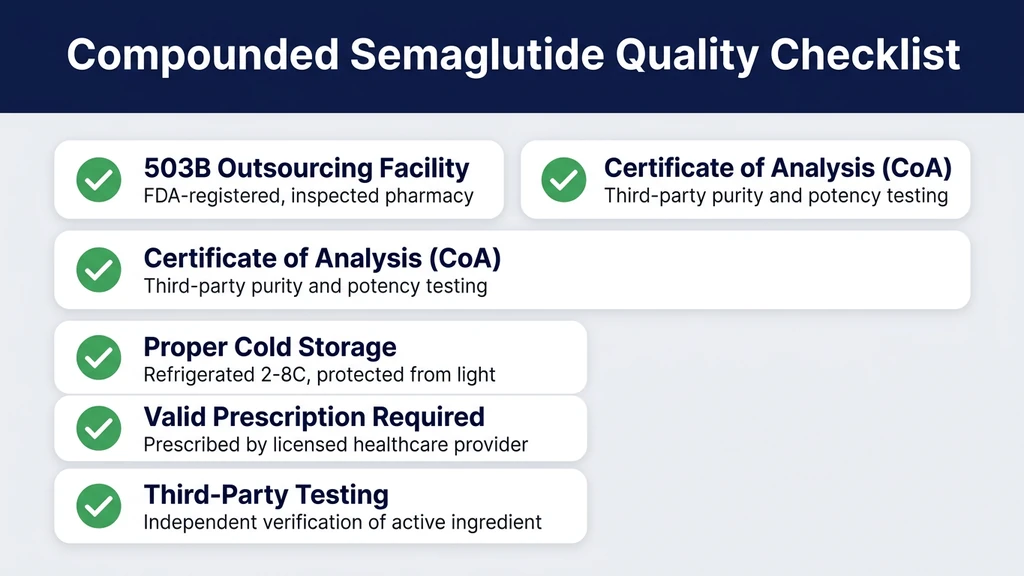
The practical difference for you: A vial from a 503B pharmacy has undergone more rigorous testing and is produced under stricter manufacturing controls than a vial from a 503A pharmacy. When choosing a source for compounded semaglutide + B12, prefer 503B facilities. You can verify 503B registration on the FDA's outsourcing facility registry. For a broader guide to evaluating peptide suppliers, see where to buy peptides in 2026.
The Novo Nordisk Shortage Question
Compounding pharmacies can legally produce copies of FDA-approved drugs when those drugs are on the FDA Drug Shortage List. Semaglutide was on this list from 2022 through early 2024, which opened the door for widespread compounding. When the shortage resolved, legal questions arose about whether compounding could continue.
The FDA issued updated guidance in 2025 clarifying that compounding pharmacies may continue producing semaglutide only if they meet specific criteria, including demonstrated patient need and compliance with 503A or 503B requirements. Some pharmacies have transitioned to semaglutide salts (such as semaglutide sodium) that are technically distinct from the branded product, arguing this removes the shortage requirement.
This regulatory landscape is shifting. Before starting compounded semaglutide + B12, confirm with your prescriber that the pharmacy's legal basis for compounding remains intact. For patients considering alternatives, the semaglutide to tirzepatide switching guide covers the transition process.
Cost Comparison: Compounded vs Brand-Name Semaglutide
Cost is the primary reason most patients choose compounded semaglutide + B12 over brand-name Ozempic or Wegovy. The price difference is substantial, but so are the trade-offs. Use the peptide cost calculator to estimate your specific costs.
Monthly Cost Breakdown
The following costs reflect typical U.S. pricing in early 2026. Prices vary by pharmacy, clinic, and geographic region.
| Cost Category | Compounded Semaglutide + B12 | Ozempic (Brand) | Wegovy (Brand) |
|---|---|---|---|
| Medication (monthly) | $100-$350 | $900-$1,350 | $1,300-$1,700 |
| Clinic/telehealth visit | $0-$100/month | Covered by insurance copay | Covered by insurance copay |
| Syringes and needles | $5-$15/month | Included in pen | Included in pen |
| B12 supplement (if separate) | Included | $5-$15/month | $5-$15/month |
| Insurance coverage | Rarely covered | Sometimes covered | Sometimes covered |
| Total monthly cost | $150-$500 | $50-$1,350 (insurance dependent) | $50-$1,700 (insurance dependent) |
The insurance variable. Brand-name semaglutide with good insurance coverage can cost $25-$100 per month in copays, making it cheaper than compounded options. Without insurance or with a plan that excludes GLP-1 agonists for weight management, brand-name semaglutide costs $900 or more monthly. Most patients choosing compounded semaglutide + B12 lack insurance coverage for the branded products.
What You Give Up with Compounding
The lower price of compounded semaglutide + B12 comes with real trade-offs.
No FDA approval of the finished product. The semaglutide API is manufactured to pharmaceutical standards, but the final combined product has not undergone the clinical trials or regulatory review that Ozempic and Wegovy completed.
Variable quality between pharmacies. A 503B facility with clean FDA inspection records produces a fundamentally different product than a 503A pharmacy with minimal oversight. The label says "semaglutide + B12" in both cases, but the manufacturing rigor differs.
No manufacturer warranty on potency. Novo Nordisk guarantees that every Ozempic pen contains the labeled dose through the expiration date when stored properly. Compounding pharmacies provide beyond-use dates based on their own stability testing, which may be less comprehensive.
Injection complexity. Drawing from a multi-dose vial with a syringe requires more skill and attention than clicking an Ozempic pen. Dosing errors are more common with vials and syringes. The semaglutide dosage chart in mL and how many mg is 40 units of semaglutide help reduce these errors.
Safety Considerations for Compounded Semaglutide + B12
The safety profile of compounded semaglutide + B12 depends on two factors: the inherent safety of the active ingredients, and the quality of the compounding process. The active ingredients are well-characterized. The compounding process is where risk concentrates.
Semaglutide Side Effects (Same Regardless of Source)
Whether compounded or brand-name, semaglutide produces the same side effect profile because it activates the same GLP-1 receptor. Common side effects include:
Gastrointestinal. Nausea (reported in 20-44% of clinical trial participants), vomiting, diarrhea, constipation, and abdominal pain. These effects are dose-dependent and typically most intense during the titration phase. For management strategies, see does semaglutide cause nausea and how long does semaglutide side effects last.
Fatigue. Reported in 5-11% of participants, often during caloric deficit. See does semaglutide cause fatigue for a detailed breakdown.
Hair thinning. Telogen effluvium from rapid weight loss, not a direct pharmacological effect. Covered in does semaglutide cause hair loss.
Injection site reactions. Redness, swelling, or itching at the injection site. More common with compounded vials due to potential differences in formulation pH or osmolality compared to brand-name pens.
Serious but rare. Pancreatitis (incidence < 0.3%), gallbladder disease (1.5-2%), thyroid C-cell tumors (observed in rodents at high doses; human relevance uncertain). These risks exist with all semaglutide products. For a comprehensive safety overview, see the peptide safety guide.
B12 Safety Profile
Cyanocobalamin has an excellent safety profile at doses used in compounded semaglutide formulations (500-1,000 mcg per injection). The Institute of Medicine has not established a Tolerable Upper Intake Level for B12 because toxicity has not been observed even at doses of 5,000 mcg daily.
Water-soluble B12 is excreted renally when serum levels exceed physiological needs. Injection bypasses the GI absorption pathway entirely, delivering 100% bioavailability regardless of intrinsic factor status or gastric emptying delay.
The only population requiring caution is patients with Leber hereditary optic neuropathy, where cyanocobalamin can accelerate optic nerve damage. This is rare (approximately 1 in 50,000) but should be disclosed during screening (Sethi et al., J Neuroophthalmol, 2005). Methylcobalamin is preferred for these patients.
Compounding-Specific Risks
The risks unique to compounded semaglutide + B12 relate to the compounding process, not the molecules.
Potency variability. A 2023 analysis of compounded semaglutide products found that some tested samples contained 50-110% of labeled semaglutide content (Lam et al., JAMA Netw Open, 2023). Underdosed vials reduce efficacy. Overdosed vials intensify side effects, particularly nausea and vomiting.
Sterility failures. FDA inspection records for compounding pharmacies reveal recurring citations for inadequate environmental monitoring, improper gowning, and insufficient sterility testing. Contaminated injectable products can cause infections ranging from injection site abscesses to systemic sepsis.
Endotoxin contamination. Even sterile products can contain bacterial endotoxins (lipopolysaccharides from gram-negative bacteria). Endotoxin testing (LAL assay) is mandatory for 503B facilities but optional for 503A pharmacies. Endotoxin-contaminated injections cause fever, chills, and inflammatory responses.
Stability failures. Semaglutide is a peptide that degrades through deamidation, oxidation, and aggregation. If the pharmacy's formulation, pH buffer, or storage conditions are suboptimal, the peptide may degrade before the beyond-use date. Signs of degradation include cloudiness, particulate matter, and color change. For detailed storage guidance, see does semaglutide need to be refrigerated and does semaglutide expire.
How to Evaluate a Compounding Pharmacy
Not all pharmacies filling semaglutide + B12 prescriptions are equivalent. The following checklist helps you distinguish high-quality sources from corner-cutting operations. This evaluation framework applies to all compounded peptides, not just semaglutide. For a broader supplier evaluation guide, see peptide sciences alternatives.
Red Flags That Should Stop You
Walk away from any pharmacy or telehealth clinic that exhibits these warning signs.
No prescription required. Semaglutide is a prescription medication. Any source selling it without requiring a prescription from a licensed prescriber is operating illegally. This includes clinics that offer "prescriptions" through questionnaires reviewed by no physician or NP.
No verifiable pharmacy license. Every compounding pharmacy must hold a state pharmacy license. Ask for the license number and verify it on your state's pharmacy board website. If they cannot provide one, the product may originate from an unlicensed facility or an overseas manufacturer.
Unusually low pricing. Semaglutide API costs roughly $40-$80 per milligram from legitimate FDA-registered suppliers. A vial containing 5 mg of semaglutide at $50 does not cover ingredient costs, sterile manufacturing, and testing. Extremely low prices suggest underdosed product, counterfeit API, or skipped quality testing.
No certificate of analysis available. Legitimate compounding pharmacies can provide a certificate of analysis (COA) for each batch, showing potency, sterility, endotoxin, and pH results. If a pharmacy refuses or cannot produce a COA, their testing practices are inadequate.
FDA warning letters on record. Search the FDA's database of warning letters for the pharmacy's name. Warning letters indicate that FDA inspectors found significant violations of cGMP requirements during an inspection.
Green Flags That Build Confidence
These indicators suggest a pharmacy that takes compounding quality seriously.
PCAB accreditation. The Pharmacy Compounding Accreditation Board (PCAB, a service of the Accreditation Commission for Health Care) accredits pharmacies that meet standards exceeding minimum USP requirements. PCAB-accredited pharmacies undergo voluntary inspections and must demonstrate robust quality management systems.
503B FDA registration. As discussed above, 503B facilities operate under federal oversight with mandatory batch testing. Check the FDA's outsourcing facility registry for registration status and inspection history.
Published stability data. Some pharmacies publish or share their stability studies showing semaglutide potency retention over time at specified storage conditions. This data supports the beyond-use date on the vial and demonstrates that the pharmacy has invested in product characterization.
Clear cold-chain shipping. Semaglutide degrades at elevated temperatures. The pharmacy should ship in insulated packaging with gel ice packs and a temperature indicator. If your vial arrives warm, the pharmacy should replace it. For storage after delivery, see how to store peptides.
Transparent prescriber relationship. The telehealth clinician prescribing your semaglutide should conduct a meaningful medical evaluation, review your health history, check for contraindications (personal or family history of medullary thyroid carcinoma, MEN 2 syndrome, pancreatitis), and provide ongoing monitoring.
Brand-Name vs Compounded: Making the Decision
The choice between brand-name semaglutide and compounded semaglutide + B12 is not purely financial. It involves weighing regulatory protections, quality assurance, convenience, and personal risk tolerance.
Choose Brand-Name Semaglutide When
Your insurance covers it. If your copay for Ozempic or Wegovy is $50-$150 per month, the brand-name product offers FDA-approved manufacturing, guaranteed potency, pen-based convenience, and manufacturer support. There is no compelling reason to choose compounded semaglutide when brand-name is affordable.
You have a complex medical history. Patients with a history of pancreatitis, thyroid disease, renal impairment, or other conditions that require careful dose titration benefit from the standardized dosing and validated pharmacokinetics of brand-name pens.
You prefer simplicity. Ozempic and Wegovy pens are designed for self-injection by patients with no medical training. Click, inject, done. No vials, no syringes, no reconstitution. For patients who find the vial-and-syringe process intimidating, brand-name pens remove a compliance barrier.
You want the exact molecule studied in clinical trials. The STEP trials that demonstrated semaglutide's 15-17% mean body weight reduction over 68 weeks used Novo Nordisk's formulation (Wilding et al., N Engl J Med, 2021). Compounded semaglutide contains the same active ingredient but in a different formulation that has not been independently studied in large clinical trials.
Choose Compounded Semaglutide + B12 When
Insurance does not cover brand-name semaglutide for weight management. Many insurance plans cover Ozempic only for type 2 diabetes, not for weight loss alone. Wegovy coverage remains inconsistent. At $900 or more per month out of pocket, brand-name semaglutide is unsustainable for most households.
You want B12 co-administered for clinical reasons. If you are on metformin, have had gastric bypass, follow a plant-based diet, or have a history of B12 deficiency, the combined formulation eliminates the need for separate B12 injections.
You are comfortable with vial-and-syringe injection. Drawing from a vial requires slightly more skill than using a pen, but the process is straightforward once learned. The semaglutide dosage chart in mL provides exact draw volumes for every dose.
You have verified the pharmacy's credentials. A PCAB-accredited or FDA-registered 503B facility producing semaglutide + B12 with published COAs offers a quality level that, while not identical to Novo Nordisk's manufacturing, is meaningfully higher than unregulated sources. The where to buy peptides guide covers additional verification steps.
Typical Dosing Protocol for Compounded Semaglutide + B12
The dosing schedule for compounded semaglutide follows the same titration protocol as brand-name Ozempic and Wegovy. The B12 component is delivered passively with each injection at a fixed concentration. Understanding how to calculate your specific dose volume is essential for accurate treatment.
Standard Titration Schedule
The gradual dose escalation minimizes gastrointestinal side effects by allowing the GLP-1 receptor system to adapt. Skipping doses or escalating too quickly increases nausea, vomiting, and treatment discontinuation.
| Week | Semaglutide Dose | Purpose | B12 Per Injection (at 1,000 mcg/mL) |
|---|---|---|---|
| 1-4 | 0.25 mg weekly | GI tolerance building | ~250-500 mcg |
| 5-8 | 0.5 mg weekly | Continued titration | ~500 mcg |
| 9-12 | 1.0 mg weekly | Therapeutic range entry | ~1,000 mcg |
| 13-16 | 1.7 mg weekly | Further escalation if needed | ~1,000 mcg |
| 17+ | 2.4 mg weekly | Full therapeutic dose | ~1,000 mcg |
The B12 dose varies because it depends on the injection volume and the B12 concentration in the formulation. At a semaglutide concentration of 5 mg/mL with B12 at 1,000 mcg/mL, a 0.25 mg semaglutide dose (0.05 mL) delivers only 50 mcg of B12. At the 2.4 mg dose (0.48 mL), B12 delivery reaches 480 mcg. Some pharmacies compensate by using higher B12 concentrations in lower-dose vials.
For exact volume calculations at any concentration, use the semaglutide dosage calculator. To understand the relationship between units and milligrams, see how many mg is 40 units of semaglutide.
Injection Technique and Practical Tips
Compounded semaglutide + B12 is administered as a subcutaneous injection, identical to brand-name semaglutide. Weekly injection on the same day at roughly the same time maintains steady serum levels.
Injection sites. Rotate between the abdomen (2 inches from the navel), front of the thigh, and upper arm (if another person administers). Rotating sites prevents lipodystrophy (fat tissue changes from repeated injections at one location).
Needle selection. Use 29-31 gauge, 0.5 inch insulin syringes. These are the same syringes used for insulin and other subcutaneous peptide injections. For patients also using other peptides, the is reconstitution solution the same as bacteriostatic water article covers diluent selection.
Storage between doses. Keep the multi-dose vial refrigerated at 2-8°C between uses. Swab the rubber stopper with alcohol before each draw. Discard the vial 28 days after first puncture, regardless of remaining volume. For complete storage protocols, see does semaglutide need to be refrigerated.
Missed dose protocol. If you miss a dose and fewer than 5 days have passed since the scheduled injection day, inject as soon as you remember. If more than 5 days have passed, skip that dose and resume on the next scheduled injection day. Semaglutide's long half-life (approximately 7 days) provides a buffer. For a detailed pharmacokinetic explanation, see how long does semaglutide stay in your system.
What to Expect: Timeline and Results
Setting realistic expectations helps patients stay compliant through the titration phase, when side effects are most pronounced and weight loss has not yet become dramatic.
Week-by-Week Expectations
Weeks 1-4 (0.25 mg). Appetite suppression begins within 3-5 days of the first injection. Most patients notice reduced interest in food, particularly between meals. Weight loss is modest: 1-3 pounds, primarily from reduced caloric intake. GI side effects (mild nausea, possible constipation) peak during this period and improve as the body adapts.
Weeks 5-8 (0.5 mg). Appetite suppression intensifies. Weight loss accelerates to 1-2 pounds per week for most patients. Some patients experience a "honeymoon phase" where appetite nearly disappears. This normalizes as GLP-1 receptors downregulate slightly.
Weeks 9-16 (1.0-1.7 mg). Clinically significant weight loss becomes apparent. Patients typically reach 5-8% body weight reduction by week 12. Energy levels often improve as the body adapts to lower caloric intake. B12 in the formulation supports this energy normalization. For detailed week-by-week data, see how long does semaglutide take to work.
Weeks 17+ (2.4 mg). Full therapeutic dose. Weight loss continues at a rate of 0.5-1.5 pounds per week. The STEP 1 trial showed mean weight loss of 14.9% at 68 weeks on 2.4 mg weekly semaglutide versus 2.4% on placebo (Wilding et al., N Engl J Med, 2021). Individual results vary based on dietary compliance, exercise, baseline metabolic health, and genetic factors.
When Results Plateau
Weight loss plateaus are normal and expected. They typically occur at 3-4 months and again at 8-10 months. A plateau does not mean the semaglutide has stopped working. It means your body has reached a new energy equilibrium at the current caloric intake and expenditure levels.
Before assuming the medication is failing, check these factors. Is the vial stored properly and within its 28-day window? Degraded semaglutide delivers reduced potency. Has dietary intake crept upward as the novelty of reduced appetite faded? Has exercise frequency decreased?
For a comprehensive troubleshooting guide covering all plateau causes, see not losing weight on semaglutide. If you and your prescriber determine that semaglutide is insufficient, the semaglutide to tirzepatide switching guide covers the transition to the dual GIP/GLP-1 agonist.
Compound Semaglutide with B12 FAQ
Frequently Asked Questions
What is compound semaglutide with B12?
Compound semaglutide with B12 is a custom-prepared injectable medication that combines the GLP-1 receptor agonist semaglutide with cyanocobalamin (vitamin B12) in a single vial. It is prepared by compounding pharmacies under 503A or 503B regulations and is not an FDA-approved finished product. The B12 addresses potential vitamin deficiency caused by reduced food intake and slowed gastric absorption on semaglutide.
Does the B12 in compounded semaglutide help you lose more weight?
B12 does not directly cause additional fat loss. No controlled trial has shown that B12 supplementation accelerates weight reduction in B12-replete individuals. Its value lies in preventing the fatigue, anemia, and neurological symptoms that accompany B12 deficiency, which can develop during semaglutide treatment due to reduced food intake and impaired GI absorption. Maintaining adequate B12 supports exercise capacity and treatment adherence.
Is compounded semaglutide with B12 safe?
The active ingredients (semaglutide and cyanocobalamin) are both well-characterized with established safety profiles. The primary safety variable is compounding quality. Vials from PCAB-accredited or FDA-registered 503B facilities undergo sterility, endotoxin, and potency testing comparable to branded pharmaceuticals. Vials from unverified sources carry risks of contamination, inaccurate dosing, and degradation.
How much does compounded semaglutide with B12 cost per month?
Monthly costs typically range from $150 to $500, including the medication, telehealth consultation, and supplies. This represents a 70-85% savings compared to brand-name Ozempic ($900-$1,350) or Wegovy ($1,300-$1,700) without insurance. Prices vary by pharmacy, semaglutide concentration, and whether the telehealth platform bundles visits into the medication cost.
What is the difference between 503A and 503B compounding pharmacies?
503A pharmacies compound under state pharmacy board oversight for individual prescriptions. 503B outsourcing facilities register with the FDA and follow cGMP manufacturing standards, including mandatory batch testing for sterility, endotoxin, and potency. 503B facilities undergo regular FDA inspections. For semaglutide, 503B facilities offer stronger quality assurance because every batch is tested before release.
Can I take oral B12 instead of getting it in the injection?
Yes. Oral B12 supplements (500-1,000 mcg daily) are an effective alternative for most patients. However, semaglutide slows gastric emptying and reduces appetite, which can impair oral B12 absorption. Injectable B12 bypasses the GI tract entirely, delivering 100% bioavailability regardless of gastric function. For patients with documented absorption issues or a history of gastric surgery, injectable B12 is more reliable.
How should I store compounded semaglutide with B12?
Refrigerate at 2-8°C (36-46°F) at all times. Discard the vial 28 days after the first needle puncture through the stopper, even if medication remains. Never freeze liquid semaglutide. Protect from direct light. If the solution becomes cloudy, contains particles, or changes color, discard it immediately. Both semaglutide and B12 are stable under standard refrigeration conditions.
Will compounded semaglutide with B12 remain legal in 2026?
The regulatory status is evolving. Semaglutide compounding expanded during the 2022-2024 FDA drug shortage. After the shortage resolved, the FDA issued guidance narrowing the conditions under which compounding may continue. Some pharmacies now compound semaglutide salts rather than the base molecule. Consult your prescriber and verify the pharmacy's current regulatory compliance before starting treatment.
The Bottom Line
Compounded semaglutide with B12 fills a genuine access gap for patients who cannot afford or obtain insurance coverage for brand-name Ozempic or Wegovy. The B12 addition addresses a real physiological concern: GLP-1 receptor agonists impair B12 absorption through slowed gastric emptying and reduced food intake, creating deficiency risk over months of treatment. For patients on metformin, over age 50, or following plant-based diets, that risk is elevated enough to justify co-administration. If your clinic bundles the B12 into a lipotropic blend instead, the Lipo-C dosage guide covers what MIC + B12 injections contain and how they are dosed.
The critical variable is not the molecules. Both semaglutide and cyanocobalamin are well-characterized, effective, and safe at therapeutic doses. The critical variable is the pharmacy producing the finished product. A 503B outsourcing facility with clean FDA inspection records, batch-level testing, and published stability data provides a meaningfully different product than an unaccredited 503A pharmacy cutting corners on sterility testing.
Before you order, verify the pharmacy's accreditation, request a certificate of analysis, confirm your prescriber has conducted a genuine medical evaluation, and ensure you understand the storage requirements. Use the semaglutide dosage calculator to confirm your injection volume. Review the semaglutide dosage chart in mL for your titration schedule. And monitor for the side effects covered in our guides on nausea, fatigue, and hair changes.
Related articles: - Semaglutide Dosage Chart (mL) - exact volumes for every dose from 0.25 mg to 2.4 mg - How Long Does Semaglutide Take to Work? - week-by-week timeline for weight loss and appetite suppression - Not Losing Weight on Semaglutide? - troubleshooting guide for plateaus and stalls - FDA Peptide Crackdown 2026 - current regulatory landscape for compounded peptides - Where to Buy Peptides in 2026 - supplier evaluation framework - Peptide Safety Guide - comprehensive safety protocols for all injectable peptides
Helpful Tools
Related Articles
Not Losing Weight on Semaglutide?
Not losing weight on semaglutide? 5-10% of users are non-responders. Learn 8 fixable reasons, STEP trial data, and a 4-week troubleshooting plan.
Brello Health Reviews: Legit GLP-1 Source?
Brello Health reviews: pricing, how the telehealth GLP-1 program works, legitimacy, user complaints, and how it compares to Hims, Ro, and Ivim in 2026.
Lavender Sky Health Reviews: Legit?
Lavender Sky Health reviews: GLP-1 telehealth pricing, how it works, legitimacy, user complaints, and how it compares to Brello, Hims, and Ivim in 2026.
Does Compounded Tirzepatide Work? Real Data
Does compounded tirzepatide work? Review SURMOUNT data, salt form differences (base, acetate, sodium), potency gaps, and FDA status in 2026.